
A Meatball That Floats: Yangzhou’s Crab-Meat Lion’s Head
细切粗斩肥瘦匀,一圆浮处蟹粉香 Xì qiè cū zhǎn féishòu yún, yī yuán fú chù xièfěn xiāng – Finely sliced, coarsely chopped, fat and lean even; where the ball floats, the crab-roe fragrance rises
正文:蟹粉狮子头 Xièfěn Shīzitóu crab-meat lion’s head is Huaiyang cooking’s showpiece – a fist-wide meatball of hand-cut pork simmered until it wobbles, lifted by crab meat and roe in autumn, served in clear broth so pale the ball seems to float. The craft is famously against the grain of ordinary meatballs: the pork is cut with knives in two rhythms – fine slices then coarse chops – never ground, so the meat keeps its texture; fat and lean are balanced by season (autumn fattest); and the ball is formed by tossing between palms, never squeezing, so it stays loose enough to sway on the chopstick. In Yangzhou the dish anchors banquet menus from the teahouses to the state guesthouse, and October to December – when the lake crabs peak – is the only season purists accept for the crab version.
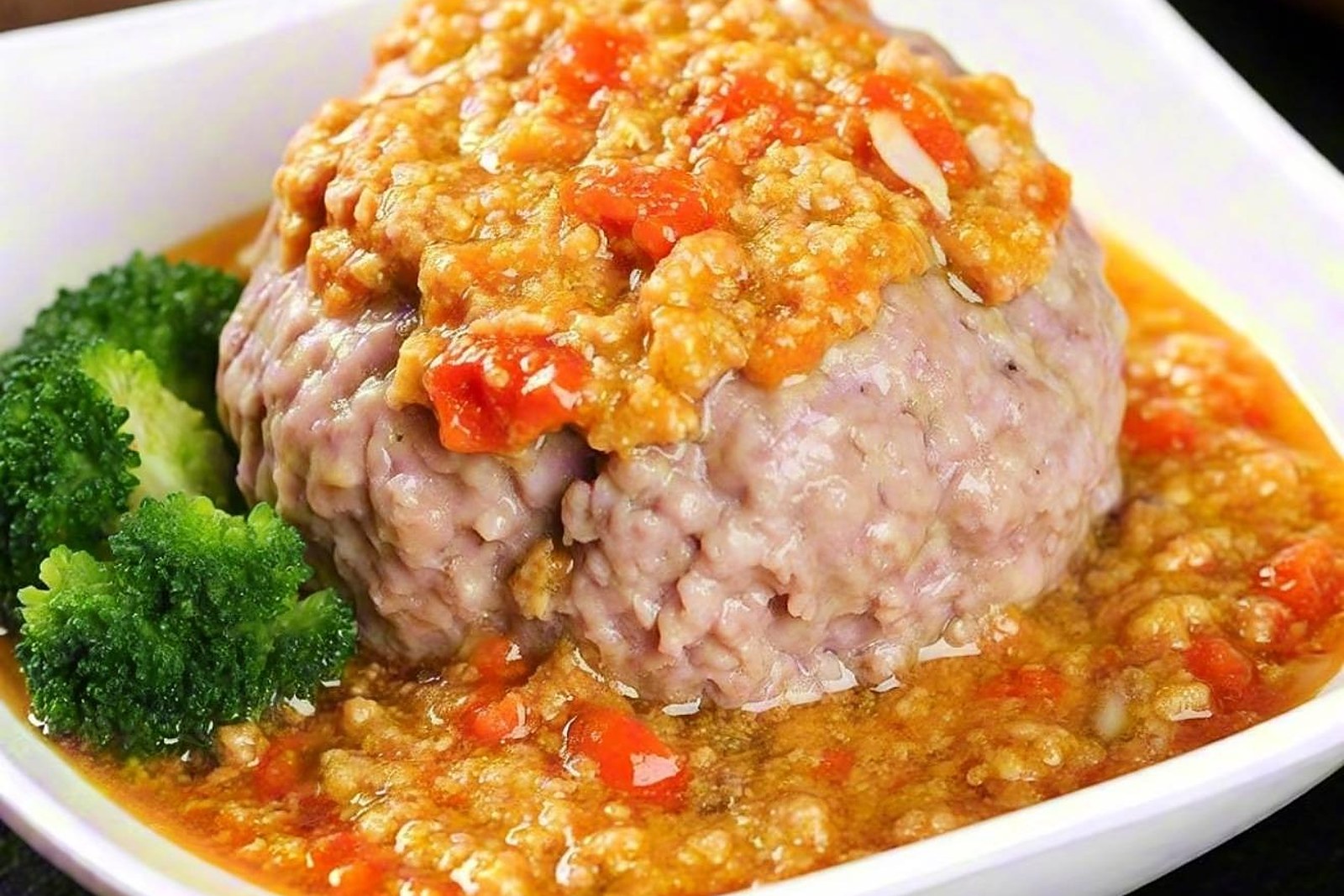
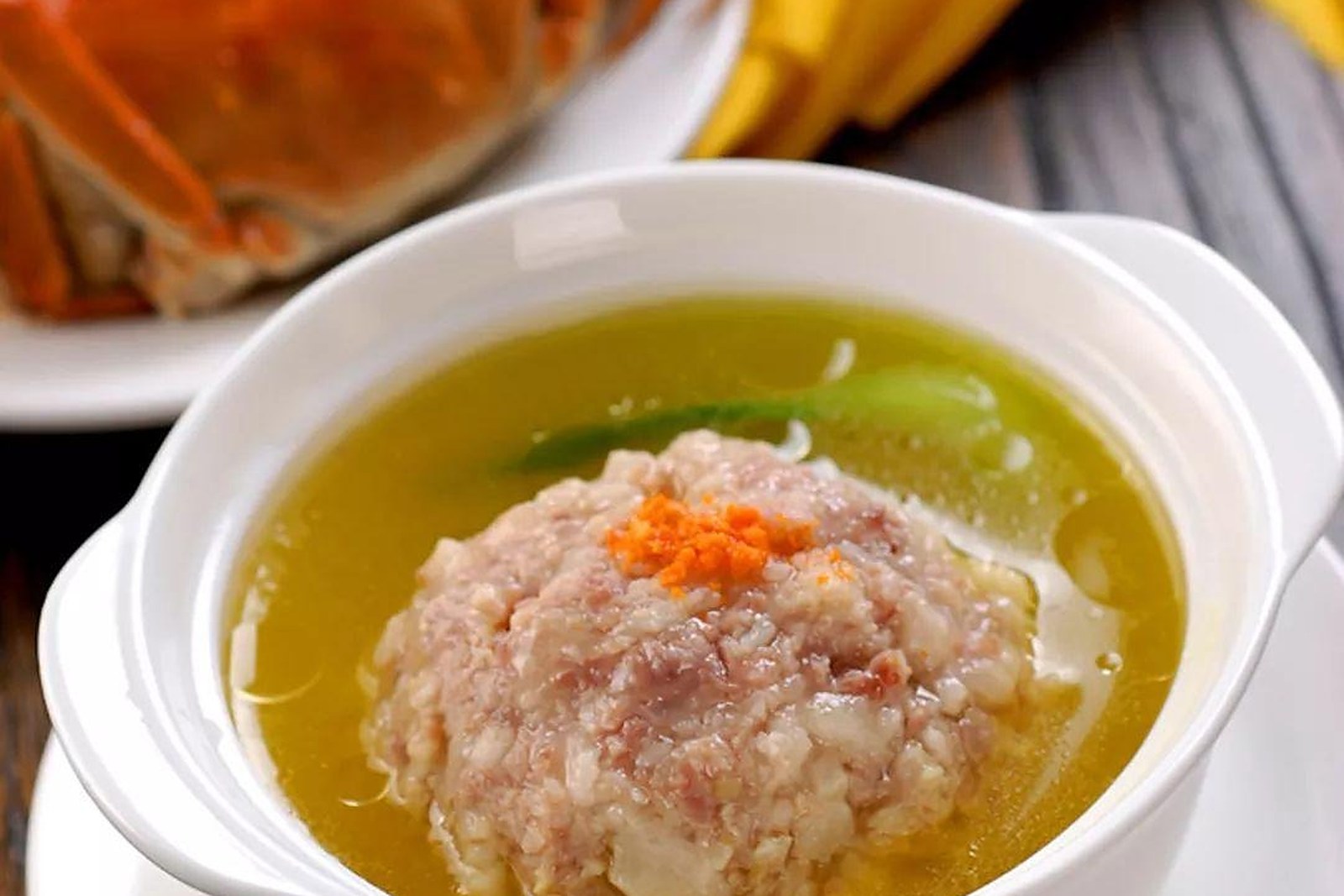
The classic serving is one ball to a bowl, in broth the colour of pale tea, with a crown of orange crab roe and shreds of ginger. The surface trembles when the bowl moves; the first spoonful breaks along the hand-cut planes rather than mashing, and the broth carries sweet pork and crab in one note.
Variations mark the seasons. Spring versions braise the ball with river greens; winter braises it with cabbage hearts in clay pots; the clear-steamed autumn crab version is the standard against which all others are measured. The hand-cut discipline never varies – a kitchen that serves a dense, machine-ground ball has broken the genre, and Yangzhou diners will say so.
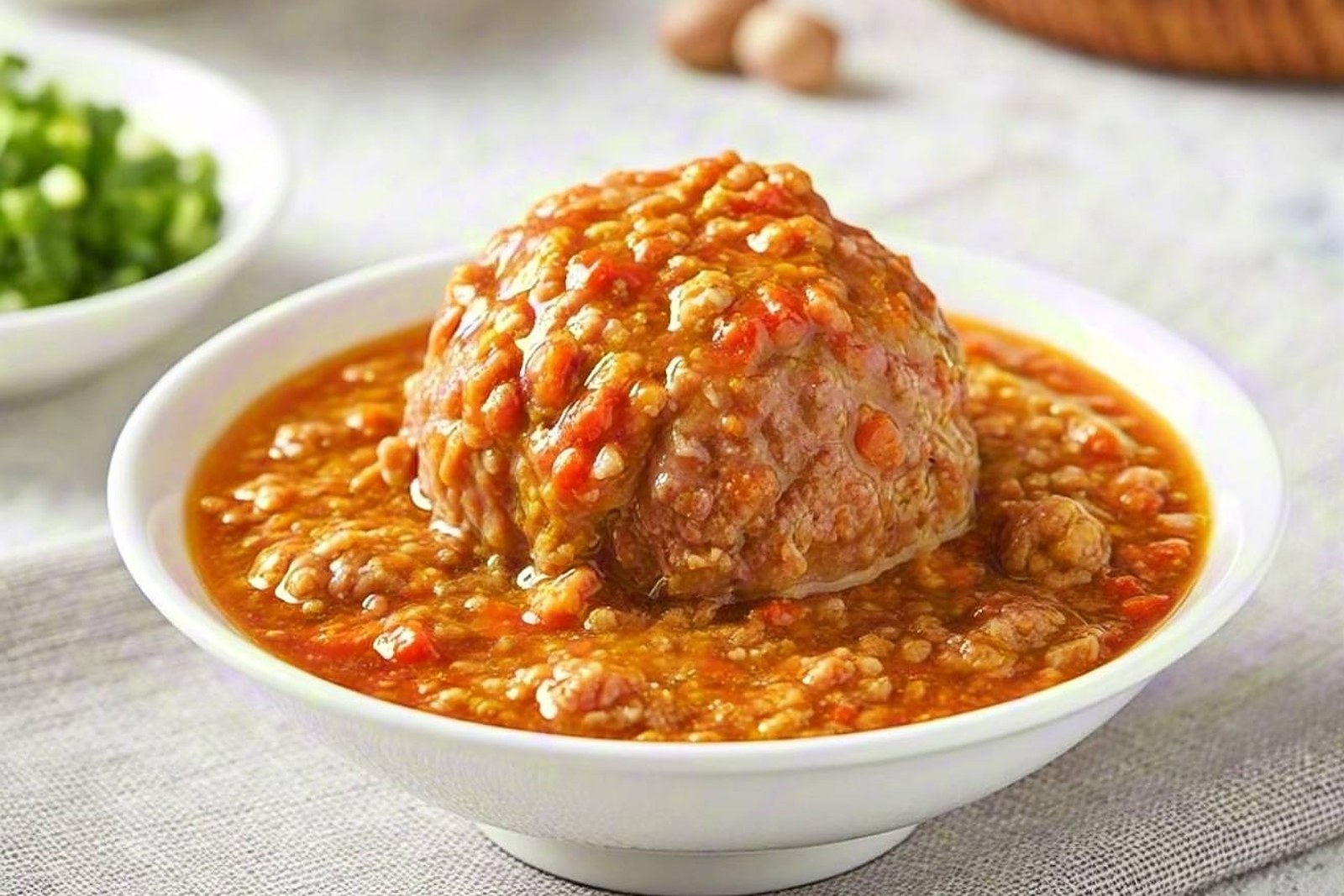
Ordering it well: ask whether the crab is in season and the ball hand-cut; take it as the soup course of a Huaiyang banquet rather than a shared starter; and let it cool a breath before the first spoon – the fat sets just enough to hold the broth’s sweetness. One ball is a course, not a dish; two is a decision.
The same district holds more flavors worth chasing: 扬州炒饭 Yángzhōu Chǎofàn the fried rice, 大煮干丝 Dàzhǔ Gānsī the braised shredded tofu, 富春三丁包 Fùchūn Sāndīng Bāo the three-dice buns, or 扬州老鹅 Yángzhōu Lǎo’é the old goose – four more doors into the same 扬州市 Yángzhōu Shì Yangzhou City table.
Words and Names
What the Locals Know
flowcloud would say the lion’s head is Huaiyang’s paradox on a spoon: a thousand knife cuts inside a ball that trembles like jelly – and in crab season, the whole argument turns orange. All checked November 2026.
Where to find it: Crab-meat lion’s head anchors Huaiyang banquet rooms across the city – the teahouses of the old town and the state-style kitchens both run autumn crab versions, priced per ball with the clear-broth style standard; season peaks October to December, order one per person as the soup course, and expect the best versions to sell by reservation on weekends. All checked November 2026.