
过桥米线 Guòqiáo Mǐxiàn Crossing-the-Bridge Rice Noodles is Kunming’s city card – a bowl of near-boiling broth capped with a film of chicken oil to hold the heat, with the raw slices, quail egg, greens and 米线 mǐxiàn rice ribbons added at the table. The dish is said to come from 蒙自 Měngzì Mengzi in 红河 Hónghe Honghe, where a scholar’s wife crossed a bridge to feed him hot food on a lake islet, and the oil cap is the trick that kept the broth at a rolling boil. The honest shape is that this is a ritual as much as a meal: you build the bowl, the soup does the cooking.
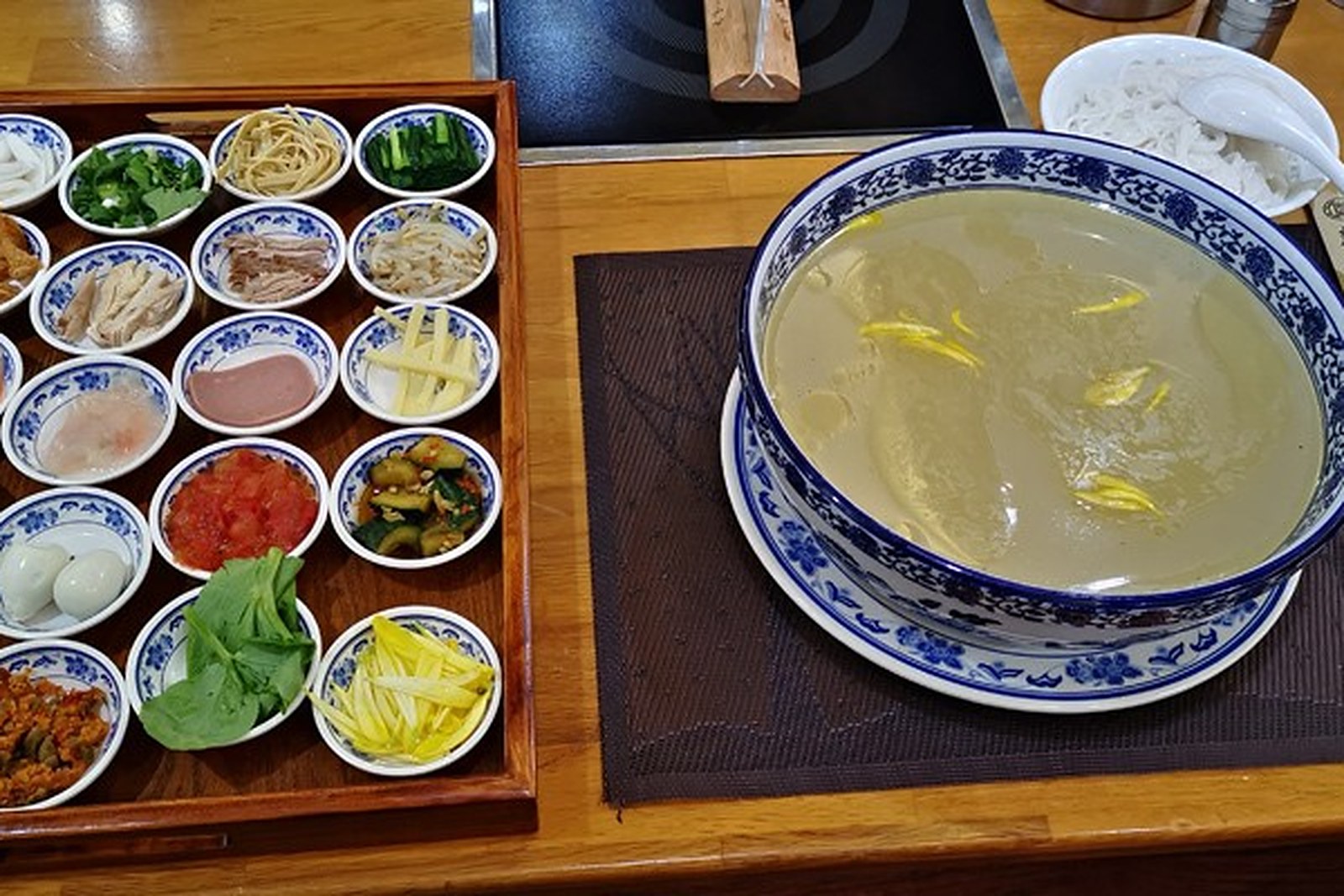
What the eater actually meets is the oil cap, and the cap is the whole technique. The broth is built from old chicken, 筒骨 tǒnggǔ pork bone and 宣威火腿 Xuānwēi huǒtuǐ Xuanwei ham, simmered some eight hours, then sealed with chicken oil so the surface stays at near-boil while the bowl travels. The 桥香园 Qiáoxiāngyuán Bridge Fragrance and 建新园 Jiànxīnyuán Jianxin Yuan old-name chains keep the order – meat first, then greens, then the noodles last – and a basic street bowl runs 15 to 25 yuan while a mid-range restaurant version is 30 to 50 yuan. No source publishes a free bowl, so treat the 30-to-40-yuan old-name bowl as the tariff for the proper ritual.
The grades are the second thing to know, and they are stated plainly. A street shop basic is 15 to 25 yuan, a mid-range restaurant with richer toppings is 30 to 50 yuan, and a top version reaches 80 to 120 yuan, a spread the food guides cite as the city’s range rather than a single price. The comparison with 小锅米线 xiǎoguō mǐxiàn small-pot noodles is exact: the cross-bridge is the ceremony, the small-pot is the street, and only the broth method differs. The useful caveat is to add the meat first and the noodles last, because the oil cap is the heat and the order is the cook.
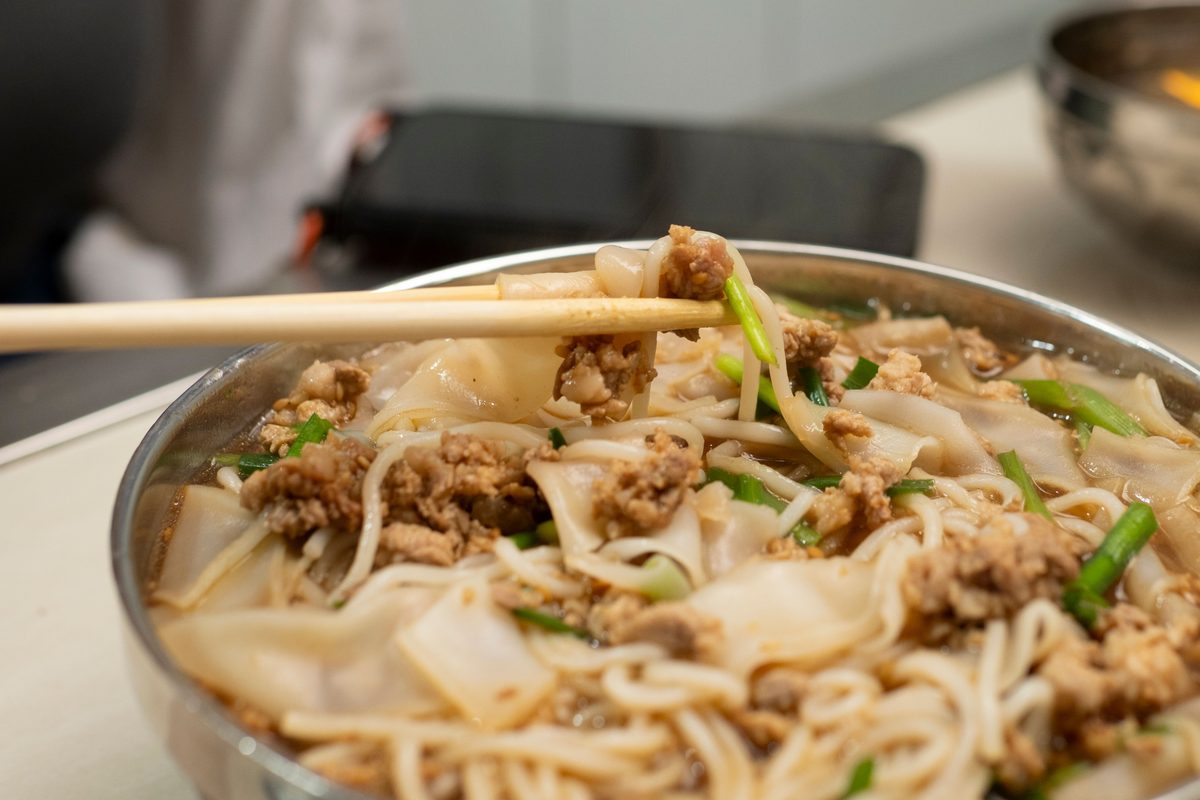
Getting it right is the part a visitor must plan, and the shop is the identifier. 建新园 Jiànxīnyuán (宝善街 Bǎoshàn Jiē Baoshan Street) and 桥香园 Qiáoxiāngyuán (南屏街 Nánpíng Jiē Nanping Street) are the old names the guides name, and a first timer is told to take a 30-to-40-yuan bowl at either rather than chase the top tier. The dish is a Kunming constant, served across the city and the year, so the only limit is the shop you pick, and the 米线 mǐxiàn ribbon is the thing to slurp, not stir. The honest form is that the bowl is the city’s ritual, and the old name is the address worth naming.
What the record does not give is a free taste, and that absence is the dish’s model rather than a gap. The 15-to-120-yuan range is the standing charge, with no published free bowl and no seasonal surcharge named, so the practical answer is to pick the grade and keep the oil-cap order. The broth is the cook the table does, and the ribbon is the reason the bowl is more than soup, which is the honest shape of the article: a near-boiling broth that is a ritual inside.
Words and Names
过桥米线 Guòqiáo Mǐxiàn Crossing-the-Bridge Rice Noodles, Kunming’s city card – a bowl of near-boiling broth capped with chicken oil to hold the heat, built from old chicken, 筒骨 tǒnggǔ pork bone and 宣威火腿 Xuānwēi huǒtuǐ Xuanwei ham simmered some eight hours, with raw slices, quail egg, greens and 米线 mǐxiàn rice ribbons added at the table in the order meat-first-then-greens-then-noodles. The dish is said to come from 蒙自 Měngzì Mengzi in 红河 Hónghe Honghe, where a scholar’s wife crossed a bridge to feed him hot food on a lake islet, and the oil cap is the trick that keeps the broth at a rolling boil. A street basic is 15–25 yuan, a mid-range restaurant 30–50 yuan, a top version 80–120 yuan; the old names 桥香园 Qiáoxiāngyuán Bridge Fragrance (南屏街 Nánpíng Jiē Nanping Street) and 建新园 Jiànxīnyuán Jianxin Yuan (宝善街 Bǎoshàn Jiē Baoshan Street) keep the ritual, and no source publishes a free bowl, so the 30-to-40-yuan old-name bowl is the tariff.
What the Locals Know
The local knowledge about the noodles is about the oil cap and the order, and it is the same check a Kunming regular makes whatever shop the bowl sits in. The broth should steam under its chicken-oil film and stay near-boiling when the raw slices hit it, which is the sign the cap did its job and the meat cooks at the table rather than in a pot, and a bowl that has gone tepid has lost the point. The second check is the order: meat first, greens next, 米线 mǐxiàn last, because the ribbon is the thing to slurp while the broth is hottest, and a visitor who dumps the noodles first eats cooled soup. The trade also knows the dish is a ritual not a recipe, which is why the old names 建新园 Jiànxīnyuán and 桥香园 Qiáoxiāngyuán are named here as the addresses, and a first timer should take the 30-to-40-yuan bowl and watch the cap, not chase the 120-yuan tier.
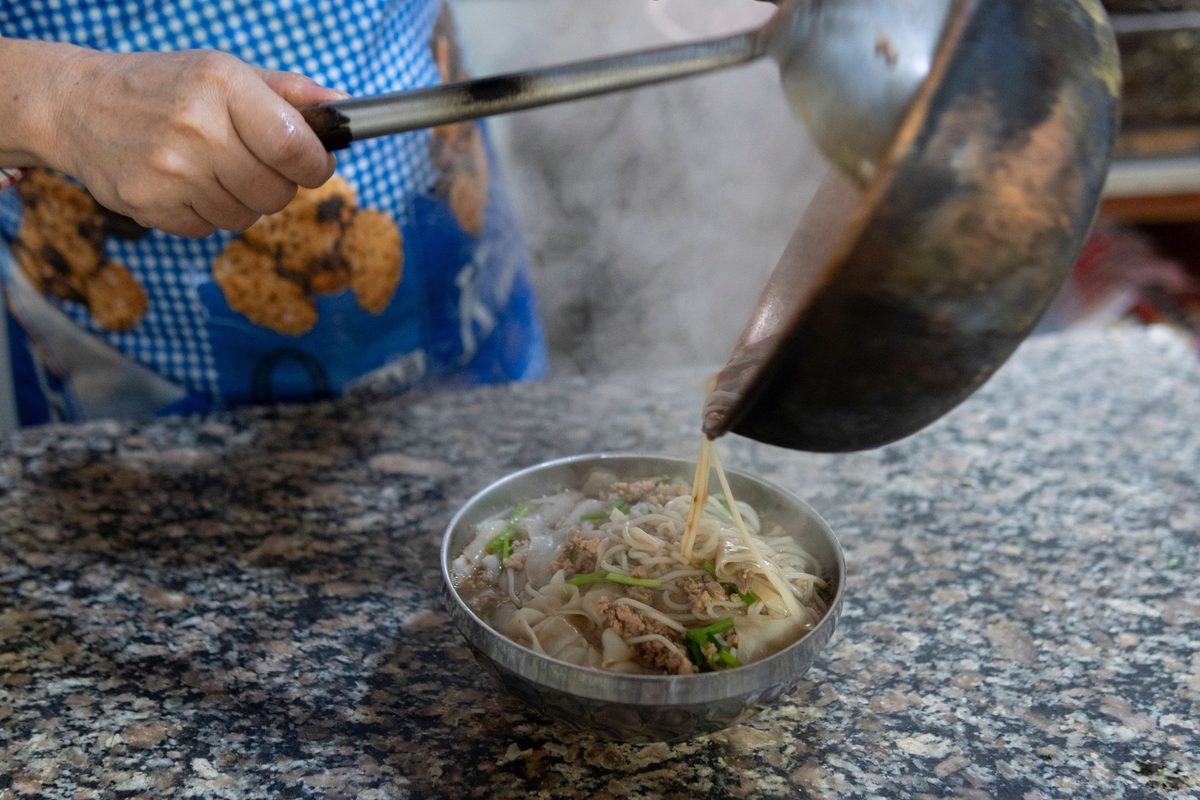
flowcloud would say that Crossing-the-Bridge Rice Noodles is Kunming’s city card – a near-boiling chicken-oil-capped broth built from old chicken, pork bone and Xuanwei ham simmered eight hours, with raw slices and rice ribbons added meat-first at the table – and that the correct way to treat it is as a ritual not a recipe, taking a 30-to-40-yuan bowl at the old names 建新园 or 桥香园 and keeping the oil-cap order, because the broth is the cook and the ribbon is the reason the bowl is more than soup. All checked October 2026.
Where to find it: the cross-bridge noodles are a Kunming constant served across the city and the year, at old names 建新园 Jiànxīnyuán Jianxin Yuan (宝善街 Bǎoshàn Jiē Baoshan Street) and 桥香园 Qiáoxiāngyuán Bridge Fragrance (南屏街 Nánpíng Jiē Nanping Street), 15–25 yuan street basic, 30–50 yuan mid-range, 80–120 yuan top; the broth is old chicken, 筒骨 tǒnggǔ pork bone and 宣威火腿 Xuānwēi huǒtuǐ Xuanwei ham simmered eight hours under a chicken-oil cap, added meat-first then greens then 米线 mǐxiàn, and no source publishes a free bowl, so treat the 30-to-40-yuan old-name bowl as the address rather than any counter that does not name the ritual.