
Cuandixia Farmhouse Food: Wood Fire, Stone Courtyards and Mountain Greens of Mentougou District, Beijing
爨底村头炊烟起,柴锅一炖满山香。Cuàn dǐ cūn tóu chuī yān qǐ, chái guō yī dùn mǎn shān xiāng – At Cuandixia’s gate the cooking smoke rises; one wood-pot stew scents the whole mountain.
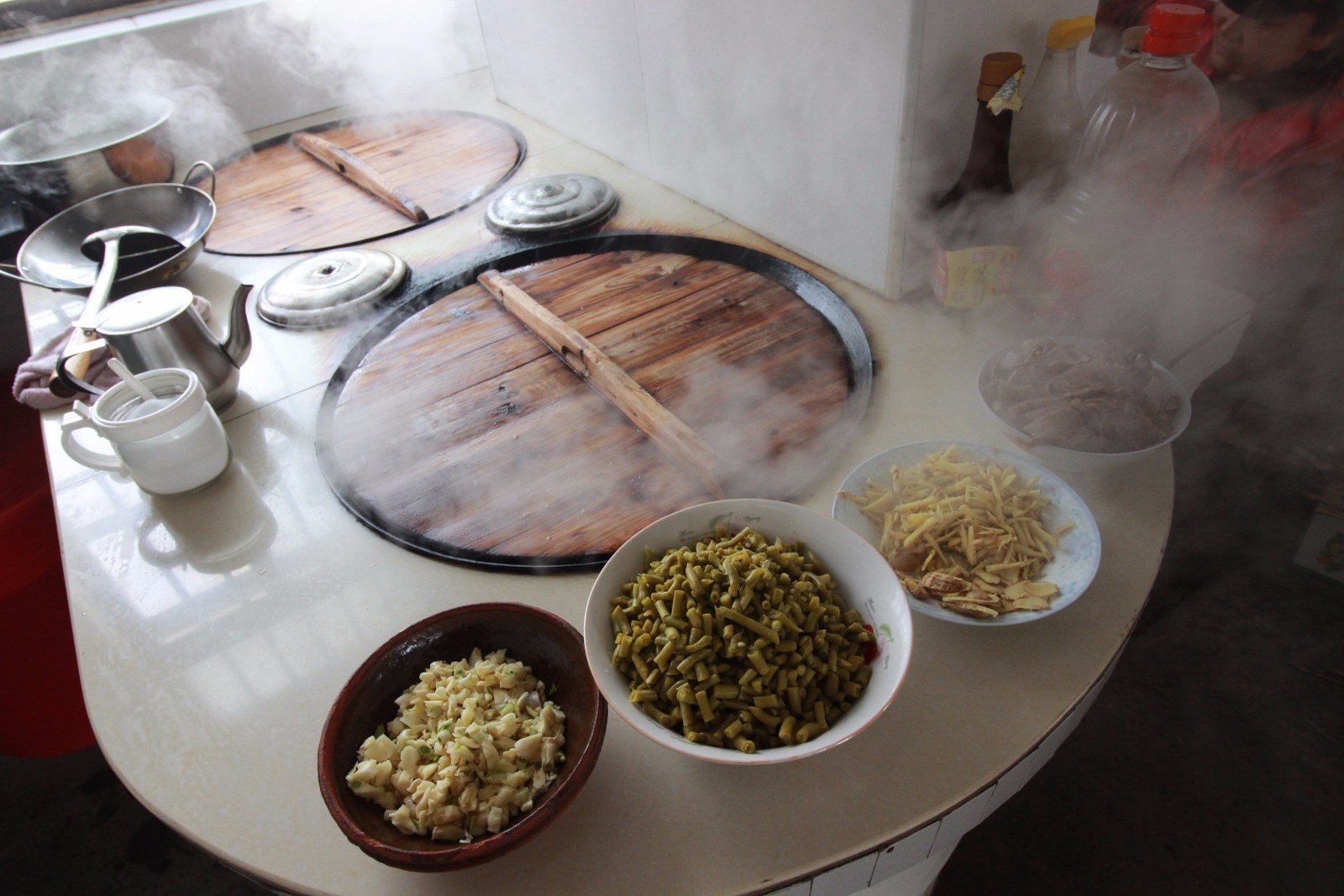
爨底下农家菜 Cuàndǐxià nóngjiācài Cuandixia farmhouse food is the wood-fired mountain table Beijing’s deep western hills cook for the visitors their ancient village draws, and the address is a village: 爨底下村 Cuàndǐxià Cūn Cuandixia, the 门头沟区 Méntóugōu Qū Mentougou District, Beijing stone-and-tile hamlet in the 斋堂 Zhāitáng Zhaitang hill country, a hillside stack of 明清 Míng-Qīng Ming-Qing 四合院 sìhéyuàn courtyards climbing terrace above terrace – a heritage-listed village, a film-set favourite, and a weekend institution for city families who come for the old houses and stay for the stew. The form is the 农家院 nóngjiāyuàn farmhouse courtyard – a family house that feeds guests at tables under the grape trellis, a 柴锅 cháiguō wood-fire pot at the heart of the kitchen, a menu written by the mountain rather than the market: 山野菜 shānyěcài wild mountain greens, 土鸡 tǔjī free-range village chicken, 蘑菇 mógū mushrooms off the slopes, maize in all its shapes. The craft most visitors under-rate is the fire: a true 柴锅 cháiguō stew takes hours and a woodpile, and the honest houses build the day around what the fire can finish – a courtyard that pressure-cooks its “wood-fire” chicken and calls it tradition has missed the whole reason anyone drove up. The naming is the tell: 爨 cuàn is the old character for a cooking stove – hearth, hands, fire and pot drawn in one thirty-stroke figure – so the village is, quite literally, named after dinner; the story runs that simpler homophone spellings served for years before the heritage era put the stove back on the sign (worth confirming the details).
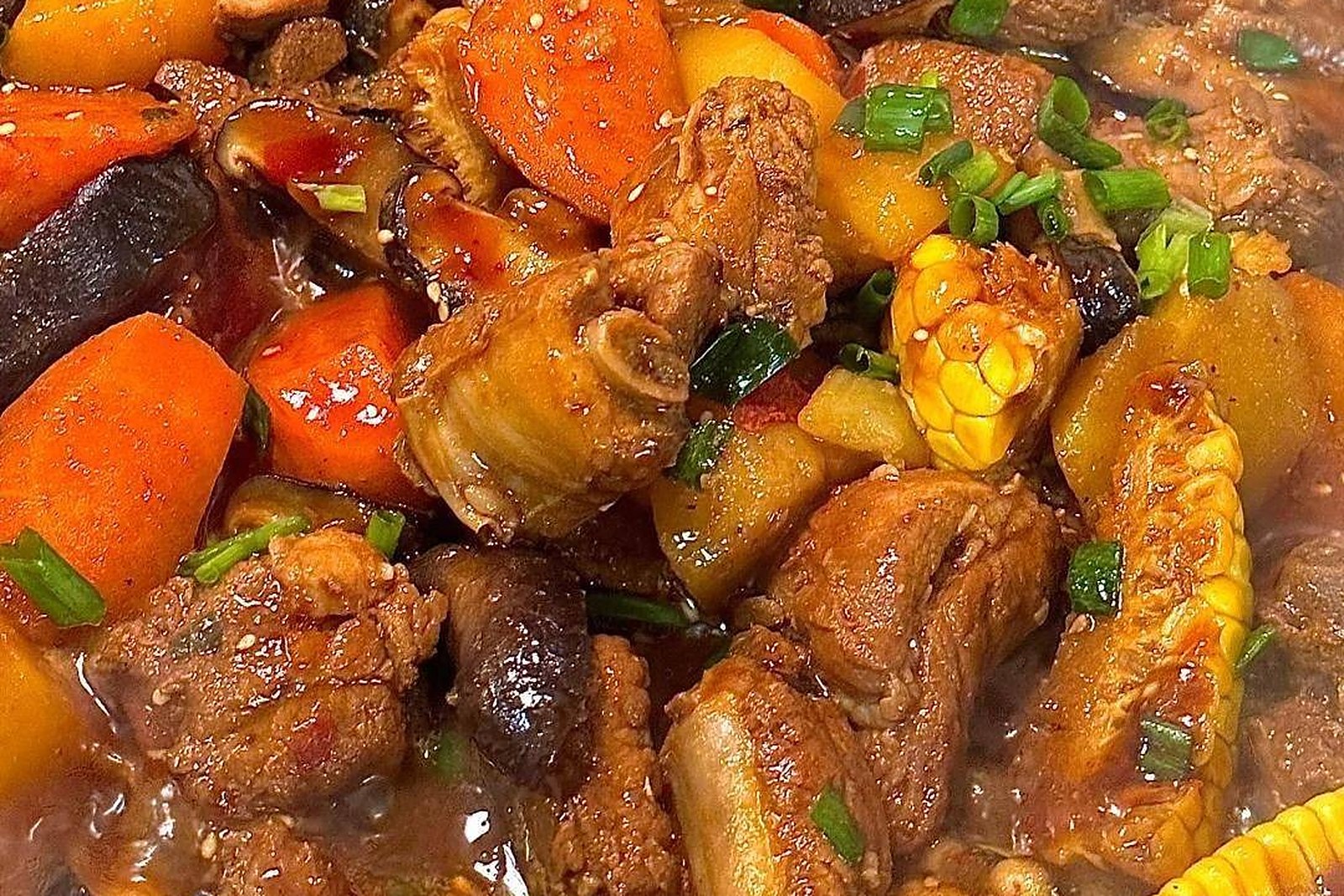
The eating is a one-fire grammar written for mountain appetites, and the menu leans 炖 dùn stew plus 粗粮 cūliáng coarse grain to match the walking crowd. The anchor is the 柴锅炖 cháiguō dùn wood-pot stew – 土鸡 tǔjī village chicken with 蘑菇 mógū mushrooms, or pork with 干豆角 gān dòujiǎo dried beans, simmered until the broth reads 浓 nóng thick – with 贴饼子 tiēbǐngzi maize cakes stuck to the pot’s inner wall to steam, 窝头 wōtóu conical maize bread, 小米粥 xiǎomǐ zhōu millet porridge for the morning after, and the seasonal 山野菜 shānyěcài – spring 香椿 xiāngchūn toon shoots, bracken and mountain greens in their weeks – dressed cold or scrambled with 土鸡蛋 tǔjīdàn village eggs. The courtyards double as 客栈 kèzhàn guesthouses, so the menu runs all day: lunch for the day-trippers, supper and a fire for the overnight crowd, breakfast porridge before the light comes down the valley – and the houses that have fed the village’s visitors for years cook to the same grammar their grandmothers did, because the mountain’s menu keeps no season passes and allows no rewrites.
The honest grade is geography plus the 车程 chēchéng drive clock. 爨底下 Cuàndǐxià sits deep in the Mentougou hills – the better part of two hours from the central city along the mountain roads (worth confirming the details by season and traffic) – so the meal is planned like an expedition, and the courtyard tables fill hard on the 周末 zhōumò when tour buses and city families share one narrow lane. What repays the effort is the fire and the quiet: a weekday lunch at a courtyard table under the old walls, stew steaming and hillsides empty, is the version the postcards omit. A per-person bill runs on the 柴锅 cháiguō and the 土鸡 tǔjī, so call it worth confirming the details rather than a fixed number, and book the stew ahead on weekends – the honest houses cook to order from a morning decision, and the chicken decides at nine whether your noon is good.
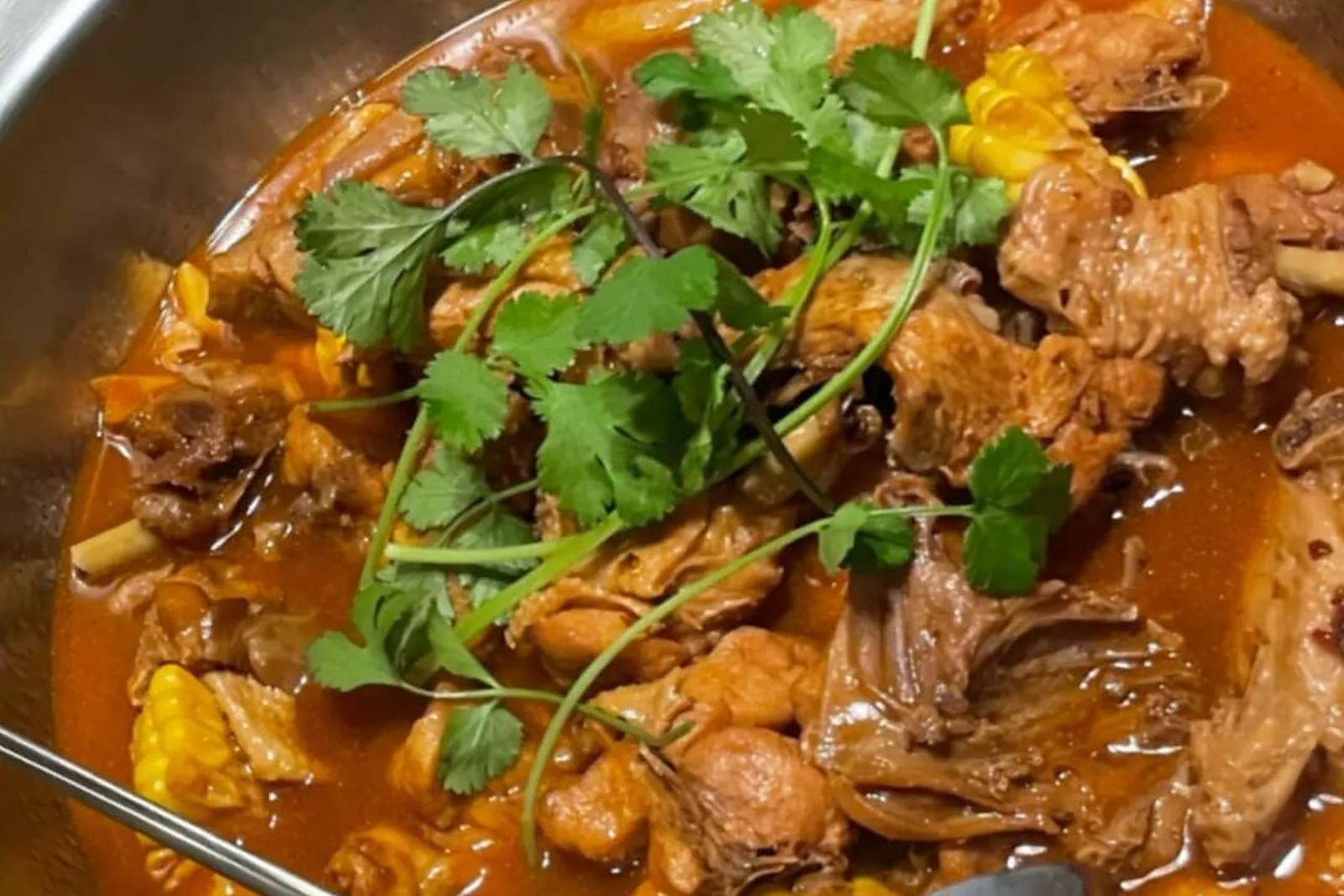
The wry truth is that 爨底下农家菜 Cuàndǐxià nóngjiācài is over-rated as an “ancient village dining experience” and under-rated as working mountain hospitality: travel lists file the village as a photo stop and the food as an amenity, while the actual trade – the 农家院 nóngjiāyuàn families who feed and house the visitors – is the reason the old houses are worth visiting at all. The real divide is 柴锅 cháiguō wood fire versus 煤气灶 méiqìzào gas ring: a true wood-pot stew reads smoky-edged and slow-thickened, a gas shortcut reads faster and flatter, and no extra 花椒 huājiāo Sichuan pepper hides it – worth confirming the details, courtyard by courtyard, because both versions advertise the same firewood. Season shapes the pot directly: spring brings the toon shoots and the greens, summer the trellis shade and the full menu, autumn the harvest stews, and winter – cold, clear, near-empty – is when the overnight crowd gets the fire, the porridge and the village to itself.
The self-deprecating footnote, and the district braid: a food writer will mispronounce 爨 cuàn at the village gate – everyone does, the character is a stove with thirty strokes – explain “slow food” to a grandmother who has never heard the movement named but has simmered the same pot for fifty years, photograph the courtyard stew at heroic shutter, and then call the 贴饼子 tiēbǐngzi “commendably rustic” as if rusticism were a menu category – which is the honest grade: 爨底下农家菜 Cuàndǐxià nóngjiācài is a fire-and-pot table the writer will photograph more than he waits for, and the courtyard family at the next 桌 zhuō has finished the chicken and called for the porridge before his shutter closes. The same 门头沟区 Méntóugōu Qū Mentougou District, Beijing thread runs on: the vegetarian pots of 潭柘寺素斋 Tánzhè Sì sùzhāi Tanzhe temple vegetarian food simmer by the ancient temple, the rose ovens of 妙峰山玫瑰饼 Miàofēng Shān méiguībǐng Miaofeng rose pastries bake in the flower valley, the noodle steam of 大峪城区食肆 Dàyù chéngqū shísì Dayu area eats rises by the district seat, and the glass jars of 京西白蜜 Jīngxī báimì Jingxi white honey wait on the mountain-product shelves – one district, four more tables.
Words and Names
爨底下村 Cuàndǐxià Cūn / Cuandixia Village · the Ming-Qing courtyard village of the Mentougou hills 爨 cuàn / cooking stove · the thirty-stroke character the village is named for, and the trade it eats by 农家院 nóngjiāyuàn / farmhouse courtyard · the family house that feeds and houses the visitors 柴锅 cháiguō / wood-fire pot · the hearth stew that grades every courtyard 贴饼子 tiēbǐngzi / pot-wall maize cakes · the coarse-grain staple steamed against the pot 山野菜 shānyěcài / wild mountain greens · the seasonal side the hillside writes into the menu 斋堂 Zhāitáng / Zhaitang · the old town at the centre of the western hill country 门头沟区 Méntóugōu Qū / Mentougou District · the Beijing district holding the mountain village
What the Locals Know
- Book the 柴锅 cháiguō ahead: weekend courtyards fill with tour buses, and the wood-pot stews cook to order from a morning decision (worth confirming the details).
- Stay the night: the 小米粥 xiǎomǐ zhōu millet-porridge breakfast and the empty morning lanes are the village’s real luxury, not the noon crowds.
- Order the season: spring 香椿 xiāngchūn toon and mountain greens, autumn harvest stews – the menu is honest about what the hillside has this week.
- Eat what the fire made: the wood-pot stew and the 贴饼子 tiēbǐngzi are the house’s craft; city fried dishes on farmhouse menus are strangers.
flowcloud would say that the 爨底下农家菜 Cuàndǐxià nóngjiācài is the wood fire, stone courtyards and mountain greens of Mentougou District, Beijing – a 明清 Míng-Qīng hillside village under the character for stove, where 柴锅 cháiguō stews, 贴饼子 tiēbǐngzi and 山野菜 shānyěcài feed the visitors the old houses draw – and that the honest move is to book the stew, stay the night, and eat what the fire made, because the drive buys the quiet and the fire sets the grade. All checked October 2026.
Where to find it: Mentougou District Méntóugōu Qū, Beijing – the 爨底下村 Cuàndǐxià Cūn Cuandixia village in the 斋堂 Zhāitáng Zhaitang hill country of western Mentougou, where 农家院 nóngjiāyuàn farmhouse courtyards serve 柴锅 cháiguō wood-pot stews, 贴饼子 tiēbǐngzi and seasonal 山野菜 shānyěcài beneath the Ming-Qing terraces (worth confirming the details – which houses cook on true wood fire and which keep winter hours); a per-person bill runs on the stew and the 土鸡 tǔjī, so call it worth confirming the details rather than a fixed number. Cuandixia farmhouse food is the wood fire, stone courtyards and mountain greens of Mentougou District, Beijing, firewood before filters.