
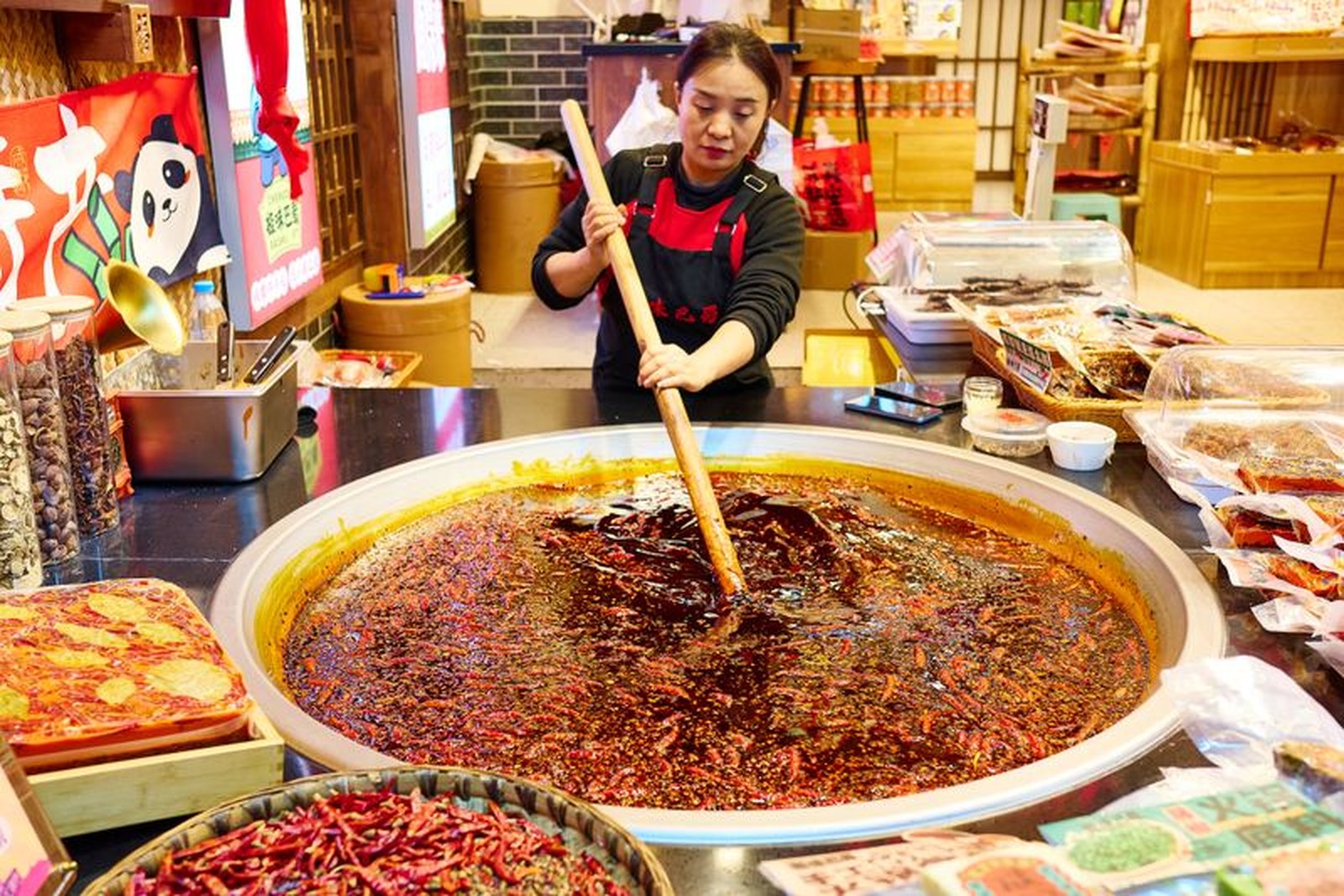
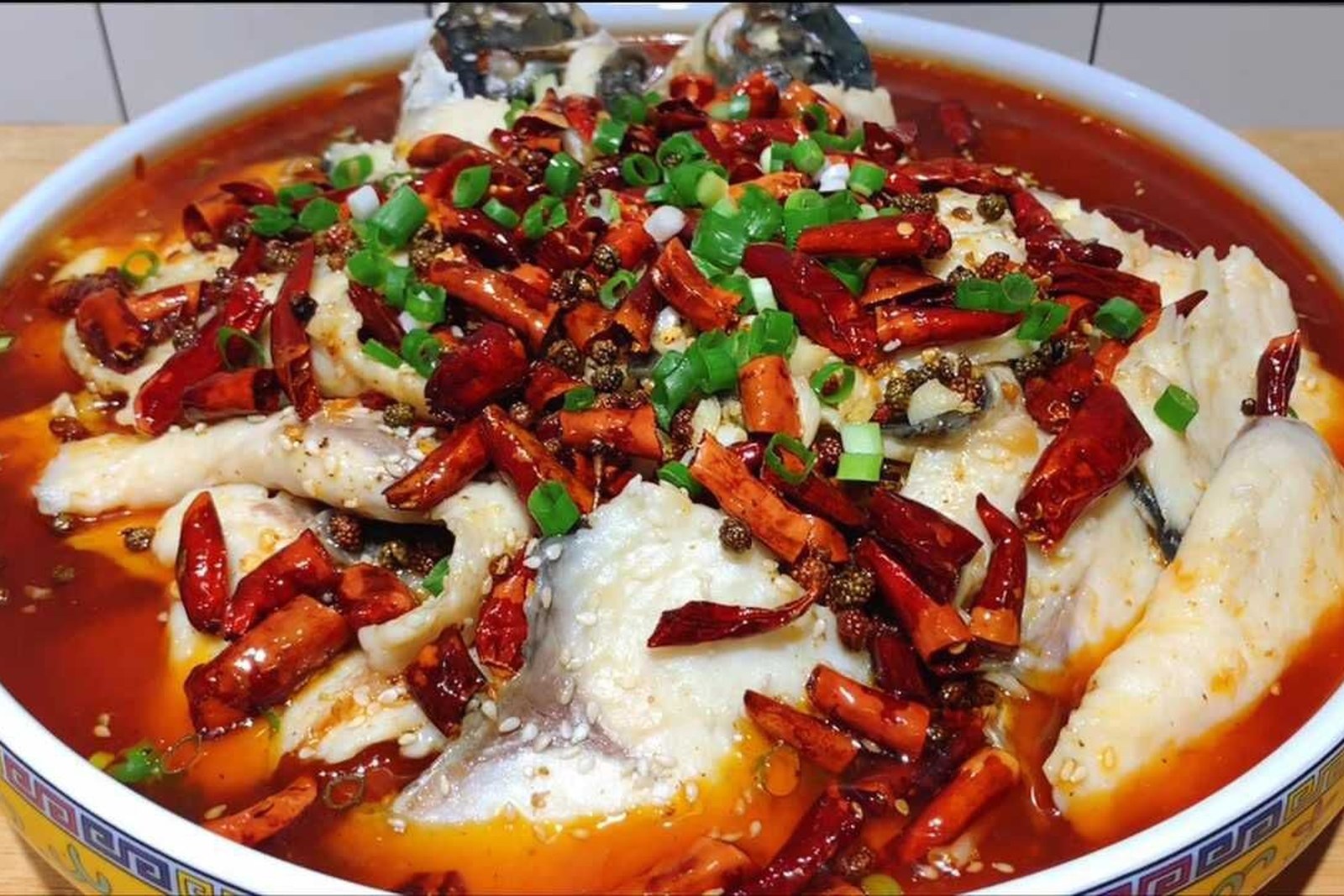
The first thing that reaches you is not the fish, it is the smell: the dry, warm fragrance of Sichuan pepper and dried red chilli coming off a wok of red oil before a single slice of fish goes near it. That smell is the dish being made, and here it is the argument. 水煮鱼 Shuǐzhǔ Yú shuizhu yu, water-boiled fish, is usually traced to 翠云 Cuìyún Cuiyun – a former subdistrict of 渝北区 Yùbèi Qū Yubei District, the northern district of Chongqing Municipality, which stopped being a district on 7 November 2025, when the municipal government published 渝府发〔2025〕15号 and abolished Yubei with 江北区 Jiangbei to create 两江新区 Liangjiang New Area. Cuiyun is inside the new area now, and in 2007 the Chinese Culinary Association named the old district China’s hometown of water-boiled fish.
The title is a piece of administrative history as much as a piece of cooking. Yubei was new when it got it: the district was created on 17 December 1994 by abolishing 江北县 Jiangbei County, and its name is simply a direction, Yubei meaning north of the city because the city was 渝州 Yuzhou. The district that claimed the fish in 2007 was, by its own accounts, Chongqing’s largest industrial economy, roughly half its output value in automobiles and electronics. A dish built on a wok, a ladle and a pot of oil is not an industrial food, and it is exactly what a new district with tens of thousands of shift workers would name itself after. The dish went onto the district’s first intangible-heritage list in 2009, as 江湖菜 Jiānghú Cài, the open-fire cooking of the city’s small restaurants.
What separates a good shuizhu yu from a bad one is not a secret ingredient, and everyone here will tell you so. The method begins by frying the numbing fragrance of the pepper and the heat of the chilli out into the oil, so the aromatics are cooked before the fish and the oil is the finished product of that step, not a neutral medium. Then the fish is cut and the quantity of oil is decided, and these are the two variables the craft lives in. A thick slice, cut against the grain, can sit in a violent pot of oil and come out with its own texture; a thin slice turns into the same hot, flavourless strip of nothing.
The road north out of the city runs a set menu, and the line no longer sits inside Yubei. Along the old 汉渝公路 Hanyu Highway, Highway 210, three dishes are named in sequence: Yubei water-boiled fish, 茨竹青椒鱼 Cízhú Qīngjiāo Yú Cizhu green-chilli fish, and 木耳地丁黄鳝汤 Mù’ěr Dìdīng Huángshàn Tāng Muer’s dingsheaf-and-eel soup, the last a district-level heritage dish of 木耳镇 Muer town. Cizhu, the green-chilli fish town and a source of 藠头 Jiàotóu, Chinese water chestnut greens, is one of the five northern towns that moved to Beibei District in the November 2025 reorganisation, and its hot spring and its pear orchards are Beibei’s now. Muer is not one of the five, and its eel soup stayed with Liangjiang New Area. That split is the most useful thing a visitor can carry out of this page.
Words and Names
翠云 Cuìyún Cuiyun, the former subdistrict where shuizhu yu is generally traced to the origin, now inside Liangjiang New Area; 多功城 Duōgōngchéng, also called 翠云寨 Cuiyun Stockade, the best-known of the district’s old stockades. 渝北区 Yùbèi Qū Yubei District, the former northern district of Chongqing Municipality, created 17 December 1994 and abolished 7 November 2025. 水煮鱼 Shuǐzhǔ Yú shuizhu yu, water-boiled fish, in the district’s first intangible-heritage batch in 2009 as 江湖菜 Jiānghú Cài; the district was named China’s hometown of water-boiled fish in 2007. 210 国道 Highway 210, the Hanyu road north out of Chongqing, along which run the “three fish”: Yubei water-boiled fish, 茨竹青椒鱼 Cizhu green-chilli fish, 木耳地丁黄鳝汤 Muer’s dingsheaf-and-eel soup. 藠头 Jiàotóu Chinese water chestnut greens, the Cizhu speciality; 玉峰山花椒鸡 Yufeng Mountain pepper chicken; 哑巴兔 Yǎbǎ Tù “mute rabbit” and 姜豆豉 Jiāng Dòuchǐ ginger bean paste.
What the Locals Know
The local test is entirely about the fish and entirely at the counter, because a shop that has made one version of this dish for years cannot afford a second. Three things decide it. The slices are thick enough to see edge-on in the bowl before the broth settles, and cut on the bias rather than straight down, which is what keeps them from going to pieces in the first thirty seconds. The oil is red and clear at the top rather than a muddy brown, and it carries visible chilli sediment, which means the aromatics were fried into it properly instead of being sprinkled on afterwards. And the pieces are counted, not estimated, so a table that ordered for four is given what looks like too much fish. The other half of local knowledge is the order in which things are eaten: the broth is drunk first, because by the time the fish has been picked over the oil has gone flat.
flowcloud would say that Cuiyun is the accepted birthplace of shuizhu yu, the dish that got a district a national title: Yubei was created in 1994 out of Jiangbei County, an industrial district, and the Chinese Culinary Association named it China’s hometown of water-boiled fish in 2007, with the dish entering the district’s first intangible-heritage list in 2009 as 江湖菜. The craft is not a secret ingredient but two variables – slice thickness against the grain, and how much oil the aromatics were fried into before the fish went in. Along Highway 210 the same road still runs three fish, of which Cizhu’s green-chilli fish and Muer’s dingsheaf eel soup are the other two, and since 7 November 2025 Cizhu has been in Beibei District rather than in the old Yubei. All checked October 2026.
Where to find it: the Cuiyun-area water-boiled fish shops along the Jialing-side roads around 翠云 Cuìyún Cuiyun, in the part of the former 渝北区 Yubei District that is now Liangjiang New Area – the old Hanyu road, Highway 210, and the side streets off it. The dish is served at lunch and dinner rather than at breakfast, in a room with a gas ring per table or a counter in front of a wok, and the shop is not on any official list, so look for the room that is full rather than the room that is famous. Rail transit does not reach Cuiyun, so this is a bus or a taxi from the city, and the sensible plan is to arrive for the evening sitting. No shop is ranked and no prices are quoted: the dish is ordered by the weight of the fish and the room’s own pot. The 2007 title and the 2009 heritage listing are the district’s and the association’s, and the transfer of the five northern towns to Beibei is the 7 November 2025 reorganisation.