
Dai Pai Dong — Cooking by Firelight on the Street
绿棚灯下镬气起,一街炉火炒夜香 Lǜpéng dēng xià huòqì qǐ, yī jiē lúhuǒ chǎo yè xiāng – Under the green canopy the wok-breath rises; a street of stoves fries the night fragrant
大排档 dàpáidàng dai pai dong – the licensed open-air food stall under its green-painted canopy – is Hong Kong street eating in its original form, and Central and Western holds the best-known surviving concentration. Born after the war as unlicensed cook shops, the stalls were later regulated into a fixed number of street-side licenses, and the few dozen that remain cook with a firepower domestic kitchens cannot match: roaring wok burners, cast-iron stoves, and folding tables set almost into the traffic.
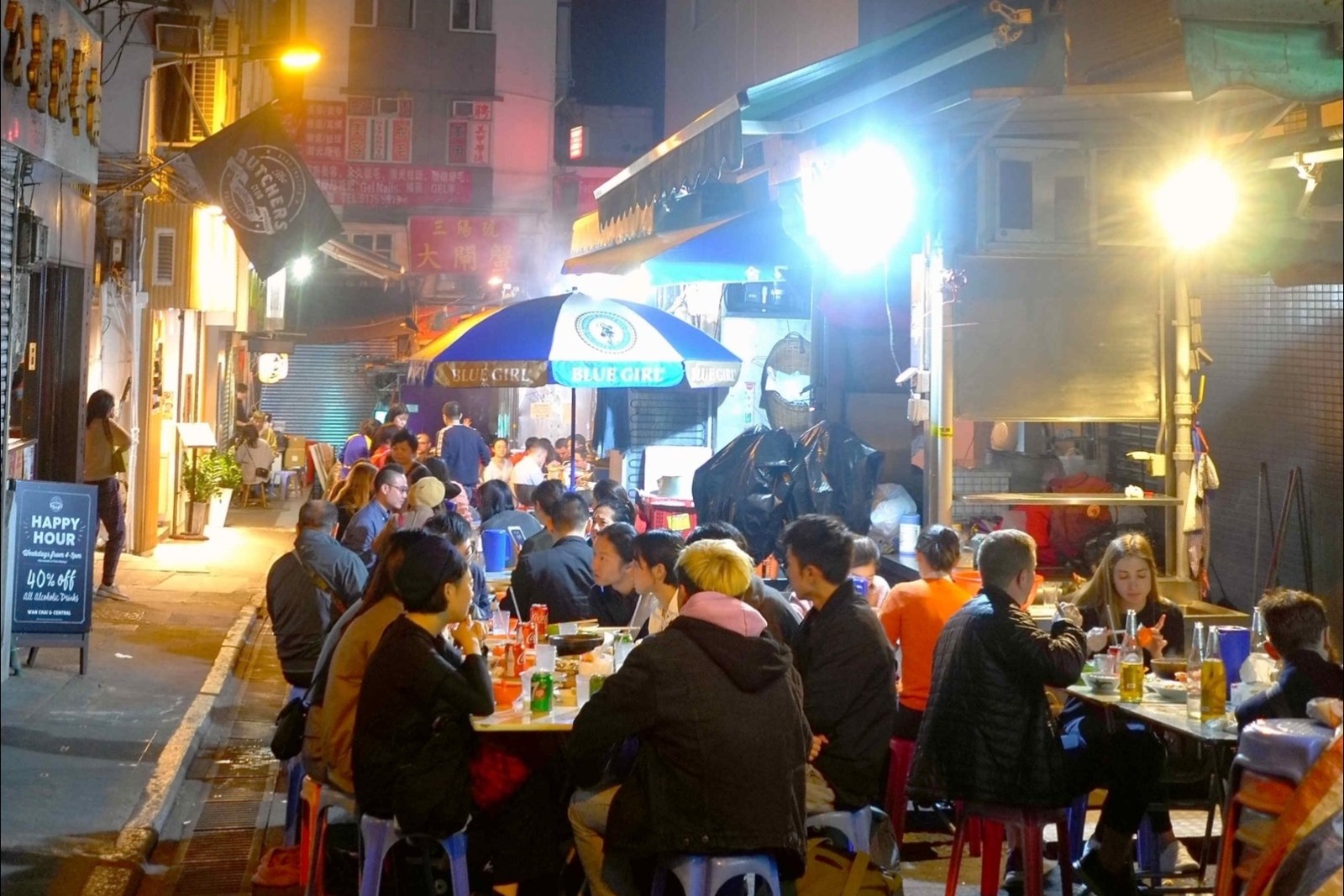
The stall at work is the show: flames leaping off the wok, the cook’s two spatulas blurring, plates of 豉椒炒蚬 chǐjiāo chǎo xiǎn stir-fried clams in black bean and chili landing on shared tables. The 镬气 huòqì wok-breath – that charred, smoky flavor only violent heat gives – is the style’s whole secret, and it cannot travel: eat it at the stall or miss it.
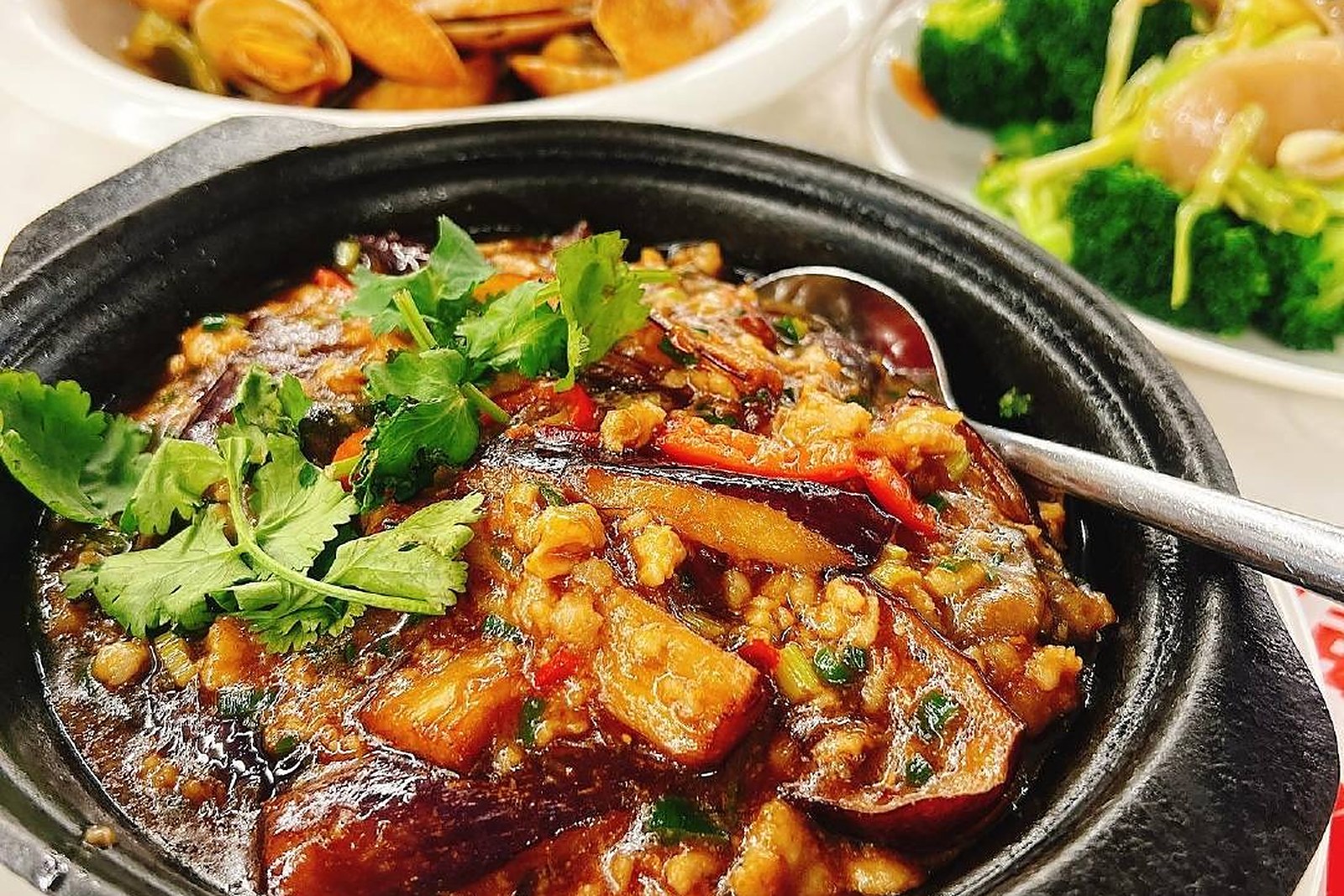
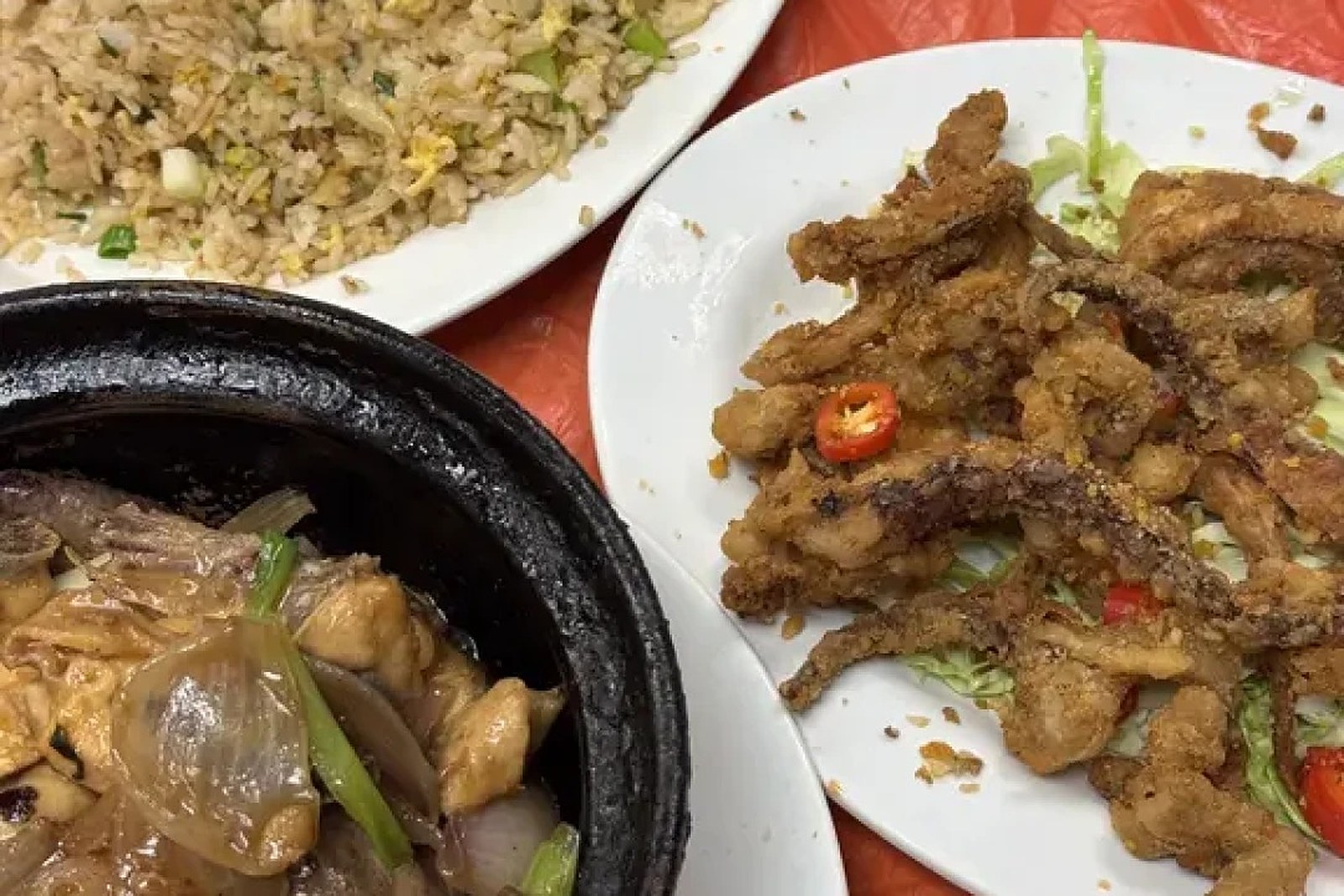
The repertoire is short and absolute: salt-and-pepper squid, beef and ginger hotpot, 蠔烙 háolào omelettes, vegetables blasted in a rolling inferno, and rice or noodles to hold the line. Beer arrives cold by the crate, and dinner runs loud, fast and cheap – the stall is the district’s most democratic table, where office workers and truck drivers eat side by side under the same bare bulbs.
The stalls survive on heritage protection and devoted locals; expect queues, expect elbows, and accept that the smallest, oldest stall with the most battered wok is usually the best. Come hungry after dark, order the clams first, and watch the street cook by flame – the district’s oldest dinner theater, still running nightly.
Words and Names
大排档 dàpáidàng the licensed open-air stall, the green-canopy original; 镬气 huòqì wok-breath, the charred flavor of violent heat; 豉椒炒蚬 chǐjiāo chǎo xiǎn clams fried with black bean and chili, the signature order; 炒粉 chǎofěn the fried noodles that anchor the table; 排档执照 páidàng zhízhào the street license, the reason the stalls are few. The same 中西区 Zhōngxī Qū Central and Western holds more flavors worth chasing: 港式蛋挞 Gǎngshì dàntà the two-school tart, 丝袜奶茶 sīwà nǎichá the silk-filtered cup, 粤式点心茶楼 Yuèshì diǎnxīn chálóu the trolley teahouses, or 兰桂坊 Lánguìfāng the nightlife slope – four more doors into the same district table.
What the Locals Know
Locals know the stall by its fire – the one with the tallest flames and the oldest cook wins – and they order whatever arrived at the market that morning rather than anything printed on the menu card. Sit down, point at the next table’s best-looking plate, and the stall takes it from there. All checked November 2026.
flowcloud would say dai pai dong is the city eating the way it actually lives – fast, loud, over open flame, and out in the street.
Where to find it: The licensed stalls cluster on Stanley Street and the side lanes of Central, with rival scenes in the working districts across the harbor – dinner from six, cash in pocket, and the clams ordered first. All checked November 2026.