
青梅小刀,雕出梅花。Qīngméi xiǎodāo, diāochū méihuā – Green plums and a small knife: carve out plum blossoms.
雕梅 Diāoméi is the plum that answers the knife – a green 青梅 qīngméi plum scored with a small blade so that, once pressed and preserved in honey and sugar, it opens into something that looks like a 梅花 méihuā plum blossom. It is a 白族 Báizú Bai women’s craft from the plum country of 洱源 Ěryuán north of Dali: in the old custom a bride’s carved plums were the proof of her hand, presented to the in-laws, and the jar still appears at weddings and festivals. Eaten as 蜜饯 mìjiàn candied fruit with tea, it is also the partner of 雕梅扣肉 Diāoméi Kòuròu – steamed pork belly studded with the carved plums – on the Bai banquet table. A jar commonly runs about 20-40 yuan at market stalls, and the honest shape is that the fruit is ordinary and the hand is not. The preserve keeps for a year in the syrup, which is why the jar travels and the craft went to market.
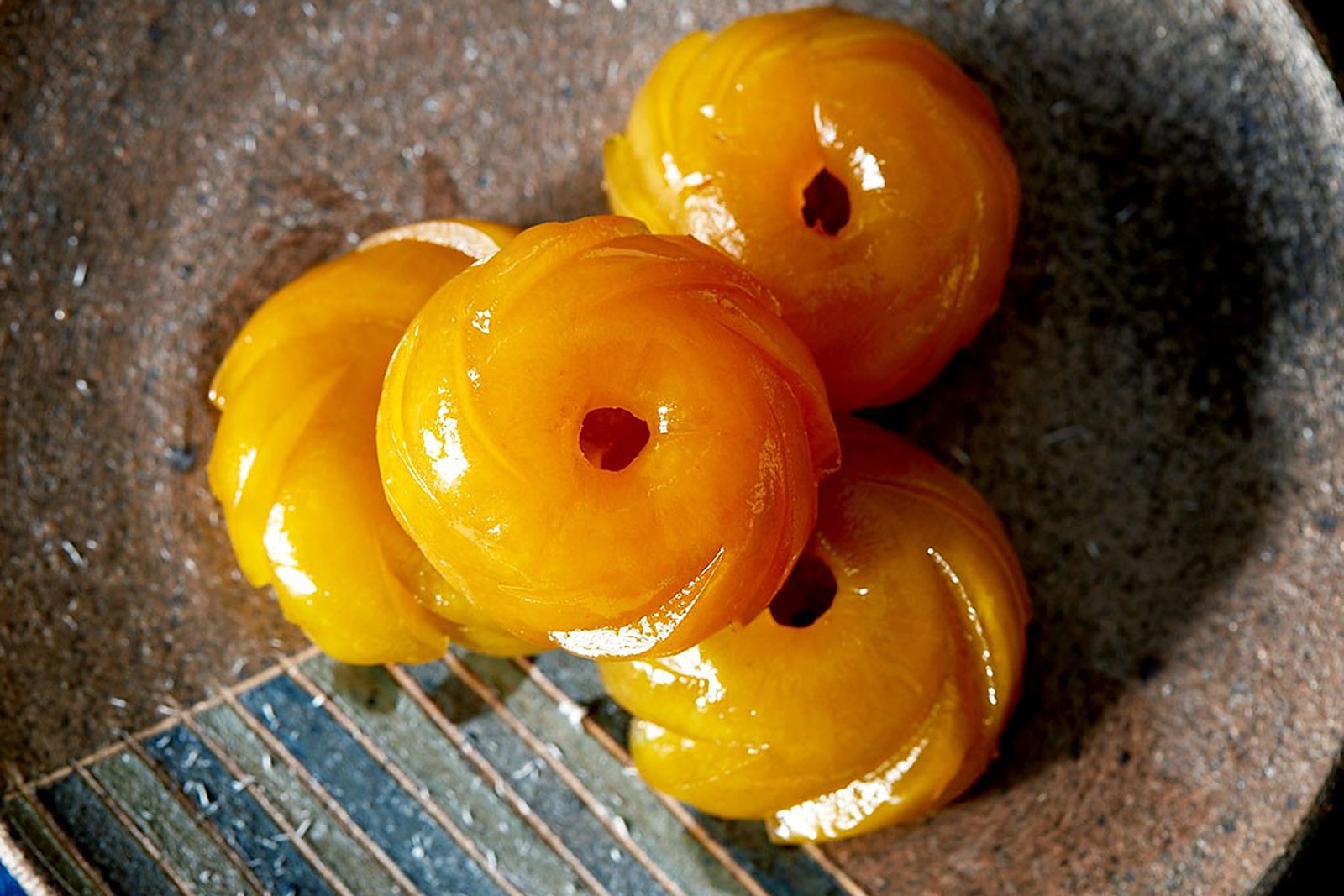
The mechanism is the cut. The knife work removes a spiral from the fruit so the plum can be pressed flat without breaking, and the pressure is what opens it into petals – the blossom is not added, it is revealed. The fruit is then soaked, pressed and kept in 蜂蜜 fēngmì honey or sugar until the sour turns sweet-tart and the skin turns translucent amber. The season is late spring, when the 青梅 qīngméi come in green and hard, and the carving has to be finished before the fruit softens – the craft is a race against ripeness. The difference from ordinary 蜜饯 mìjiàn candied fruit is exact: the preserve is the same craft as anywhere, but here the form is the value, and the form is knife work taught to girls young. The craft was listed on Yunnan’s provincial intangible-heritage register in December 2022.
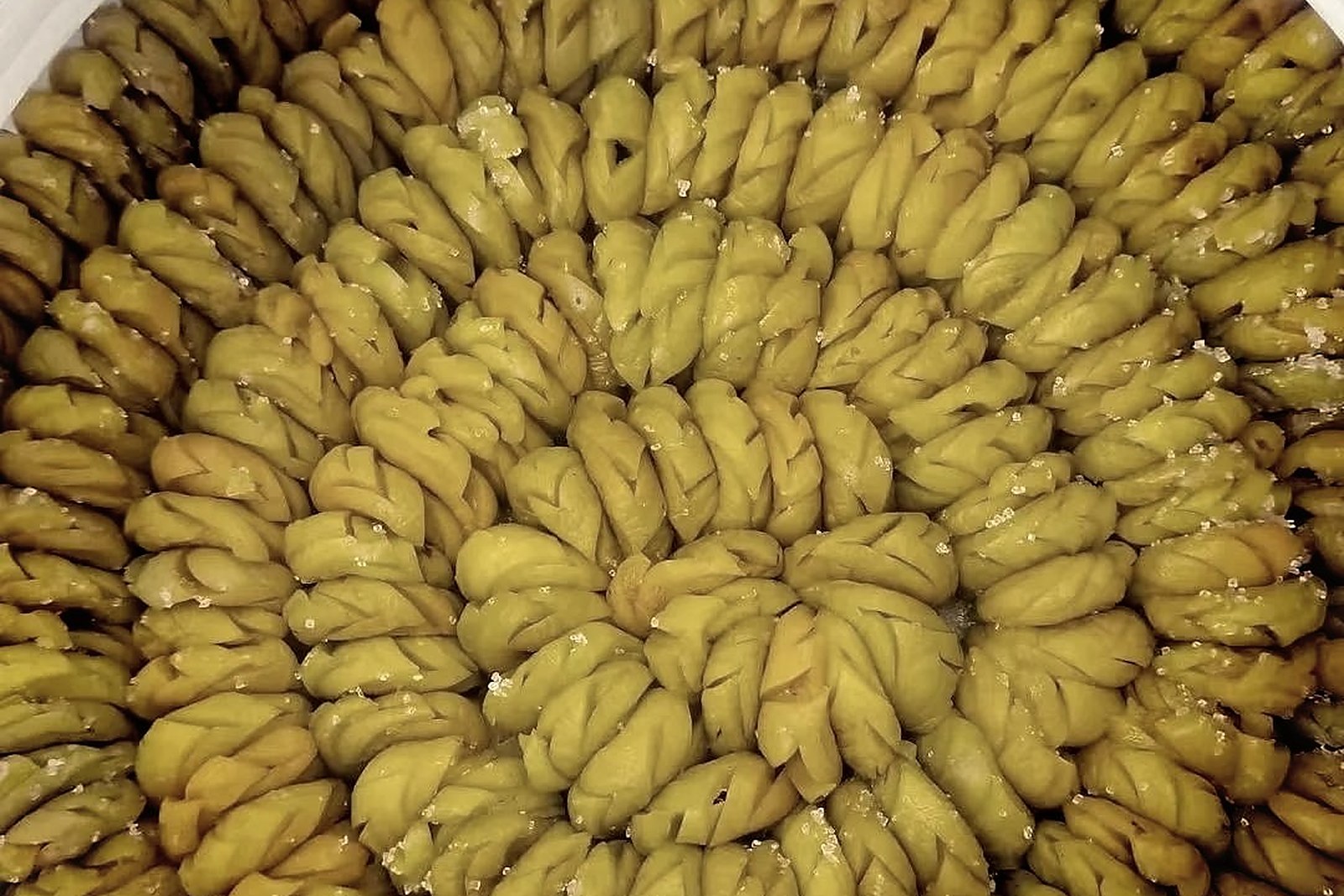
Locals treat it as tea food. Open the jar at tea – the sweet-tart plum cuts the 普洱茶 Pǔ’ěr chá bitterness – and keep a few for the 扣肉 kòuròu steamed-pork plate when the family eats out. At a Bai wedding the jar is still part of the bride’s presentation, and the 蜜饯 mìjiàn tray – carved plums among the candied fruits – is the sweet end of the banquet. Jars are sold at the old town’s north-gate market and the 特产店 tèchǎn diàn souvenir shops along 复兴路 Fùxīng Lù; the good ones keep their shape in the syrup rather than collapsing into jam, which is the honest test of the carving. Check the price and the shape before buying a gift jar.
Where to find it: jars at the north-gate market in 大理古城 Dàlǐ Gǔchéng and 特产店 tèchǎn diàn shops along 复兴路 Fùxīng Lù; the 雕梅扣肉 Diāoméi Kòuròu plate is on Bai restaurant menus. All checked October 2026.
Words and Names
雕梅 Diāoméi carved preserved plums · 青梅 Qīngméi green plums · 白族 Báizú the Bai people · 蜜饯 Mìjiàn candied fruit · 雕梅扣肉 Diāoméi Kòuròu steamed pork with carved plums · 洱源 Ěryuán the plum country north of Dali · 刀工 Dāogōng knife work · 梅花 Méihuā plum blossom
What the Locals Know
The local knowledge about the plum is about the shape in the syrup, and it is the same check a Bai regular makes before a jar leaves the shelf. The good ones keep their form in the syrup rather than collapsing into jam, which is the honest test of the carving, because the form is the value and the form is knife work – the blossom is not added, it is revealed by the spiral cut and the press. The second check is the use: the plum is tea food, opened at the table to cut the bitterness of 普洱茶 Pǔ’ěr chá, with a few kept back for the 雕梅扣肉 Diāoméi Kòuròu plate, not a souvenir eaten from the bag. The third is the hand, which the craft still reads as a bride’s proof – the knife work taught to girls young – so the jar whose plums hold their petals in the syrup is the one worth carrying home.
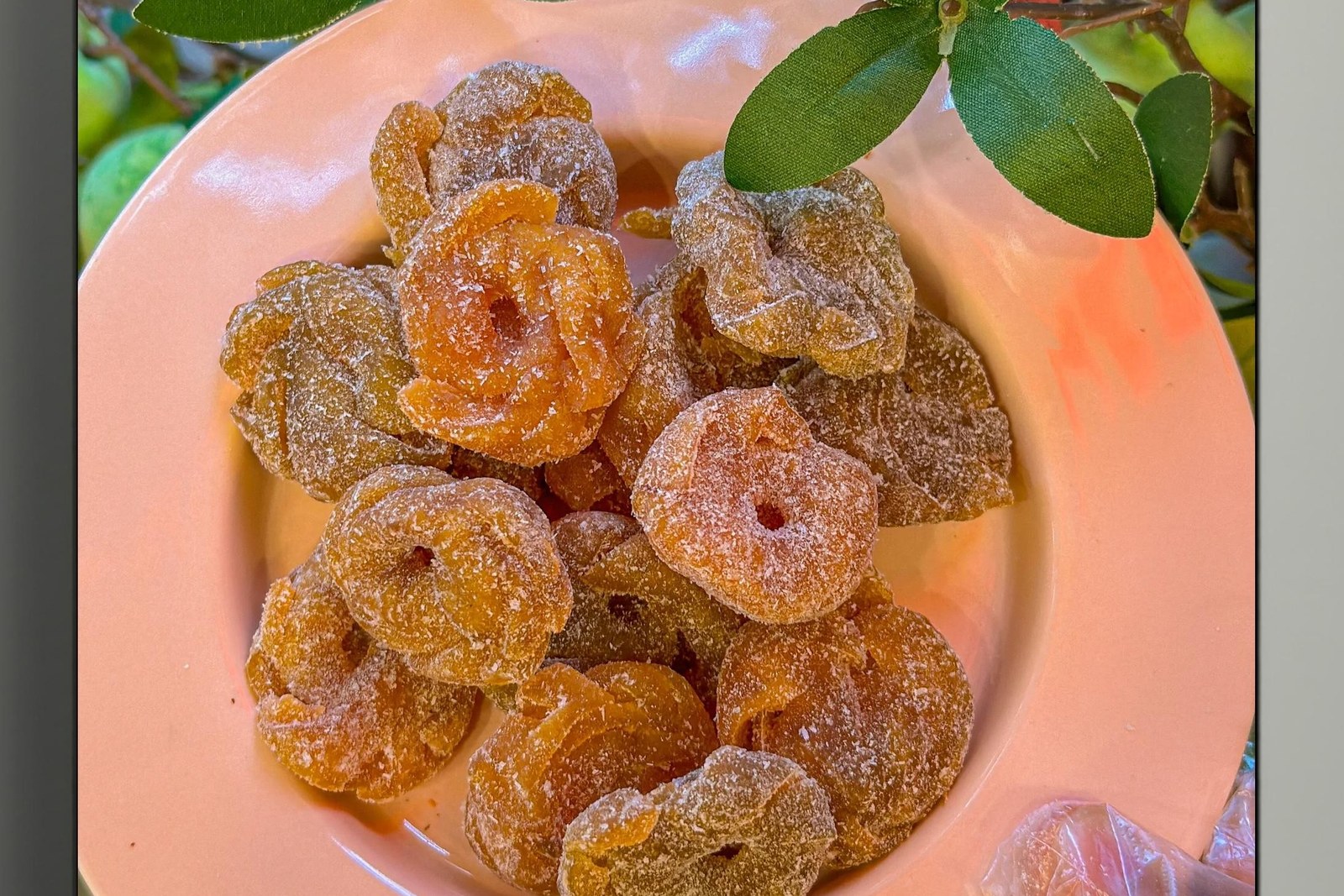
flowcloud would say that the diao mei is a plum turned into a plum blossom with a knife – carved, pressed, kept in honey – and that the honest move is to open the jar at tea, because the craft is the flavour and the flower is the craft. All checked October 2026.
Where to find it: jars at the north-gate market in 大理古城 Dàlǐ Gǔchéng and 特产店 tèchǎn diàn souvenir shops along 复兴路 Fùxīng Lù, commonly about 20-40 yuan a jar; the 雕梅扣肉 Diāoméi Kòuròu plate is on Bai restaurant menus, and the honest gift jar is the one whose plums keep their shape in the syrup (checked October 2026, subject to change).