
洱海鲫鱼美,木瓜酸汤鲜。Érhǎi jìyú měi, mùguā suāntāng xiān – Erhai carp is fine; the papaya sour soup is fresh.
酸辣鱼 Suānlà Yú sour-spicy fish is the Bai home dish the lake gave the table – a whole carp stewed sour-hot with 木瓜 mùguā sour papaya, 干辣椒 gān lājiāo dried chili and 豆腐 dòufu tofu, finished with coriander and 薄荷 bòhé mint. The classic fish was the 弓鱼 gōngyú Erhai carp of the old records, now protected and rare, so the pot is a 鲫鱼 jìyú crucian or a lake 鲤鱼 lǐyú. It is not a banquet dish: the banquet version is 砂锅鱼 Shāguō Yú clay-pot fish, clear and gentle; the home version is red, loud and everyday. It sits on the Bai table the way a stew sits on any table: the middle dish everyone spoons over rice, not the centrepiece. A restaurant portion commonly runs about 40-80 yuan depending on the fish and the house, and the honest shape is that the sour comes from a fruit and the heat from a chili, never from a bottle.
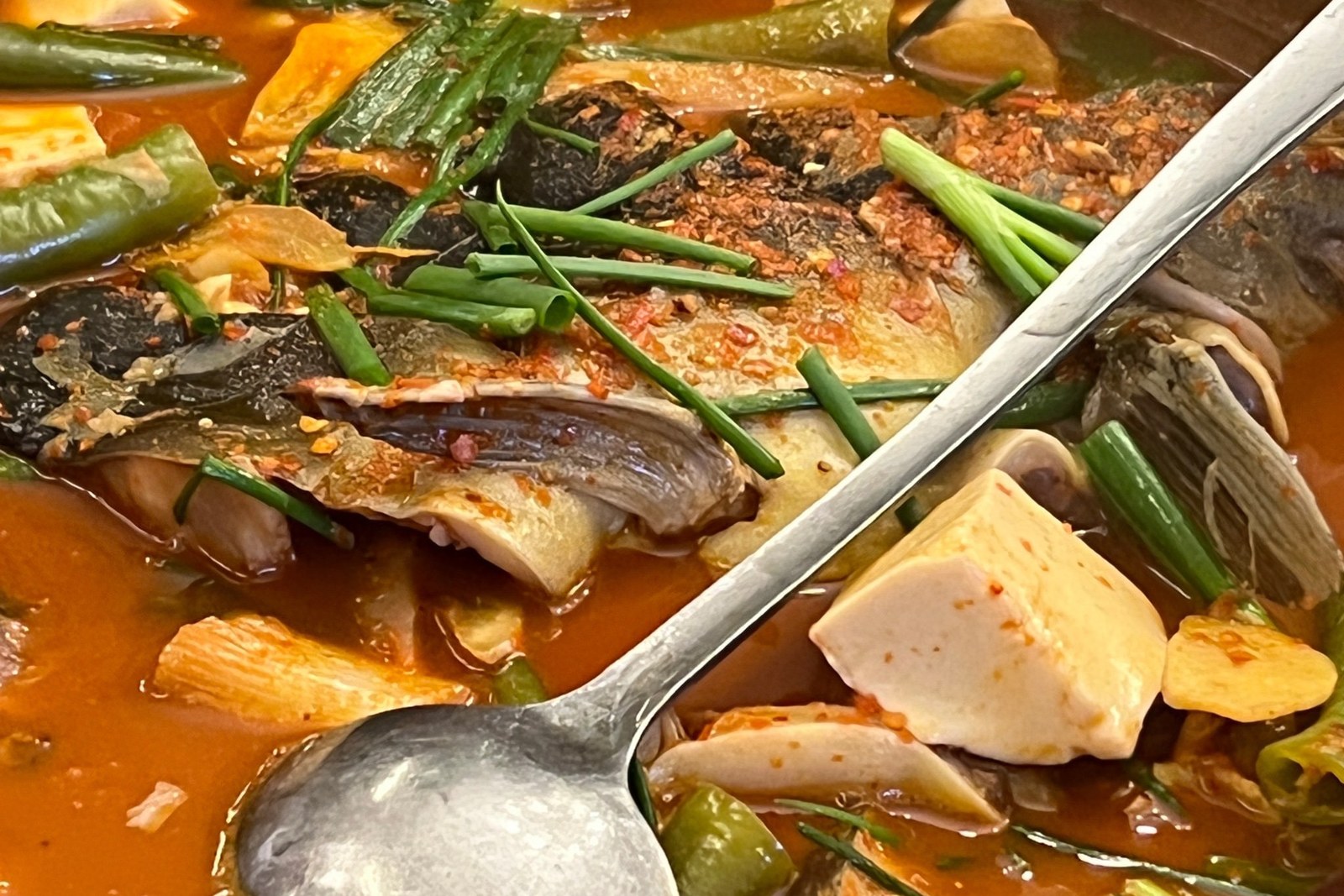
The mechanism is the papaya. In the Yunnan highlands the souring agent is a fruit, not vinegar: 酸木瓜 suān mùguā – a small fragrant papaya sold green in markets – is the acid base of this pot, and the chili is the local dried kind, either whole in the broth or ground as 糊辣椒面 hú lājiāo miàn toasted powder on top. The fish is fried first to set the shape, then stewed with the papaya, tofu and chili until the broth goes sour-hot and the tofu takes the colour. The comparison with any 水煮鱼 shuǐzhǔ yú is exact: this is a fruit-sour stew, not an oil-heavy numbing pot, and the mint is not a garnish so much as the Bai signature.
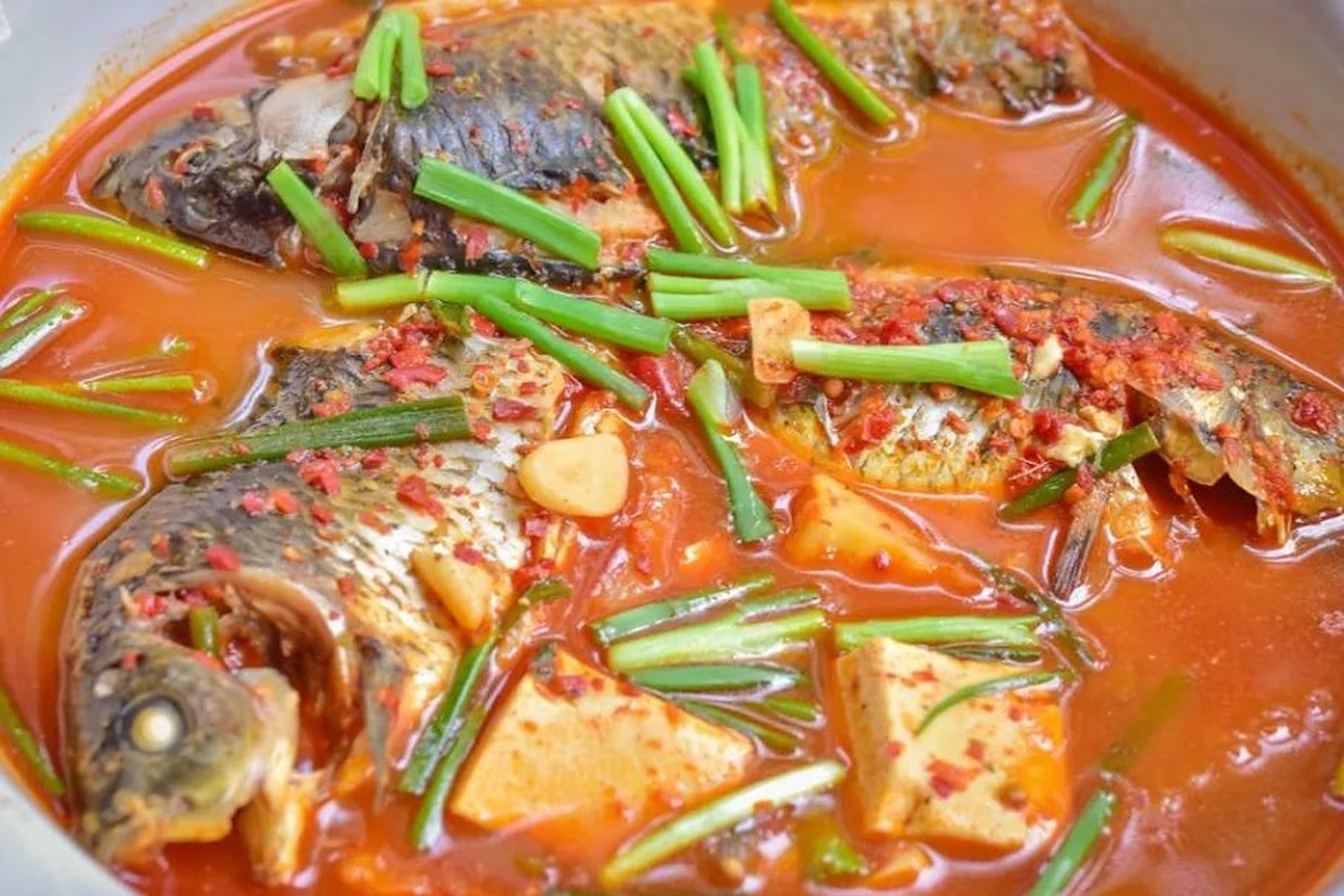
Locals order the small pot first and ask for 微辣 wēilà mild-hot, because the kitchen cooks to local tongues. The dish is a constant on Bai menus across 喜洲 Xǐzhōu and the 环海西路 Huánhǎi Xī Lù west lake road, where the farm-house restaurants (农家乐 nóngjiālè) serve the home version, and the 酸木瓜 suān mùguā to cook it with is sold at the old town’s north-gate market for a few yuan a jin in season – check the current price, since the fruit moves with the harvest. The pot wants plain rice, and the honest move is to eat it at a 农家乐 nóngjiālè table rather than a city menu, because the sour is the house’s own fruit and the chili is the house’s own patience. Ask whether the pot is 小份 xiǎofèn or 大份 dàfèn – the small feeds two with rice, the large is a table dish – and expect the broth to be the part you drink, not just pour.
Where to find it: Bai restaurants along 复兴路 Fùxīng Lù and 人民路 Rénmín Lù in the old town, farm-house kitchens on the west lake road and in 喜洲 Xǐzhōu; the 酸木瓜 suān mùguā itself is at the north-gate morning market. All checked October 2026.
Words and Names
酸辣鱼 Suānlà Yú sour-spicy fish · 白族 Báizú the Bai people · 木瓜 Mùguā the sour papaya used as the acid base · 鲫鱼 Jìyú crucian carp · 糊辣椒面 Hú Lājiāo Miàn toasted chili powder · 砂锅鱼 Shāguō Yú clay-pot fish, the banquet version · 薄荷 Bòhé mint · 农家乐 Nóngjiālè farm-house restaurants
What the Locals Know
The local knowledge about the fish is about the sour and the heat, and it is the same check a Dali regular makes at any Bai table. The sour should taste of fruit rather than a bottle – 酸木瓜 suān mùguā gives a clean, fragrant acid that vinegar cannot imitate – and a pot that hits sharp and flat has taken a shortcut. The second check is the order of the meal: ask for 微辣 wēilà mild-hot, because the kitchen cooks to local tongues, and take the 小份 xiǎofèn first, since the small feeds two with rice and the 大份 dàfèn is a table dish. The third is the broth, which is the part you drink rather than only pour over rice, and the honest move is to eat the pot at a 农家乐 nóngjiālè farm-house table rather than a city menu, because the sour is the house’s own fruit and the chili is the house’s own patience.
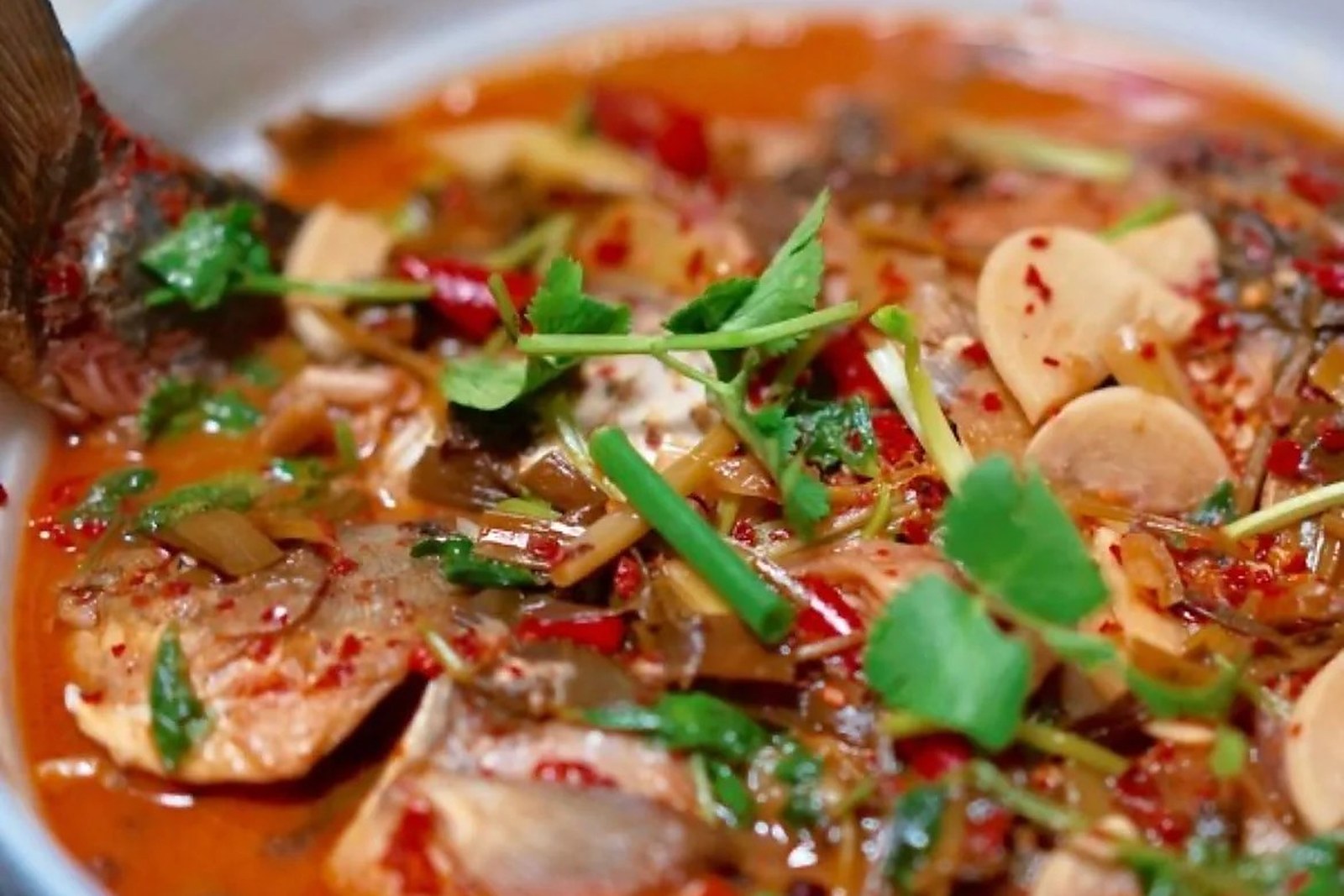
flowcloud would say that the sour comes from papaya and the heat from chili, never from a bottle – a whole lake carp stewed with tofu, fruit and fire – and that the honest move is to order the small pot at a farm-house table and ask for mild, because the Bai cook this at home and the restaurant only borrows the recipe. All checked October 2026.
Where to find it: the sour-spicy fish is a constant on Bai menus across the old town and the lake – Bai restaurants along 复兴路 Fùxīng Lù and 人民路 Rénmín Lù, farm-house kitchens (农家乐 nóngjiālè) on the 环海西路 Huánhǎi Xī Lù west lake road and in 喜洲 Xǐzhōu – about 40-80 yuan a pot depending on the fish and the house, the small pot feeding two with rice; the 酸木瓜 suān mùguā itself is at the north-gate morning market for a few yuan a jin in season, and the honest table is the farm-house one, not the city menu (checked October 2026, subject to change).