
大茂酸菜 dà mào suān cài is pickled mustard, and in this county the phrase 提到酸菜,首推澄迈 – if you are talking about pickled mustard, start with Chengmai – is not a boast so much as a direction. The village behind it is 大茂村 Dà mào cūn, inside 夏富村 Xià fù cūn village committee, in 金江镇 Jīn jiāng zhèn, the county town of 澄迈县 Chéng mài xiàn, on the bank of the 南渡江 Nán dù jiāng, the river that cuts the north of 海南岛 Hǎi nán dǎo in two. The trade has been at it for three hundred years, and it is also sold under three other names – 六帮酸菜 liù bāng suān cài, 儋尾酸菜 dān wěi suān cài and 金江酸菜 jīn jiāng suān cài – so a buyer may meet the same pickle four times without knowing it.
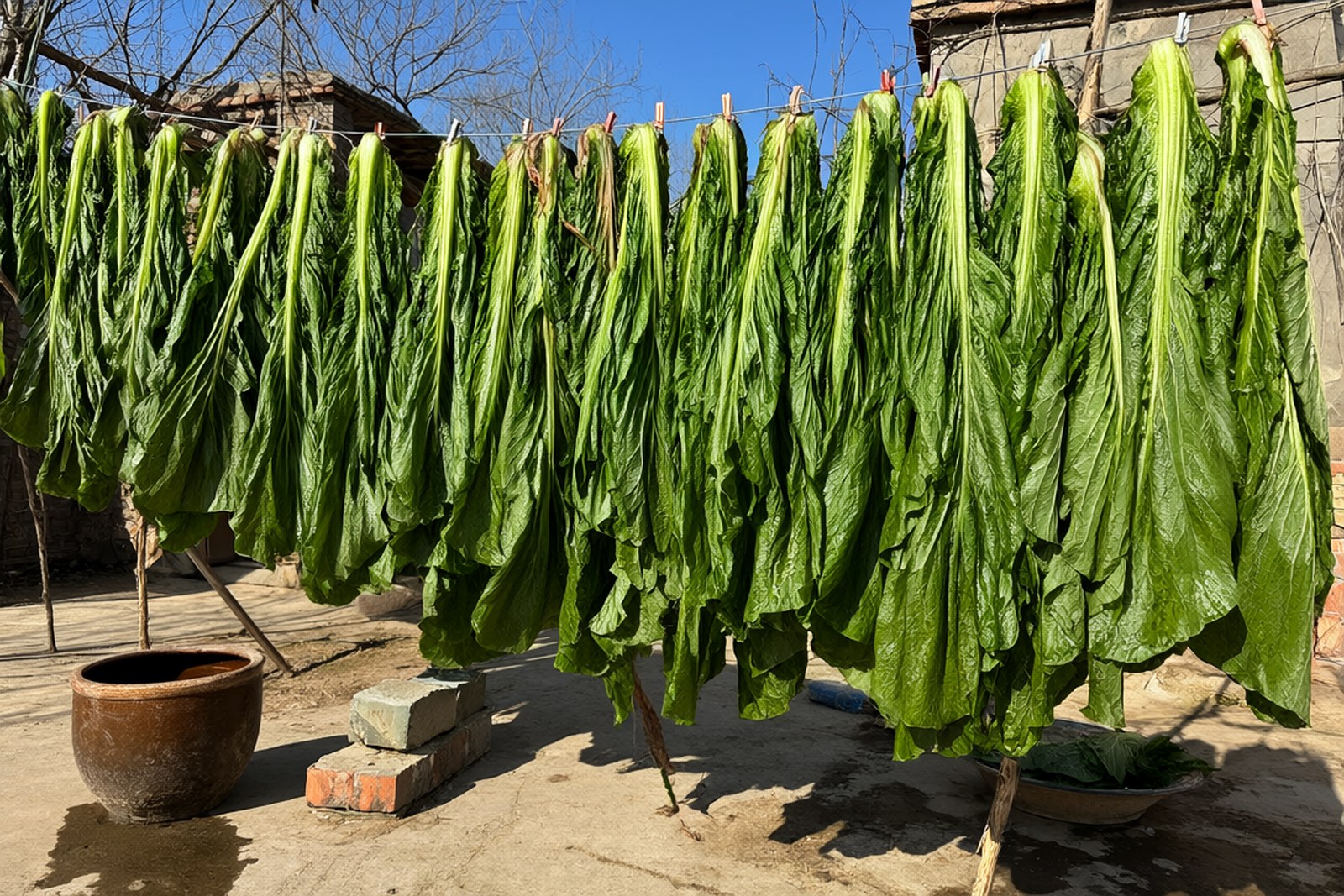
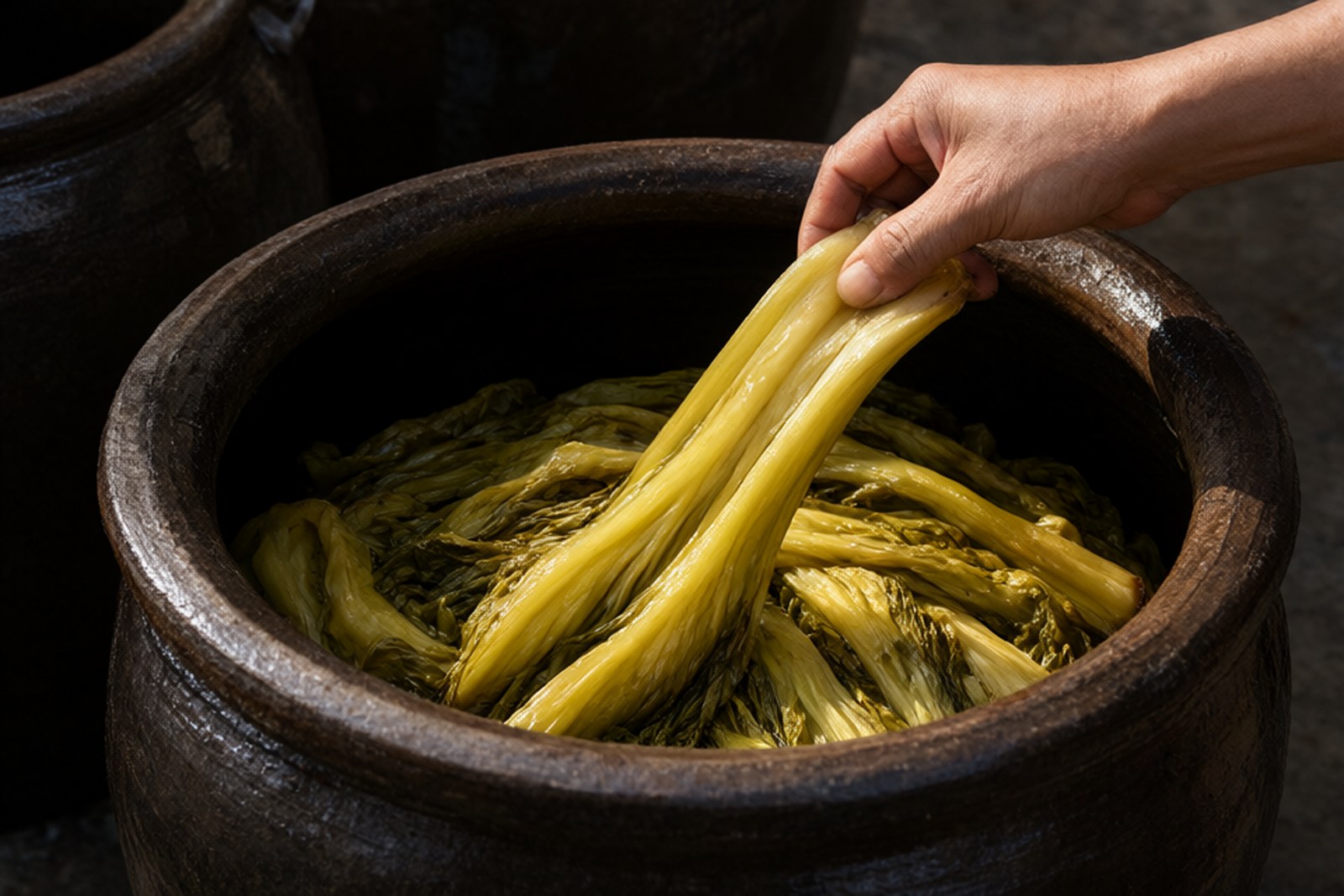
The raw material is a single plant. 六帮菜 liù bāng cài, six-strand mustard, also called 大叶芥菜 dà yè jiè cài, big-leaf mustard, is the only thing the village pickles: a mustard with fat stems and heavy leaves that yields a pickle that is 酸香鲜嫩,脆爽无渣, sour and fragrant, tender and crisp with no fibre to it. The method is the method of a village with no refrigeration and a river to draw from. The mustard is cut and laid out on the grass in fine weather until the stems lose their surface water and stay supple but have not wilted; then it is salted, pressed down, packed into a clay jar, covered with more salt and well water until the vegetable is under the surface, sealed, and the water changed every other day. Within a few days the whole lot turns 金黄 jīn huáng, gold, and smells of nothing but itself. Some households then do a second pass, and it is the part the village is proudest of: the pickled stems are cut into three or four centimetre lengths, worked by hand with a little more salt, packed into a small earthen jar, the mouth covered with leaves, and the jar stood upside down on a bed of river sand in the shade behind the house. Done that way the pickle both improves and keeps for months, and a jar opened after that will scent the air a hundred metres off.
It is a village industry rather than a factory one. More than 180 households in 大茂村 still pickle, some of them in workshops no bigger than a kitchen, and the village runs it through 澄迈茂富果菜种植专业合作社 under the county’s 一村一品 yī cūn yī pǐn, one-village-one-product, poverty-alleviation programme, which coordinates the seed, the technical advice and the selling. The arrangement became visible in 2020, when the county government published an appeal on its own website asking the public to buy the village’s stock after the epidemic had closed the usual channels and left the jars filling up in the stores – an unusually plain admission that the product is a livelihood before it is a delicacy.
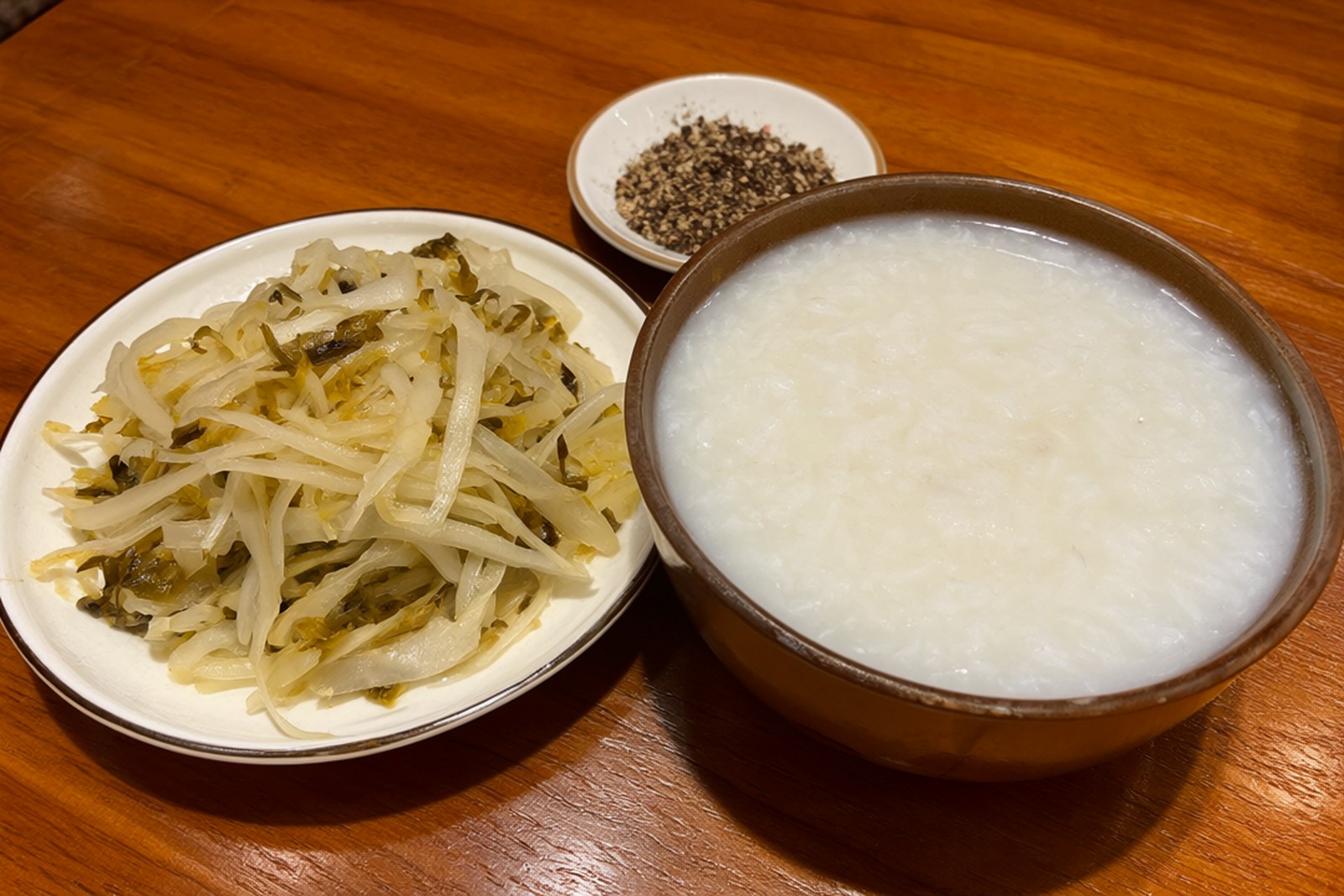
It is eaten in three ways and all three are ordinary. 凉拌酸菜 liáng bàn suān cài, dressed cold: a stem washed, cut into fine strips, tossed with chopped garlic, white pepper and peanut oil and finished with coriander and spring onion, which is the thing that turns a bowl of plain rice congee into a meal and is the commonest way it appears on a table here. 酸菜炒粉丝 suān cài chǎo fěn sī: the pickle fried hard in a hot pan, glass noodles added and a little water, so that the noodles take up the sourness that they have none of their own. And above all 酸菜猪骨火锅 suān cài zhū gǔ huǒ guō, a hotpot of pork bones simmered with the stems, sometimes with intestines, kidney or tripe in the same pot, which is served in 澄迈 all year and most obviously in winter – a table, a gas ring in the middle, and a pickle doing the work that stock cubes do elsewhere.
Words and Names
酸菜 suān cài is pickled or sour vegetable, and 大茂酸菜 is the village name in front of it. 六帮酸菜 liù bāng suān cài takes its name from 六帮菜, the six-strand mustard the village pickles; 儋尾酸菜 and 金江酸菜 are the other two names the same product travels under, one from an old local place name and one from the county town. 腌渍 yān zì is the pickling, 坛子 tán zi the earthen jar, 凉拌 liáng bàn the cold dressed treatment, and 酸菜猪骨火锅 the pork-bone hotpot that is the county’s winter signature.
What the Locals Know
Judge a pickle by colour and smell before taste. It should be gold to yellow-gold and translucent at the stem, never grey, brown or slimy; the smell should be clean and sour with nothing musty or ammoniac behind it; and a stem should still snap rather than bend, because crispness is the whole point of 六帮菜. It is salty in the jar, so taste it before you cook, and rinse or soak it briefly if you are dressing it cold – the village’s own households usually do not, because the salt is part of how it is meant to be eaten with congee. The jars keep for months in a cool shaded place, and a household here will typically have one standing on its head behind the kitchen door; once opened, keep the pickle covered in its own liquid and use a dry chopstick, because a wet hand or a dirty spoon will turn the whole jar in a week.
flowcloud would say that the cheapest food in the county is the one with the longest memory: a mustard nobody sells fresh, three hundred years of salt and river water, a jar stood upside down on a bed of sand because there was never any ice – and a government reduced to asking the public to please buy some, which is a more honest kind of fame than a plaque.
Where to find it: the workshops and household cellars of 大茂村 in 夏富村, 金江镇, in 澄迈县, and the county town’s markets, where it is sold by the jar and by the stem alongside the county’s salted vegetables; 金江镇 is about an hour from 海口 by the 西线高速 Xī xiàn gāo sù, and the village sits on the 南渡江 a short drive from the town centre. It is a cheap thing, sold in earthen jars or plastic pails, and the second-processed jars are the ones worth carrying home because the extra salt and the sand-store method are what let them travel; the pickle also appears on the menu of most 澄迈 restaurants as the cold dish that arrives before anything else.