
Dashunzai Sugar Huoshao: Ming-Era Pastry, Sesame-Paste Swirls and Canal Travel Bread of Tongzhou District, Beijing
大顺斋中糖火烧,芝麻红糖四时香。Dàshùnzhāi zhōng táng huǒshao, zhīma hóngtáng sìshí xiāng – In Dashunzai the sugar huoshao bakes; sesame and brown sugar fragrant through all four seasons.
大顺斋糖火烧 Dàshùnzhāi táng huǒshao Dashunzai sugar huoshao is the soft round pastry Beijing’s east has boxed for gifts since the grain barges still worked the canal, and the address is a family: a Nanjing Hui Muslim called 刘大顺 Liú Dàshùn Liu Dashun – 大顺 was the milk name – who came north up the waterway with his household in the late Ming, settled in the canal port of 通州区 Tōngzhōu Qū Tongzhou District, Beijing, and hawked his own baking street by street until a shop front in the Hui quarter could be bought and the sign hung out (the records date the founding to 1637, in the last Ming years of the Chongzhen court; the family story says the recipe travelled with them from the south, worth confirming the details of the first oven). The pastry is 糖火烧 táng huǒshao sugar huoshao: a wheaten round laminated through with 芝麻酱 zhīmajiàng sesame paste and 红糖 hóngtáng brown sugar, perfumed with 桂花 guìhuā osmanthus and small-mill sesame oil, folded, coiled, flattened and baked – a halal pastry, sweetened without lard, whose recipe was pitched deliberately between northern and southern tastes and whose texture runs 绵软 miánruǎn soft-springy rather than flaky. The craft most visitors under-rate is its keeping: dense with oil and sugar, the cake resists summer mould and winter dry-out for weeks, which on a canal where travel was measured in months made it provision, not snack – the boatman’s ration that became the town’s gift box. The naming is the tell: the shop is named for a baby’s milk name, and the pastry made the nickname a brand.
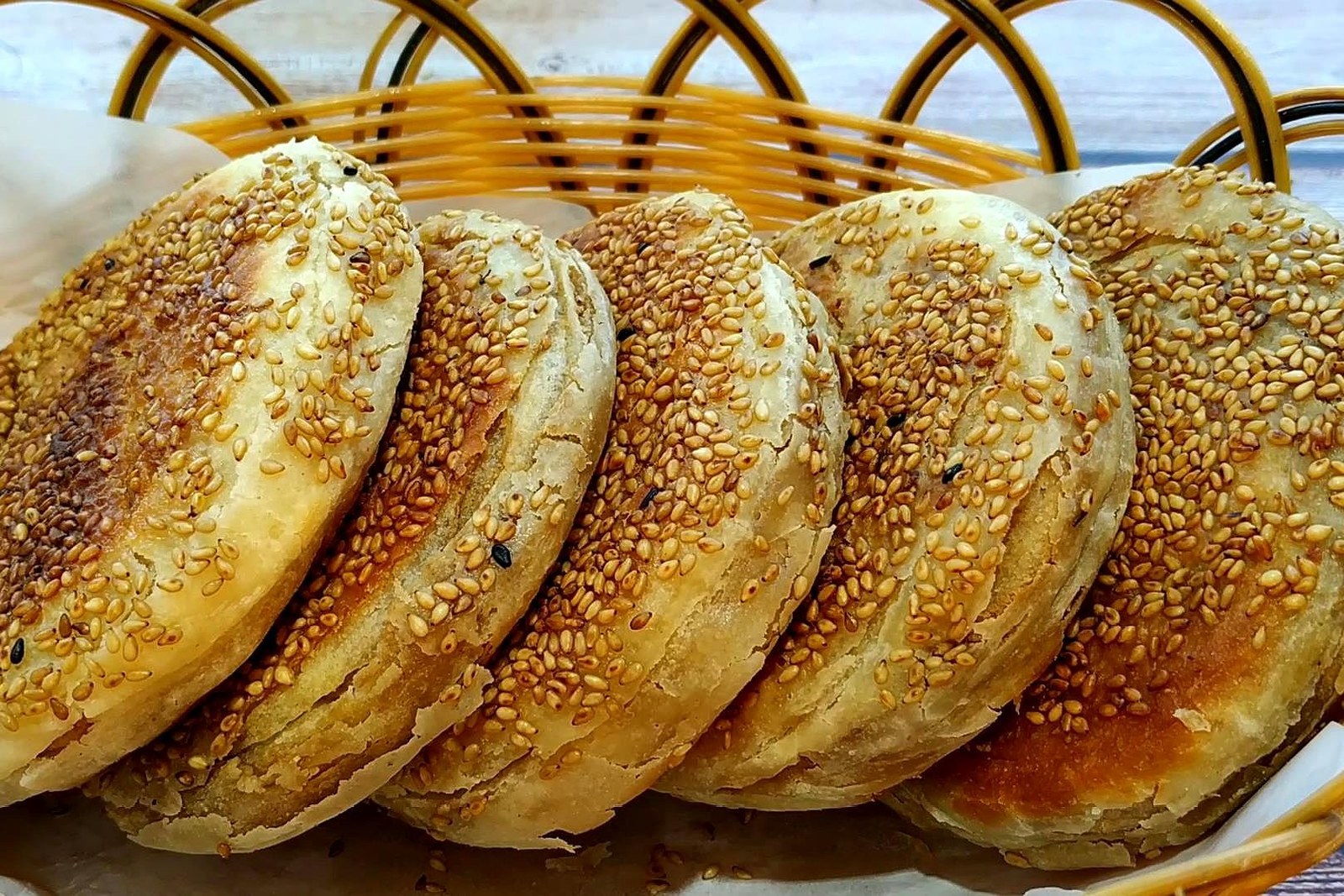
The eating is a rest-and-tea grammar written for a pastry that improves by waiting, and it leans 香甜 xiāngtián fragrant-sweet plus 软 ruǎn soft to match the tea table. The anchor is the rested round itself – spiral-cut, mahogany-flecked, eating tender with a long sesame-and-brown-sugar finish – and the counter’s own instruction outranks the visitor’s instinct: unlike most Beijing snacks, 糖火烧 is not eaten hot from the oven. Fresh-baked it runs hard; the trade rests it a day or two in wooden boxes or ceramic jars – the old practice is called 圈 juān – letting the sugar draw moisture back and turn the crumb soft and deeper-sweet (worth confirming the details – how many days each shop rests its batch). Around the round the shop runs its halal bakery book: the celebration trays of the old 榜联, the sesame and osmanthus relatives, the festival boxes – brick-carved shop couplets advertising the wares still survive in the district museum, a menu carved in masonry. The drink is the pairing the regulars insist on: strong tea against the sweetness, the pastry torn rather than bitten, the box opened at home rather than on the counter – canal provisions eaten at canal speed, slowly.
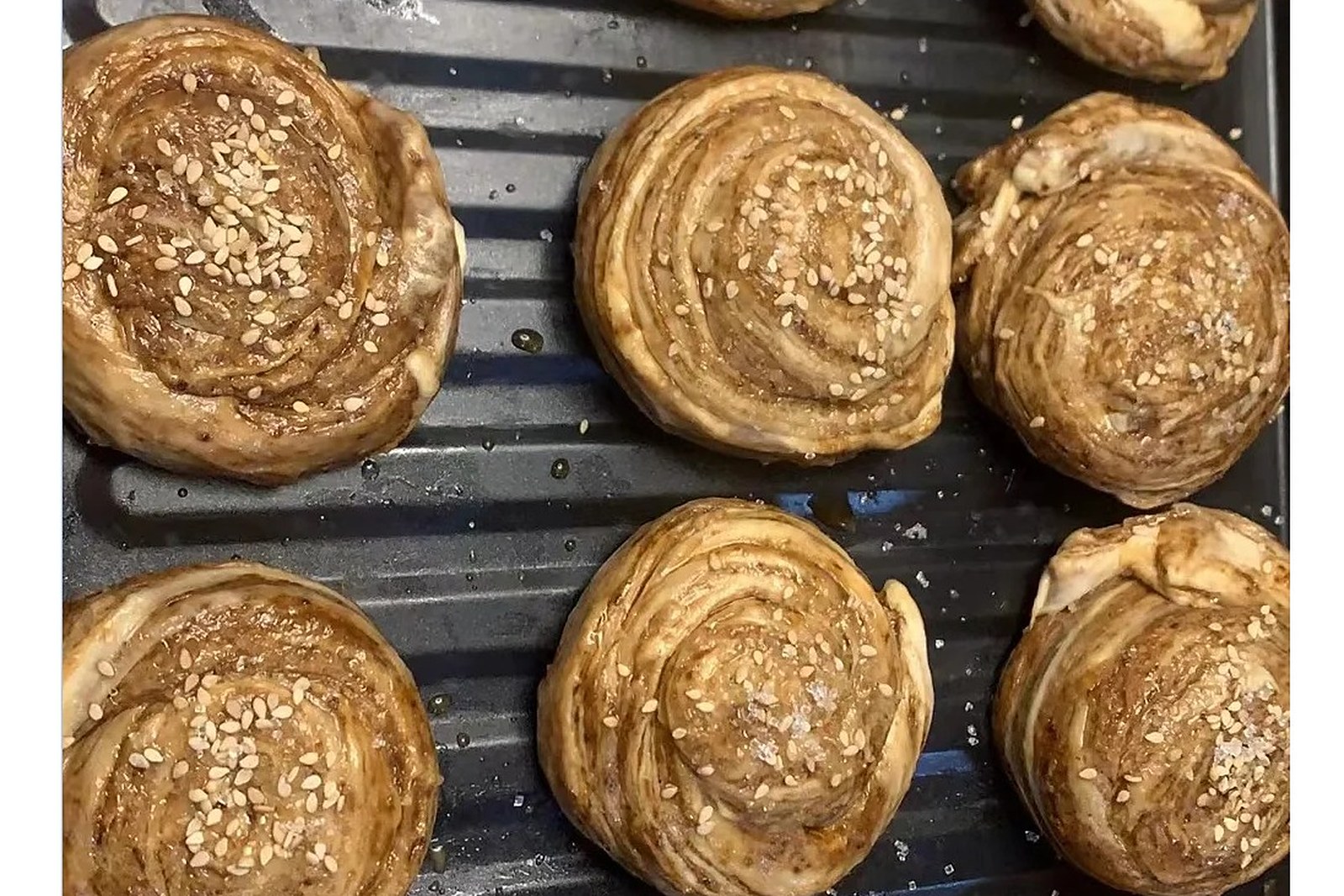
The honest grade is geography plus the rest-day clock. In 通州区 Tōngzhōu Qū Tongzhou District, Beijing the honest buying is at the brand’s own counters and shops in the old town and the district’s markets, where the boxes carry dates and the batches turn over fast (worth confirming the details – which counters bake their own and which resell). The test costs nothing: a rested huoshao springs back when pressed and peels into soft layers; a stale one reads dry at the edge and hard in the palm, and no gift ribbon hides it. The craft is officially pedigreed – the making technique holds a Beijing municipal intangible-heritage listing, the pastry has taken national gold-tourism-snack honours, and the trade counts its inheritance into the seventeenth generation (worth confirming the details of each listing) – but the eater’s test is still the palm, not the plaque. A per-person bill runs on the box and the bag, so call it worth confirming the details rather than a fixed number, and buy a day behind the bake: yesterday’s round is the honest one, today’s is still thinking.
The wry truth is that 大顺斋糖火烧 Dàshùnzhāi táng huǒshao is over-rated as a souvenir and under-rated as travel engineering: gift-box marketing files it under “old Beijing pastry”, while the actual thing – a moisture-holding, mould-defying, calorie-dense round built to survive weeks on a grain barge, invented by a migrant family who baked to suit a climate their bodies resented – is provision design the souvenir aisle never explains. The legend regulars recite has the right shape: a Beijing pilgrim carried the rounds on the sea voyage to Mecca in the 1920s and they arrived soft and sweet two months later, which is less a miracle than a specification. The self-deprecating footnote, and the district braid: a food writer will explain “terroir” to a counter hand whose whole answer is “sesame paste, brown sugar, osmanthus”, photograph the spiral at heroic shutter, and then call the crumb “commendably artisanal” as if patience were a recipe – which is the honest grade: 大顺斋糖火烧 Dàshùnzhāi táng huǒshao is a four-hundred-year provision the writer will romanticise more than he rests, and the auntie at the next counter has already bought her box, gone home and put the kettle on before the shutter closes. The same 通州区 Tōngzhōu Qū Tongzhou District, Beijing thread runs on: the canal catfish of 小楼烧鲇鱼 Xiǎolóu shāo niányú Xiaolou braised catfish fries golden on the old South Street, the red jars of 仙源腐乳 Xiānyuán fǔrǔ Xianyuan fermented beancurd line the shop shelves, the cherry rows of 西集大樱桃 Xíjí dà yīngtáo Xiji big cherries fill the May picking rows, and the trellises of 张家湾葡萄 Zhāngjiāwān pútáo Zhangjiawan grapes weigh heavy into autumn – one district, four more tables.
Words and Names
- 大顺斋 Dàshùnzhāi / Dashunzai · the Ming-founded halal pastry shop named for a milk name - 糖火烧 táng huǒshao / sugar huoshao · the sesame-paste and brown-sugar round of the canal port - 芝麻酱 zhīmajiàng / sesame paste · the lamination that builds the soft spiral - 红糖 hóngtáng / brown sugar · the filling that keeps the crumb moist and dark - 桂花 guìhuā / osmanthus · the southern perfume that marks the canal recipe - 圈 juān / resting · the box-and-jar wait that finishes the pastry - 通州三宝 Tōngzhōu sān bǎo / the Three Treasures of Tongzhou · the pastry, the catfish and the beancurd in one town’s larder - 通州区 Tōngzhōu Qū / Tongzhou District · the Beijing district holding the old shop
What the Locals Know
- Do not eat it fresh from the oven: the honest huoshao rests a day or two – the trade calls it 圈 juān – and only then turns soft and sweet (worth confirming the details shop by shop).
- Press the test: a good round springs back and peels into layers; a stale one reads dry at the edge – the palm grades faster than the box.
- Pair it with strong tea: the sweetness is the point and the tea is the counterweight – eaten dry it eats heavy.
- Buy where the turnover is fast: a counter that empties boxes daily never sells last season’s batch (worth confirming which counters bake their own).
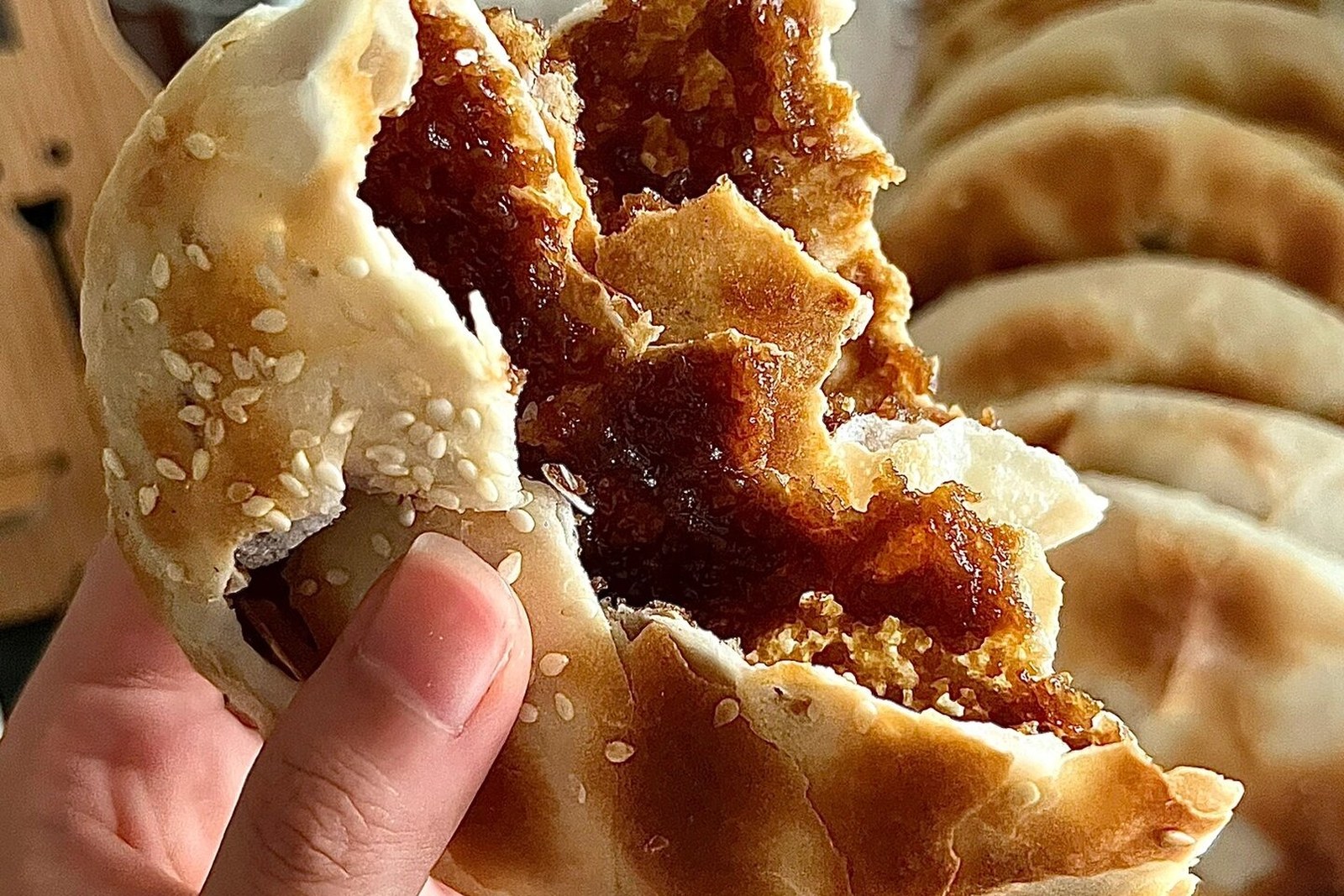
flowcloud would say that the 大顺斋糖火烧 Dàshùnzhāi táng huǒshao is the Ming-era pastry, sesame-paste swirls and canal travel bread of Tongzhou District, Beijing – a 芝麻酱 zhīmajiàng and 红糖 hóngtáng round baked by a Nanjing migrant family and finished by 圈 juān, the box-and-jar rest that turns it 绵软 miánruǎn – and that the honest move is to buy a day behind the bake, press the spring test, and pour strong tea, because the oven starts the pastry and the waiting finishes it. All checked October 2026.
Where to find it: Tongzhou District Tōngzhōu Qū, Beijing – 大顺斋 Dàshùnzhāi brand counters and shops around the old town and the district’s markets, where boxes of 糖火烧 táng huǒshao, sesame pastries and festival trays are sold year-round (worth confirming the details – which counters bake their own and which rest their batches the full two days); a per-person bill runs on the box and the bag, so call it worth confirming the details rather than a fixed number. Dashunzai sugar huoshao is the Ming-era pastry, sesame-paste swirls and canal travel bread of Tongzhou District, Beijing, rest before bite.