
Daxing Braised Pork: The Old Kitchens, Soy-Braised Shanks and the County-Seat Supper of Daxing District, Beijing
酱肘子浓香满座,老菜馆里见真章。Jiàng zhǒuzi nóng xiāng mǎn zuò, lǎo càiguàn lǐ jiàn zhēnzhāng – The soy-braised shank fills the room with a deep fragrance; in the old kitchens the real craft shows itself.
大兴烧肉 Dàxīng shāoròu Daxing braised pork is the plate the county seat has served for generations, and the address is a town: 黄村镇 Huángcūn Zhèn Huangcun town, the historic county seat of 大兴区 Dàxīng Qū Daxing District, Beijing, where the old market street still keeps its row of 老菜馆 lǎo càiguàn old-style kitchens (worth confirming which houses trace their recipes furthest back). The dish most visitors under-rate is not the pork but the pot it comes out of: 酱肘子 jiàng zhǒuzi soy-braised pig’s shank, the forearm cut split open and set to braise in a dark 老抽 lǎochōu aged-sauce base loaded with scallion, ginger, star anise and a handful of house 香料 xiāngliào spices, then left to stand overnight so the gelatin sets into a glossy, trembling skin. The naming is the tell: a district that named its own braising style after the town’s table answers to the road where the kitchen first hung its sign – a dish that took the county seat’s name because the county seat ate it every night. The craft sits on the district’s intangible-heritage rolls (worth confirming which year and level), but the eater’s test is still the lifted plate, not the plaque.
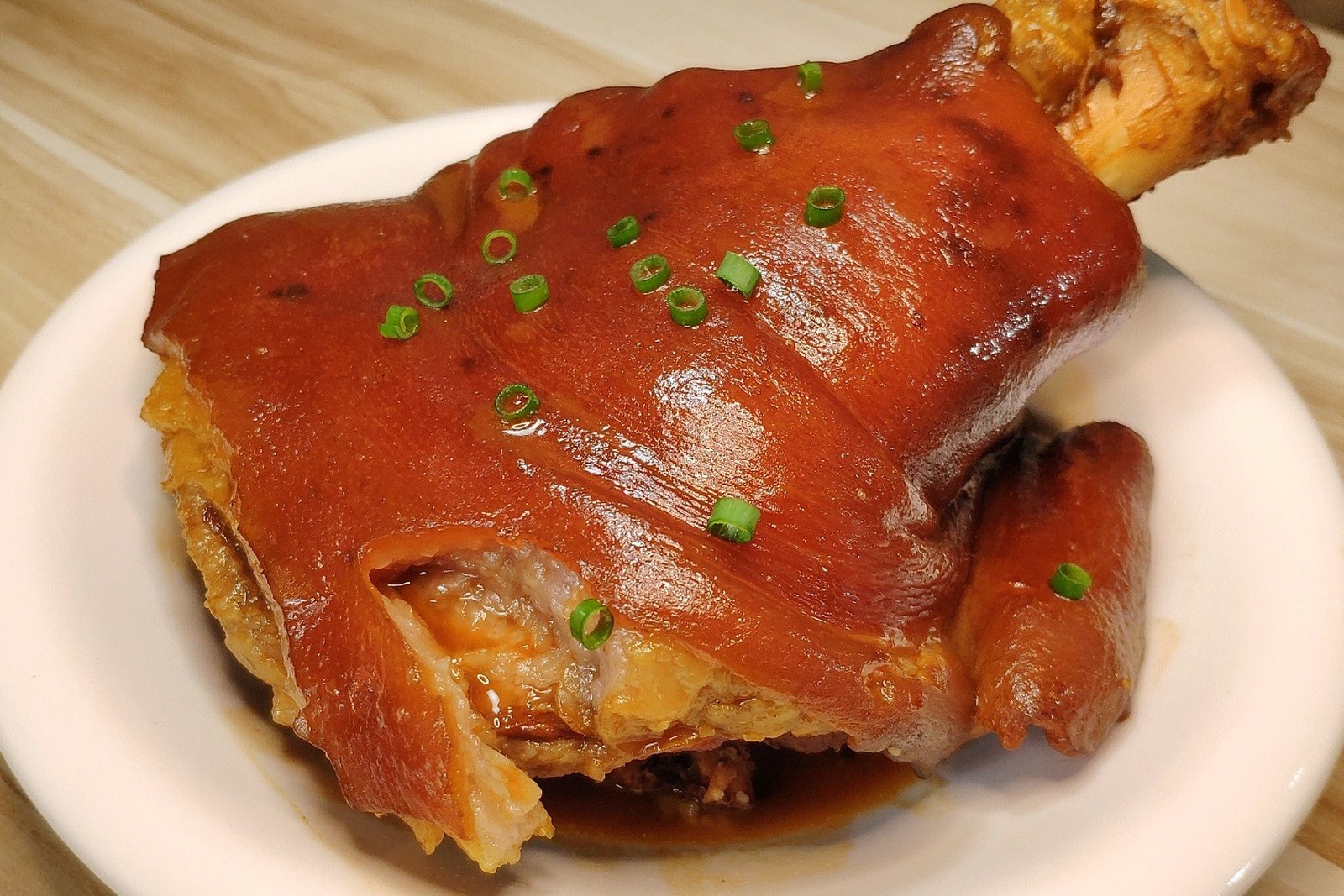
The eating is a slice-and-dip grammar written for meat graded by the way the skin holds, and it leans 酱香 jiàngxiāng soy-deep plus 软糯 ruǎnuò soft-melt to match the old-kitchen table. The anchor is the shank at the centre of the platter: sliced thick against the grain, the outer skin glistening with a lacquered glaze, the muscle underneath falling apart in clean layers, the fat rendered to a translucent amber that melts on the tongue before the salt catches up. Around the meat the table runs its supporting cast: 米饭 mǐfàn steamed rice to soak the sauce, a bowl of the 卤汁 lǔzhì braising liquor poured over the slices as a finishing pour, pickled 萝卜条 luóbotiáo radish strips to cut the richness, and between courses a cup of 大麦茶 dàmài chá barley tea or plain hot water to reset the palate (worth confirming the details – each house pours its own finish differently). The pot’s own virtues decide the order: the shank arrives last, because the whole table has been building toward the plate that justifies the evening, and a kitchen that serves it first has wasted the build-up.
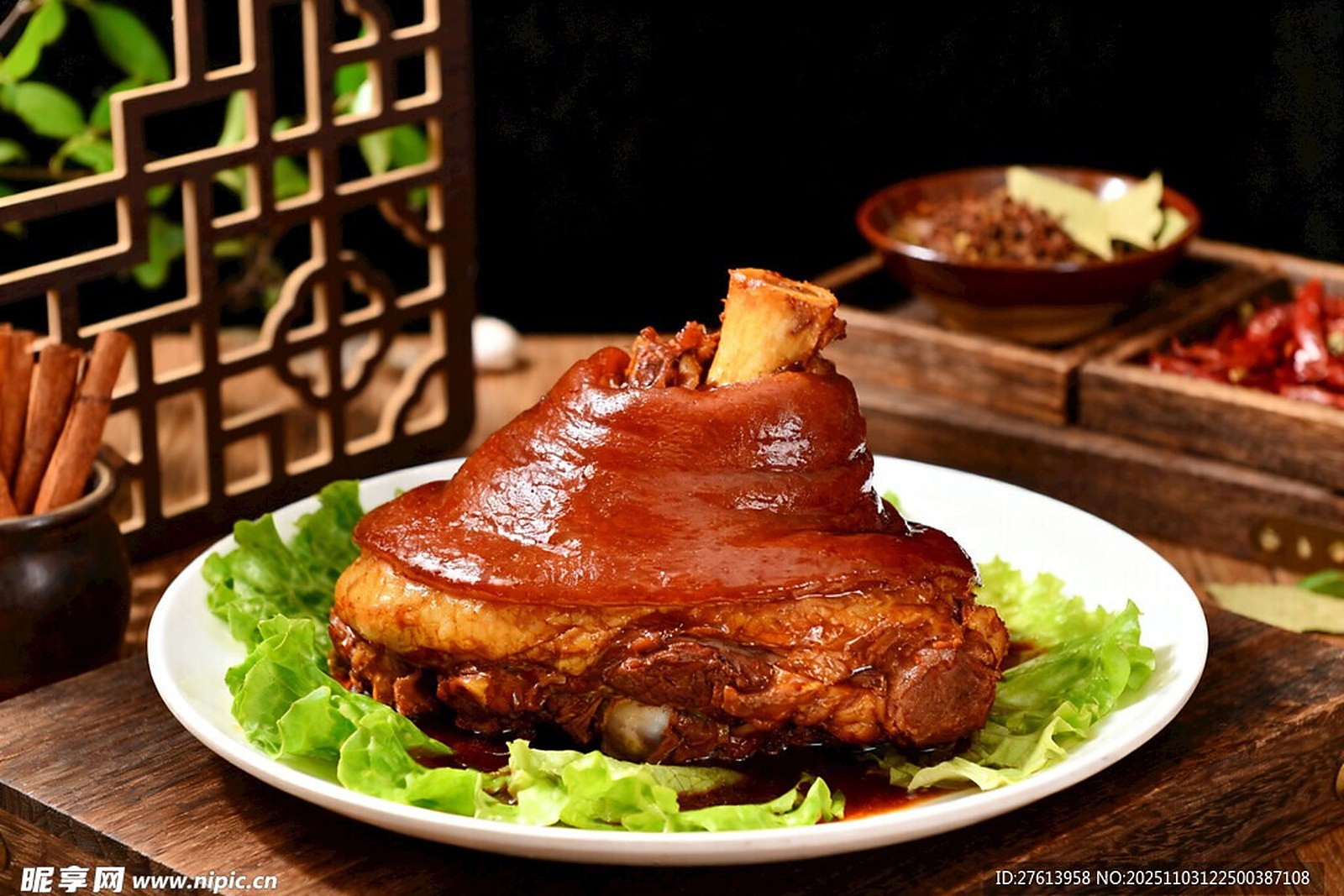
The honest grade is geography plus the overnight clock. In 大兴区 Dàxīng Qū Daxing District, Beijing the honest eating is at the old houses along Huangcun’s main street, where the shanks go into the pot in the afternoon and come out after a full night’s rest – the resting hour is the whole argument, because rushed 酱肘子 jiàng zhǒuzi slides off the bone and never sets its skin (worth confirming which houses still run the overnight cycle). The test costs nothing: press the slice with the chopstick and lift – a properly rested shank holds its shape, the gelatin quivers but does not break, and the sauce beads on the surface rather than pooling flat – then taste one piece plain, because a dark-sauce pot has nowhere to hide a tired cut. A per-person bill runs on the plates and the house’s standing, so call it worth confirming the details rather than a fixed number, and come in the cold half of the year: the old kitchens fill fast on winter weekends, and the best tables are gone by seven.
The wry truth is that 大兴烧肉 Dàxīng shāoròu is over-rated as a “local special” sticker and under-rated as a patience discipline: the menu files it under “county-seat classic”, while the actual thing – a shank braised in a dark spice base, rested overnight until the gelatin sets, sliced to order and finished at the table with its own liquor – is a slow-craft argument the signboard never explains. The self-deprecating footnote, and the district braid: a food writer will discourse on “old Beijing soul”, photograph the lacquered shank at heroic shutter, and then call the plate “commendably rustic” as if soy were a recipe – which is the honest grade: 大兴烧肉 Dàxīng shāoròu is a working supper the writer will romanticise more than he finishes, and the family at the next table has picked the bones clean, called for the second helping of rice and asked the waiter which house makes the better 卤汁 lǔzhì before the shutter closes. The same 大兴区 Dàxīng Qū Daxing District thread runs on: the pressed threads of 黄村饸饹面 Huángcūn hélao miàn Huangcun helao noodles fill the county-seat bowls, the flaky trays of 大兴糕点 Dàxīng gāodiǎn Daxing pastries line the old-brand counters, the rows of 大兴草莓 Dàxīng cǎoméi Daxing strawberries redden the winter greenhouses, and the copper pots of 大兴铜锅涮肉 Dàxīng tóngguō shuànròu Daxing copper-pot mutton steam through the cold nights – one district, four more tables.
Words and Names
- 大兴烧肉 Dàxīng shāoròu / Daxing braised pork · the county-seat plate the district named for - 酱肘子 jiàng zhǒuzi / soy-braised pig’s shank · the forearm cut that anchors the dish - 老菜馆 lǎo càiguàn / old-style kitchen · the house that carries the recipe forward - 老抽 lǎochōu / aged soy sauce · the dark base that builds the glaze - 卤汁 lǔzhì / braising liquor · the finishing pour the table adds - 酱香 jiàngxiāng / soy-deep flavour · the nose the dish is graded by - 软糯 ruǎnuò / soft-melting texture · the melt the overnight rest buys - 大兴区 Dàxīng Qū / Daxing District · the Beijing district holding the old kitchens
What the Locals Know
- Order the shank, not the loin: ask for 酱肘子 jiàng zhǒuzi by name – a house that only offers trimmed loin is cutting corners on the cut that earned the dish its name.
- Run the gelatin test: press the slice and lift – a rested shank quivers but holds; a rushed one slides and breaks, and no sauce hides the difference.
- Pour the liquor at the table: the 卤汁 lǔzhì finishing pour is the house’s signature – let it bead on the slices, not pool in the bowl.
- Come off-peak: the old kitchens serve the shank best when the pot has had its full overnight rest – mid-week evenings beat the weekend crush.
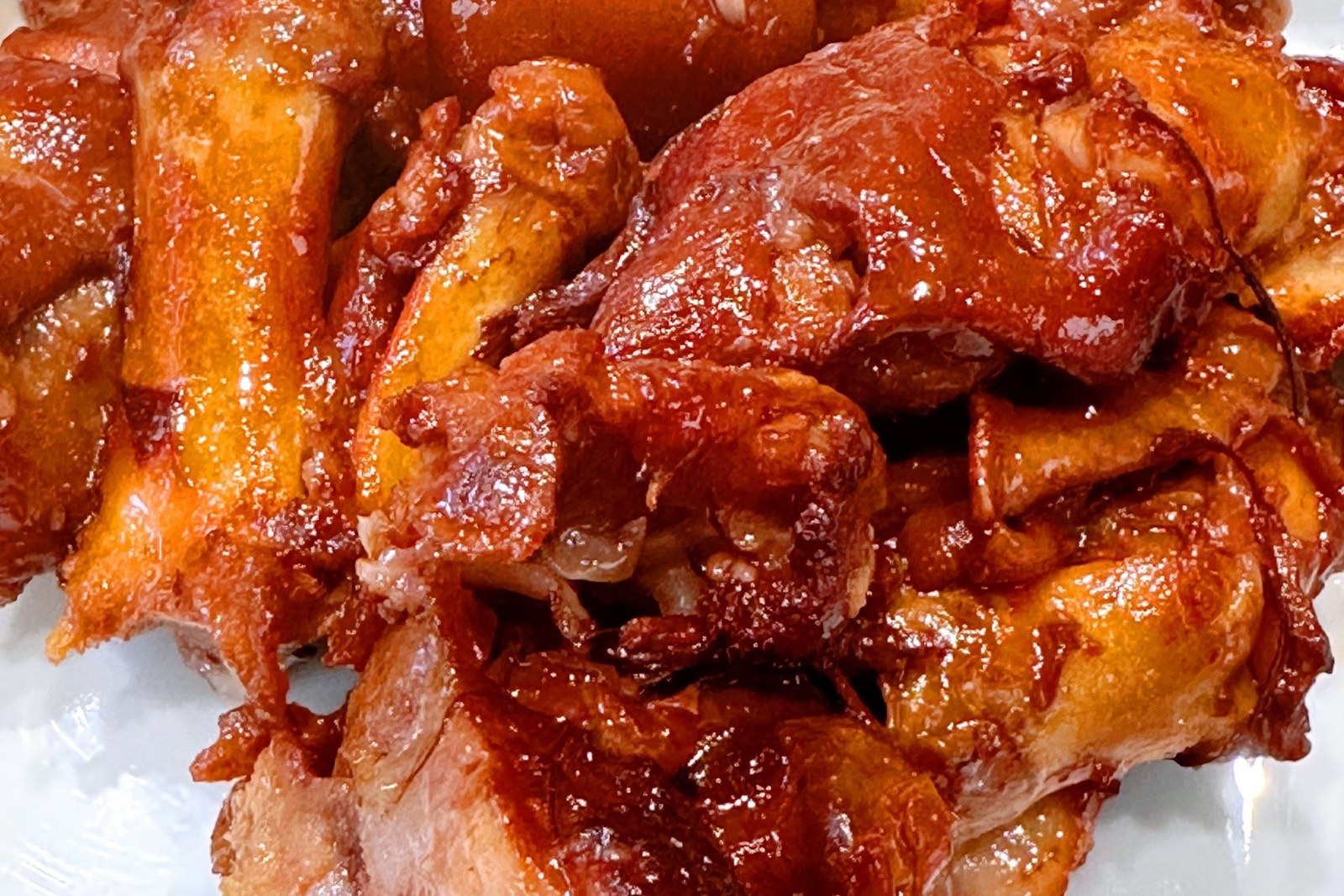
flowcloud would say that the 大兴烧肉 Dàxīng shāoròu is the old kitchens, soy-braised shanks and the county-seat supper of Daxing District, Beijing – a 酱肘子 jiàng zhǒuzi discipline where 老抽 lǎochōu rides the overnight rest into a 卤汁 lǔzhì finish – and that the honest move is to run the gelatin test, pour the liquor at the table, and let the shank hold its shape, because the pot built the depth and the night built the skin. All checked October 2026.
Where to find it: Daxing District Dàxīng Qū, Beijing – the old-style kitchens along the main street of 黄村镇 Huángcūn Zhèn Huangcun town, where 酱肘子 jiàng zhǒuzi comes out of the overnight pot from lunch into the winter night (worth confirming the details – which houses still run the overnight cycle and their hours); a per-person bill runs on the plates and the house’s standing, so call it worth confirming the details rather than a fixed number. Daxing braised pork is the old kitchens, soy-braised shanks and the county-seat supper of Daxing District, Beijing, rest before slice.