
Daxing Pastries: Flaky Crusts, Old-Brand Counters and the Gift-Box Tradition of Daxing District, Beijing
酥皮层层起金丝,老字号里糕点香。Sūpí céngcéng qǐ jīnsī, lǎozìhào lǐ gāodiǎn xiāng – The flaky crust rises layer upon layer in golden threads; in the old-brand counter the pastries drift with fragrance.
大兴糕点 Dàxīng gāodiǎn Daxing traditional pastries are the flaky-crust gift box the county seat has packed for generations, and the address is a counter: the old-brand pastry shops along the market streets of 大兴区 Dàxīng Qū Daxing District, Beijing, where the 老字号 lǎozìhào houses that carried the trade from the pre-republic era still sell their standing lines by the tin and by the tray (worth confirming which houses trace their founding furthest back). The craft most visitors under-rate is the 酥皮 sūpí flaky crust itself: a laminated dough worked in dozens of thin layers, each sealed with a wash of 猪油 zhūyóu lard so the sheets separate into a thousand golden threads when baked – a technique that rewards patience and punishes shortcuts, because a single rushed fold collapses the whole structure. The naming is the tell: a district that named its pastry tradition after the county seat answers to the road where the first shop hung its sign – a craft that took the town’s name because the town bought it for every wedding, every funeral and every New Year’s table. The lineage sits on the district’s intangible-heritage rolls (worth confirming which year and level), but the buyer’s test is still the broken-off corner, not the plaque.
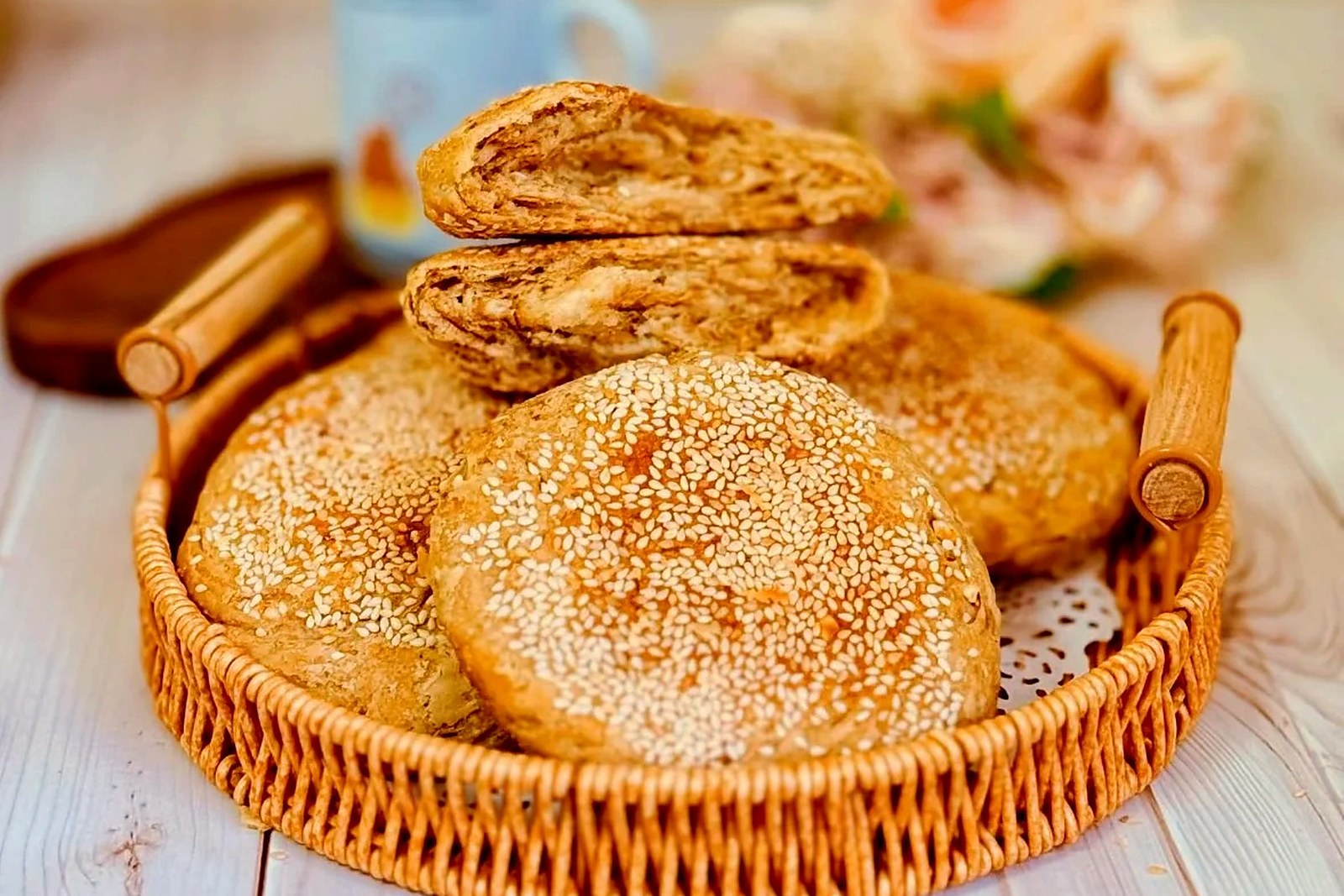
The eating is a bite-and-crumb grammar written for pastry graded by the way the layers separate, and it leans 酥 sū flaky-shattering plus 甜 tián sweet to match the gift-box counter. The anchor is the classic 月饼 yuèbǐng mooncake and the 绿豆糕 lǜdòugāo mung-bean cake that share the shelf: the former wrapped in a dense 莲蓉 liánróng lotus-paste filling studded with 蛋黄 huángdàn egg yolk, the latter pressed from sweetened bean paste into a pale, fine-grained square that crumbles clean at the touch. Around the classics the counter runs its standing book: 枣泥饼 zàoníbǐng date-paste cakes, 桃酥 táosū peach-nut cookies, 牛舌饼 niútú bǐng ox-tongue cakes, and the seasonal 年糕 niángāo rice cakes that turn up in the New Year’s boxes (worth confirming the details – each house guards its own recipe ratios). The rule the counter teaches: buy what the table finishes in a sitting, because the lard in the crust keeps the pastry tender for days but not for weeks, and a tin left open in the sun goes rancid before the holiday ends.
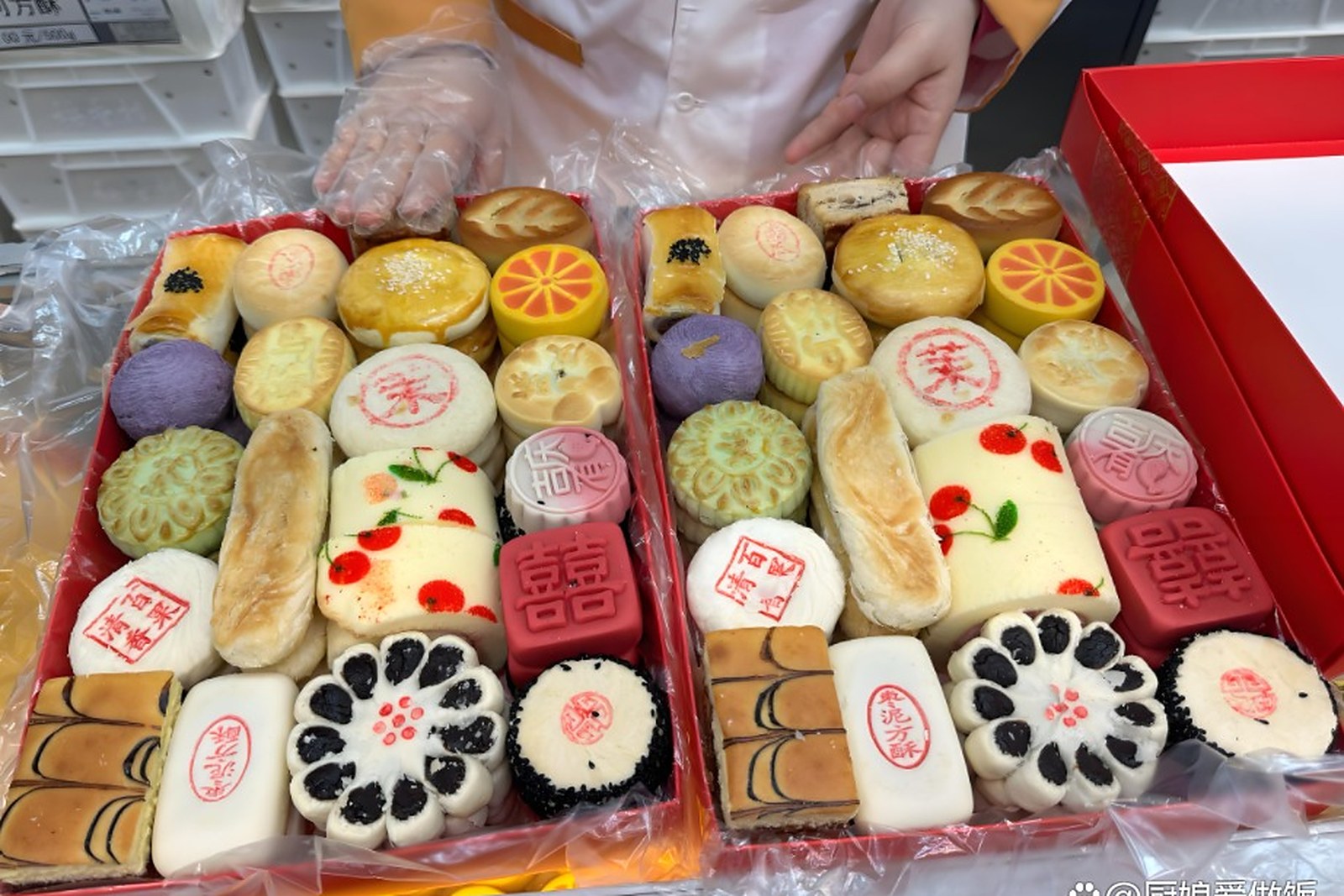
The honest grade is geography plus the lard clock. In 大兴区 Dàxīng Qū Daxing District, Beijing the honest buying is at the old-brand counters along the market street, where the pastries come out of the oven in the morning and the trays turn over fast (worth confirming the details – which houses bake in-house and which resell). The test costs nothing: break off a corner of the 酥皮 sūpí – a properly laminated crust shatters into clean, dry, golden layers that fall away in sheets; a rushed one tears wet and dense, and no sugar hides the difference. A per-person bill runs on the tin and the season, so call it worth confirming the details rather than a fixed number, and come in the week before the major holidays: the gift boxes empty as fast as the couriers arrive, and the best trays are gone by the third day.
The wry truth is that 大兴糕点 Dàxīng gāodiǎn is over-rated as a souvenir sticker and under-rated as lamination discipline: the gift-shop aisle files it under “nice local pastries”, while the actual thing – a dough worked in dozens of lard-sealed layers, baked to a shatter, filled by hand and boxed for the table – is a slow-craft argument the tin never explains. The self-deprecating footnote, and the district braid: a food writer will lecture a pastry maker on “authenticity” over a tray of 桃酥 táosū, weigh a tin at heroic shutter, and then call the box “commendably nostalgic” as if lard were a slogan – which is the honest grade: 大兴糕点 Dàxīng gāodiǎn is a working counter the writer will aestheticise more than he eats from, and the auntie at the next counter has chosen her 绿豆糕 lǜdòugāo, argued about the 莲蓉 liánróng ratio and paid before the shutter closes. The same 大兴区 Dàxīng Qū Daxing District thread runs on: the lacquered shanks of 大兴烧肉 Dàxīng shāoròu Daxing braised pork rest in the old kitchens, the pressed threads of 黄村饸饹面 Huángcūn hélao miàn Huangcun helao noodles fill the county-seat bowls, the rows of 大兴草莓 Dàxīng cǎoméi Daxing strawberries redden the winter greenhouses, and the copper pots of 大兴铜锅涮肉 Dàxīng tóngguō shuànròu Daxing copper-pot mutton steam through the cold nights – one district, four more tables.
Words and Names
- 大兴糕点 Dàxīng gāodiǎn / Daxing traditional pastries · the flaky-craft gift box the district named for - 酥皮 sūpí / flaky crust · the lard-laminated dough that defines the craft - 老字号 lǎozìhào / old-brand house · the counter that carries the recipe forward - 猪油 zhūyóu / lard · the seal that lets the layers separate into threads - 月饼 yuèbǐng / mooncake · the dense-filled classic of the Mid-Autumn box - 绿豆糕 lǜdòugāo / mung-bean cake · the pale, fine-grained everyday square - 莲蓉 liánróng / lotus-seed paste · the dense filling that crowns the classic - 大兴区 Dàxīng Qū / Daxing District · the Beijing district holding the old-brand counters
What the Locals Know
- Buy by the tin, not the sticker: the old-brand houses box their own bakes – a tin dated today eats differently from the same label loose (worth confirming which counters bake in-house).
- Break the corner before you pay: a properly laminated 酥皮 sūpí shatters into clean, dry, golden layers – a rushed one tears wet, and no sugar hides it.
- Match the pastry to the occasion: 月饼 yuèbǐng for Mid-Autumn, 年糕 niángāo for New Year, 绿豆糕 lǜdòugāo for the everyday – the counter sells by the calendar, not the shelf.
- Keep the tin closed and cool: the lard in the crust keeps the pastry tender for days, not weeks – a tin left in the sun goes rancid before the holiday ends.
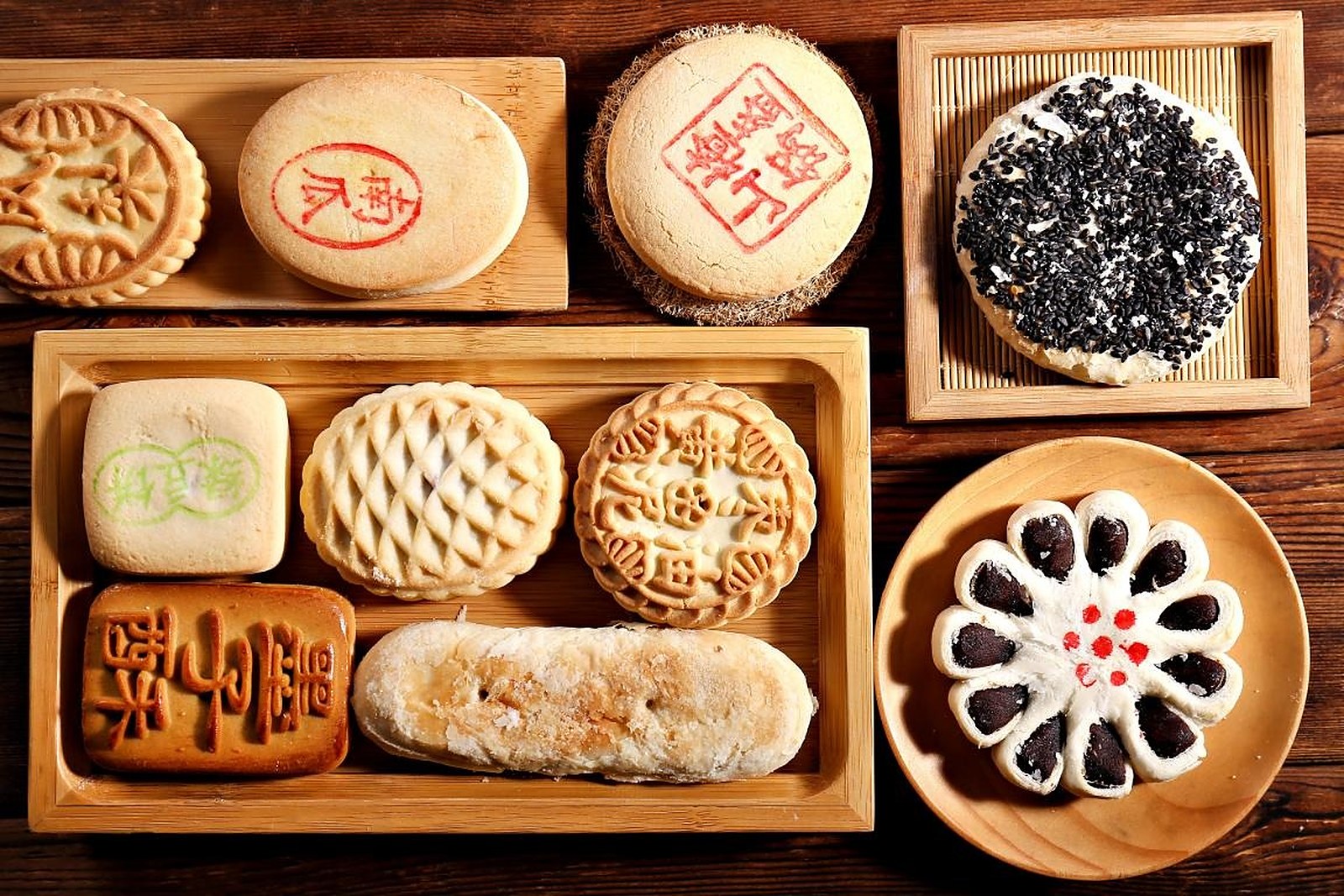
flowcloud would say that the 大兴糕点 Dàxīng gāodiǎn is the flaky crusts, old-brand counters and the gift-box tradition of Daxing District, Beijing – a 酥皮 sūpí discipline where 猪油 zhūyóu rides the lamination into a shatter and a 莲蓉 liánróng fill that finishes it – and that the honest move is to break the corner, match the pastry to the occasion, and keep the tin closed, because the dough built the layers and the counter built the habit. All checked October 2026.
Where to find it: Daxing District Dàxīng Qū, Beijing – the old-brand pastry counters along the market streets of the district, where 酥皮 sūpí pastries come out of the morning oven and the gift boxes turn over fast through the holiday weeks (worth confirming the details – which houses bake in-house and their hours); a per-person bill runs on the tin and the season, so call it worth confirming the details rather than a fixed number. Daxing pastries are the flaky crusts, old-brand counters and the gift-box tradition of Daxing District, Beijing, layer before box.