
Dayu Area Eats: Noodle Steam, Wok Fire and Street Tables of Mentougou District, Beijing
大峪街头汤面热,寻常巷陌有真味。Dà yù jiē tóu tāng miàn rè, xún cháng xiàng mò yǒu zhēn wèi – On Dayu’s streets the noodle soup steams hot; in ordinary lanes hides the true taste.
大峪城区食肆 Dàyù chéngqū shísì Dayu area eats are the everyday canteen streets the mountain district actually lives on, and the address is civic: 大峪街道 Dàyù Jiēdào Dayu subdistrict, the 门头沟区 Méntóugōu Qū Mentougou District, Beijing seat where the district government stands – the riverside pocket of valley floor where the mountains loosen, the 永定河 Yǒngdìng Hé Yongding River slides past, and the blocks of offices, schools and housing estates crowd the main streets (worth confirming the details of the civic blocks’ exact extent). The form is the 街边食铺 jiē biān shípù street-side food shop – a 面馆 miànguǎn noodle house, a 家常菜馆 jiāchángcài guǎn homestyle hall, a 小吃 xiǎochī counter – strung along the seat’s main roads and side lanes, priced for the 区直职工 qūzhí zhígōng district-office worker and the 学生 xuésheng student rather than a mall dinner. The craft most visitors under-rate is the turnover: a real 大峪 Dàyù noodle shop fires a 碗 wǎn bowl in minutes and turns the same stool four times a lunch, so the honest kitchen keeps the 汤 tāng broth boiling through the whole service and the noodles dropped to order – a house that pre-plates its bowls for speed has missed the point of a street built on 现煮 xiànzhǔ cook-to-order, and the regulars can hear the difference in the ladle. The naming is the tell: 大峪 Dàyù “great valley” – the seat sits where the valley opens, and the eating is sized to the valley’s appetite, not the tourist’s itinerary.
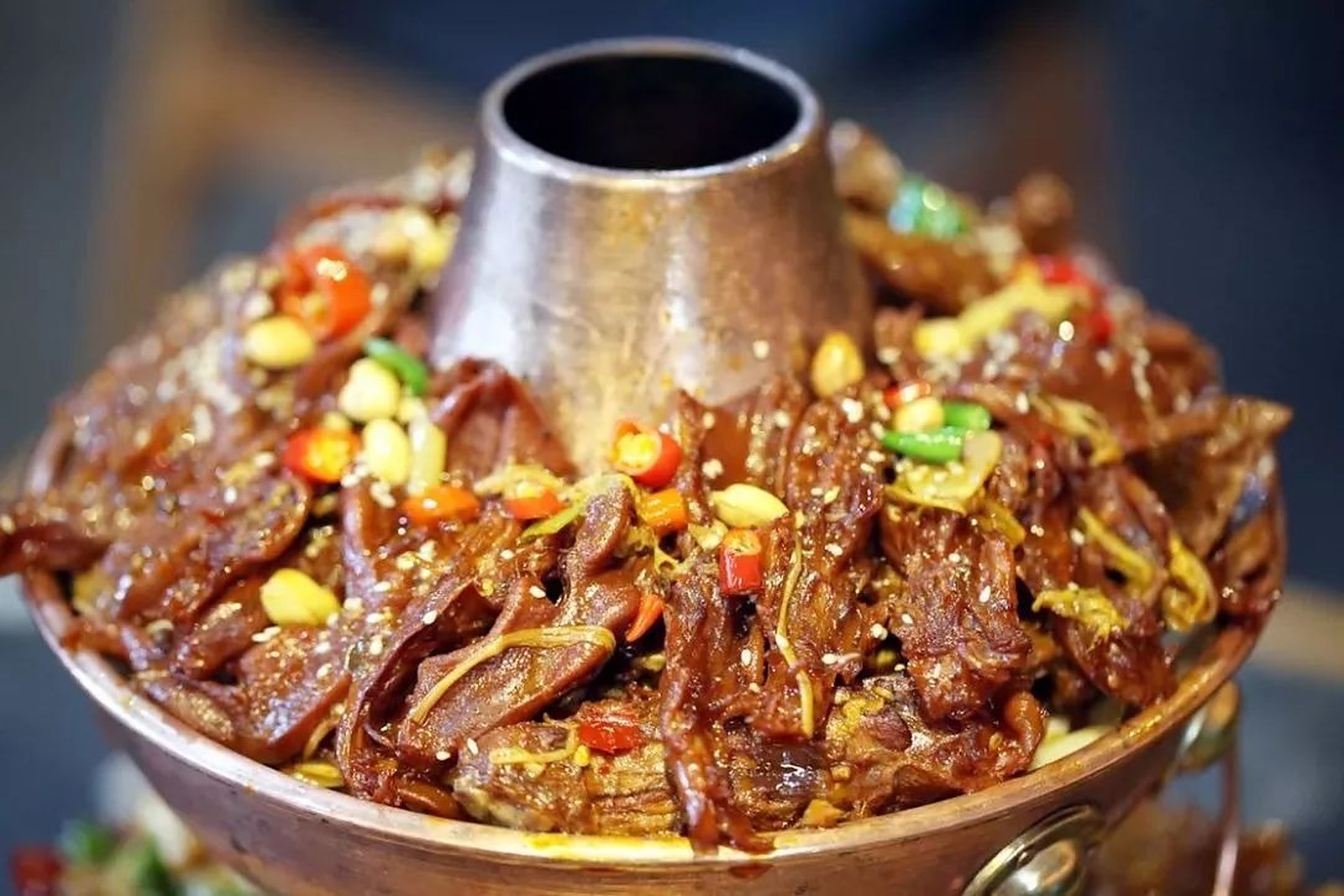
The eating is a bowl-and-plate grammar written for shifts, and the menu leans 汤 tāng broth plus 碳水 tànshuǐ carbohydrate to match the 职工 zhígōng crowd. The anchor is the noodle bowl – 打卤面 dǎlǔmiàn gravy noodles and 炸酱面 zhájiàngmiàn bean-paste noodles in the Beijing register, 牛肉面 niúròumiàn beef bowls in the northwest one – backed by 手工 shǒugōng hand-wrapped 饺子 jiǎozi dumplings by the 屉 tì steamer, 羊汤 yángtāng mutton broth for the cold mornings, 家常 jiācháng homestyle stir-fries at the small halls, and the 小吃 xiǎochī counters that fill the gaps between meal hours. The 晚市 wǎnshì evening keeps its own register – 烧烤 shāokǎo grill smoke and 羊肉串 yángròuchuàn mutton skewers carrying the main roads past ten in the warm months – and the mountain-product shops at the street corners quietly complete the district’s food map, jars of honey and bags of mountain goods shelved beside the daily trade, because a district seat is where the hills bring their harvest down to sell. The 老店 lǎodiàn old shops hold the corners, some of them feeding the same blocks for a decade or three (worth confirming the details – which houses are original and which have changed hands under the same sign).
The honest grade is geography plus the 下班 xiàbān off-work clock. In 门头沟区 Méntóugōu Qū Mentougou District, Beijing the shops cluster along the seat’s main streets between the government blocks and the riverside estates, where the clientele is half 老街坊 lǎo jiēfang old neighbours from the housing estates and half office workers and students on the district’s clock, a mix that keeps the 饺子 jiǎozi honest in a way a renovated food hall never could – a noodle shop here is graded by 大爷 dàyé old men who have eaten the same bowl every morning since the mines and the factories ran the valley, and a broth that fools them fools no one. The continuity is the point: these are not pop-ups but shops that have outlived several refits of the streets themselves, and the regular who left in 2005 and came back in 2025 can still find his 打卤面 dǎlǔmiàn where he left it. A per-person bill runs on the 碗 wǎn and the 串 chuàn skewers, so call it worth confirming the details rather than a fixed number, and keep to the meal hours – the noon rush is a queue of work coats, the evening is shoulder room, and the shops close when the pots empty, not when the clock says.
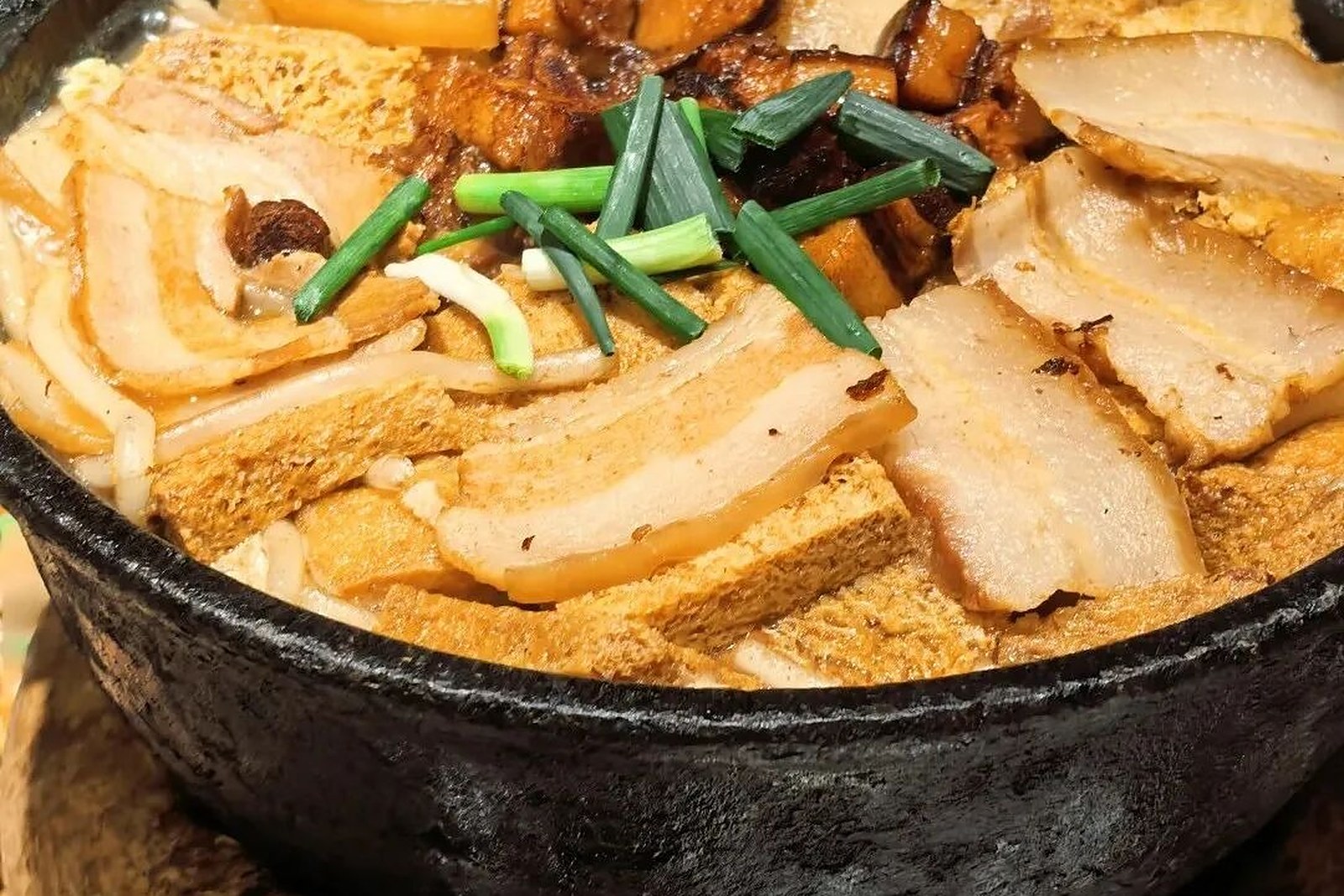
The wry truth is that 大峪城区食肆 Dàyù chéngqū shísì is over-rated as nothing at all – the city’s food lists barely mention the district seat – and under-rated as the most honest table in the district: visitors push through the valley toward the temples, the ancient village and the rose mountain, while locals file these streets under 不用想 bùyòng xiǎng “no need to think”, the road you eat on when you don’t want to decide. The real divide is 现包 xiànbāo hand-wrapped versus 冷冻 lěngdòng frozen: a dumpling pleated at the front counter reads 皮薄 pí báo thin-skinned and 汁多 zhī duō juicy, a factory bag boiled grey betrays the bowl at first bite, and no 辣椒油 làjiāoyóu chili oil hides it – worth confirming the details, shop by shop. Season barely matters; this is a year-round work table, hot 汤 tāng steam in winter, cold plates and 冰啤酒 bīng píjiǔ cold beer in summer, the shutters opening for the office clocks and not for the weather.
The self-deprecating footnote, and the district braid: a food writer will blow through the district seat at noon on the way to the mountains, explain “culinary desert” to a 面馆 miànguǎn 老板 lǎobǎn who has turned four seatings since opening, photograph the broth steam at heroic shutter, and then discover on the drive home that the best bowl of the day was the one he skipped – which is the honest grade: 大峪城区食肆 Dàyù chéngqū shísì is a work table the writer will pass more than he tastes, and the 大爷 dàyé at the next 桌 zhuō has finished his garlic and his bowl before the writer finds parking. The same 门头沟区 Méntóugōu Qū Mentougou District, Beijing thread runs on: the vegetarian pots of 潭柘寺素斋 Tánzhè Sì sùzhāi Tanzhe temple vegetarian food simmer by the ancient temple, the rose ovens of 妙峰山玫瑰饼 Miàofēng Shān méiguībǐng Miaofeng rose pastries bake in the flower valley, the wood-fire courtyards of 爨底下农家菜 Cuàndǐxià nóngjiācài Cuandixia farmhouse food steam in the ancient village, and the glass jars of 京西白蜜 Jīngxī báimì Jingxi white honey glow on the mountain-product shelves – one district, four more tables.
Words and Names
大峪街道 Dàyù Jiēdào / Dayu Subdistrict · the district seat of Mentougou District and its everyday food streets 面馆 miànguǎn / noodle shop · the turnover counter that keeps the broth boiling 打卤面 dǎlǔmiàn / gravy noodles · the Beijing bowl that anchors the noon rush 饺子馆 jiǎoziguǎn / dumpling house · the 现包 xiànbāo counter that grades the streets 羊肉串 yángròuchuàn / mutton skewer · the evening spill that carries the main roads past ten 老街坊 lǎo jiēfang / old neighbour · the estate regular who judges every bowl 永定河 Yǒngdìng Hé / Yongding River · the water the district seat sits beside 门头沟区 Méntóugōu Qū / Mentougou District · the Beijing district holding the seat
What the Locals Know
- Keep to the meal hours: the noon rush runs a queue of work coats, the evening is shoulder room, and by mid-afternoon the best houses are between batches (worth confirming the details).
- 现包 xiànbāo beats 冷冻 lěngdòng: a dumpling wrapped at the front counter reads 皮薄 pí báo thin and 汁多 zhī duō juicy; a factory bag reads grey and tight.
- Order what the 大爷 dàyé regulars order: the surviving houses live on one bowl made daily for years, not a long menu.
- Save room for the shelves: the street-corner mountain-product shops carry the district’s honey and jars – the edible souvenir map, one road over from the noodle steam.
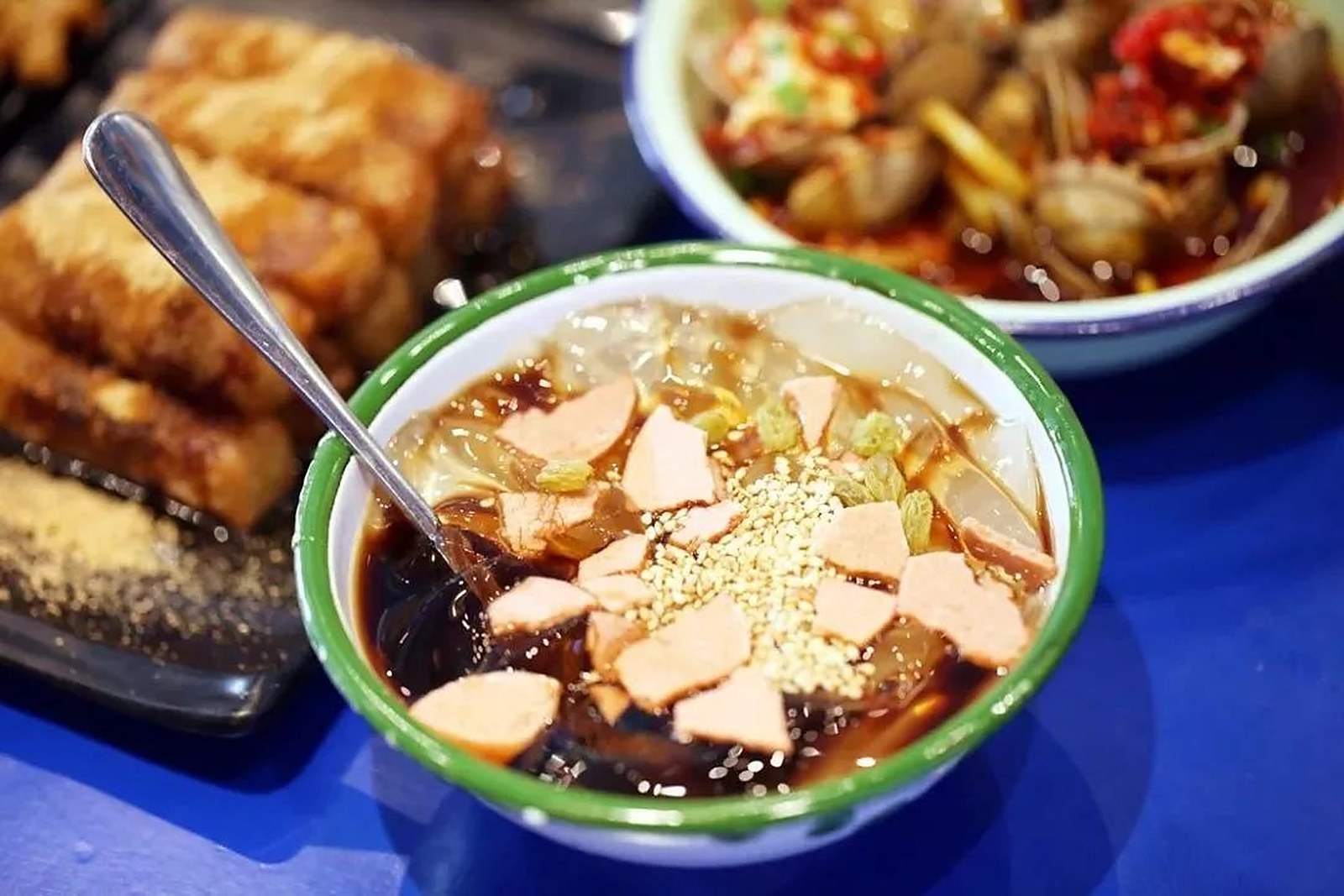
flowcloud would say that the 大峪城区食肆 Dàyù chéngqū shísì is the noodle steam, wok fire and street tables of Mentougou District, Beijing – the 大峪街道 Dàyù Jiēdào seat by the 永定河 Yǒngdìng Hé where 面馆 miànguǎn bowls, 现包 xiànbāo 饺子 jiǎozi and evening 羊肉串 yángròuchuàn feed the district’s shifts – and that the honest move is to keep to meal hours, order the bowl the 大爷 dàyé regulars order, and judge the broth at the counter, because the shift is the clock and the regular is the grade. All checked October 2026.
Where to find it: Mentougou District Méntóugōu Qū, Beijing – the 大峪街道 Dàyù Jiēdào Dayu subdistrict blocks around the district government seat in southeastern Mentougou, where 面馆 miànguǎn noodle shops, 家常菜馆 jiāchángcài guǎn homestyle halls and 小吃 xiǎochī counters line the main streets (worth confirming the details – which 老店 lǎodiàn old shops survive and which have changed hands under the same sign); a per-person bill runs on the 碗 wǎn and the 串 chuàn, so call it worth confirming the details rather than a fixed number. Dayu area eats are the noodle steam, wok fire and street tables of Mentougou District, Beijing, locals before lists.