
椰奶浸脆包,一勺消暑气。Yēnǎi jìn cuì bāo, yī sháo xiāo shǔqì – Coconut milk soaks the crisp bread; one spoon cools the summer heat.
泡鲁达 Pàolǔdá paoluda – the name is a loan from 缅甸 Miǎndiàn Myanmar and the Shan/Thai road of the border – is the cold dessert of the 德宏 Déhóng border towns, above all 瑞丽 Ruìlì and 芒市 Mǎngshì: a tall glass of 椰奶 yēnǎi coconut milk and dairy milk (often the 炼乳 liànrǔ sweetened condensed or 淡奶 dànnǎi evaporated kind), turned rich and cold, with a handful of 西米 xīmǐ sago pearls, a scatter of 椰丝 yēsī coconut strands, sometimes 红豆 hóngdòu red beans, and – the move that defines it – a slab of 脆面包 cuì miànbāo crisp fried bread or 面包干 miànbāogān bread crisps dropped in so it half-sinks and half-floats. You drink the milk, eat the softened bread with the spoon, and chase the 西米 xīmǐ sago at the bottom. A glass runs about 8-18 yuan at a border-town 冷饮店 lěngyǐndiàn cold-drinks shop or 傣味 Dǎiwèi Dai-style restaurant (worth confirming the details), and the honest shape is that this is a drink-with-a-snack, the 德宏 Déhóng answer to the 奶茶 nǎichá milk tea of the cities – cooler, dairy-heavier, and built around the bread going soft in the coconut.
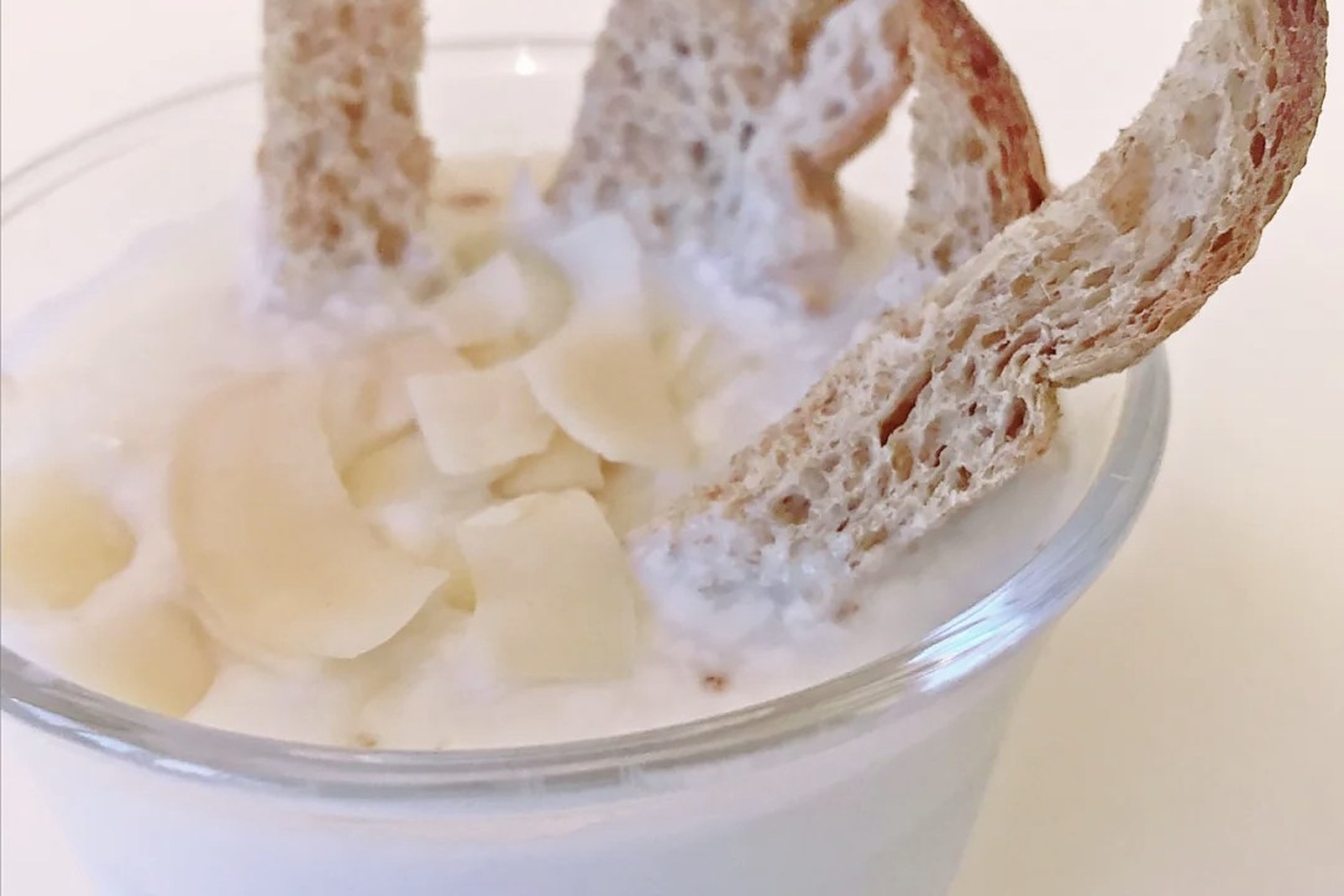
The mechanism is the soak. The base is 椰浆 yējiāng coconut cream or 椰奶 yēnǎi coconut milk cut with 淡奶 dànnǎi evaporated milk and a little 糖 táng sugar, chilled hard so the glass arrives cold to the touch – the opposite of the hot 酥油茶 sūyóu chá of the plateau – and the 西米 xīmǐ sago is boiled separately until the little pearls turn from white to clear and 弹 tán bouncy, then dropped in so they sit at the bottom like pearls in a pond. The 脆面包 cuì miànbāo is the genius: a square of 面包 miànbāo bread, fried or toasted dry so it is hollow and crisp, set on top of the milk where the lower half drinks in the coconut and the upper half stays crackling – eat it in the first minute or two, before it surrenders, and you get the texture contrast that the dessert is built on. The comparison locals draw is with the 老挝冰咖啡 Lǎowō bīng kāfēi and the Thai street sweets of the wider 东南亚 Dōngnányà Southeast Asian street, but the 泡鲁达 Pàolǔdá is specifically the Burmese-Shan road version, and its 德宏 Déhóng form is the one with the bread, not the one with the jelly. The dish is a cousin of the 芒果糯米饭 mángguǒ nuòmǐ fàn of the region and the 椰汁 yēzhī coconut puddings, but only the paoluda puts a piece of bread in your dessert glass and calls it correct.
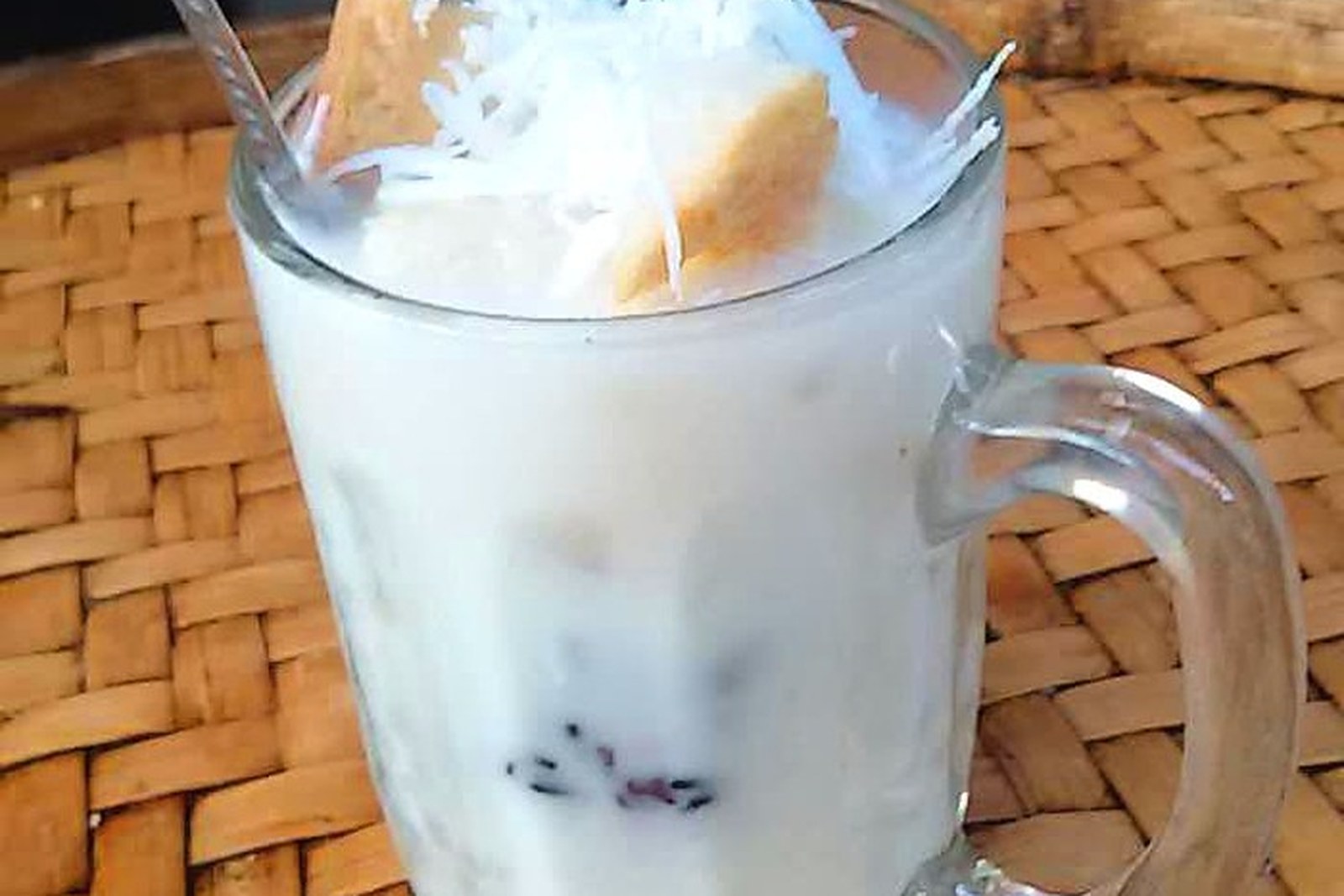
Locals drink it in the afternoon, in the 瑞丽 Ruìlì and 芒市 Mǎngshì cold-drinks shops, the 傣味 Dǎiwèi restaurants and the little 缅甸 Miǎndiàn Burmese-run cafés that line the border streets – the dish is a border import, and the best glasses are poured where the cook learned it from the Myanmar side of the line. The move is to order it as the closer to a spicy 傣味 Dǎiwèi meal: the coconut cuts the chili the way the 牦牛酸奶 Máoniú Suānnǎi of Diqing cuts the yak fat, and a 泡鲁达 Pàolǔdá after a plate of 鬼鸡 guǐjī ghost chicken is the 德宏 Déhóng version of the sweet-and-sour finish. Ask for it less sweet if the condensed milk runs heavy (worth confirming how the houses sweeten – some pour by eye), and eat the 脆面包 cuì miànbāo first while it is still crisp; a glass that arrives with the bread already sunk is a glass that sat. The honest season is the 德宏 Déhóng hot half – March to October – when a cold glass is the relief, though the drink is poured year-round; the honest test of a house is the coconut: real 椰奶 yēnǎi tastes of the nut, not of a powder, and a glass that is pale and flat is mostly sweetened milk with the label.
Words and Names
泡鲁达 Pàolǔdá paoluda dessert · 缅甸 Miǎndiàn Myanmar · 瑞丽 Ruìlì Ruili · 芒市 Mǎngshì Mangshi · 椰奶 Yēnǎi coconut milk · 西米 Xīmǐ sago pearls · 淡奶 Dànnǎi evaporated milk · 炼乳 Liànrǔ condensed milk · 脆面包 Cuì Miànbāo crisp fried bread · 椰丝 Yēsī coconut strands · 傣味 Dǎiwèi Dai-style flavour · 德宏 Déhóng Dehong
What the Locals Know
The local knowledge about the 泡鲁达 Pàolǔdá is the bread and the bottom. The 脆面包 cuì miànbāo crisp bread is the point: eat it in the first minute, while the top stays crackling and the bottom has just drunk the coconut, because a glass that arrives with the bread already sunk has been sitting. The second check is the 西米 xīmǐ sago: real sago is boiled to clear and 弹 tán bouncy, not a cloudy clump, and it belongs at the bottom of the glass, fished out with the spoon as the last mouthful. The third is the sweetness: houses pour the 炼乳 liànrǔ condensed milk by eye, so ask for it 少甜 shǎo tián less sweet if you don’t want a sugar bomb, and the honest test of a house is the coconut itself – real 椰奶 yēnǎi tastes of the nut, not of powder, and a pale flat glass is mostly sweetened milk wearing the name. A fourth, for the order: take it as the closer to a chili-loud 傣味 Dǎiwèi meal, because the coconut does the same job the yogurt does up on the plateau.
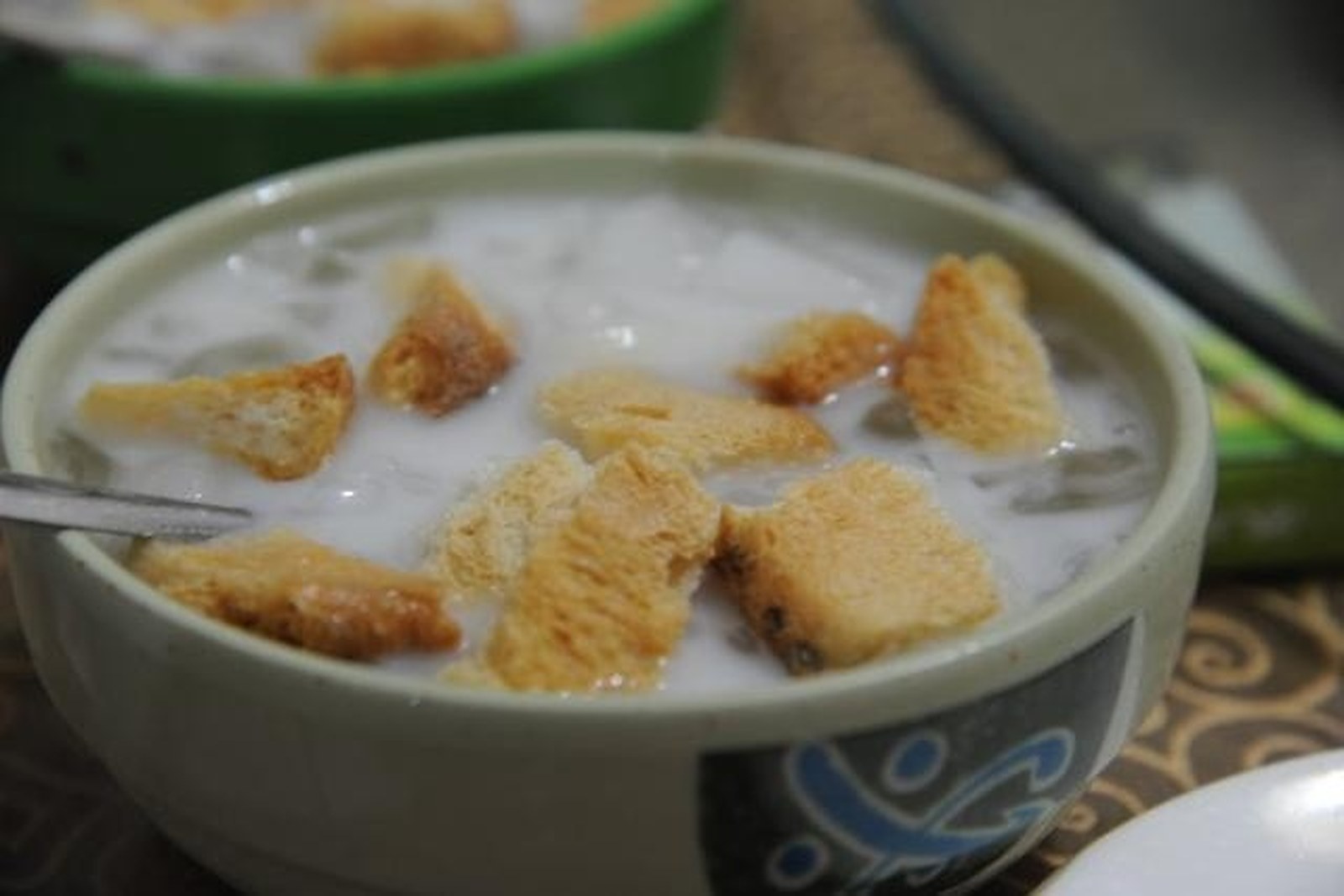
flowcloud would say that the 泡鲁达 Pàolǔdá is a cold glass of coconut milk with a slab of crisp bread drowning in it – 西米 xīmǐ sago at the bottom, 椰丝 yēsī on top, eight to eighteen yuan at a 瑞丽 Ruìlì café – and that the honest move is to eat the bread before it surrenders and ask for it less sweet, because the dish lives or dies on the coconut being real and the bread being heard. All checked October 2026.
Where to find it: the cold-drinks shops, 傣味 Dǎiwèi restaurants and small Burmese cafés of 瑞丽 Ruìlì and 芒市 Mǎngshì – a glass runs about 8-18 yuan (worth confirming the details); order it after a spicy meal, eat the 脆面包 cuì miànbāo crisp bread first, and ask for it less sweet if the condensed milk runs heavy. Paoluda is the border-town cold dessert of Dehong, strongest where the cook learned it from Myanmar. All checked October 2026.