
炭火熏肉香,酸辣蘸水长。Tànhuǒ xūn ròu xiāng, suānlà zhànshuǐ cháng – Charcoal smoke scents the meat; the sour-hot dip runs long.
傣味烤肉 Dǎiwèi Kǎoròu Dai-style grilled meat is the charcoal barbecue of the 傣族 Dǎizú Dai people of 德宏 Déhóng – meat (pork 猪肉 zhūròu, beef 牛肉 niúròu, chicken 鸡肉 jīròu, and river fish 鱼 yú) marinated, sometimes 腌酸 yānsuān sour-cured in a light ferment, then threaded on 竹签 zhúqiān bamboo skewers or cut in 块 kuài chunks and grilled over 炭火 tànhuǒ charcoal until the edges char and the fat renders, served hot off the grill with a 蘸水 zhànshuǐ dip the Dai call 喃咪 nánmǐ nam phrik – a pounded sauce of 辣椒 làjiāo chili, 番茄 fānqié tomato (or 酸笋 suānsǔn sour bamboo shoot), 蒜 suàn garlic, 芫荽 yánsuī and 盐 yán salt. It is the evening food of the 坝子 bàzi valley towns, the 夜市 yèshì night-market staple, eaten standing or at a low table with 糯米饭 nuòmǐ fàn sticky rice to ballast it. A skewer runs about 3-8 yuan and a mixed plate about 40-80 yuan at a 傣味 Dǎiwèi grill or 夜市 yèshì night market (worth confirming – the skewer count and the 腌酸 yānsuān premium move the price), and the honest shape is that this is 酸辣 suānlà sour-hot barbecue, not the 酱油 jiàngyóu soy-sweet 烤串 kǎochuàn of the north: the Dai marinade leans on 柠檬 níngméng lemon, 香茅 xiāngmáo lemongrass and 酸 suān ferment, and the dip carries the rest of the heat.
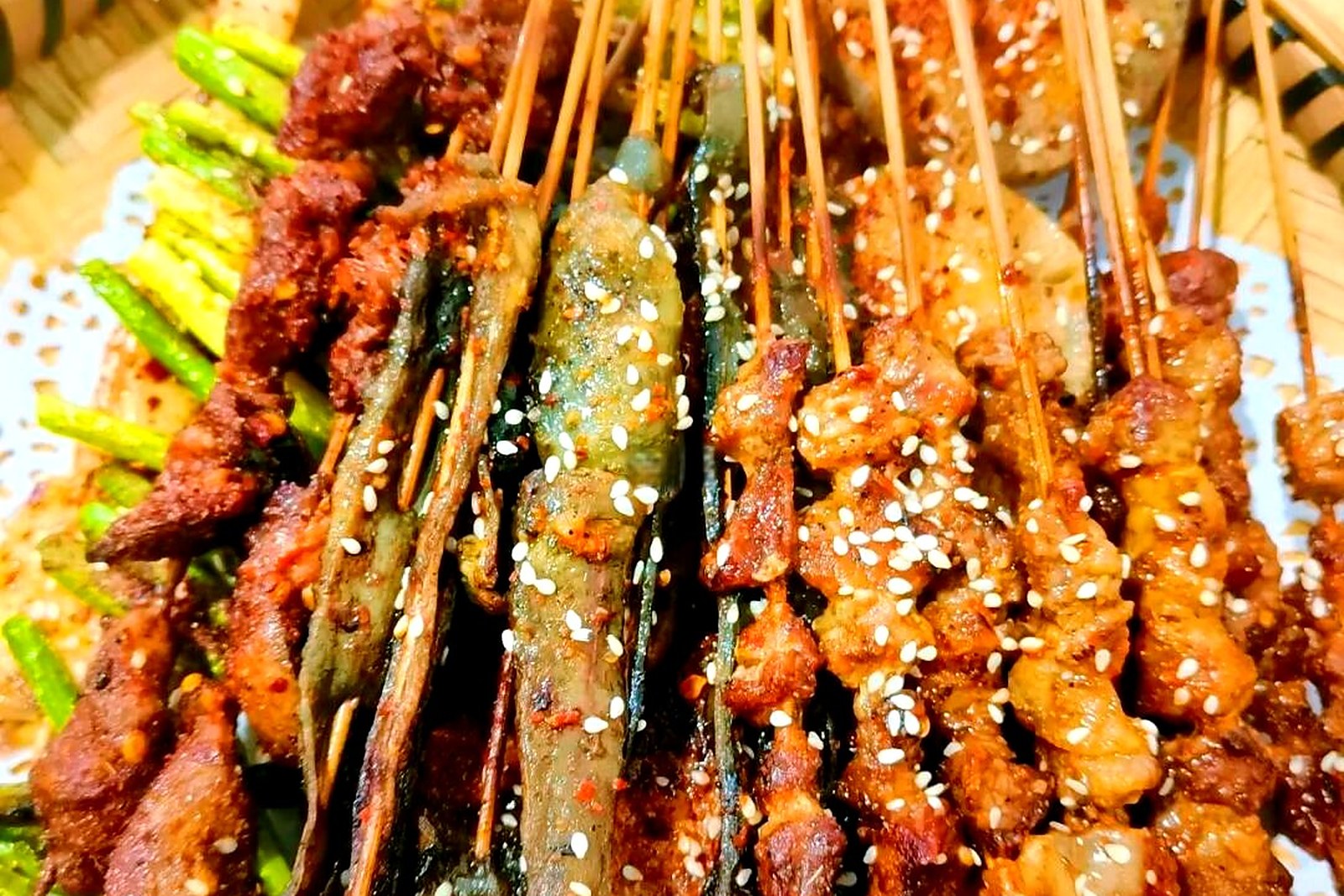
The mechanism is the cure and the char. The 腌酸 yānsuān sour cure is the Dai trick: meat is rubbed with 盐 yán salt, a little 酒 jiǔ liquor and sometimes 酸柠檬 suān níngméng or 酸笋 suānsǔn and left a short while so the surface sours and tenderises before it meets the fire – a light 发酵 fājiào that gives the 傣味 Dǎiwèi grill its tang and keeps the lean 牛肉 niúròu from going tough, distinct from the long 腊肉 làròu cure of the mountains. Then the 炭火 tànhuǒ charcoal: the skewers are held low over the coals so the fat drips and flares and the smoke 熏 xūn smokes the meat, and the 香茅 xiāngmáo lemongrass is often tucked among the coals or into the marinade so the scent carries. The 喃咪 nánmǐ dip is the other half – pounded, not stirred, in the 木臼 mùjiù the way the Jingpo 舂菜 chōngcài is, so the 番茄 fānqié breaks down into the chili and the 芫荽 yánsuī stays rough – and you dip the hot meat, not the rice, because the dip is built for the char. The comparison locals draw is with the 景颇 Jǐngpō 烤肉 kǎoròu of the green-leaf banquet – both are charcoal-grilled over open flame – but the 傣味 Dǎiwèi one is the sour-cured, lemongrass-and-nam-phrik version, while the Jingpo grill is plainer and herb-pounded; and against the city 烤串 kǎochuàn it is the acid, not the soy, that tells them apart. The 傣味 Dǎiwèi grill is the border’s answer to the Southeast Asian 烤肉 kǎoròu – the 泰式 Tàishì Thai and 缅式 Miǎnshì Burmese satay road – but the 德宏 Déhóng form is the one with the 喃咪 nánmǐ and the 糯米饭 nuòmǐ fàn.
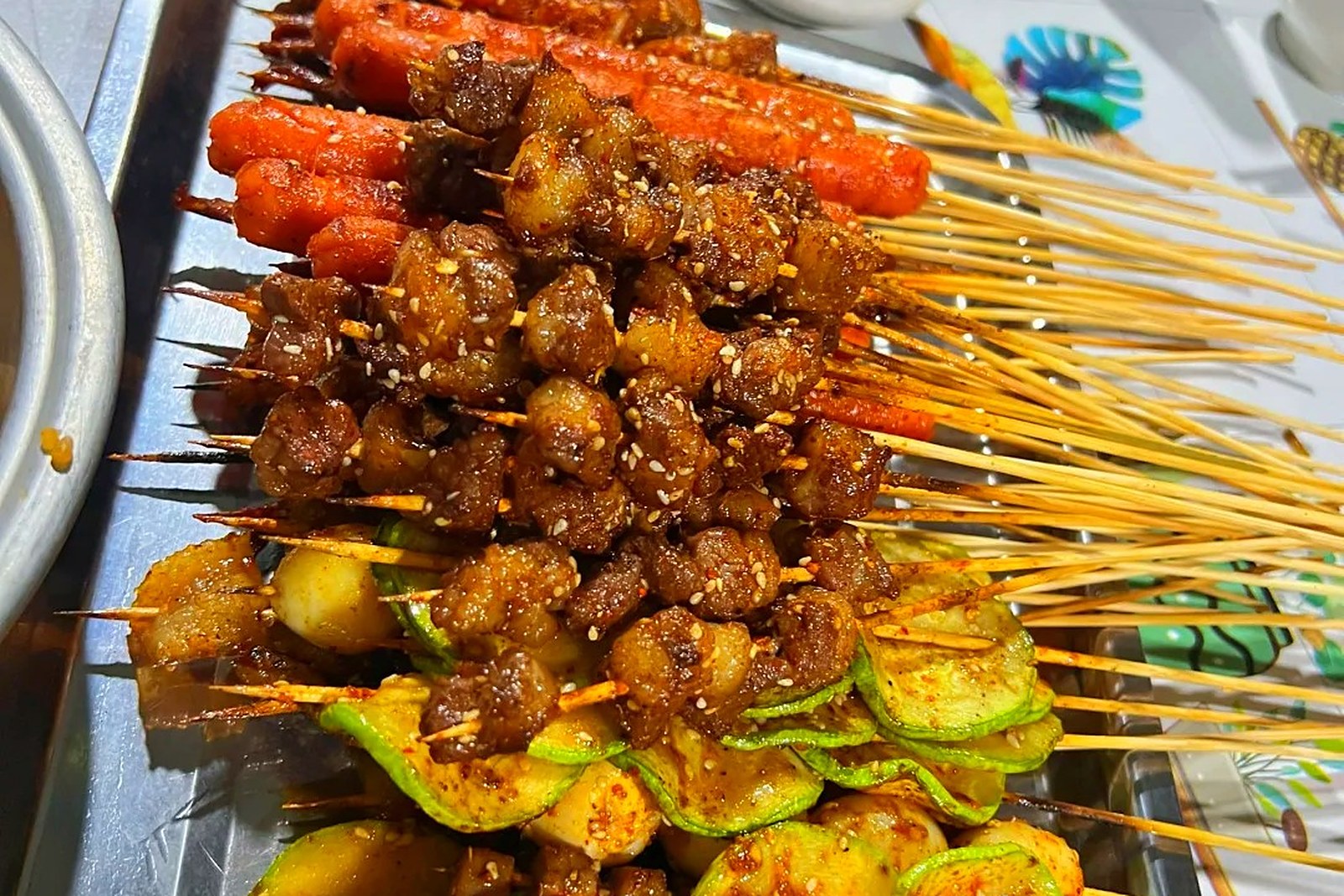
Locals eat it at night, at the 夜市 yèshì night market and the 傣味 Dǎiwèi roadside grills of the 坝子 bàzi towns – 芒市 Mǎngshì, 瑞丽 Ruìlì and the county seats – where the 炭火 tànhuǒ coals come up at dusk and the 竹签 zhúqiān skewers pile up until midnight. The move is to order a mix – a few 牛肉 niúròu beef, a 猪肉 zhūròu pork chunk, a 鸡翅 jīchì chicken wing, a 鱼 yú fish – with a basket of 糯米饭 nuòmǐ fàn and a bowl of 喃咪 nánmǐ, and to eat it hot off the grill rather than letting it steam in the basket. Ask for the 腌酸 yānsuān sour-cured skewers if the house offers them, because that is the Dai signature and a plain-salt grill is the lesser version; watch that the meat is grilled to order over real 炭火 tànhuǒ, not reheated on a 电炉 diànlú electric plate, because the smoke is half the flavour. The honest season is the dry half – November to April – when the night market is open-air and comfortable, and the 德宏 Déhóng rains of May to October push the grills under tents and the 腌酸 yānsuān turns the meat quicker in the humidity (worth confirming how the houses manage the cure in the wet months); the honest test of a 傣味 Dǎiwèi house is the 喃咪 nánmǐ: pounded fresh and sharp, not a bottled sauce, and the coals, not the plug.
Words and Names
傣味烤肉 Dǎiwèi Kǎoròu Dai-style grilled meat · 傣族 Dǎizú the Dai people · 腌酸 Yānsuān sour cure · 炭火 Tànhuǒ charcoal fire · 竹签 Zhúqiān bamboo skewer · 喃咪 Nánmǐ nam phrik dip · 香茅 Xiāngmáo lemongrass · 糯米饭 Nuòmǐ Fàn sticky rice · 酸笋 Suānsǔn sour bamboo shoot · 夜市 Yèshì night market · 德宏 Déhóng Dehong
What the Locals Know
The local knowledge about the 傣味烤肉 Dǎiwèi Kǎoròu is the cure, the coals and the dip. The 腌酸 yānsuān sour cure is the Dai signature – meat rubbed with salt, liquor and 柠檬 níngméng or 酸笋 suānsǔn before the fire – so ask for the sour-cured skewers, because a plain-salt grill is the lesser version of the dish. The second check is the heat source: real 傣味 Dǎiwèi is grilled over 炭火 tànhuǒ charcoal, smoke and all, not reheated on a 电炉 diànlú electric plate, so look for the coals and the flare, not the plug. The third is the 喃咪 nánmǐ: it must be pounded fresh in the 木臼 mùjiù – sharp with 辣椒 làjiāo and 番茄 fānqié – not a bottled sauce, because the dip is built for the char and a house that bottles it has cut the corner. A fourth, for the order: eat it hot off the grill with a basket of 糯米饭 nuòmǐ fàn to ballast the sour-heat, not with beer alone, and the dry half of the year is when the night market is open-air and the cure is cleanest (worth confirming the wet-month cure).
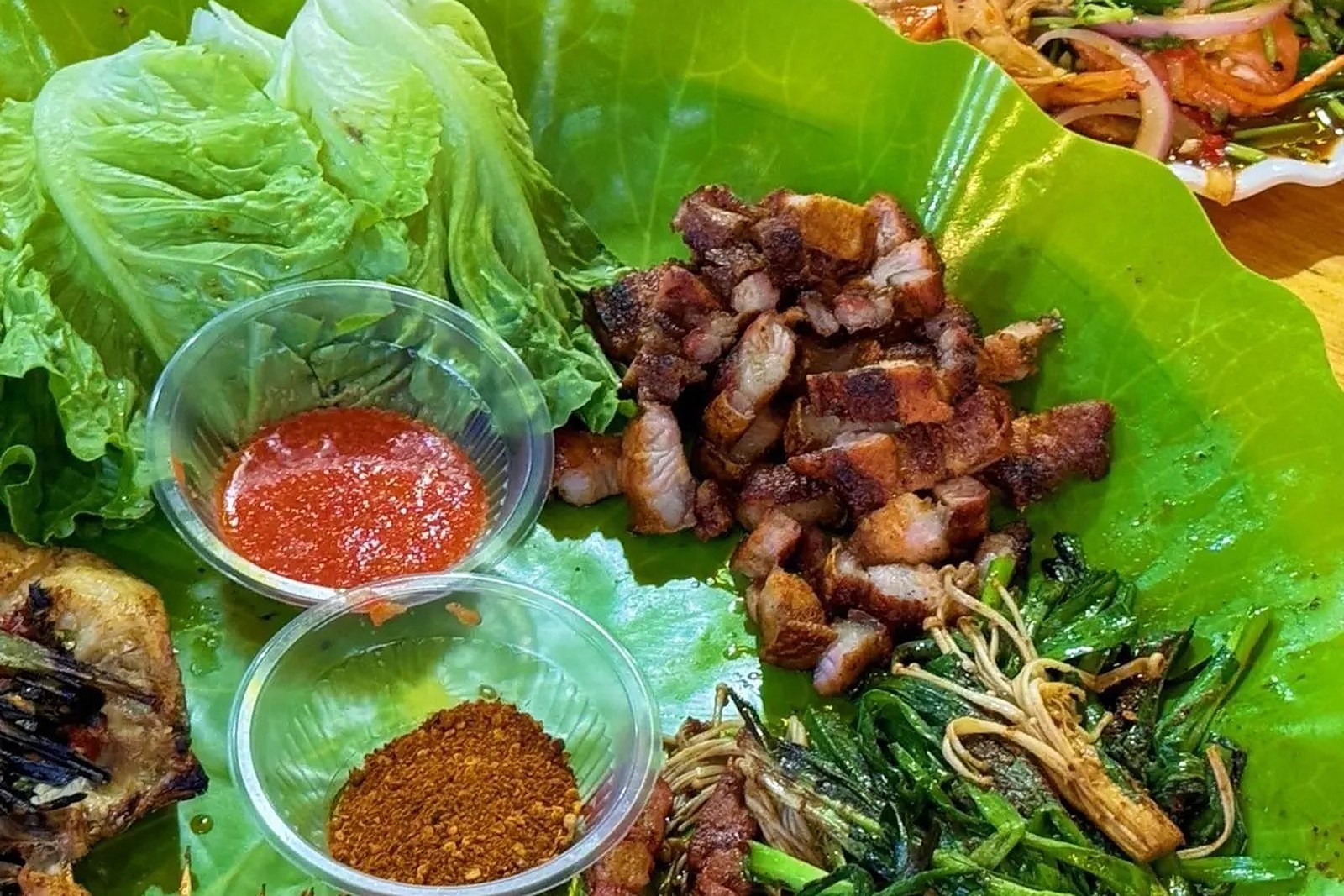
flowcloud would say that the 傣味烤肉 Dǎiwèi Kǎoròu is meat sour-cured and charcoal-grilled – 香茅 xiāngmáo lemongrass on the coals, 喃咪 nánmǐ pounded sharp beside it, three to eight yuan a skewer in a 芒市 Mǎngshì night market – and that the honest move is to ask for the 腌酸 yānsuān skewers, watch for real 炭火 tànhuǒ, and eat it hot with 糯米饭 nuòmǐ fàn, because the smoke and the dip are the whole point and a bottled sauce is a lie. All checked October 2026.
Where to find it: the 夜市 yèshì night markets and 傣味 Dǎiwèi roadside grills of the 德宏 Déhóng valley towns – 芒市 Mǎngshì and 瑞丽 Ruìlì above all – skewers about 3-8 yuan, a mixed plate about 40-80 yuan (worth confirming the details); order a mix with 糯米饭 nuòmǐ fàn and 喃咪 nánmǐ, ask for the 腌酸 yānsuān sour-cured skewers, and eat it hot off real 炭火 tànhuǒ. Dai grill is the sour-cured, charcoal barbecue of Dehong, dipped in pounded nam phrik. All checked October 2026.