
鬼鸡不用鬼,柠檬与辣椒。Guǐjī bù yòng guǐ, níngméng yǔ làjiāo – The ghost chicken needs no ghost; lemon and chili will do.
德宏柠檬鬼鸡 Déhóng Níngméng Guǐjī Dehong lemon ghost chicken is the cold salad of the 景颇族 Jǐngpōzú Jingpo people – 鸡 jī chicken, poached whole until just set, then hand-shredded off the bone and dressed while warm with 柠檬 níngméng lemon (the small sour 青柠 qīngníng lime of the border, not the sweet supermarket kind), 小米辣 xiǎomǐlà bird’s-eye chili, 芫荽 yánsuī coriander, 姜 jiāng ginger, 蒜 suàn garlic and a pinch of 盐 yán salt, sometimes a little 花椒 huājiāo Sichuan pepper for the numb. It is eaten cool, at room temperature, as one of the small dishes of a 景颇 Jǐngpō spread, and the name is the story: 鬼 guǐ ‘ghost’ reaches back to the Jingpo 鬼宴 guǐyàn ghost feast, the old ceremonies where a chicken was prepared and offered to the 鬼神 guǐshén spirits before the living ate – the dish that began as an offering is now the most ordinary salad on a Jingpo table, and the ‘ghost’ is memory, not ingredient. A plate runs about 30-60 yuan at a 景颇 Jǐngpō restaurant or 农家乐 nóngjiālè farm kitchen (worth confirming the details), and the honest shape is that this is a 酸辣 suānlà sour-hot salad, not a cooked chicken – the poaching is gentle and the dressing is raw, so what you taste is the lemon cutting the fat and the chili behind it.
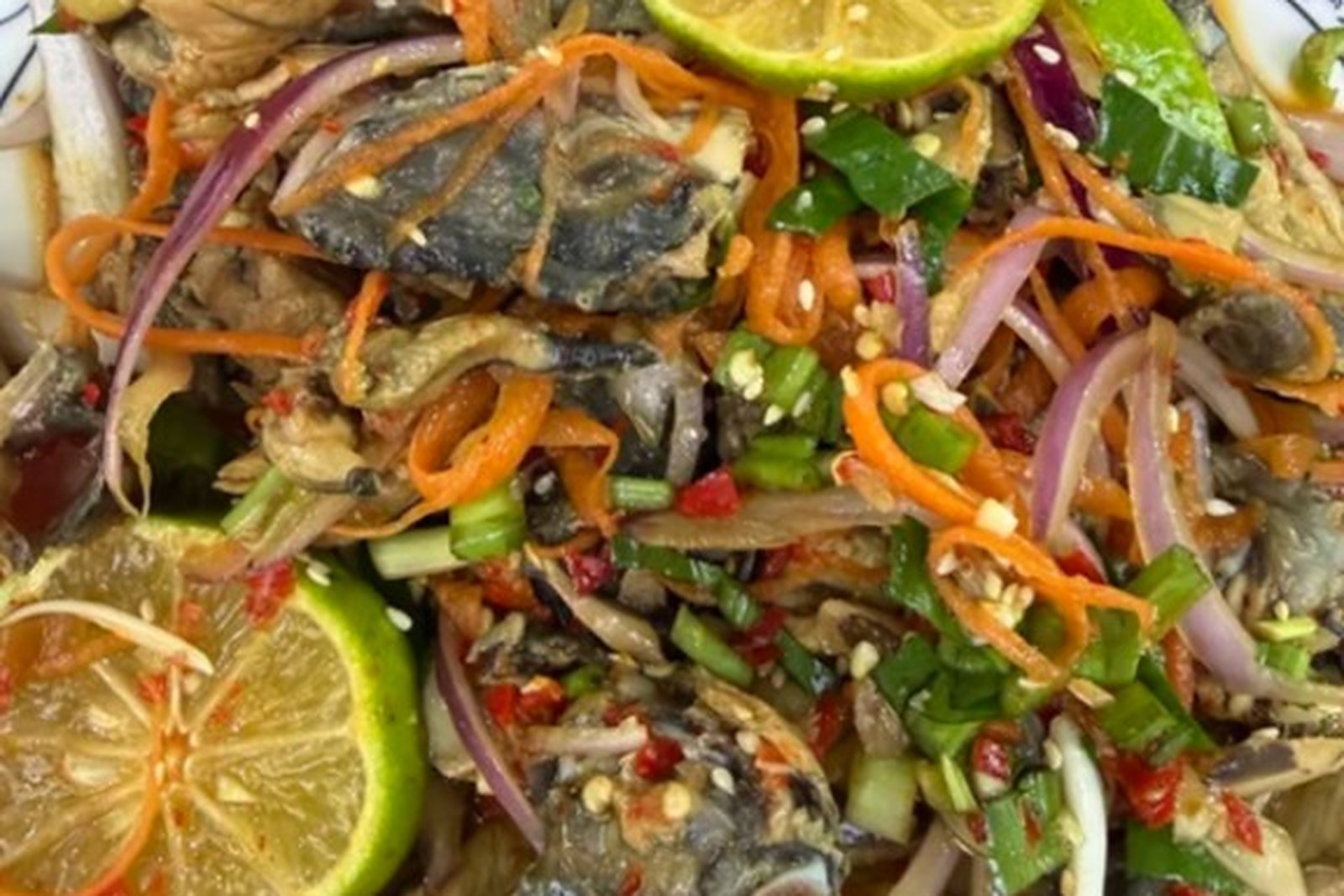
The mechanism is the shred and the acid. The 鸡 jī is a free-range 土鸡 tǔjī village chicken, poached in plain water with a 姜 jiāng and 葱 cōng scented light broth (the broth itself becomes the 景颇 Jǐngpō soup, nothing wasted), then pulled apart by hand while still warm so the meat stays in rough strands rather than neat cubes – the tear, not the knife, is what gives 鬼鸡 guǐjī its ragged, honest look. The dressing is where the dish is made: the 柠檬 níngméng is juiced straight over the warm meat so the acid ‘cooks’ the surface a little more and the sourness opens the fat, the 小米辣 xiǎomǐlà is smashed rather than sliced so its heat spreads, and the 芫荽 yánsuī coriander goes in whole-leaf and generous, because in 德宏 Déhóng coriander is a vegetable, not a garnish. The comparison locals draw is with the 舂鸡脚 chōng jījiǎo pounded chicken feet and the 柠檬撒 níngméng sā lemon dip of the Dai – same sour-lemon family, different grammar – but the 鬼鸡 guǐjī is the Jingpo one, built on shredded meat and 芫荽 yánsuī rather than on pounded bone or a broth-dip. It is a first cousin of the 泰式青木瓜 Tàishì qīngmùguā Thai som tam of the region, but the 鬼鸡 guǐjī uses chicken and lemon where som tam uses papaya and lime, and the Jingpo version is the one that carries the spirit-name.
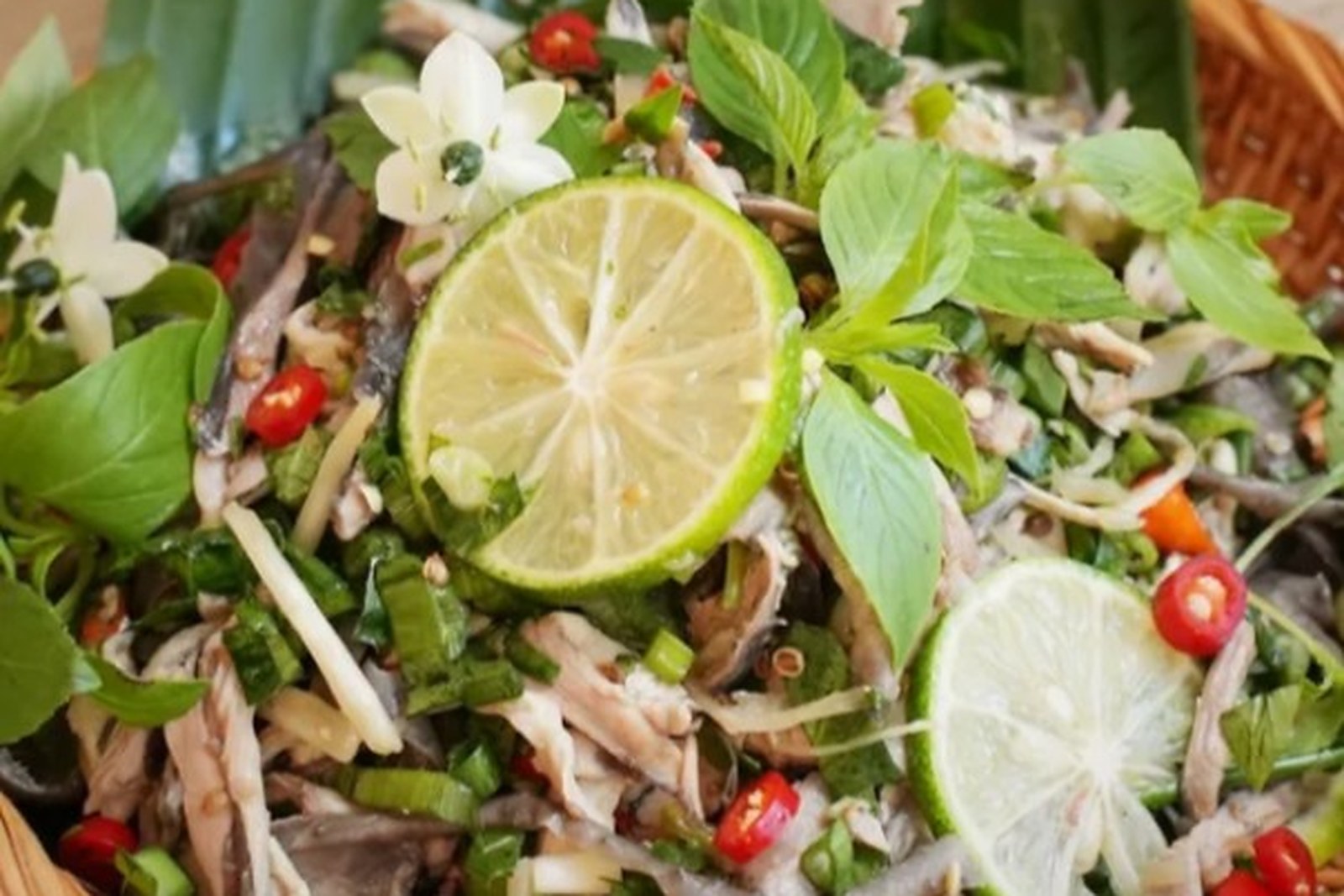
Locals eat it as a cold dish among many, not as a main. The move is to order it at a 景颇 Jǐngpō restaurant or a 绿叶宴 lǜyèyàn green-leaf banquet house – the dish is the spine of the Jingpo table – and to ask for it 酸 suān sour and 辣 là hot to your level, because a house that tones the lemon down for visitors has missed the point. Eat it cool, with the 鬼鸡 guǐjī and a pile of the 香柳 xiāngliǔ fragrant herb the Jingpo love, and treat it as the bright counterpoint to the 烤肉 kǎoròu grill and the 舂菜 chōngcài pounded dishes of the same spread. The honest season is the warm half of the year – spring through autumn – when a cool sour salad sits right, though it is poured year-round at the banquet houses; the honest test of a 景颇 Jǐngpō cook is the 柠檬 níngméng: real border lime is sharp enough to make the eyes water, and a 鬼鸡 guǐjī dressed with bottled 醋 cù vinegar instead of fresh lemon is a ghost of the real thing. Note that in 德宏 Déhóng the 柠檬 níngméng is a local crop of the 坝子 bàzi valley fields, and the best plates are where the cook picked it that morning (worth confirming seasonal supply).
Words and Names
德宏柠檬鬼鸡 Déhóng Níngméng Guǐjī Dehong lemon ghost chicken · 景颇族 Jǐngpōzú the Jingpo people · 鬼宴 Guǐyàn the ghost feast · 柠檬 Níngméng lemon / border lime · 小米辣 Xiǎomǐlà bird’s-eye chili · 芫荽 Yánsuī coriander · 土鸡 Tǔjī free-range village chicken · 香柳 Xiāngliǔ fragrant herb · 绿叶宴 Lǜyèyàn green-leaf banquet · 舂菜 Chōngcài pounded dishes · 德宏 Déhóng Dehong
What the Locals Know
The local knowledge about the 鬼鸡 guǐjī is the lemon, the tear and the temperature. The dressing must be fresh 柠檬 níngméng border lime, juiced over warm meat – a plate dressed with bottled 醋 cù vinegar instead is a ghost of the real thing, so taste the acid first. The second check is the shred: the chicken should be hand-torn into rough strands while warm, not cubed by a knife, because the ragged tear is what lets the lemon and 芫荽 yánsuī cling; a neat cube plate is a kitchen shortcut. The third is the heat: ask for 酸 suān and 辣 là to your level, but know a house that tones the 小米辣 xiǎomǐlà down for visitors has missed the point – the dish is supposed to pucker and burn. A fourth, for the order: eat it cool, as one of many small dishes of a 景颇 Jǐngpō spread, with the 香柳 xiāngliǔ herb, never as a lone hot main, and the best plates are where the 柠檬 níngméng was picked that morning (worth confirming seasonal supply).
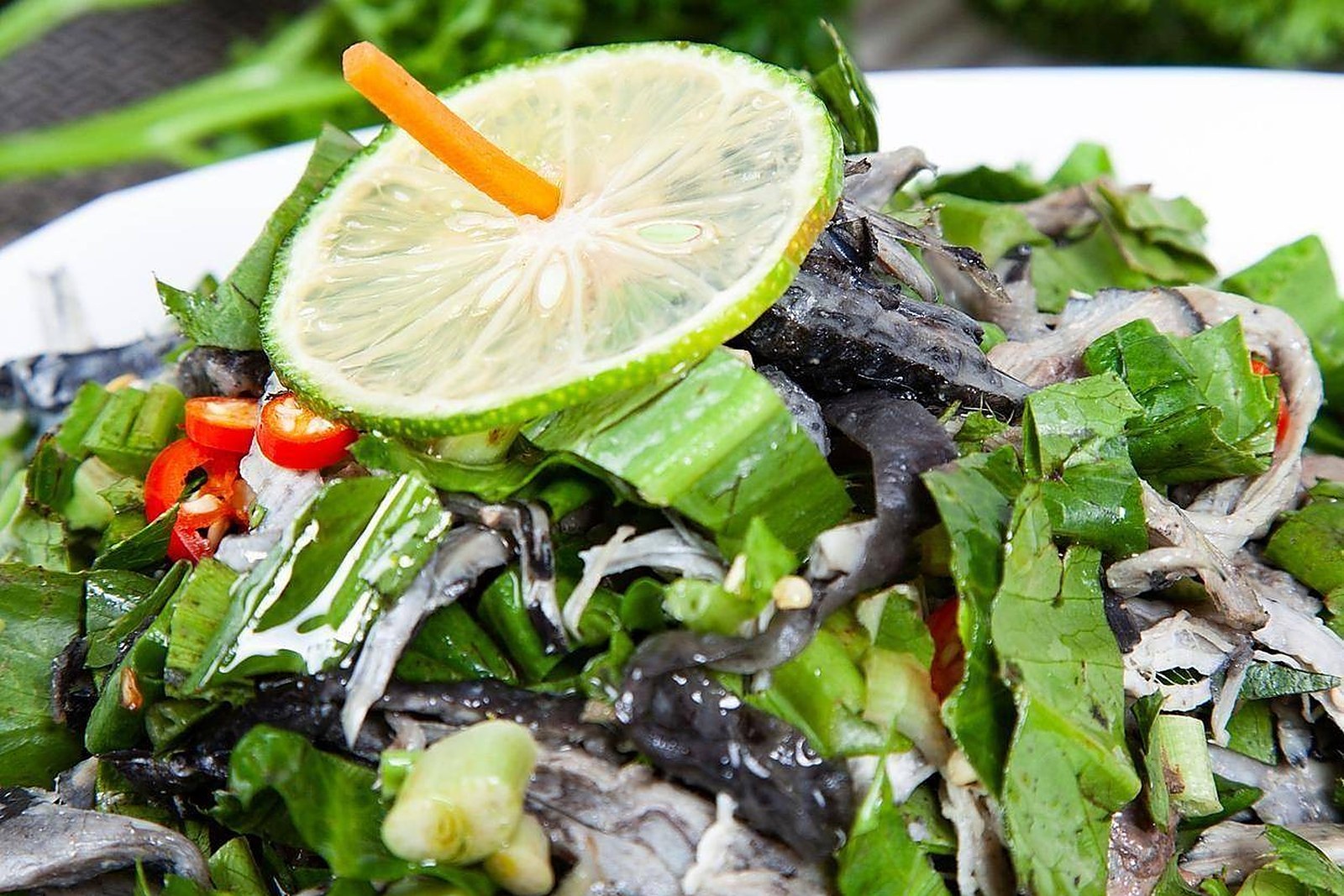
flowcloud would say that the 鬼鸡 guǐjī is a poached 土鸡 tǔjī torn by hand and dressed with fresh 柠檬 níngméng lemon and a fist of 芫荽 yánsuī – thirty to sixty yuan on a 景颇 Jǐngpō table – and that the honest move is to ask for it sour and hot, eat it cool among the small dishes, and trust the lemon over the vinegar, because the ghost in the name is memory and the bite is the point. All checked October 2026.
Where to find it: 景颇族 Jǐngpōzú restaurants and 农家乐 nóngjiālè farm kitchens across 德宏 Déhóng, especially inside the 绿叶宴 lǜyèyàn green-leaf banquet spread – a plate runs about 30-60 yuan (worth confirming the details); ask for it sour and hot to your taste, eat it cool among the other small dishes, and check that the dressing is fresh 柠檬 níngméng lemon and not 醋 cù vinegar. Ghost chicken is the Jingpo cold salad of Dehong, named for the old spirit-feast and built on lemon and coriander. All checked October 2026.