
Deqing gonggan is a mandarin, and its name is a piece of civic self-promotion that happens to be true. 德庆贡柑 Déqìng gònggān means the tribute mandarin of Deqing, and 贡 gòng is the word for a gift to the emperor, so the county is claiming that its fruit was once sent to the court. What is not in doubt is the fruit itself: a thin-skinned mandarin with a dense, sweet flesh and a remarkable amount of dry, honeycomb pith, which is what allows the peel to come away in one unbroken strip rather than in fragments. It is a 柑 gān rather than a 橘 jú or an 橙 chéng, sitting between the small mandarin and the orange, and the local harvest runs from late November into January. The pith is the key to the variety. In most citrus the albedo, the white layer under the peel, is tightly bound to the segments and must be torn away, and it is bitter. Here it is loose, spongy and almost tasteless, so the fruit can be peeled and eaten with the pith still attached, and the segments separate cleanly. That single property is why the variety is grown rather than the sweeter but harder-to-peel mandarins, and it is why the fruit travels: a gonggan packed into a box arrives intact where a softer one would have bruised.
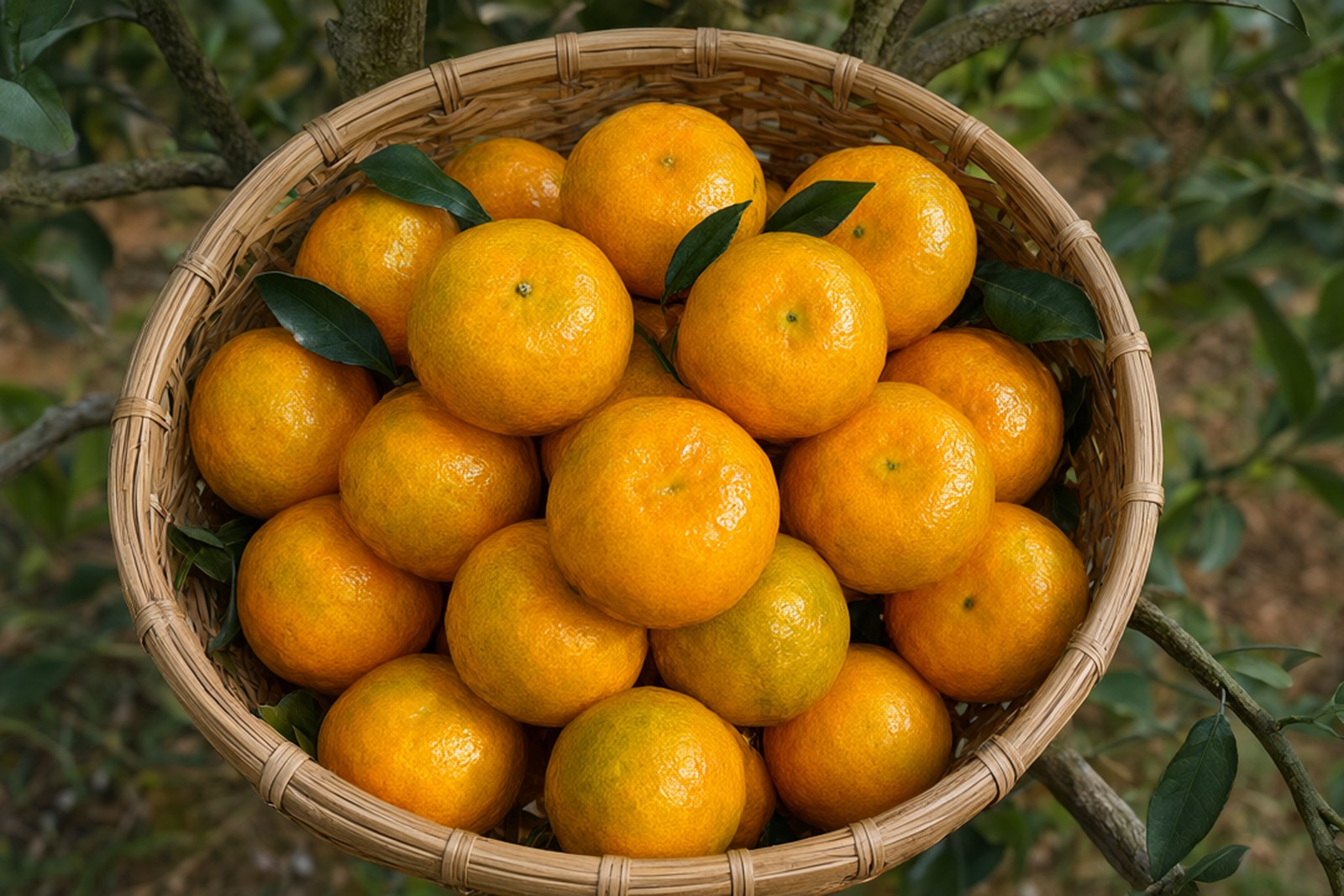
Deqing sits along the 西江 Xī Jiāng, the West River, in the far west of the prefecture, and the fruit is grown on the low hills above the river where the soil is sandy and the winter nights are cool. The cool nights are what build the sugar: citrus ripens by accumulating sugars and losing acid, and a site with a wide day-night temperature swing does both faster than a warm one. The trees are old by modern standards, many of them on rootstock chosen for the local soil, and the county has kept named orchards rather than pushing everything into a single industrial variety, which is unusual and good.
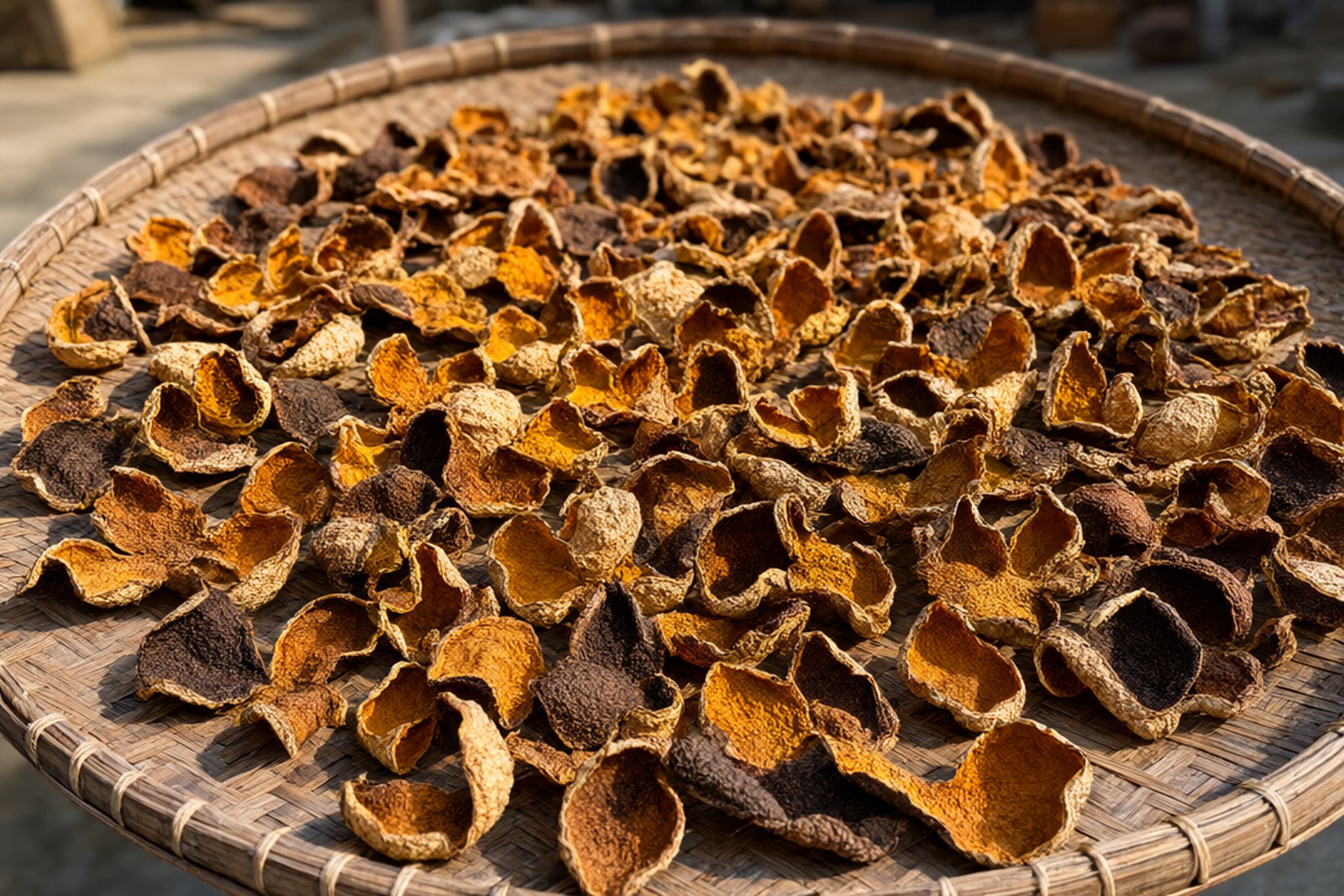
Because the fruit is a 柑, it also has a second use. The peel, dried and aged, is 陈皮 chénpí, the aged tangerine peel that is one of the most valuable ingredients in Cantonese cooking and medicine, and Deqing’s peel is considered good stock. A three-year peel is worth more than the fruit it came from, and a twenty-year one is sold in small paper packets at prices that surprise visitors.
Tribute, Orchard and Peel
The tribute claim is difficult to verify and easy to believe. Several southern fruits were at various times sent north to the court, and the practice is the origin of the 贡 gòng in dozens of local names. What is documented is that the variety has been grown in the county for a very long time and that the modern industry dates from the 1990s, when the county settled on gonggan as its crop and built the orchards around it. The result is a fruit that is now sold under a protected name and shipped across the country.
The peeling habit is worth knowing. Local people peel a gonggan in one motion, starting at the stem end and spiralling the peel off in a single band, and they do it in about three seconds. Children are taught to do it that way, and a person who produces fragments is teased. The peel is then either thrown away, dried for the kitchen, or eaten as 柑皮 gānpí, candied and salted as a snack.
Words and Names
德庆贡柑 Déqìng gònggān is the fruit; 贡柑 gònggān alone is enough in Guangzhou markets. 柑 gān is the intermediate citrus between mandarin and orange, 橘 jú the smaller mandarin, 橙 chéng the orange. 皮 pí is peel, 陈皮 chénpí aged dried peel and 柑皮 gānpí the fresh or candied version. 白络 báiluò is the pith, which is the property the fruit is chosen for, 沙糖桔 shātángjú is the sweet little mandarin of 四会 Sìhuì in the same prefecture, and 西江 Xī Jiāng the West River the orchards overlook.
What the Locals Know
Buy in season, from late November to January, and buy fruit with the leaves still attached, which is the local mark of freshness. Judge by weight rather than by colour: a gonggan should feel heavy for its size, and the peel should be tight rather than puffy. A single fruit should peel in one strip; if it comes apart in pieces the pith has dried out and the fruit is old. Prices in the county run from about four to twelve yuan a catty in season, and rise sharply outside it. If you want 陈皮, buy a small packet of three-year peel rather than an aged one, since the aged stock is priced for collectors and hard to verify.
flowcloud would say that the gonggan is a fruit that succeeded by being easy, since its reputation rests not on being the sweetest in the grove but on coming apart in your hand without a knife.
Where to find it: the roadside orchards and 果园 stalls on the hills above the 西江 Xī Jiāng in 德庆县 Déqìng Xiàn, an hour and a half west of 肇庆市, and the fruit markets of 端州 Duānzhōu where the crop arrives in crates from late November. Buy a few to eat on the spot, ask for 带叶 dài yè fruit with the leaves on, and pick up a small packet of 陈皮 from a shop that dries its own.