
墨鱼饼 mò yú bǐng is a cake made of cuttlefish, and in 电白区 Diàn bái qū, the coastal district of 茂名市 Mào míng shì, it is not a snack but a fixture. The district’s own phrase for it is 没有墨鱼饼不成席 méi yǒu mò yú bǐng bù chéng xí: without cuttlefish cake there is no banquet. It arrives at the start of a wedding dinner and at the end of a family meal, it is sold from freezers and from roadside fryers, and it is one of the few local foods whose making has been given a formal place in the province’s heritage registers, in this case the municipal intangible-heritage list, where it was entered in July 2023.
The cake is old. It is traced to 电城 Diàn chéng, the old county town, which in the Ming was 神电卫城 Shén diàn wèi chéng, the guard city of the naval garrison, and the trade counts roughly six hundred years back from the Ming and Qing. The garrison had a harbour and the harbour had cuttlefish, and the two things together produced a way of turning a soft, awkward, fast-spoiling catch into something that could be carried. 电白’s own local historians put the beginning in the Ming, and the dish’s distribution is still essentially the two places it began: 电城镇 and 博贺镇 Bó hè zhèn, fifteen kilometres apart on the same stretch of coast.
What makes the dish interesting is that the two towns have never agreed on how to make it. 电城 works with a cleaver, chopping the cleaned cuttlefish into a paste by hand, and the resulting cake is the denser and more fibrous of the two. 博贺 pounds it, working the flesh with a wooden mallet until it becomes a sticky, elastic mass, and adds 比目鱼粉 bǐ mù yú fěn, a flatfish powder, to the mix, which gives the 博贺 version a deeper and more savoury back note. Both schools use the same supporting cast: egg white, potato starch or wheat flour, light soy, a little sugar, a little 陈皮 chén pí, the dried tangerine peel that turns up all over this province’s cooking, and salt. Both depend on one thing above all, which is that the cuttlefish has to be fresh; a frozen fish will not set, and there is no way to rescue it.
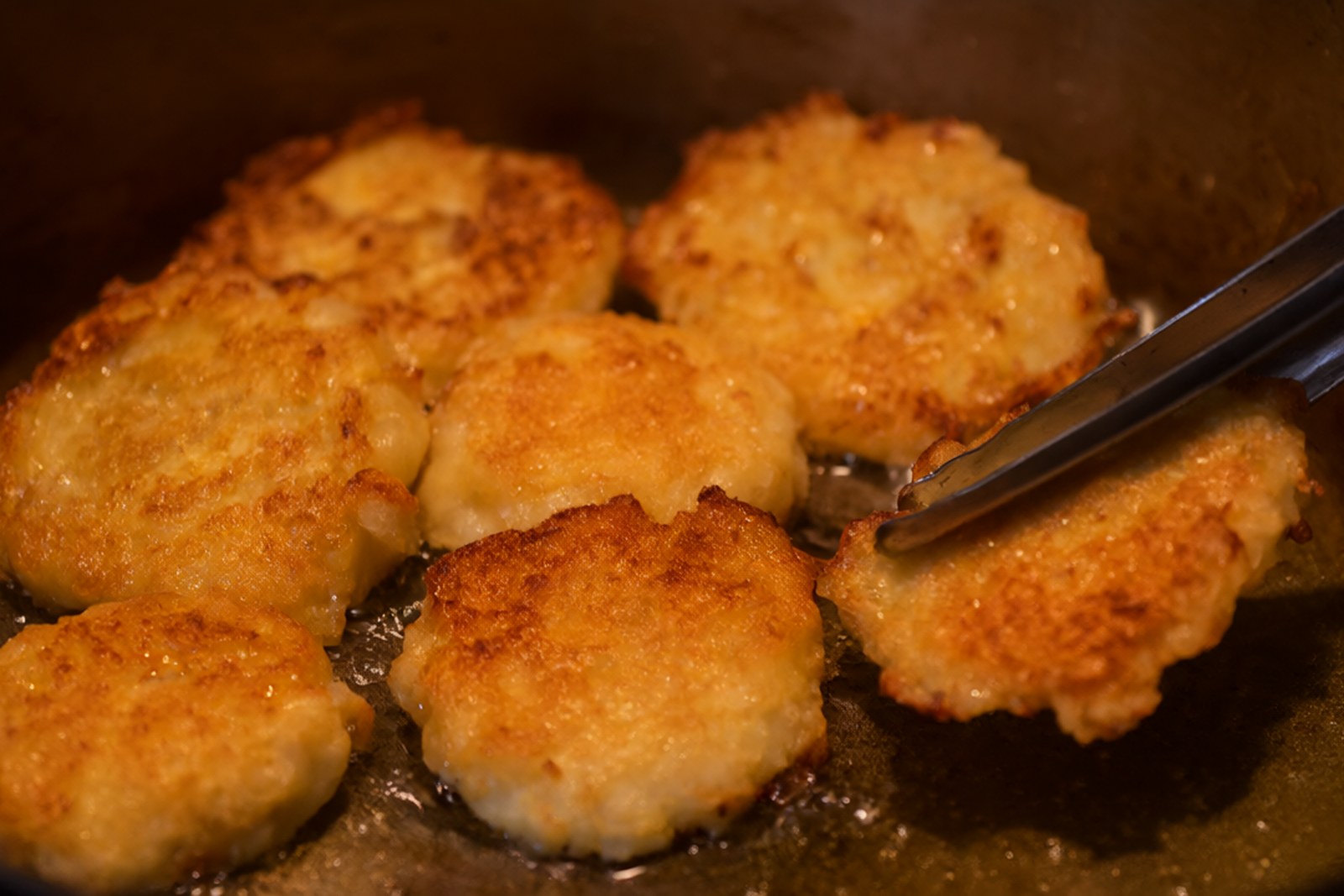
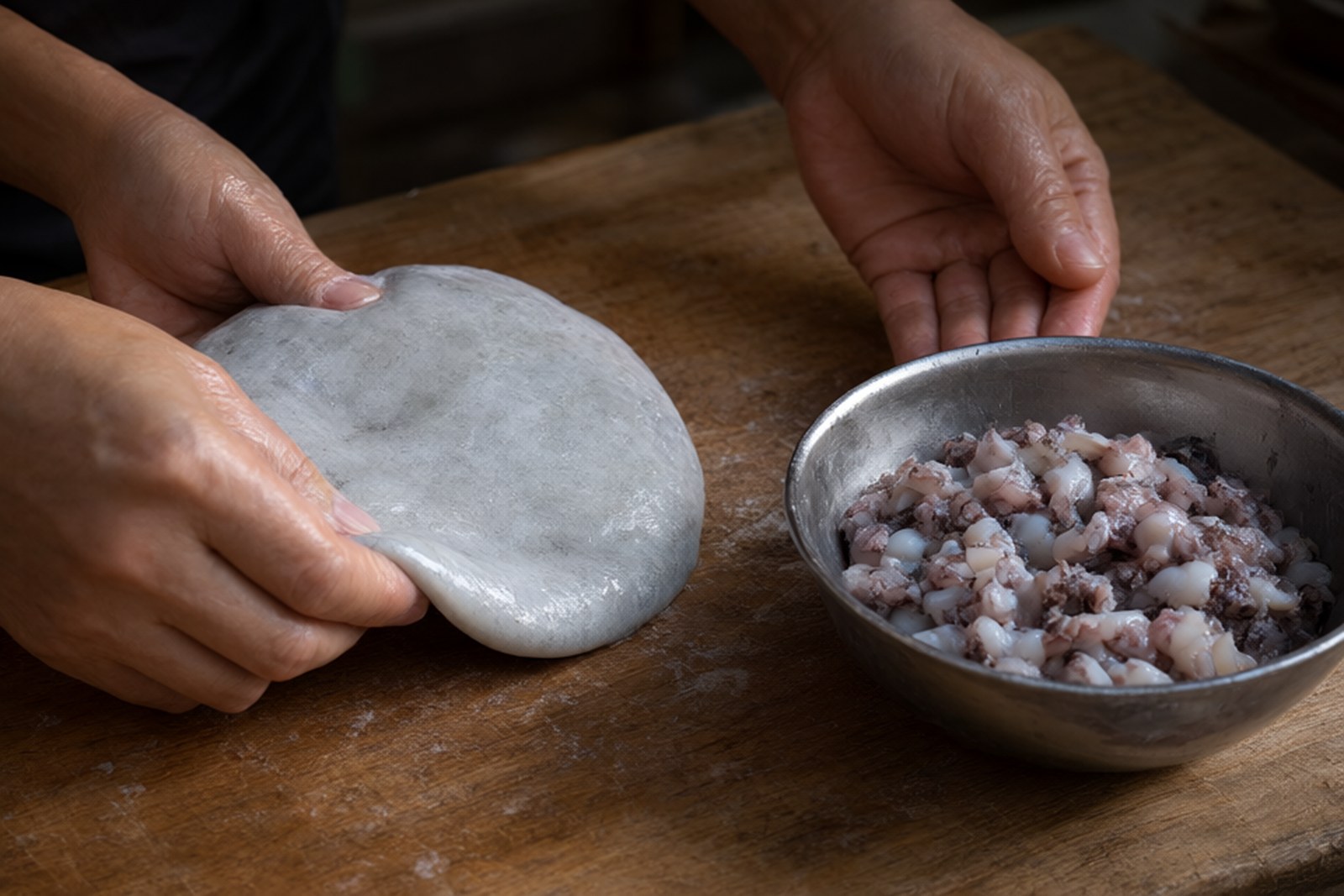
The technique inside the technique is how fine the chop goes. Chopping the flesh only part of the way leaves flecks of cuttlefish in the paste, and the cake that comes out of it has a chew and a grain; working it all the way to a smooth paste gives a springier, cleaner cake that the trade describes as 清爽 qīng shuǎng, clean and cool, and that the older cooks consider the proper texture for a formal dinner. Either way the mixture is worked until it holds together, and the cook takes a handful and slaps it between the palms until it is a flat round about the size of a saucer. Then there is a choice that divides households as much as the paste does. The cake can be 文火干煎 wén huǒ gān jiān, shallow-fried slowly until the surface goes yellow and slightly puffed, and eaten with 五香粉 wǔ xiāng fěn, five-spice, or cooked salt; or it can be 清水煮 qīng shuǐ zhǔ, dropped into plain boiling water and lifted out the moment it floats, which produces something closer to a fish dumpling and is the version that goes into soups and hotpot.
The industrial end of the trade has moved the dish a long way from the kitchen. 博贺渔港 Bó hè yú gǎng, the harbour the cakes come from, is one of the ten largest fishing ports in the country, into which the cuttlefish arrives by the tonne, and the district’s processors now make the cakes and their relatives at scale, freezing them and shipping them out; the same factories turn out 马鲛鱼圆 mǎ jiāo yú yuán, the Spanish mackerel balls that the district insists on calling 圆 yuán rather than 丸, and the prawn pastes and fish slices that go with them. Their exports have reached the United States and New Zealand, where they sell to the same emigrant households that buy the mustard, and one village in 博贺 called 上海村 Shàng hǎi cūn is known locally and simply as 墨鱼饼村 mò yú bǐng cūn, the cuttlefish-cake village, because the whole place has made them for generations. The mechanised version is not the same thing, and everyone in 电白 knows it, but it is what keeps the name on shelves two thousand kilometres away.
Words and Names
墨鱼 mò yú, ink fish, is the cuttlefish and 墨鱼饼 the cake made from it; 电城 and 博贺 are the two towns whose versions differ, and 比目鱼粉 bǐ mù yú fěn is the flatfish powder that distinguishes the 博贺 one. 打胶 dǎ jiāo is the beating or chopping of the flesh into a set paste, and 陈皮 chén pí, aged tangerine peel, is the aromatic that goes into both schools. 干煎 gān jiān is the dry shallow-fry and 清水煮 qīng shuǐ zhǔ the plain-water poach. 马鲛鱼圆 mǎ jiāo yú yuán is the mackerel ball made alongside the cake, and 墨鱼饼村 mò yú bǐng cūn is the nickname of 上海村 in 博贺.
What the Locals Know
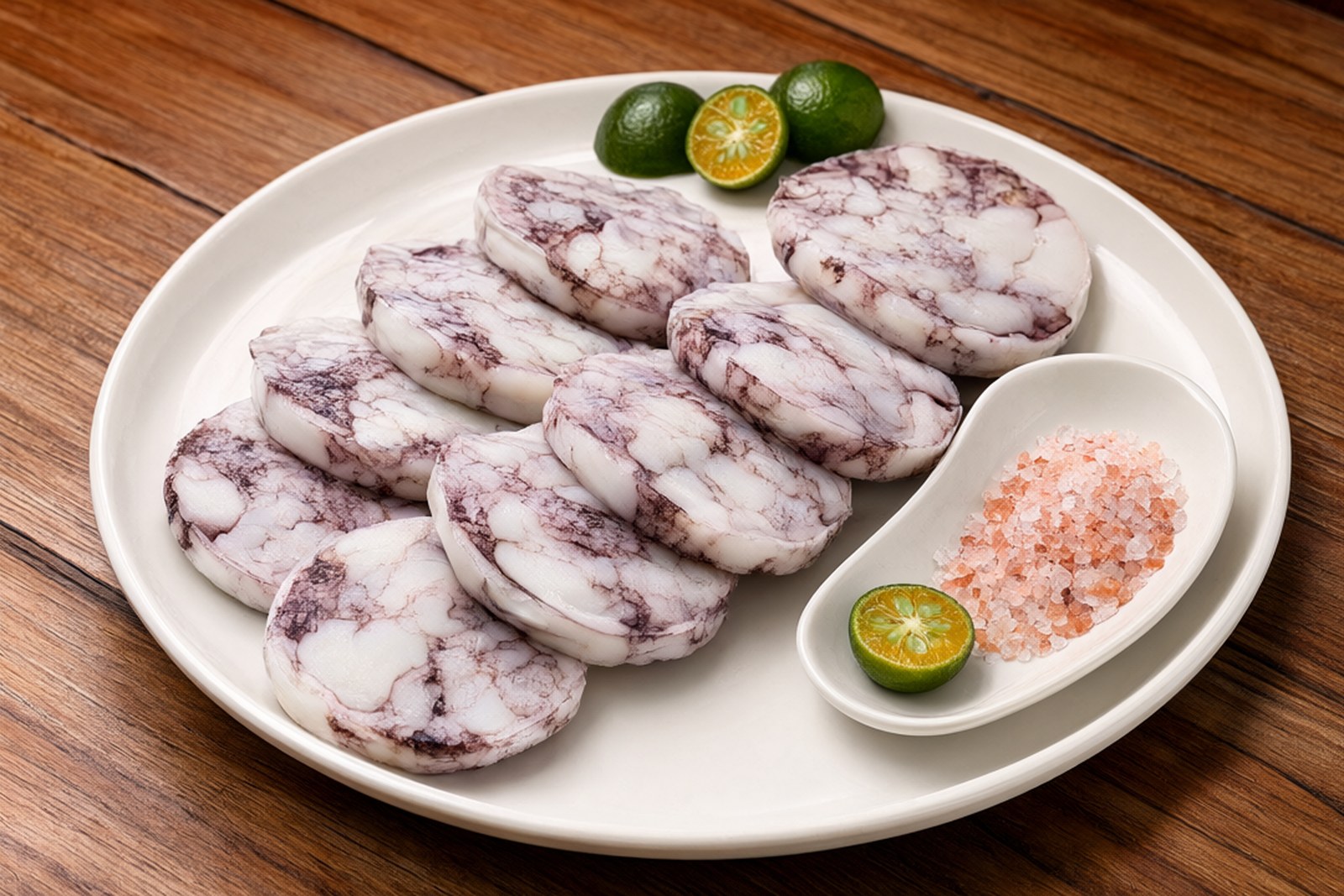
The test of a cuttlefish cake happens before it is cooked. Press a raw one and it should feel firm and slightly springy and should not weep water; a cake that leaves a puddle on the board was made from thawed fish and will turn rubbery in the pan. The colour of the raw paste should be a pale grey-white, and the finished cake should be golden at the edge and white inside. The district’s own eating advice is not to overdo the sauce; a squeeze of lime or a dip in five-spice and cooked salt is what the old cooks recommend, on the grounds that the flavour being sold is the cuttlefish. 电白人 eat it in the 打边炉 dǎ biān lú, the local hotpot, where it goes in whole and comes out swollen, and they will tell you that a cake that has been fried and then reheated is no longer a cuttlefish cake. If you buy it frozen to take away, take it home frozen.
flowcloud would say that two towns fifteen kilometres apart took the same soft, cheap, perishable catch and refused to agree on a single step of how to handle it, and that the argument has kept both versions alive for six hundred years, which is a longer run than most recipes get.
Where to find it: the fryers, market stalls and processors of 电城镇 and 博贺镇 in 电白区, where it is sold raw by weight from chilled cabinets, fried to order at the roadside, and packed frozen for export; the harbour at 博贺 is one of the country’s ten largest and the morning market beside it is where the fresh cuttlefish comes in. 电白 is the coastal district of 茂名市, reached from 茂名站 Mào míng zhàn on the 深湛 railway in about forty minutes by road, and the two towns are on the coast road east of the city. A fried cake at a stall costs a few yuan.