
Dianshan Lake Hairy Crab: Shanghai’s Own Clear-Water Mitten Crab, Green-Backed and White-Bellied with Golden Claws and Bronze Fur, the “Ninth-Month Female, Tenth-Month Male” Calendar and the Plain-Steamed Ginger-Vinegar Season of Qingpu District, Shanghai
淀山秋水蟹初肥,青背白肚一盏金。Diànshān qiūshuǐ xiè chū féi, qīng bèi bái dù yī zhǎn jīn – When the autumn waters of Dianshan fatten the first crabs, green backs and white bellies hold a cupful of gold.
淀山湖大闸蟹 Diànshānhú dàzháxiè Dianshan Lake hairy crab is the clear-water crab trade of 淀山湖 Diànshānhú Dianshan Lake in 青浦区 Qīngpǔ Qū Qingpu District, Shanghai – the city’s largest freshwater lake on its western edge, where the crab boats and restaurant tanks keep Shanghai’s own corner of the great autumn crab calendar. The crab is the lake’s own register: 清水蟹 qīngshuǐxiè clear-water mitten crab, graded the old way by 青背白肚 qīng bèi bái dù green back and white belly, 金爪黄毛 jīn zhǎo huáng máo golden claws and tawny pile – a shell clean enough to argue the water it grew in – and eaten by the season clock of 九雌十雄 jiǔ cí shí xióng, females ninth lunar month for the roe, males tenth for the milt. The eating register is deliberately plain: 清蒸 qīngzhēng steamed whole over the pot, unbound at the table and dipped in 姜醋 jiāngcù ginger-vinegar, the roe judged by whether it tastes of the lake rather than the dip, the fingers judged by the work they are worth (worth confirming the details – which shore kitchen runs which pond’s crabs and how much of the tank trade is lake-local turns over as crab seasons do, and the specific doors are best confirmed at the shore rather than recited). The clientele is the city’s autumn crab pilgrims first and the lake shore’s own celebration tables second. The blunt definition: the lake that keeps Shanghai’s own crab season – the taste of Qingpu eaten one careful, roe-first autumn at a time.
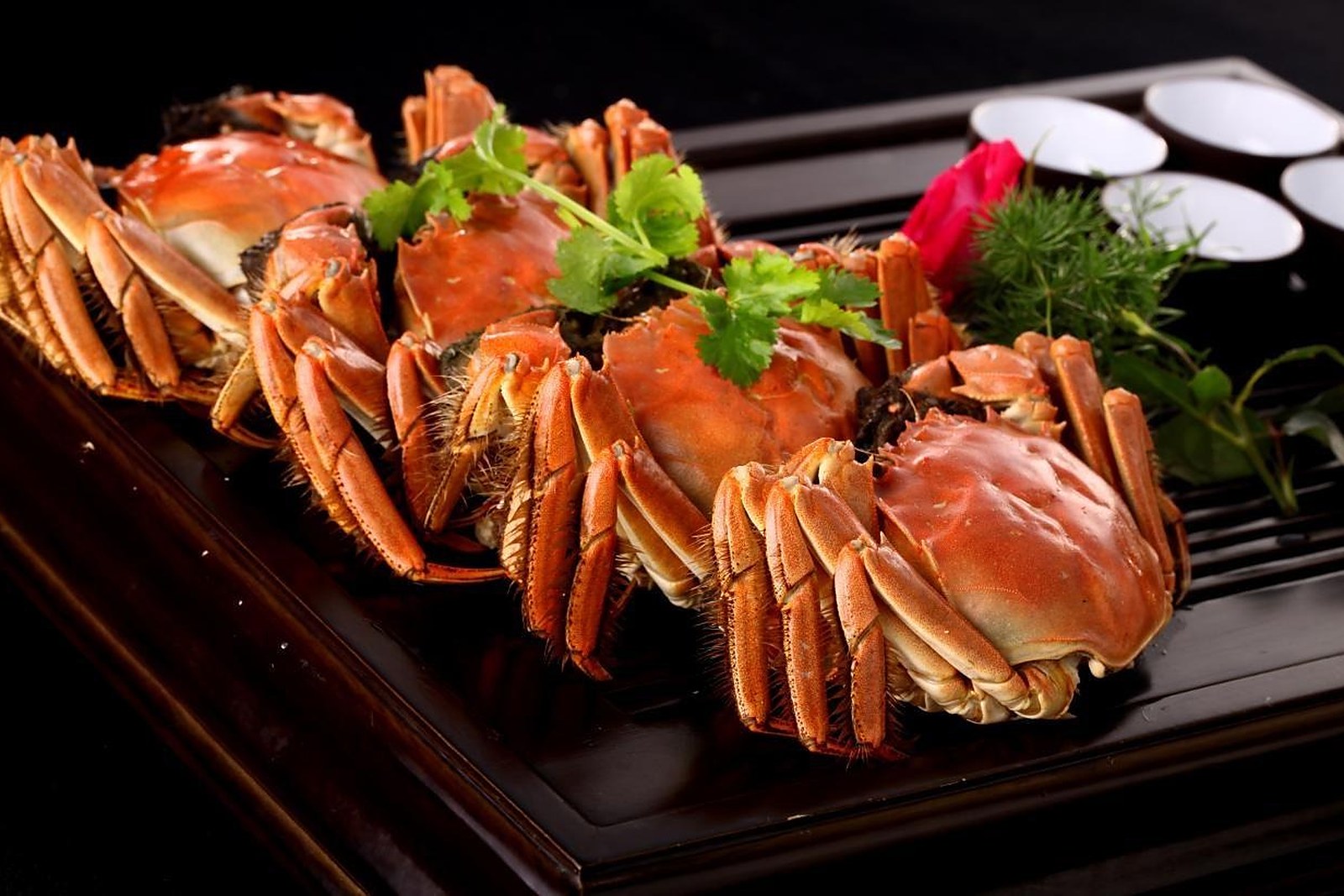
Call it honestly: crab-season money on a lunar clock. Getting there is one door: 淀山湖 Diànshānhú Dianshan Lake is reached by 地铁17号线 Dìtiě 17 hào xiàn Metro Line 17 to 东方绿舟站 Dōngfāng Lǜzhōu Zhàn Oriental Land station, then a bus or taxi to the east-shore restaurant belt (worth confirming the details for the lakeside bus loop times, which thin on weekdays); the crab tables run along the east shore promenade reach. One steamed crab at a shore table prices at occasion money by the catty, a crab banquet for a group at celebration money, a lakeside table with tea while the pots steam at occasion-within-reason money – though exact figures are worth confirming the details on rather than quoting, the crabs repricing weekly with the season’s curve. The crowds run to the season: the ninth and tenth lunar months stack the shore tables and the best bins empty by mid-afternoon, shoulder weeks thin the trade to the regulars, and a season weekday midday, when the pots steam for the shore’s own and the lake runs quiet, is the eater’s own hour (worth confirming the details for individual kitchens’ hours, which follow the crab deliveries more than any posted sign).
The honest star is the roe itself, graded crab by crab. What gets oversold is the “Yangcheng Lake twin” framing: guides sell a mirror of the famous Jiangsu crab lakes, and a first-timer may meet an ordinary lakeside strip of fish-restaurant tables, holding tanks and steamer stacks – which is not the disappointment but the point. What repays the effort is grading the crab the way the shore does: a shell judged by whether the 青背白肚 qīng bèi bái dù green-and-white holds without slime, a roe judged by whether it parts oily and dense rather than watery, a steam judged by whether the kitchen trusted the lake over the seasoning. The test costs nothing: eat one crab plain before you order the banquet, taste the first claw with no 姜醋 jiāngcù at all, and take the table where the shore’s own families hold their autumn bookings rather than where the crab banners fly – a trade that has steamed the same lake for generations grades its bins daily, and the local booking sheet is the certificate (worth confirming the details – the kitchen doors migrate with the leases, and today’s plainest shore room may be next season’s remembered one).
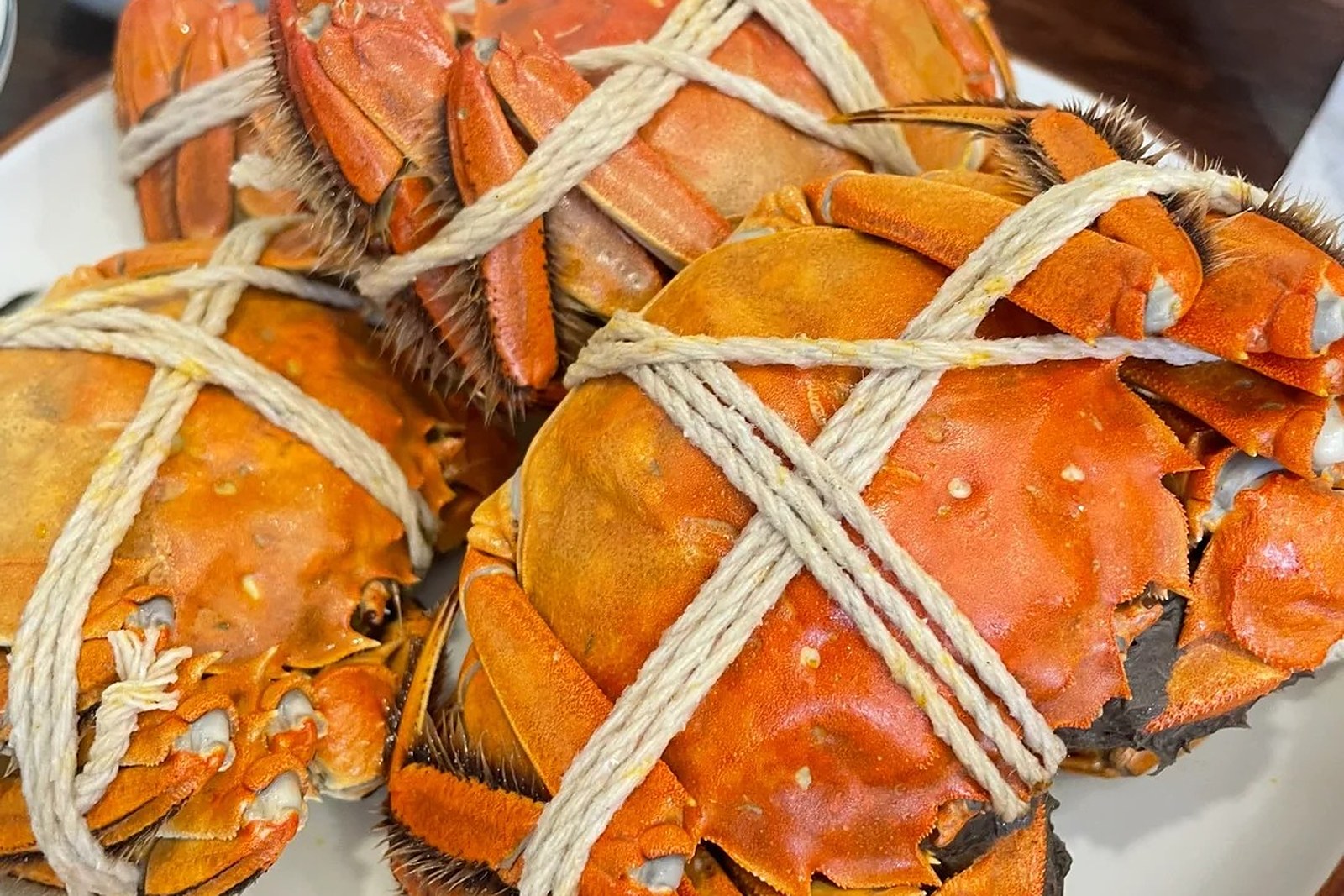
The shore’s deepest habit is the 九雌十雄 jiǔ cí shí xióng arithmetic itself: ninth lunar month the females, tenth the males, the whole shore’s menu re-ordered twice in six weeks – a calendar the kitchens staff around and the city’s crab-minded follow without reading a sign. Time it right – a season weekday midday, the pots steaming to order – and the plate explains the lake better than any banner: the water wrote the crab, and the steam keeps the season honest (worth confirming the details – which kitchens hold lake-local stock through which weeks, the trade thickening to the lunar peak and thinning again by early winter).
The rest of this Qingpu list keeps other tables: the reed-leaf bundles of 朱家角扎肉 Zhūjiājiǎo zhāròu Zhujiajiao zharou braise in the tanks of 北大街 Běidà Jiē North Street to the east, the sifted squares of 青浦焋糕 Qīngpǔ zhuànggāo Qingpu zhuanggao steam through the district’s old market towns, the pale-gold tumble of 银鱼炒蛋 yínyú chǎodàn silverfish scrambled eggs lands on these same lakeside tables from the same water, and the wrapped bundles of 阿婆粽 āpó zòngzi apo zongzi boil in the old town of 朱家角 Zhūjiājiǎo Zhujiajiao – one district, four more tables, all inside 青浦区 Qīngpǔ Qū Qingpu District; and when the crab lunch needs a lakeside bed or a broader route, the stay-and-street notes for the lake shore pick up where the steam leaves off.
Words and Names
What the Locals Know
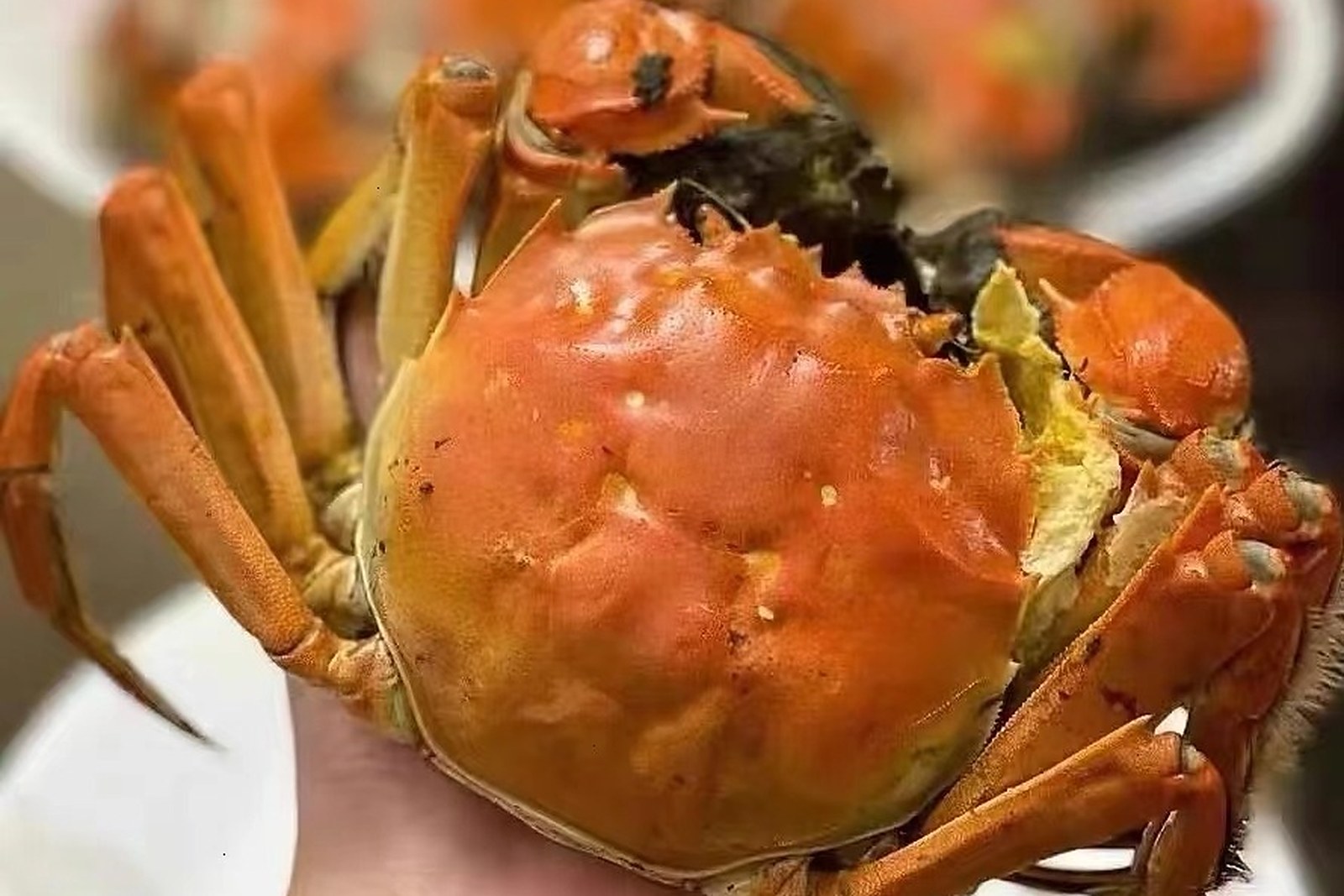
flowcloud would say that the 淀山湖大闸蟹 Diànshānhú dàzháxiè is Shanghai’s own clear-water crab and the autumn season of Qingpu District – a 清蒸 qīngzhēng steamed discipline where the 青背白肚 qīng bèi bái dù green backs and the 金爪黄毛 jīn zhǎo huáng máo golden claws answer the 九雌十雄 jiǔ cí shí xióng calendar and the 姜醋 jiāngcù ginger-vinegar dishes of the 淀山湖 Diànshānhú Dianshan Lake east shore – and that the honest move is to eat one crab plain, taste the first claw with no dip, and let the shore’s own booking sheet cast the vote, because the water wrote the crab and the steam keeps the season honest. All checked October 2026.
Where to find it: 青浦区 Qīngpǔ Qū Qingpu District, Shanghai – the autumn crab belt of 淀山湖大闸蟹 Diànshānhú dàzháxiè along the east shore of 淀山湖 Diànshānhú Dianshan Lake, where the 清水蟹 qīngshuǐxiè clear-water crabs keep the 清蒸 qīngzhēng steamed register and the 九雌十雄 jiǔ cí shí xióng lunar calendar, reached by 地铁17号线 Dìtiě 17 hào xiàn Metro Line 17 to 东方绿舟站 Dōngfāng Lǜzhōu Zhàn Oriental Land station and the bus or taxi to the east-shore tables (worth confirming the details for the lakeside bus loop and which kitchen runs which pond’s stock today, shore doors turning over as crab seasons do), where the trade keeps the lunar clock – ninth and tenth months the stacked shore tables, shoulder weeks the regulars, season weekday midday the eater’s own; occasion to celebration money by the catty, so call it worth confirming the details rather than a fixed number, and let the local booking sheet cast the vote. Dianshan Lake hairy crab is Shanghai’s own clear-water mitten crab, green-backed and white-bellied with golden claws and tawny fur, the ninth-female tenth-male calendar and the plain-steamed ginger-vinegar season of Qingpu District, Shanghai – the taste of 青浦区 Qīngpǔ Qū Qingpu District eaten one careful, roe-first autumn at a time. All checked October 2026.