
Ding’an Black Pig, a Cross-Bred Breed With a County Behind It
定安黑猪 Dìng’ān hēizhū is a pig with a county administration behind it, which is rare. The dam is 定安猪 Dìng’ān zhū, the local sow, assessed in 2010 as a national livestock genetic resource; the sire is 杜洛克 Dùluòkè Duroc, brought in by a programme that began in the early 1980s; and the result is a black, small-eared, slow-grown pig with a provincial standard, a certification mark and a county brand that reaches supermarkets on the mainland. It is also the pork in a 定安粽子 and the bone in the county’s breakfast soup.
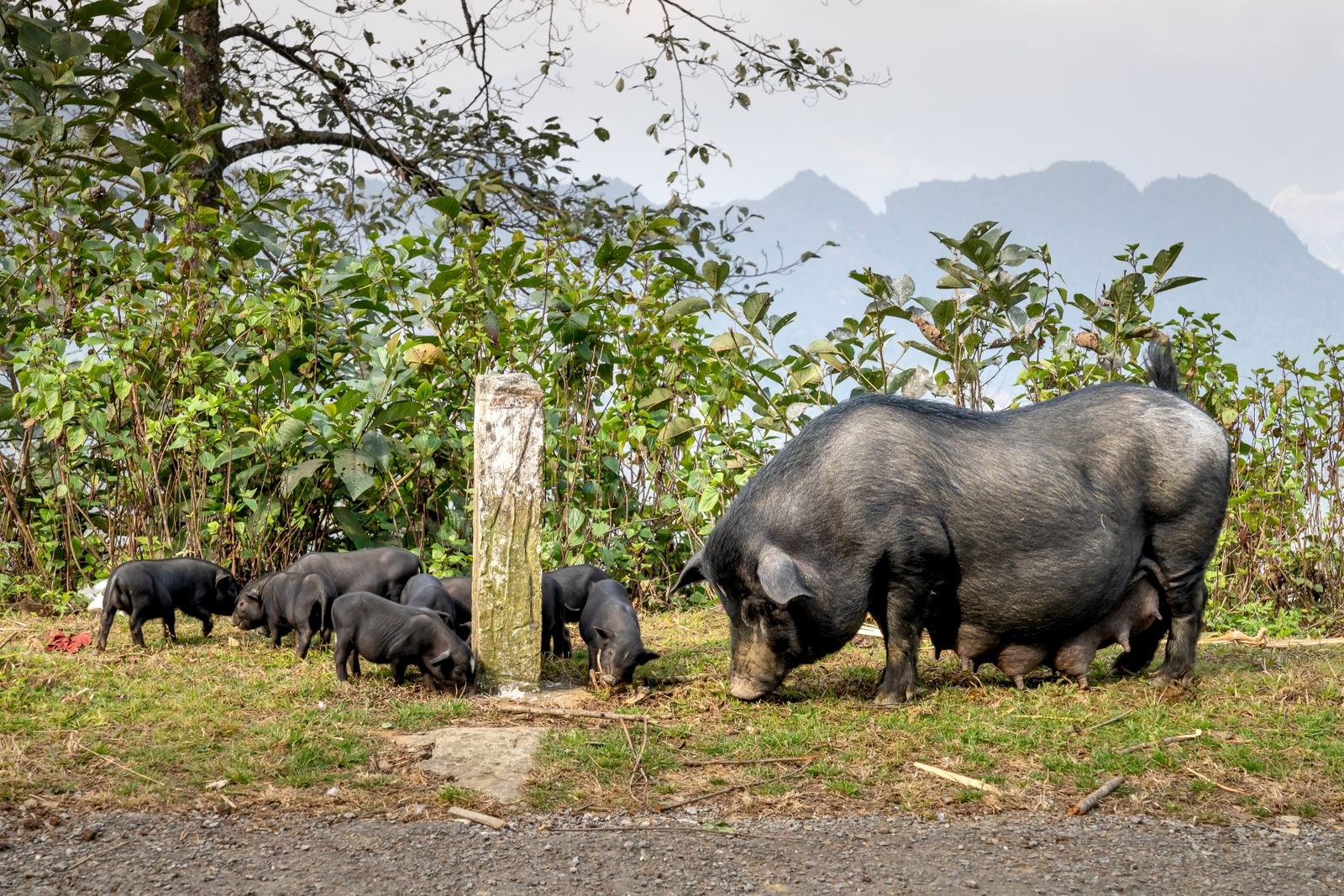
Look at the animal first. It is not large: the back and loin fairly straight, the legs strong, the hindquarters full, the coat glossy black all over and the ears small and upright. Testing laboratories have put eight indicators at the optimum value of the premium-pork industry standard, and the fat is laid down between the muscle fibres in a marbling the county calls 细密如霜, fine as frost. The growing period is the point of the breed and the argument against it: a free-range pig needs three hundred days to reach slaughter weight on the industry’s reckoning, about a year on the reckoning used for zongzi pork.
The farming is mostly free-range or semi-free-range, run by households and cooperatives. Where it is modern it is modern in a particular way: automatic feeders, pens with built-in weighing, automated drinkers, closed management, and a treatment system that filters the waste water. 龙湖镇 Lónghú zhèn’s 天烈 cooperative runs the loop the county likes to describe, cassava to fermented feed to pig to biogas and back to the cassava field. For the genetics the county works with 中山大学 Zhōngshān Dàxué on selection and purification, with six family lines of 定安猪 collected and under test, and with 海南大学 Hǎinán Dàxué, which in 2022 produced a first nutrition standard written for this pig rather than for a white one.
What is documented and what is only asserted need separating. The county’s own pages say black pigs have been kept here since the middle Qing and then give the years 1600 to 1700, which are not the middle Qing, so Ming and Qing is the safer reading. The hybrid programme is dated to the start of the 1980s, 1982 in one government account and 1981 in an encyclopaedia entry. 定安猪 was assessed as a national genetic resource in 2010; the provincial standard 《定安黑猪饲养管理技术规程》, DB46/T 73-2007, was issued in 2007; and in August 2014 the breed became a geographical-indication certification mark in class 31, live pigs and piglets.
The output figure is the county’s largest single inconsistency. The main official line, repeated across the provincial press and the county’s own 2025 write-up, is 196,000 定安 black pigs sold in 2024, 150,800 on hand and a total value of 532 million yuan, up 13.3, 14.2 and 11.8 per cent; a national specialty-brand profile of the same product says the county sells just over 68,000 a year. The two are nearly three times apart and nothing published reconciles them, so the 196,000 figure should be used only with its source attached and the 68,000 carried as doubtful rather than discarded. A third number answers a different question: the county’s whole pig herd, black and white together, was 234,600 head in 2024, down 6.8 per cent.
Words and Names
定安黑猪 Dìng’ān hēizhū is the commodity animal; 定安猪 is the local sow at the root of it, and 杜洛克 the Duroc boar that crosses into her. 保种场 bǎozhǒngchǎng is a conservation or gene-pool farm, which is the status 庆平 holds, and 家系 jiāxì is a family line, six of which are kept. 黑猪骨头汤 hēizhū gǔtou tāng is the black-pig bone soup, the county’s best-known dish, and 焖猪蹄 mèn zhūtí the braised trotter of 翰林镇 Hànlín zhèn. 名特优新 míngtèyōuxīn, famously, specially, excellently and newly produced, is the agriculture ministry’s list the brand joined in 2025.
What the Locals Know
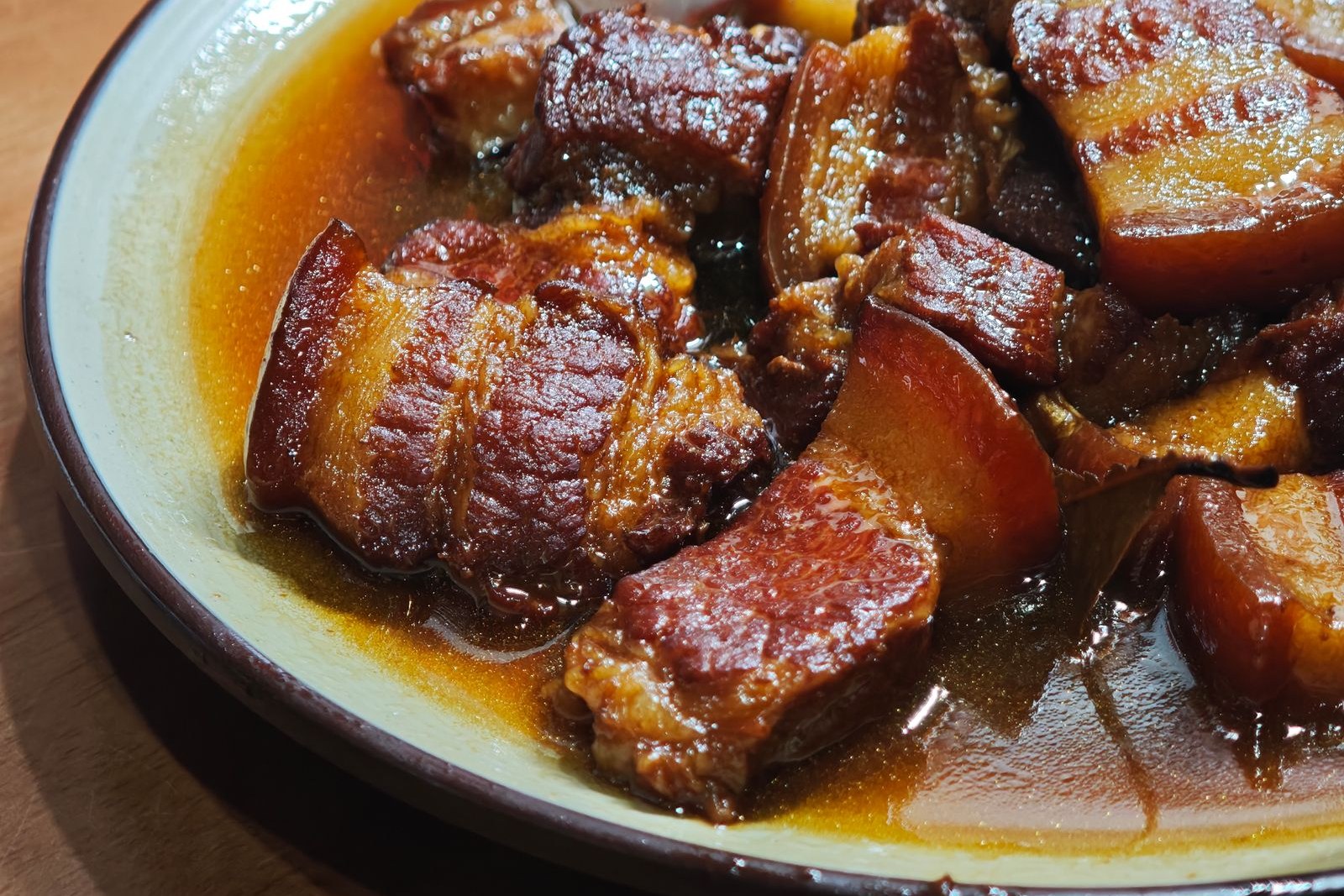
At the table the pig is mostly about bones and slow heat. 定安黑猪骨头汤 took first place in the county’s 十大特色菜肴 in 2010, the ranking made at the first Ding’an food festival; 白灼定安黑猪排骨 came fourth and 翰林焖猪蹄 ninth. The soup is a five-to-six hour affair: shank bones described as noticeably heavier than other bones, blanched to take off the blood and the smell, then simmered in a clay pot over a low fire until the liquor goes white, the bones themselves left uneaten. In 翰林镇 the trotters have an association of their own, set up in January 2023 on the strength of one dish.
The industry side is a list of projects. 庆平, the conservation farm at 同古村 Tónggǔ cūn in 新竹镇 Xīnzhú zhèn, holds about thirty thousand pigs and sells about sixty thousand a year from a four-hundred-mu site built in 2016 and expanded in 2022. A fattening park at 雷鸣镇 Léimíng zhèn, budgeted at fifteen million yuan, is designed for five thousand on hand and ten thousand sold a year. A processing park of two hundred and fifty million yuan on about seventy-two mu is planned for two thousand pigs a day, six hundred thousand a year. The county wants a standardised demonstration unit in each of its ten towns.
Where the meat goes is easy to trace. It is in 沃尔玛 Wò’ěrmǎ, 山姆 Shānmǔ, 百佳, 华润万家, 家乐福 and 大润发, and on 京东; it reaches the Greater Bay Area, Beijing, Shenzhen and Fujian, and is one of the breeds Hainan sends off the island in quantity. The price it holds in a soft market is about ten per cent above ordinary pork, and premium branded cuts for the Greater Bay Area go for more than a hundred yuan a jin. At the processed end there is a Spanish-style ham from the hind leg, cured two years, and a 德界 series of German-style sausages.
flowcloud would say that 定安黑猪 is a slow answer to a fast trade – a local sow crossed with an imported boar, three hundred days on cassava and rice, a provincial standard in 2007 and a certification mark in 2014, and a county that still argues by a factor of three about how many it sells.
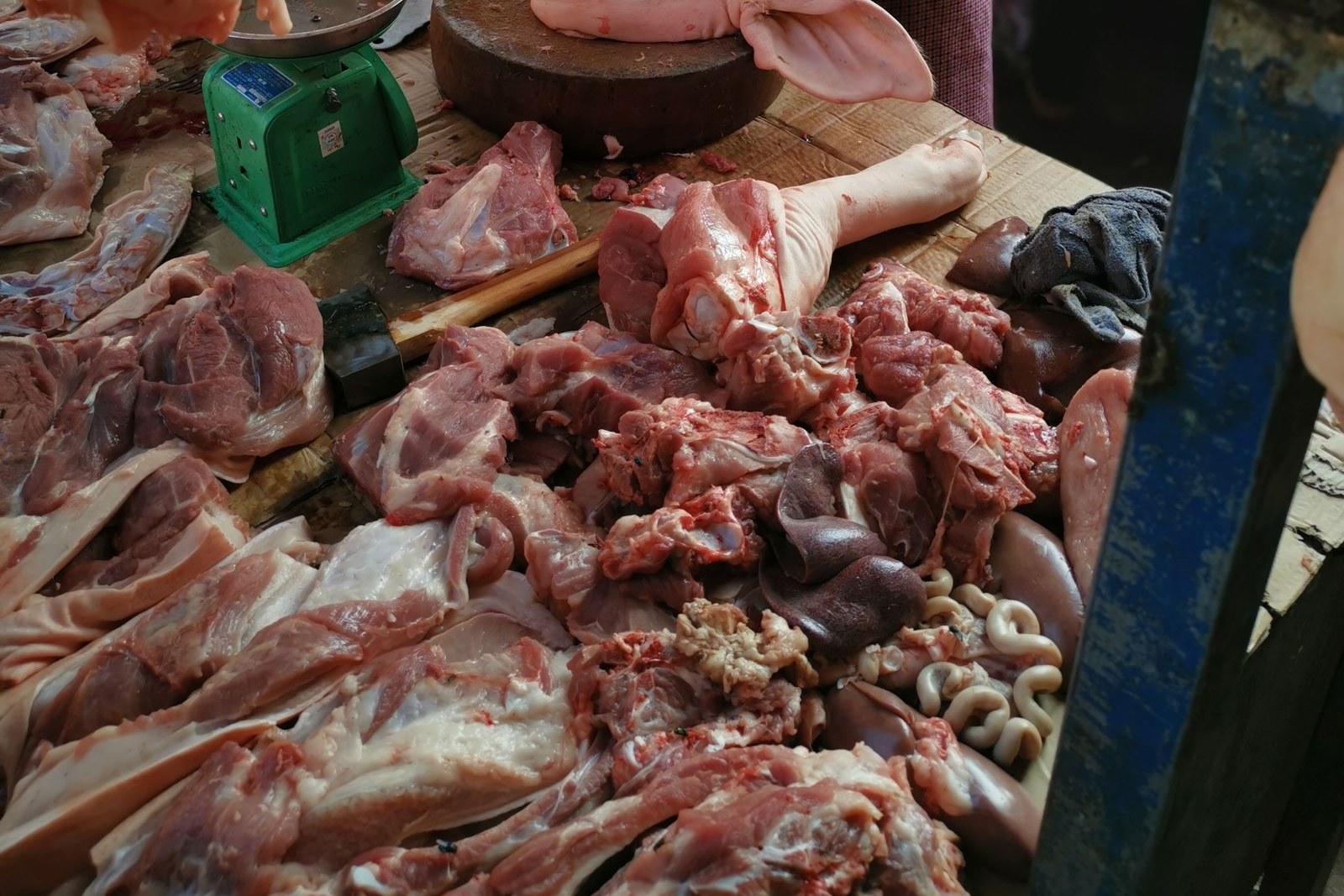
Where to find it: the conservation farm and breeding sheds around 同古村 Tónggǔ cūn in 新竹镇 Xīnzhú zhèn, the core of the breed; the black-pig butcher counters in the wet markets of 定城镇 Dìngchéng zhèn, where the cuts are labelled by brand and the belly is sold for zongzi; the bone-soup restaurants along 文明东路 Wénmíng dōng lù and through the county town, where a clay pot of shank bones is kept at a low simmer for five or six hours; and 翰林镇 for 焖猪蹄, the braised trotter that has an association of its own. Order the soup without the bones and ask for the belly cut that goes into a zongzi.