
Ding’an’s Breakfast, a Bowl of Noodles and a Wok
定安’s breakfast is a bowl of noodles and a wok, and it has been at this long enough to be written into a Ming gazetteer. 腌粉 yānfěn, noodles dressed with a sweet amber sauce; 粉汤 fěntāng or 粉条汤 fěntiáotāng, noodles in broth; and 炒粉 chǎofěn, noodles tossed over a big fire: three dishes, one grain. The noodles are cut by hand from 定安富硒大米 Dìng’ān fùxī dàmǐ, the county’s selenium-rich rice, and in the best-known shop they are deliberately a little coarse so that they survive the boil. The broth is black-pig bone, which makes this the other half of the county’s pig industry.
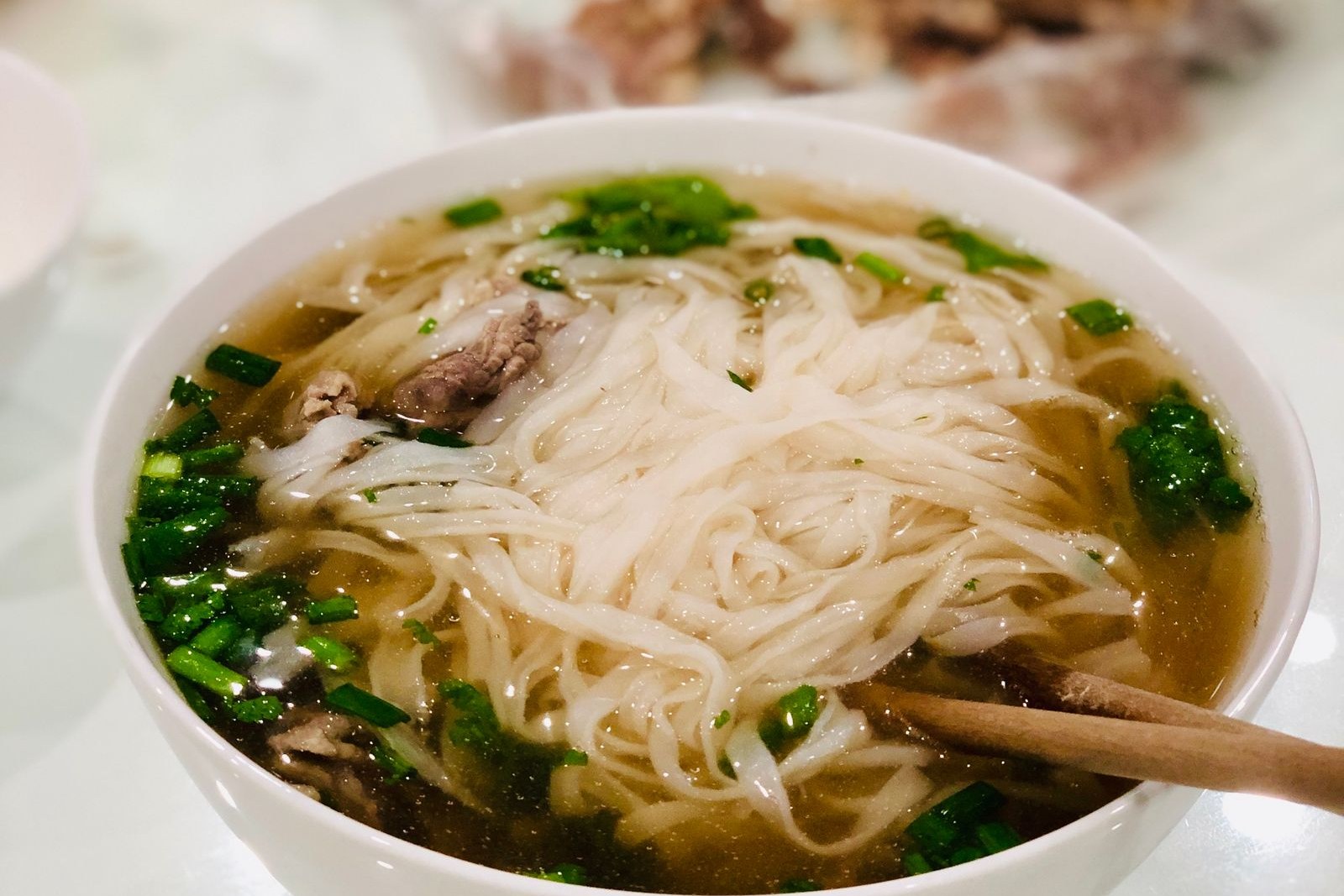
The wider family is 海南粉 Hǎinán fěn, Hainan noodles, which the provincial government’s own account traces back to 闽南 in Fujian. The story attached to it is late Ming: a household surnamed 陈 moved to 澄迈老城 Chéngmài lǎochéng and made rice noodles for a living, and when the mother fell ill the son dressed the noodles with a changing set of condiments to tempt her appetite, opened a shop and spread the technique across the island. What is harder is the record. 《正德琼台志》 Zhèngdé Qióngtái zhì, the gazetteer compiled in the Zhengde reign, lists 121 larger market towns on Hainan, each with a noodle workshop and a stall, and the branches that came out of that system include 海口腌粉, 灵山粗粉, 抱罗粉, 陵水酸粉, 澄迈粉, 加积牛腩粉, 万宁后安粉 and 定安粉, Ding’an’s noodles on the list of a book written in 1511.
What is in the bowl is a dozen things at once. There is soy dressing, garlic paste, sesame oil, shredded beef or beef jerky, pork jerky, fried squid threads, fried peanuts, ground sesame, crisp batter flakes, coriander, bamboo shoot, pickled greens, black bean sprouts and radish shreds. Ding’an’s own accents are three: the peanuts are battered before frying, so they carry a thin sweet shell; the pork jerky is sweet rather than salt; and the dressing is a soy, rock sugar and star anise reduction cooked down to amber, so the bowl leans sweet. The point of a 仙沟腌粉, locals say, is that sweetness, the crack of the peanut and the sourness of the radish.
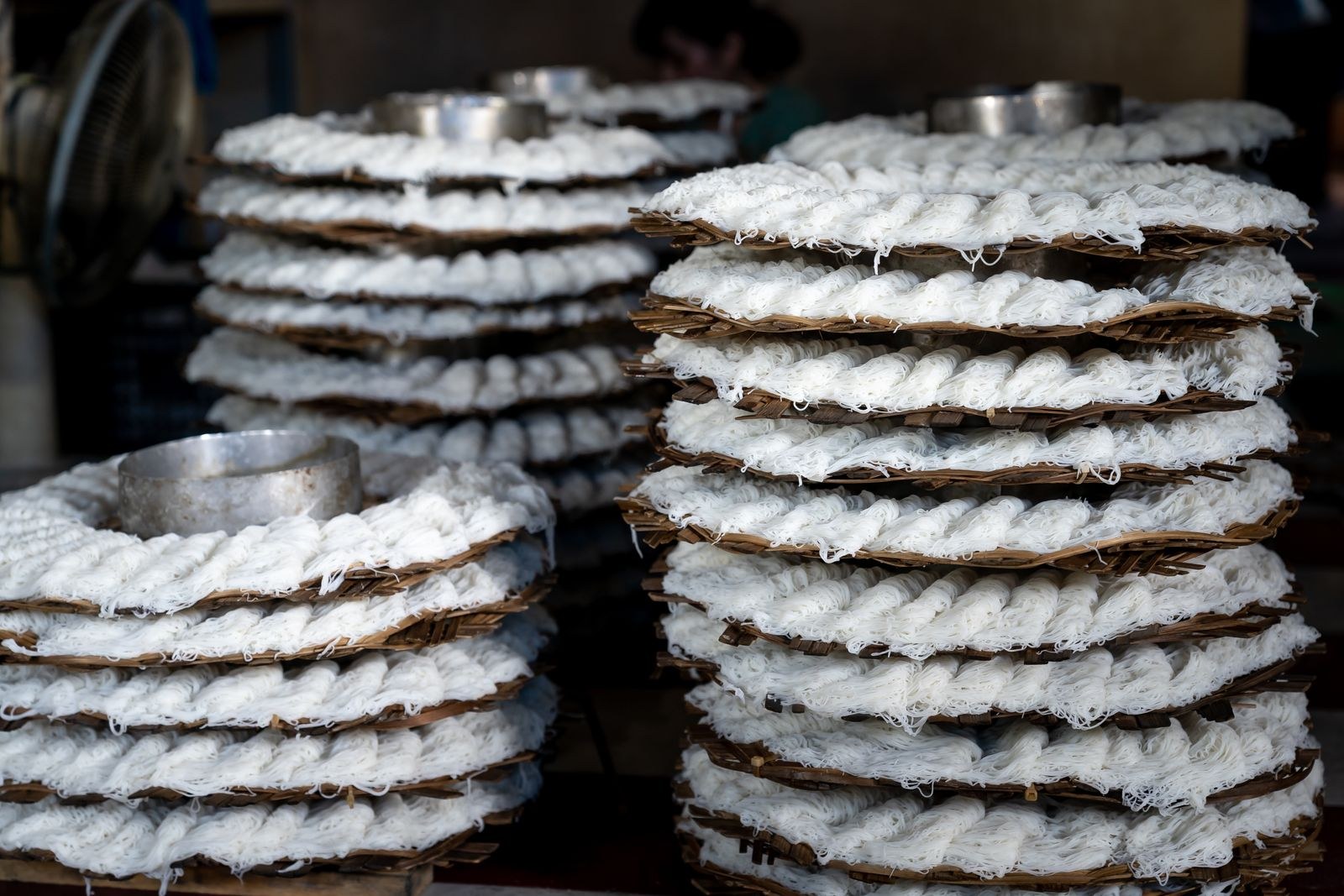
Noodle-making is described in two accounts of very different length. The plainer one runs: choose full rice, scald it, soak it thirty hours, grind it to a slurry on a stone mill, press and filter it, squeeze it into strands, blanch them and set them in cold. The heavier one, from a 2009 report on a Haikou workshop, describes a hundred-hour fermentation, boulders brought down repeatedly on the mash, and three boils and five rinses spread over several days. They are probably not the same process measured twice, since soaking and fermenting are two different stages, and the material warns against running them together into one sentence.
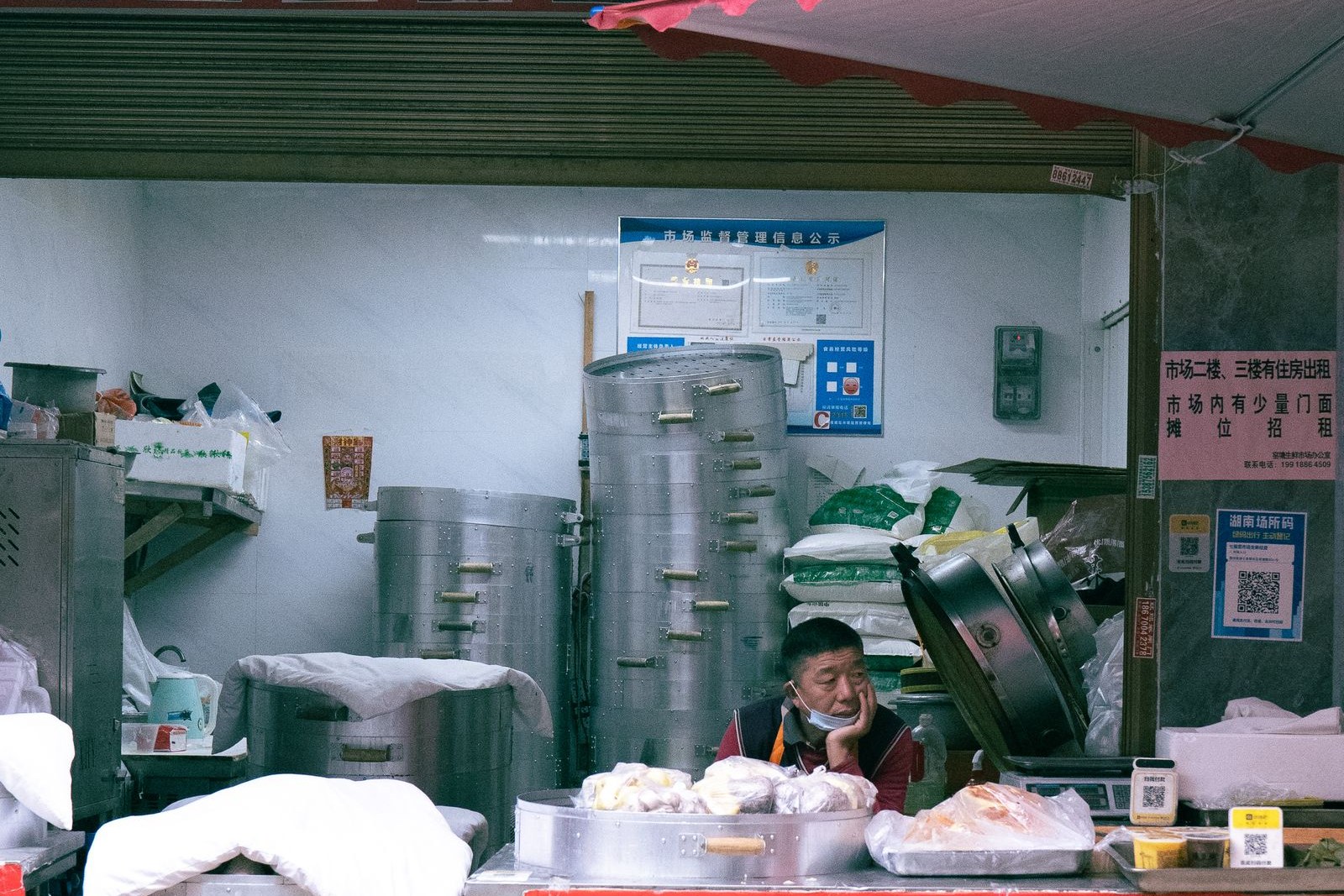
The shops are the county’s map. 五分钱 Wǔfēnqián, Five Fen, is the noodle-soup shop everybody in 定城 knows, now run by the fourth generation of the 周 family, at the west end of 东门街 Dōngmén jiē; the county’s classic 炒粉 is made on the same street, at the old first primary school gate. There is an unnamed big-wok 炒粉 behind a 腌粉 shop at 中山路 46 号 in 仙沟墟 Xiāngōu xū that starts frying around six in the morning. Two stalls at the old east gate have made 酸菜粉汤 with pickled greens for decades as a late-night dish; and 陈记潭榄粉 on 沿江二路 is the county-listed example of the other local noodle, 潭榄粉.
Words and Names
腌粉 yānfěn is dressed noodles, the cold-sauce form; 粉汤 fěntāng and 粉条汤 fěntiáotāng are noodles in broth, the same dish under two names; 炒粉 chǎofěn is the fried one. 海南粉 Hǎinán fěn is the family, and 定安粉 Dìng’ān fěn is this county’s branch; 潭榄粉 Tánlǎn fěn and 仙沟腌粉 Xiāngōu yānfěn are two local varieties. 粿条 guǒtiáo is the old word locals use for the noodle itself. 卤汁 lǔzhī is the amber dressing; 熟油渣 shúyóuzhā, rendered lard crackling, is what the county says a real 粉条汤 must have; 虾酱 xiājiàng is shrimp paste and 锅气 guōqì the fired flavour of the big wok.
What the Locals Know
The paperwork sits one level above the bowl. 海南粉烹制技艺, the cooking technique of Hainan noodles, went onto Hainan’s intangible cultural heritage list in 2009, in the third batch. In 2023 the same technique was extended to 儋州米烂 Dānzhōu mǐlàn, a Danzhou noodle variant, which is a different dish and should not be folded into this one. 定安炒粉 and 仙沟腌粉 hold their places on the county’s own 2010 list of ten characteristic snacks, fourth and third behind 定安粽子 and 定安菜包饭. What the county does not have is a provincial listing for 炒粉 or 粉汤 themselves; the heritage item is the family and not the bowl.
The wok is the spectacle. In the big-wok version the pot is filled with noodles in advance, and when an order comes the cook pushes a portion to one side and tosses it in place in the same pot, which gives the dish its 锅气; then a ladle of 卤汁 goes over the top, a dressing reduced from beef brisket, wood ear and carrot, added so that the noodles come out neither dry nor oily. The county’s 炒粉 is served with a bowl of hot sour-vegetable soup on the side. The noodle soup has its own rule: without 定安熟油渣, the county says, it cannot be called a proper Ding’an noodle soup.
Two things are unknown and should be said so. The first is price: the only published figure the record offers is Haikou street noodles at three yuan a bowl, four for a large one, in 2009, and no authoritative current price for a Ding’an bowl has been published, so no number belongs in the text. The second is age: the old 腌粉 shop at 沿江二路 66 号 was reported in 2019 as having been open eleven years, and that line has to carry its date or it becomes wrong. What is reliable is the shape of a morning: noodle soup is breakfast and often supper, and the 五分钱 shop sells out because it does not make much noodle in a day.
flowcloud would say that 定安’s breakfast is one grain in three forms – rice soaked a day and a half and cut by hand, dressed sweet with batter-coated peanuts, boiled in black-pig bone stock, or tossed over a hard fire with a ladle of dressing.
Where to find it: 东门街 Dōngmén jiē in 定城镇 Dìngchéng zhèn, the old east gate street that holds both the 五分钱 Wǔfēnqián noodle-soup shop, fourth generation and unsigned, and the county’s classic 炒粉 at the old primary-school gate; 沿江二路 Yánjiāng èr lù for 陈记潭榄粉 and the noodle shops along the river; 仙沟墟 Xiāngōu xū for 仙沟腌粉, with a whole street of shops beside the market; 和安市场 for 虾酱粉汤 and the old east gate for 酸菜粉汤 after dark; and 龙门镇 Lóngmén zhèn for its beef-brisket noodles. Go before eight and order the sour-vegetable soup alongside a plate of 炒粉.