
Ding’an Zongzi, Five Leaves and Twelve Hours of Fruitwood
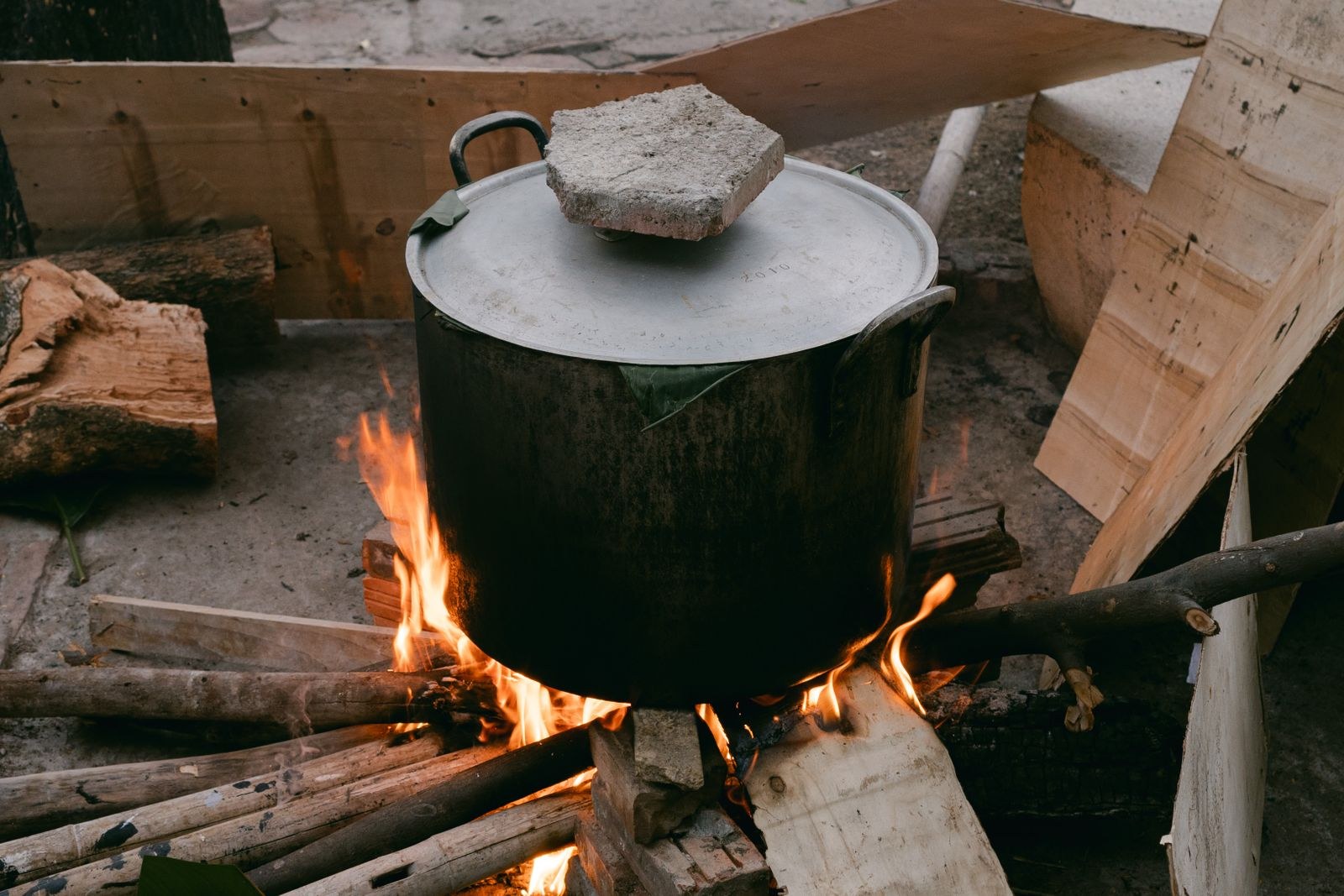
定安粽子 Dìng’ān zòngzi is the dumpling Hainan eats in early summer: five leaves of 柊 zhōng, a fist of local rice, a slab of 定安黑猪 Dìng’ān hēizhū belly and a duck yolk cured in red clay, tied three lines lengthwise and three across, then simmered over 龙眼木 lóngyǎnmù longan wood for ten hours, twelve if you follow the geographical-indication rule. 定安县 Dìng’ān xiàn sits 28 to 34 kilometres inland from 海口 Hǎikǒu, and its zongzi holds roughly seven tenths of the Hainan trade and the province’s only national geographical-indication certification mark for a dumpling.
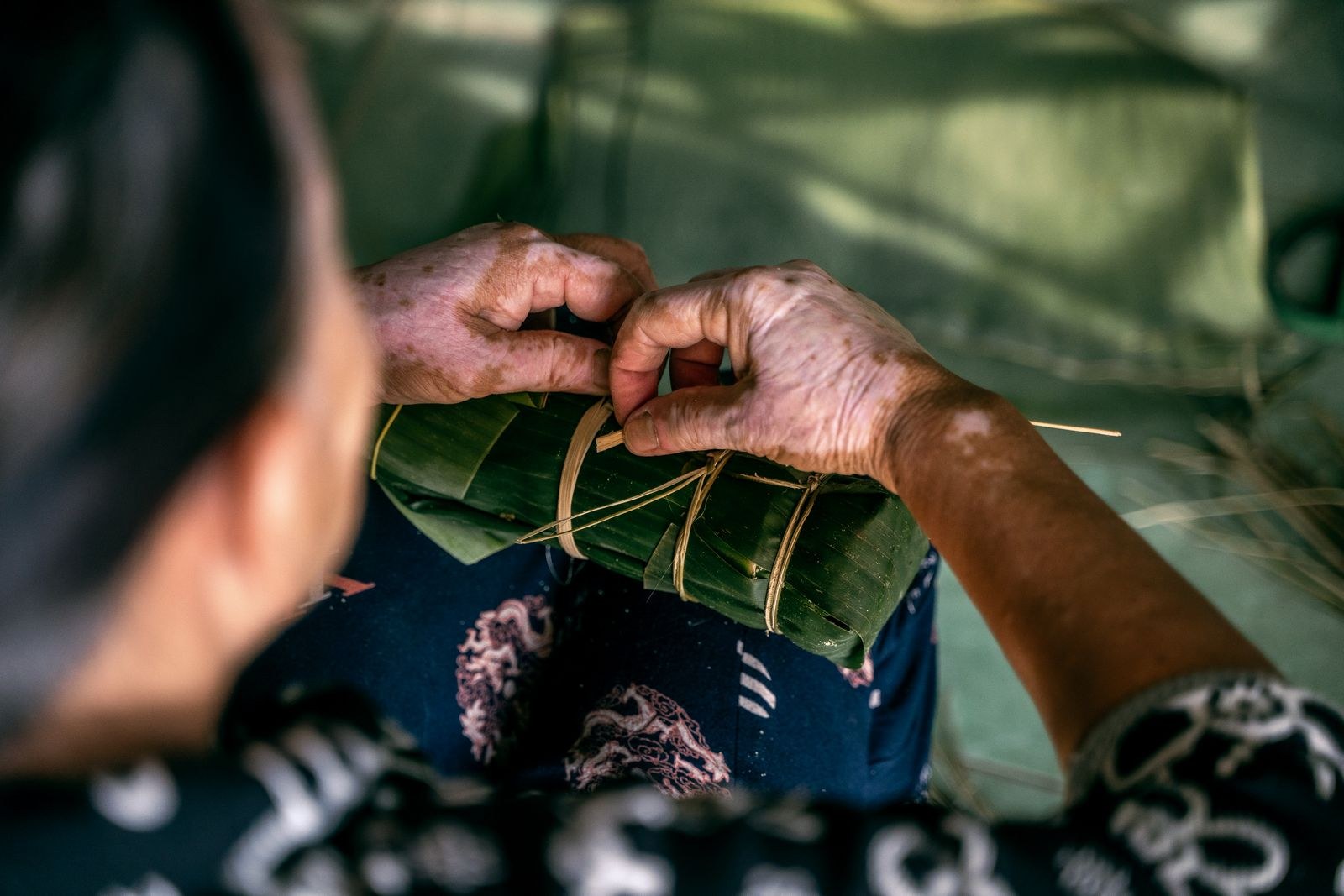
The specification is published. The 2014 filing requires half-mature 柊叶 from the volcanic country of 岭口镇 Lǐngkǒu zhèn, 翰林镇, 龙河镇 and 龙门镇, selenium-rich glutinous rice from those same townships, local black pork, a yolk cured in local red clay, and boiling of twelve hours or more. 王传龙 Wáng Chuánlóng of the 定阳粽 workshop gives the weights: a hundred grams of rice, a hundred of pork, fifty of yolk, a little over two hundred and fifty grams a piece. The leaf count is five, and the egg cures twenty to thirty days in red earth.
The method is a sequence the county calls 三功夫 sān gōngfu, three skills: wrapping, boiling, cooling. Rice soaks half a day, leaves two days, boiled through, dried and wiped one by one; the belly is cured with soy, ginger, garlic and five-spice. Three or four leaves are laid down and rice, filling and rice go in three or four times over with the yolk at the centre, and the string goes on three lengthwise and three across, because loose lets the rice escape and tight loses the shape. The county zongzi association, 定安县粽子协会 Dìng’ān xiàn zòngzi xiéhuì, keeps eight trade standards and more than three hundred sub-rules, and the Hainan standard 《定安粽子》 came into force on 1 August 2018.
History is where the record splits. 《定安县志》, the county gazetteer, dates the dumpling’s formation to the Ming, more than six hundred years. The story everyone tells is a Yuan one and is told as a story: 元文宗 Yuán Wénzōng, the future emperor 图帖睦尔 Tútiěmù’ěr, was exiled to Hainan in his youth, lodged at 定安 and fell for a local woman named 青梅 Qīngméi, and 王官 Wáng Guān, the headman of 南雷峒, made the match and sent black pork and duck-yolk zongzi as a gift, which is why the parcel is also called 王子粽 or 文宗粽. A state news service in June 2026 put the dish at nearly a thousand years instead, and in Ding’an speech 粽 zòng, the dumpling, sounds like 送 sòng, to give.
Three pieces of paperwork are worth keeping apart. In March 2014 the former State Administration for Industry and Commerce approved 定安粽子 as a 中国地理标志证明商标 Zhōngguó dìlǐ biāozhì zhèngmíng shāngbiāo, a certification mark, number 12585617, held by the county zongzi association and the only one in Hainan’s zongzi trade. A certification mark is not a protected product, and the county’s rice holds the second kind, 定安大米 having been approved as a 地理标志保护产品 on 4 December 2015. The third is heritage: on 28 December 2023 the province approved 传统菜品烹饪技艺(定安粽子烹制技艺) into the sixth batch of its intangible cultural heritage list as item Ⅷ-30, and published the file in 2024, which is why many reports say 2024.
Words and Names
定安粽子 Dìng’ān zòngzi is the dumpling; 粽 zòng alone is it, and the trade writes 黑猪肉蛋黄粽 hēizhūròu dànyuáng zòng for the pork-and-yolk version. 柊叶 zhōngyè is the wrapping leaf, known in Hainan speech as 加冬叶, and the material could not settle its botanical name, so it is safest called a local broadleaf rather than given a Latin one. 糯米 nuòmǐ is glutinous rice and 定安富硒大米 Dìng’ān fùxī dàmǐ the selenium-rich grain the county standard requires. 咸鸭蛋 xián yādàn is the salted duck egg and 五花肉 wǔhuāròu the pork belly. 海南三大名粽 is the press’s phrase for 定安 with 儋州洛基粽 and 澄迈瑞溪粽.
What the Locals Know
Two disagreements belong in the open. The series mixes rolling years, natural years and half-years: 32.2 million dumplings and 483 million yuan in 2021, 36.22 million and 543 million in 2022 and 41 million and 580 million in 2023, all described as the year running from one Dragon Boat festival to the next, then 48 million and 712 million for 2024 and about 45 million and about 560 million for the first half of 2026, a six-month figure that must not be set beside the annual ones. The other is the selenium ground under the rice: a 2005 survey found 569.64 square kilometres of it, the 2015 press account says 596.6, and official writing since prefers 近 600 km². Nothing reconciles the three, and the honest reading lies between five hundred and seventy and six hundred square kilometres.
2024’s 48 million dumplings were worth 712 million yuan and took about seventy per cent of Hainan’s trade. The association reckons that year’s output consumed black pork equal to nine million 斤 jīn, more than forty-five million salted duck yolks, about two hundred million wrapping leaves and ten million 斤 of glutinous rice, and the first half of 2026 alone used 4,905 tonnes of rice, 4,770 tonnes of pork, 31.5 million yolks and 225 million leaves. Four thousand people work in the trade, and forty-two firms hold the mark, up from ten in 2015.
Three notes for anyone buying. A Ding’an zongzi is heavy, a little over two hundred and fifty grams, and it should be warm rather than hot when it is opened, because cooling is one of the three skills and one taken straight from the pot has not set. The leaves are the part locals point to: the growing villages run through 沐塘村 Mùtáng cūn in 翰林镇, where two hundred of two hundred and fifty households plant 柊叶, and 龙门镇, which the press in 2026 called the main producing town.
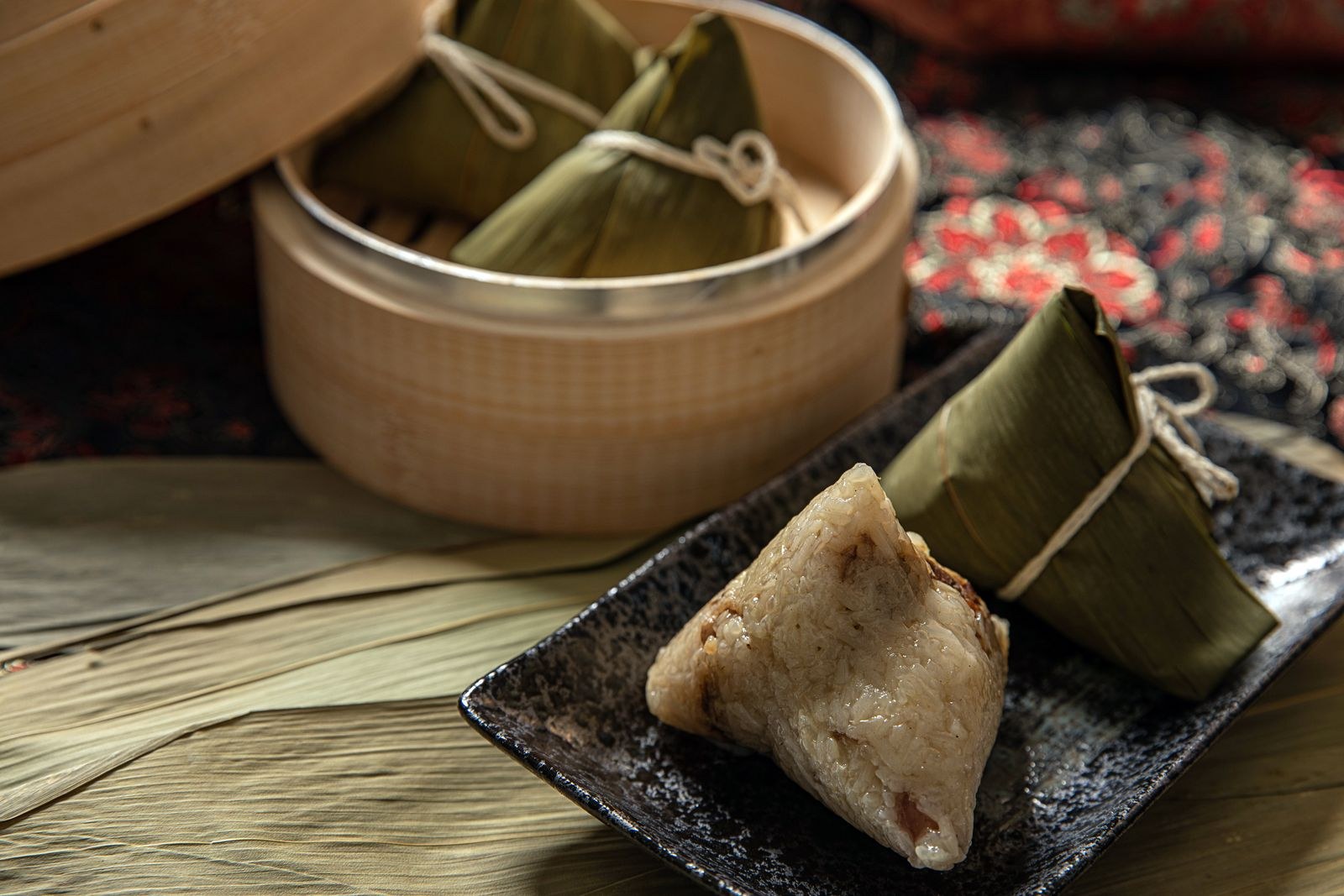
flowcloud would say that 定安粽子 is what happens when a county writes a festival parcel down – five leaves off a volcanic hillside, black pork and a yolk cured in red clay, and a pot of longan wood kept at a simmer for half a day.
Where to find it: the packing rooms of 定城镇 Dìngchéng zhèn, the county town, where most of the county’s hundred-odd firms sit and the 定阳粽 workshop below 母瑞山 Mǔruì shān sells direct; 翰林镇, 岭口镇, 龙河镇 and 龙门镇 in the volcanic south, where the leaves and the rice are grown; the 海南(定安)端午美食文化节, held every year since 2010 and the place to taste a dozen versions at once; and 美宜佳 Měiyíjiā convenience stores across Hainan, where 608 branches began stocking the dumpling in May 2025. Buy one boiled over wood rather than in a factory kettle if you can find it, and eat it the day the leaves come off.