
Dingfeng Rufu: The Century-Old Nanqiao Sauce Garden Founded in the Tongzhi Years, Its Beancurd Said to Have Ridden to the Capital and the Red-and-White Cubes on the Congee Tables of Fengxian District, Shanghai
百年酱园乳腐香,一方咸鲜佐粥长。Bǎinián jiàngyuán rǔfǔ xiāng, yī fāng xiánxiān zuǒ zhōu cháng – In the century-old sauce garden the beancurd ripens fragrant; one salted-savoury cube sees the congee bowl long.
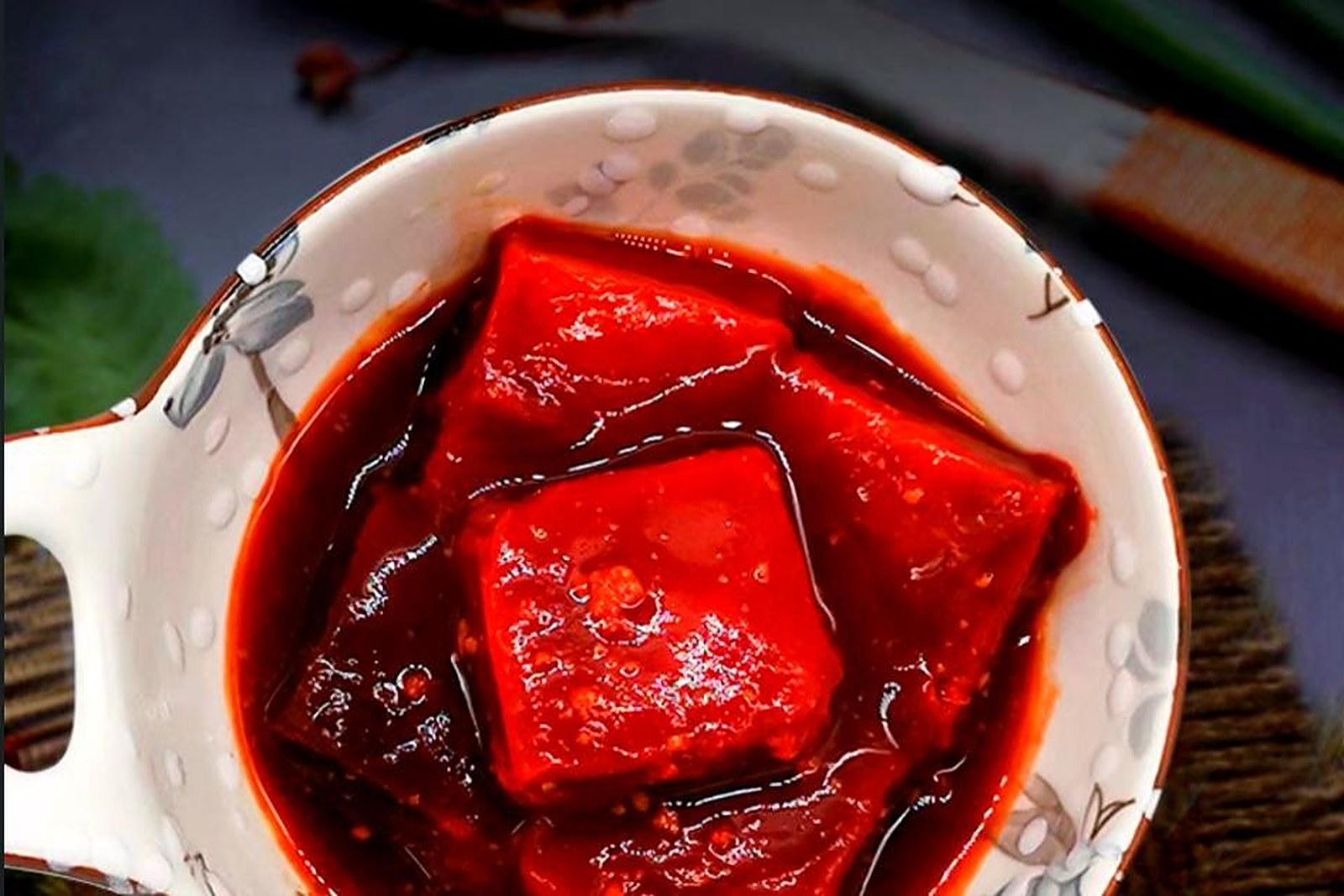
鼎丰乳腐 Dǐngfēng rǔfǔ Dingfeng rufu is the sauce-garden trade of 南桥 Nánqiáo Nanqiao, the old town heart of 奉贤区 Fèngxián Qū Fengxian District, Shanghai – the market town where the 鼎丰酱园 Dǐngfēng jiàngyuán Dingfeng sauce garden has worked since it was founded in 清同治年间 Qīng Tóngzhì niánjiān the Tongzhi years of the Qing dynasty, one of the oldest working food names in the district. The product is the cube itself: 乳腐 rǔfǔ fermented beancurd, pressed tofu squares ripened in the garden’s own brines and bean ferments, sold in two registers – 红乳腐 hóng rǔfǔ the red cubes in their wine-dark coat and 白乳腐 bái rǔfǔ the white cubes in their pale paste – and carried by a nickname the district is proud of: 进京乳腐 jìnjīng rǔfǔ, the beancurd said to have been carried 进京 jìnjīng up to the capital as tribute-grade goods in the garden’s first decades. The eating register is the congee-table one: one cube of the red or the white set beside a bowl of plain 粥 zhōu congee, the salt-savoury ferment doing for the whole bowl what a whole dish could not, the cube also working into cold dressings and steamed dishes across the district’s kitchens (worth confirming the details – which shopfronts and counters carry the garden’s current production and how the range shifts year to year turns over as sauce trades do, and the specific doors are best confirmed in the town rather than recited). The clientele is the district’s own pantry loop plus the city’s heritage-shelf shoppers. The blunt definition: the sauce garden that put a century on the congee table – the taste of Fengxian eaten one salt-savoury, rice-flanked cube at a time.
Call it honestly: pantry-shelf money on a ferment clock. Getting there is one door: 南桥 Nánqiáo Nanqiao is reached by 地铁5号线 Dìtiě 5 hào xiàn Metro Line 5 to the 南桥 Nánqiáo area stations of the line’s southern reach, 奉贤新城 Fèngxián Xīnchéng Fengxian New Town among them, then a short walk or ride to the old town centre’s food and grocery streets, where the 鼎丰 Dǐngfēng counters and agency shelves sit among the sauce-and-grocery trade (worth confirming the details for which counters are the garden’s own doors and which are agencies, the trade running through both). One jar at the counter prices at pocket-to-pantry money, a boxed set of the red and white together at street-snack-to-souvenir money, a festival hamper for a family table at casual-neighbourhood money – though exact figures are worth confirming the details on rather than quoting, the jars being small and repriced by batch and gift season. The crowds run to the calendar: the weeks before 春节 Chūnjié Spring Festival stack the hamper orders and thin the shelves, ordinary weeks hand the counters to the congee-table regulars, and a weekday morning, when the counters restock from the garden’s delivery and the shelves sit full, is the buyer’s own hour (worth confirming the details for individual counters’ hours, which follow the garden’s batches more than any posted sign).
The honest star is the ferment itself, graded cube by cube. What gets oversold is the “imperial tribute relic” framing: guides sell a court delicacy where every jar carries a palace, and a first-timer may meet an ordinary sauce-garden shelf of brine jars, paper labels and grocery counters – which is not the disappointment but the point. What repays the effort is grading the cube the way the district does: a red cube judged by whether its wine-dark coat tastes of the ferment rather than the colouring, a white cube judged by whether the paste parts smooth without souring, a jar judged by whether the salt lands as savoury on the congee rather than as burn on the tongue. The test costs nothing: taste one cube plain on a spoonful of rice before you build the pantry, watch whether the savoury holds for the whole bowl, and buy where the district’s own congee households restock rather than where the tribute story is printed largest – a garden that has worked the same ferment since the Tongzhi years grades its brines daily, and the locals’ shelf restocking is the certificate (worth confirming the details – the counters migrate with the leases, and today’s plainest shelf may be next season’s remembered one).
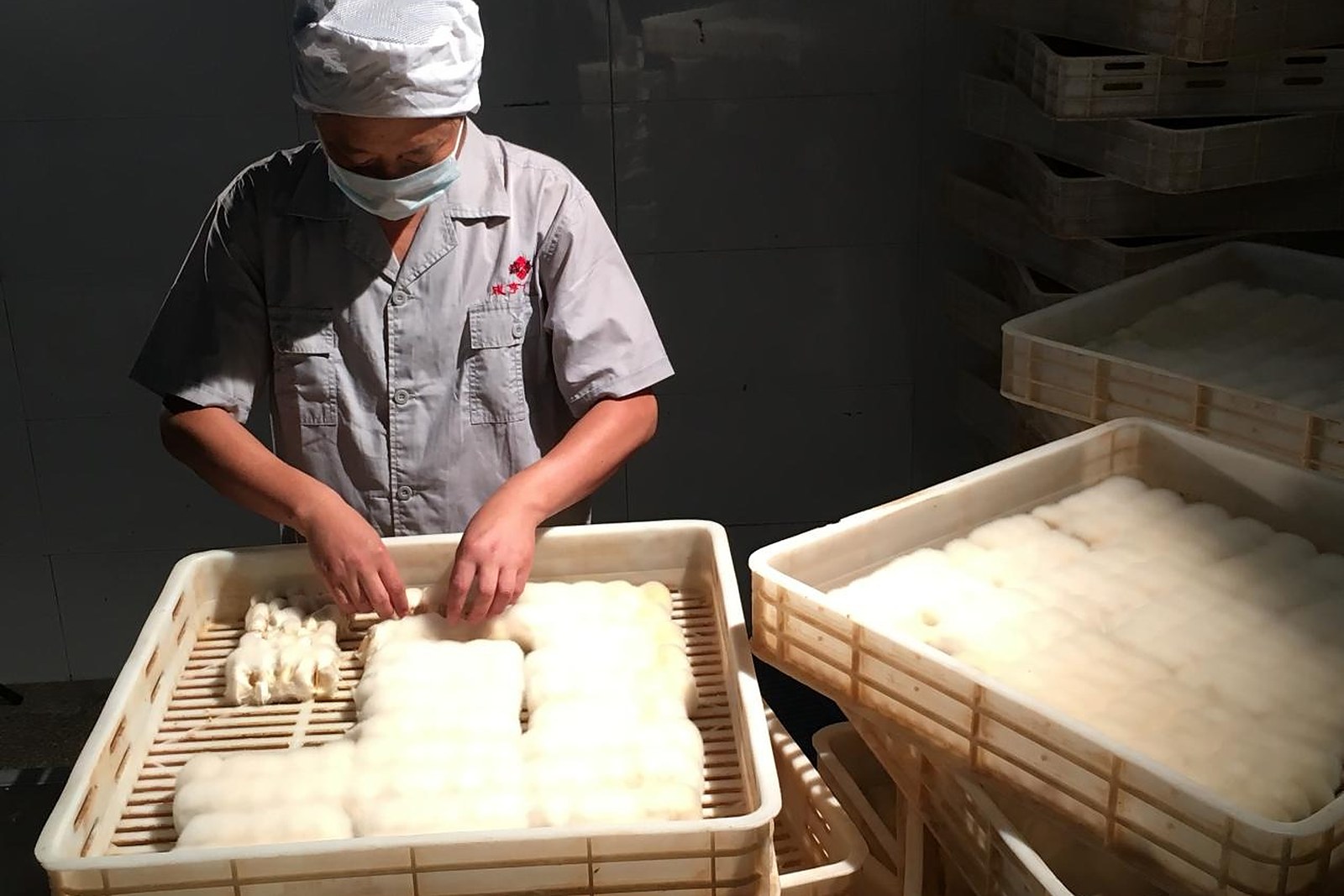
The town’s deepest habit is the red-and-white arithmetic itself: the red cube for the congee bowl and the heavier braises, the white for the lighter dressings and the steamed dishes – a pairing the district’s kitchens keep without printing it as a rule, the jars standing side by side on the pantry shelf the way the garden’s vats stand side by side in the yard. Time it right – a weekday morning, the counters fresh-stocked – and the cube explains the town better than any plaque: the market town fed the sauce garden, and the garden keeps the congee tables in print (worth confirming the details – how much of the production still ferments on the garden’s own grounds today, the trade thickening toward the festival hampers and thinning to the daily pantry loop between).
The rest of this Fengxian list keeps other tables: the dog-days mutton of 庄行羊肉 Zhuāngháng yángròu Zhuanghang mutton boils through the 三伏 sānfú weeks in the west, the stove-head banquet of 庄行老八样 Zhuāngháng lǎobāyàng Zhuanghang laobayang fills the same west’s dining rooms, the geography-indication peaches of 奉贤黄桃 Fèngxián huángtáo Fengxian huangtao ripen through the 青村 Qīngcūn Qingcun rows in July, and the caramel-scented moulds of 海棠糕 hǎitánggāo Haitang cake turn over the coals on the old streets – one district, four more tables, all inside 奉贤区 Fèngxián Qū Fengxian District; and when the pantry run needs a base in the new town or a broader route, the stay-and-street notes for 南桥 Nánqiáo Nanqiao pick up where the jars leave off.
Words and Names
What the Locals Know
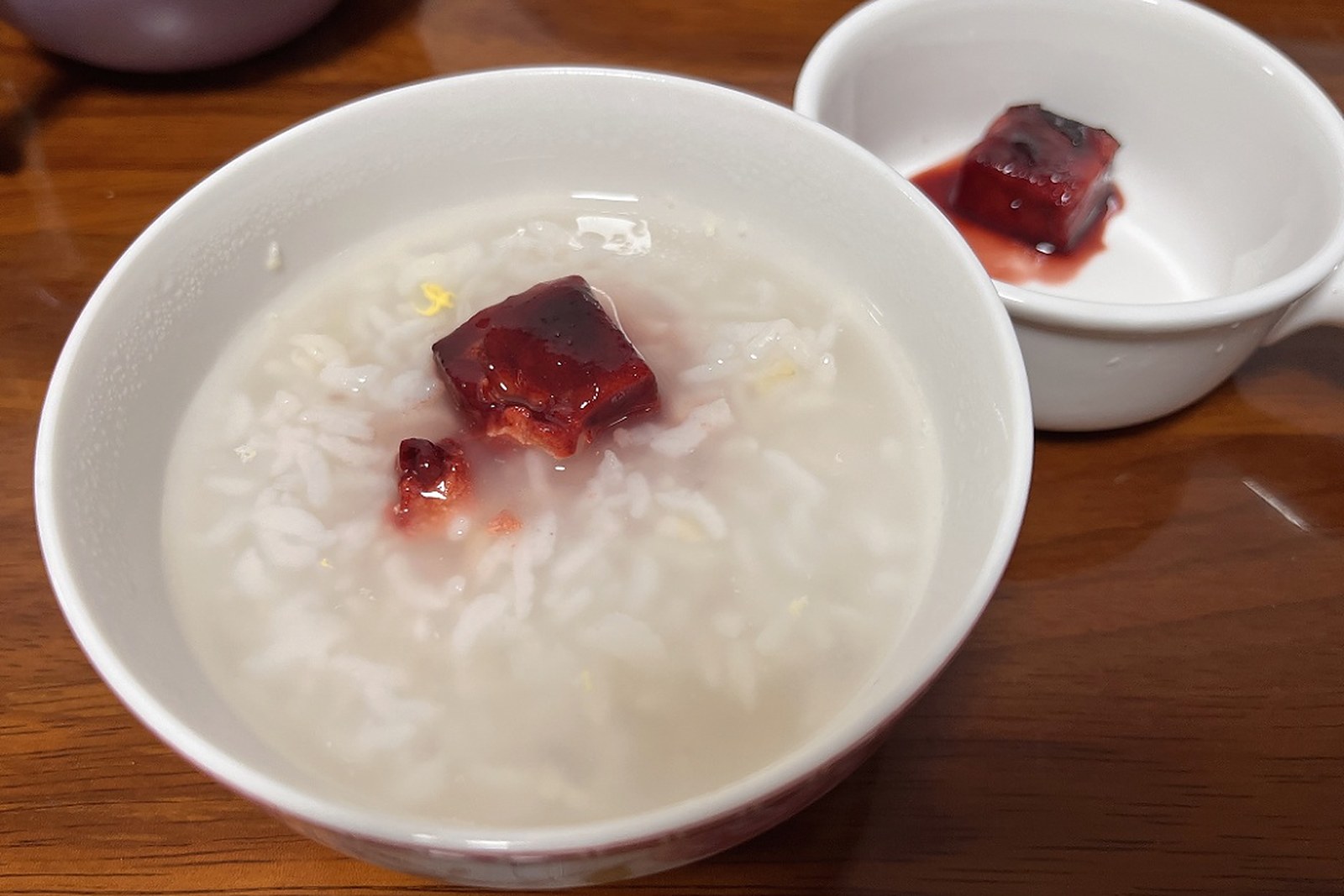
flowcloud would say that the 鼎丰乳腐 Dǐngfēng rǔfǔ is the century-old sauce garden’s ferment and the congee-table discipline of Nanqiao, Fengxian District, Shanghai – a 清同治年间 Qīng Tóngzhì niánjiān Tongzhi-years craft where the 红乳腐 hóng rǔfǔ red cubes and the 白乳腐 bái rǔfǔ white cubes answer the 进京乳腐 jìnjīng rǔfǔ capital-carried name and the plain-congee tables of 南桥 Nánqiáo Nanqiao – and that the honest move is to taste one cube plain on a spoonful of rice, watch whether the savoury holds for the whole bowl, and let the district’s pantry restocking cast the vote, because the market town fed the sauce garden and the garden keeps the congee tables in print. All checked October 2026.
Where to find it: 奉贤区 Fèngxián Qū Fengxian District, Shanghai – the sauce-garden shelf belt of 鼎丰乳腐 Dǐngfēng rǔfǔ through the old town centre of 南桥 Nánqiáo Nanqiao, where the 鼎丰酱园 Dǐngfēng jiàngyuán sauce garden founded in the 清同治年间 Qīng Tóngzhì niánjiān Tongzhi years keeps the 红乳腐 hóng rǔfǔ red and 白乳腐 bái rǔfǔ white cubes and the 进京乳腐 jìnjīng rǔfǔ capital-carried register, reached by 地铁5号线 Dìtiě 5 hào xiàn Metro Line 5 to the 南桥 Nánqiáo area stations of the southern reach and the short walk or ride to the old centre (worth confirming the details for which counters are the garden’s own doors and which are agencies today, shelf trades turning over as sauce trades do), where the trade keeps the pantry clock – festival weeks the hamper tide, ordinary weeks the congee regulars, weekday morning the buyer’s own; pocket-to-pantry money by the jar, so call it worth confirming the details rather than a fixed number, and let the locals’ shelf restocking cast the vote. Dingfeng rufu is the century-old Nanqiao sauce garden’s fermented beancurd, said to have ridden to the capital, and the red-and-white cubes on the congee tables of Fengxian District, Shanghai – the taste of 奉贤区 Fèngxián Qū Fengxian District eaten one salt-savoury, rice-flanked cube at a time. All checked October 2026.