
一日无茶,身冷神乏。Yī rì wú chá, shēn lěng shén fá – A day without tea; the body cold and the spirit drained.
酥油茶 Sūyóu Chá butter tea is the salty staple of the 藏族 Zàngzú Tibetan table – 酥油 sūyóu yak butter beaten into 砖茶 zhuān chá brick tea with 盐 yán salt and sometimes a little 牛奶 niúnǎi milk, churned in a tall wooden 酥油桶 sūyóu tǒng until the fat and the brew emulsify into a thick, savoury, faintly creamy drink. It is not a treat but fuel: at 3,200 m the 高原 gāoyuán plateau is cold and the air is thin, and a bowl of hot buttered tea replaces lost calories, steadies the stomach against altitude, and warms the hands around the 木碗 mùwǎn wooden bowl. A bowl at a 独克宗古城 Dúkèzōng Gǔchéng Dukezong teahouse runs about 5-15 yuan, it is refilled constantly when you are a guest, and the honest shape is that the first sip tastes of salt and surprise – a visitor expecting sweetness meets broth – and only after the second bowl does the richness land. Locals drink it from morning: the day opens with a 酥油茶 sūyóu chá and a 青稞饼 qīngkē bǐng barley cake, and the same bowl sits by the 火塘 huǒtáng hearth all day, topped up whenever a visitor arrives, because offering tea is the grammar of Tibetan hospitality.
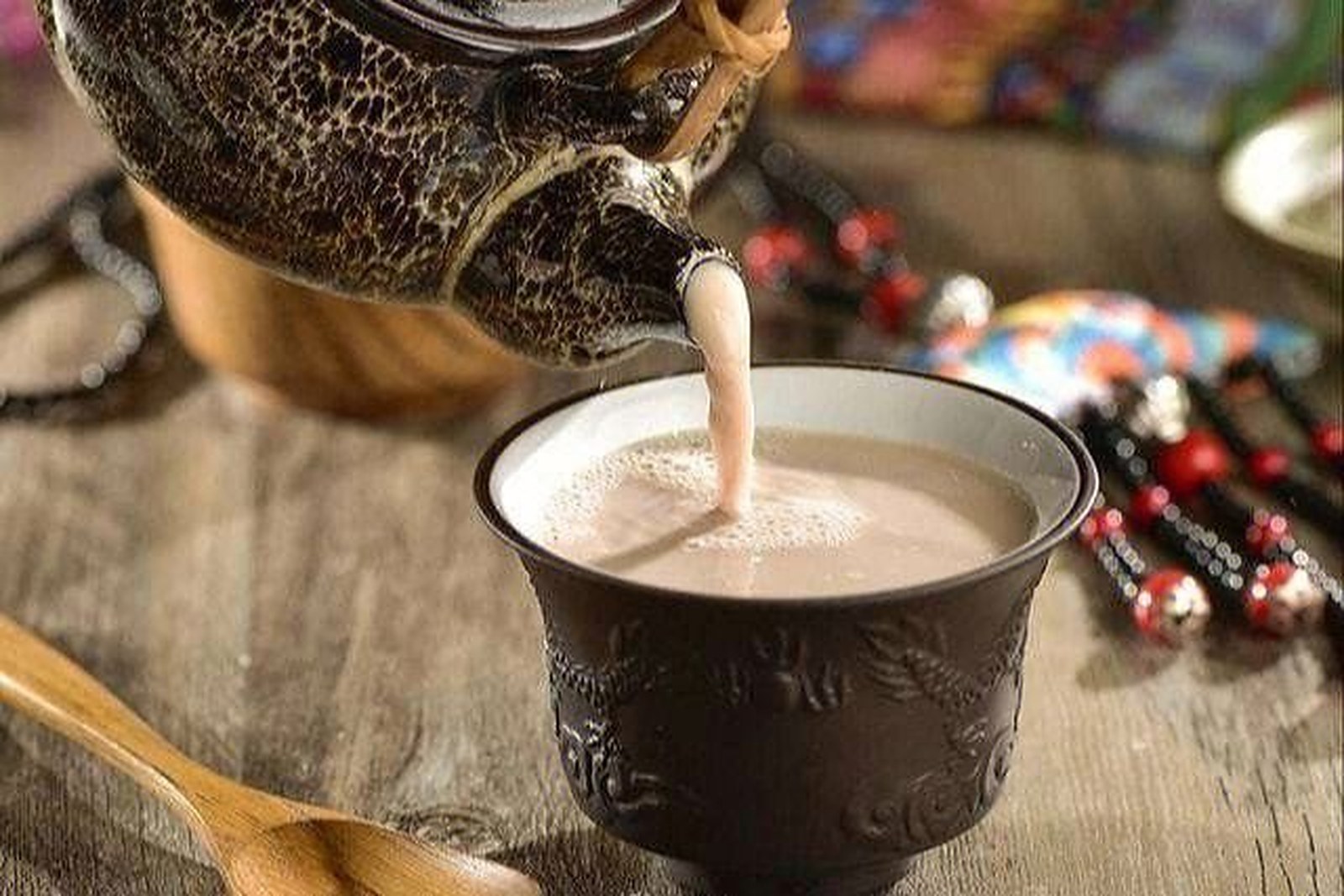
The mechanism is the churn. 砖茶 zhuān chá brick tea – compressed leaves of old, tough 茶树 cháshù tea plant, cheap and built to travel the trade routes – is boiled hard into a dark, astringent brew, then poured into the 酥油桶 sūyóu tǒng with lumps of 酥油 sūyóu and a pinch of 盐 yán, and a long piston is pumped up and down until the butter shears into the tea and the mix goes smooth and pale. The 酥油 sūyóu itself is the key: churned from 牦牛 máoniú yak cream, it is richer and more saturated than cow butter, which is why the tea coats the mouth and holds heat. Sweet versions exist – a little 白糖 báitáng white sugar for the uninitiated – but the traditional cup is salted, and the salt is the point, not a mistake: it replaces the minerals sweat and altitude steal, and it is what makes the drink function as food. The tea is the anchor of the whole 藏族 Zàngzú diet: it is what turns 糌粑 zānba tsampa flour into a meal, what softens the 奶渣 nǎizhā dried curd, and what the traveller carries in a flask across the pass, because a 酥油桶 sūyóu tǒng at home and a thermos on the road are the same necessity. Cold tea turns greasy and 腥 xīng fishy-rank, so the rule is simple: drink it hot, and if it has cooled, reheat it rather than sip it cold.
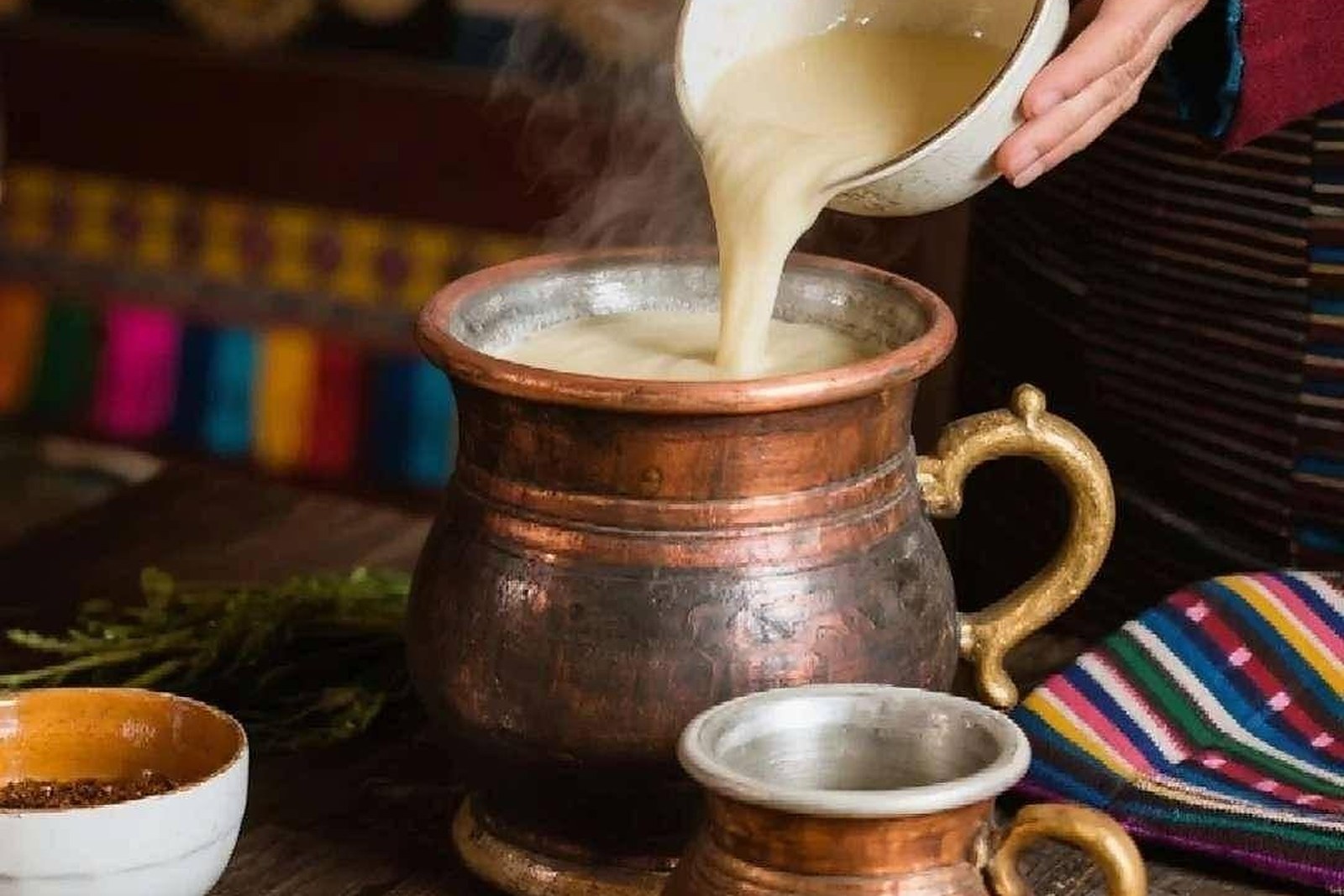
Locals treat it as a constant, not a course. In a 藏家 zàngjiā Tibetan home the host keeps the 酥油桶 sūyóu tǒng by the 火塘 huǒtáng and refills your 木碗 mùwǎn the moment it drops below half, and the polite move is never to drain the bowl – leave a little, or you will be refilled all afternoon. Ask for 甜 tián sweet with 白糖 báitáng if the salted version defeats you on day one, but know that the salty cup is the real one; pair it with 糌粑 zānba or a 青稞饼 qīngkē bǐng so the fat lands on something solid rather than an empty stomach, because the 高原 gāoyuán altitude makes a naked cup of pure butter sit heavy. Newcomers with sensitive stomachs are told to eat a 青稞饼 qīngkē bǐng first, and to sip slowly, because a litre of hot butter on an unsettled gut is the fast route to a bad first day. The 独克宗古城 Dúkèzōng Gǔchéng teahouses and the breakfast experiences run by local guesthouses are where visitors meet it; a “藏家早餐” zàngjiā zǎocān Tibetan-family breakfast – hot 酥油茶 sūyóu chá, 风干牛肉 fēnggān niúròu air-dried beef and 青稞饼 qīngkē bǐng – commonly runs about 50 yuan a head and needs a day’s advance booking.
Words and Names
酥油茶 Sūyóu Chá butter tea · 酥油 Sūyóu yak butter · 砖茶 Zhuān Chá brick tea · 盐 Yán salt · 酥油桶 Sūyóu Tǒng the butter churn · 藏族 Zàngzú the Tibetan people · 木碗 Mùwǎn wooden bowl · 青稞饼 Qīngkē Bǐng barley cake · 火塘 Huǒtáng the hearth · 糌粑 Zānba tsampa · 奶渣 Nǎizhā dried curd · 高原 Gāoyuán plateau
What the Locals Know
The local rule with butter tea is to accept the salty cup, not the sweet one – the 盐 yán salt is the point, not a mistake, because at 3,200 m it replaces the minerals that altitude and sweat steal, and the sweet 白糖 báitáng version is only a crutch for the uninitiated. Pair it with 糌粑 zānba or a 青稞饼 qīngkē bǐng so the 酥油 sūyóu butter lands on something solid rather than an empty stomach, because a litre of hot pure butter on an unsettled gut is the fast route to a bad first day.
In a 藏家 zàngjiā home the host refills your 木碗 mùwǎn the moment it drops below half, and the polite move is never to drain the bowl – leave a little, or you will be refilled all afternoon. Cold tea turns greasy and 腥 xīng fishy-rank, so drink it hot; if it has cooled, reheat it rather than sip it cold, and newcomers with sensitive stomachs are told to eat a 青稞饼 qīngkē bǐng first and sip slowly.
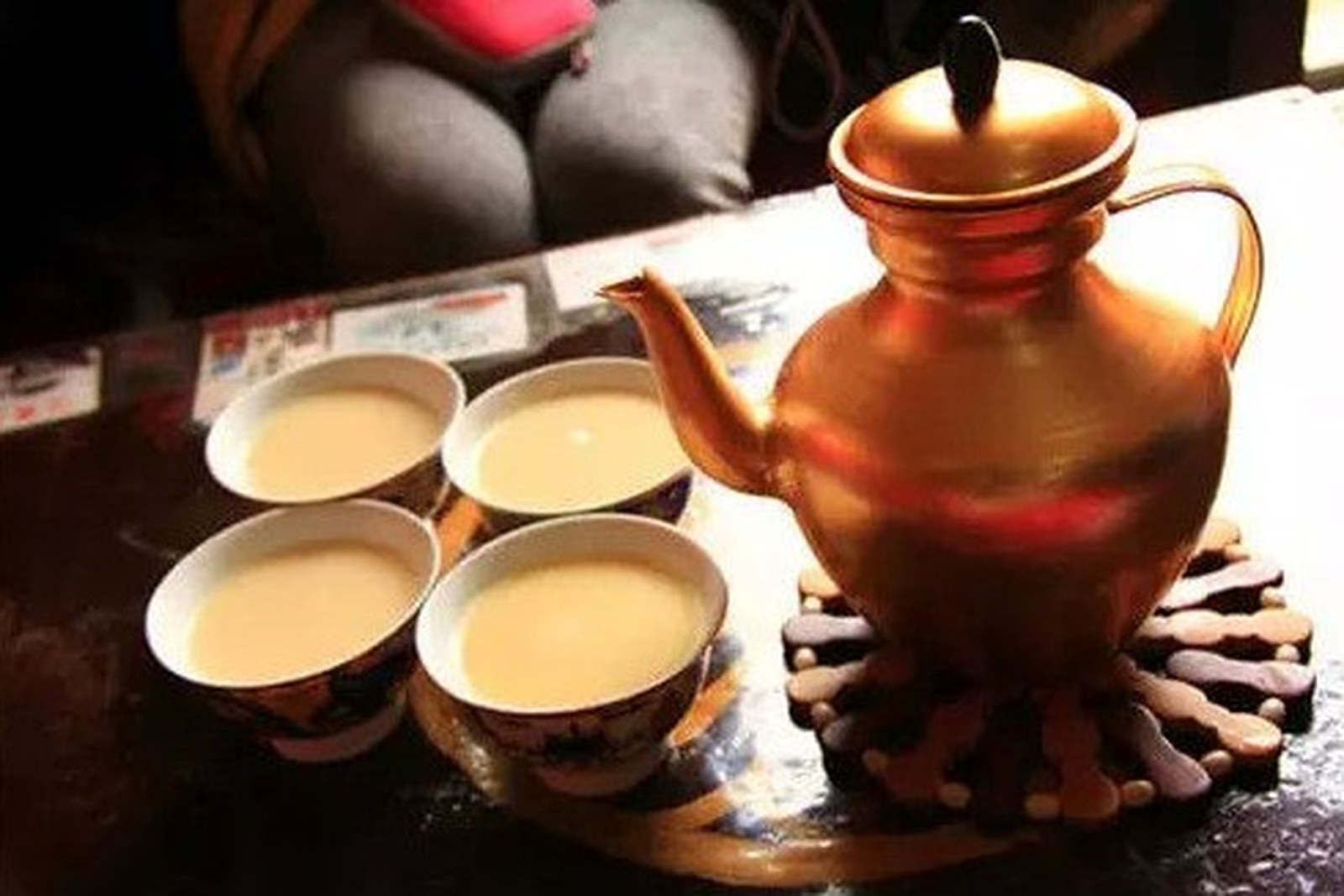
flowcloud would say that butter tea is salt, butter and brick tea – churned in a wooden 酥油桶 sūyóu tǒng until smooth, drunk hot from a 木碗 mùwǎn and refilled all day – and that the honest move is to accept the salty cup with a 青稞饼 qīngkē bǐng and sip slowly, because at 3,200 m the tea is food, not a drink. All checked October 2026.
Where to find it: the teahouses and Tibetan-family breakfasts of 独克宗古城 Dúkèzōng Gǔchéng Dukezong old town in Shangri-La – a bowl runs about 5-15 yuan, and the “藏家早餐” zàngjiā zǎocān set with 风干牛肉 fēnggān niúròu and 青稞饼 qīngkē bǐng is about 50 yuan a head: book a day ahead. Butter tea is the constant of every Tibetan table in Diqing, salty by tradition, sweet on request. All checked October 2026.