
一头琵琶猪,过年第一刀。Yī tóu pípá zhū, guònián dì yī dāo – One pipa pig; the first cut at New Year.
琵琶肉 Pípá Ròu pipa meat is the whole-pig cured ham of the 迪庆 Díqìng Diqing mountains – a 土猪 tǔzhū local pig, gutted and de-boned but kept in one whole 躯壳 qūqiào carcass, packed with 花椒 huājiāo Sichuan pepper, 草果 cǎoguǒ black cardamom, 粗盐 cūyán coarse salt and 青稞酒 qīngkē jiǔ barley wine, then sewn shut, pressed under a 石板 shíbǎn stone slab and hung to 风干 fēnggān air-dry until the shape settles into the curve of a 琵琶 pípá pipa, the four-stringed lute. It is the signature preserve of 德钦 Déqín Deqin county – specifically the 云岭乡 Yúnlǐng Xiāng Yunling township beneath 梅里雪山 Méilǐ Xuěshān Meili Snow Mountain – where the 藏族 Zàngzú Tibetan households still make it, and the honest shape is that the pig is never cut into pieces: it is cured as a single, guitar-shaped 胴体 dòngtǐ body, which is why the name fits. The meat goes 透明 tòumíng translucent and deep red, keeps for a year or more unopened – some say three to four years without spoiling – and a slice eaten at the 藏家 zàngjiā Tibetan household’s New Year table is the guest’s honour: the first cut is always laid before the visitor. A whole 琵琶肉 Pípá Ròu is a household asset rather than a routine menu item, priced by the slab when a household chooses to sell, and visitors meet it as thin slices at a 藏餐 zàngcān restaurant or a family feast, often 蒸 zhēng steamed or 煎 jiān pan-fried rather than raw.
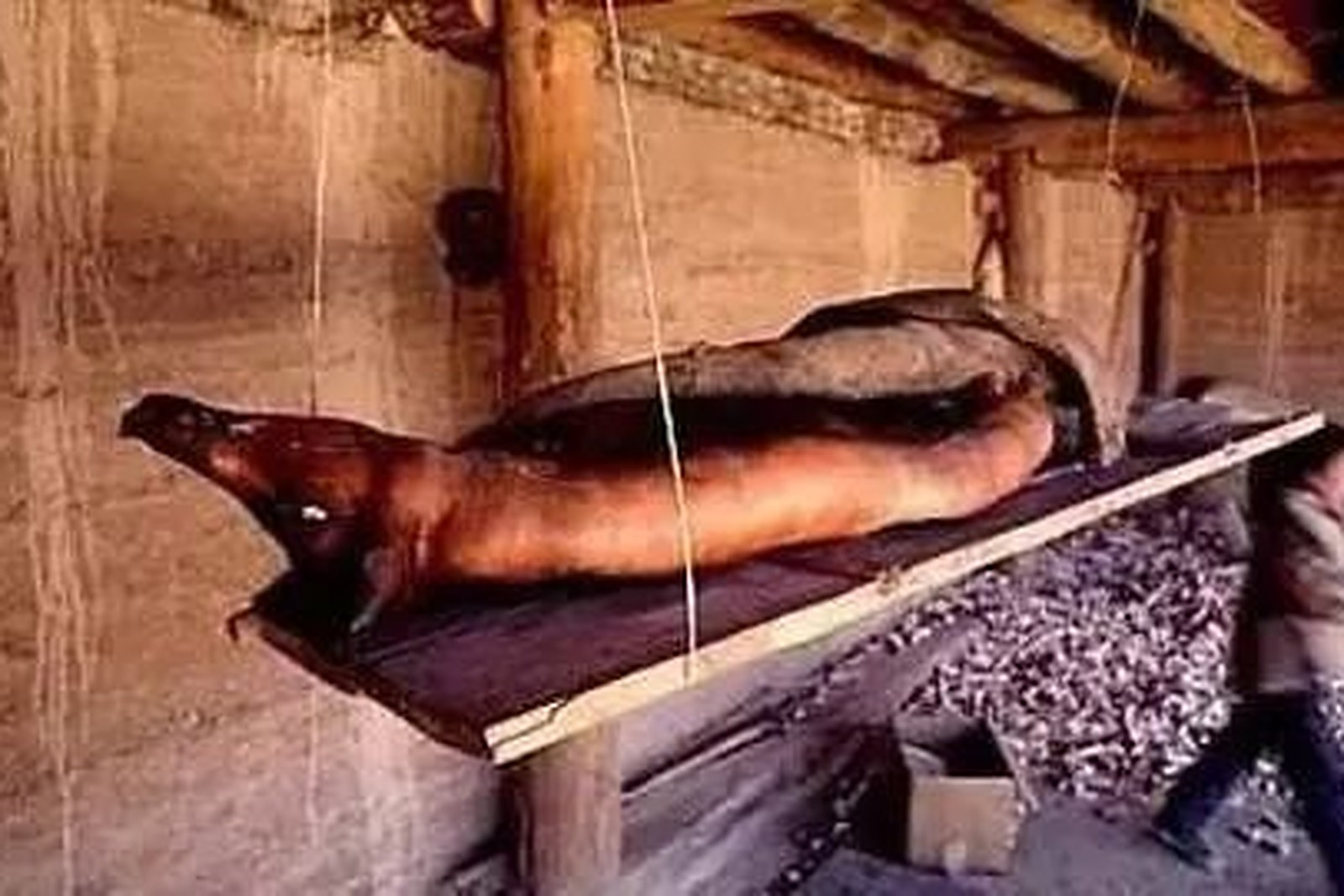
The mechanism is the whole-body cure. Unlike a 火腿 huǒtuǐ ham, which is a single leg, 琵琶肉 Pípá Ròu keeps the pig entire: the bones are pulled, the cavity is packed with the salt-and-spice 佐料 zuǒliào seasoning mix and a splash of 青稞酒 qīngkē jiǔ, the opening is stitched with thread and smeared with a 灶灰 zàohuī hearth-ash paste, the nostrils are plugged with 木棍 mùgùn wooden pegs, and the body is weighted flat and left to 风干 fēnggān in the cold, dry 高原 gāoyuán air until the fat sets and the shape bows like a 琵琶 pípá. The 花椒 huājiāo and 草果 cǎoguǒ do the preserving as much as the salt: the pepper numbs spoilage and the cardamom scents the fat, so the meat eats rich rather than merely salted, and the 青稞酒 qīngkē jiǔ carries the cure inward. It is the 火塘 huǒtáng hearth tradition made durable: a pig slaughtered at the 杀猪年 shā zhū nián pig-killing festival in the 腊月 làyuè twelfth lunar month becomes a store of meat that carries the household through the cold, and only at the 大年三十 dànián sānshí New Year’s Eve dinner is the first cut opened. The dish is a cousin of the 腊肉 làròu cured pork of Yunnan and the 琵琶猪 pípá zhū pipa-pig of the wider 藏区 zàngqū Tibetan region, but the Deqin whole-carcass method and the 云岭乡 Yúnlǐng Xiāng name are what make it the Diqing one.
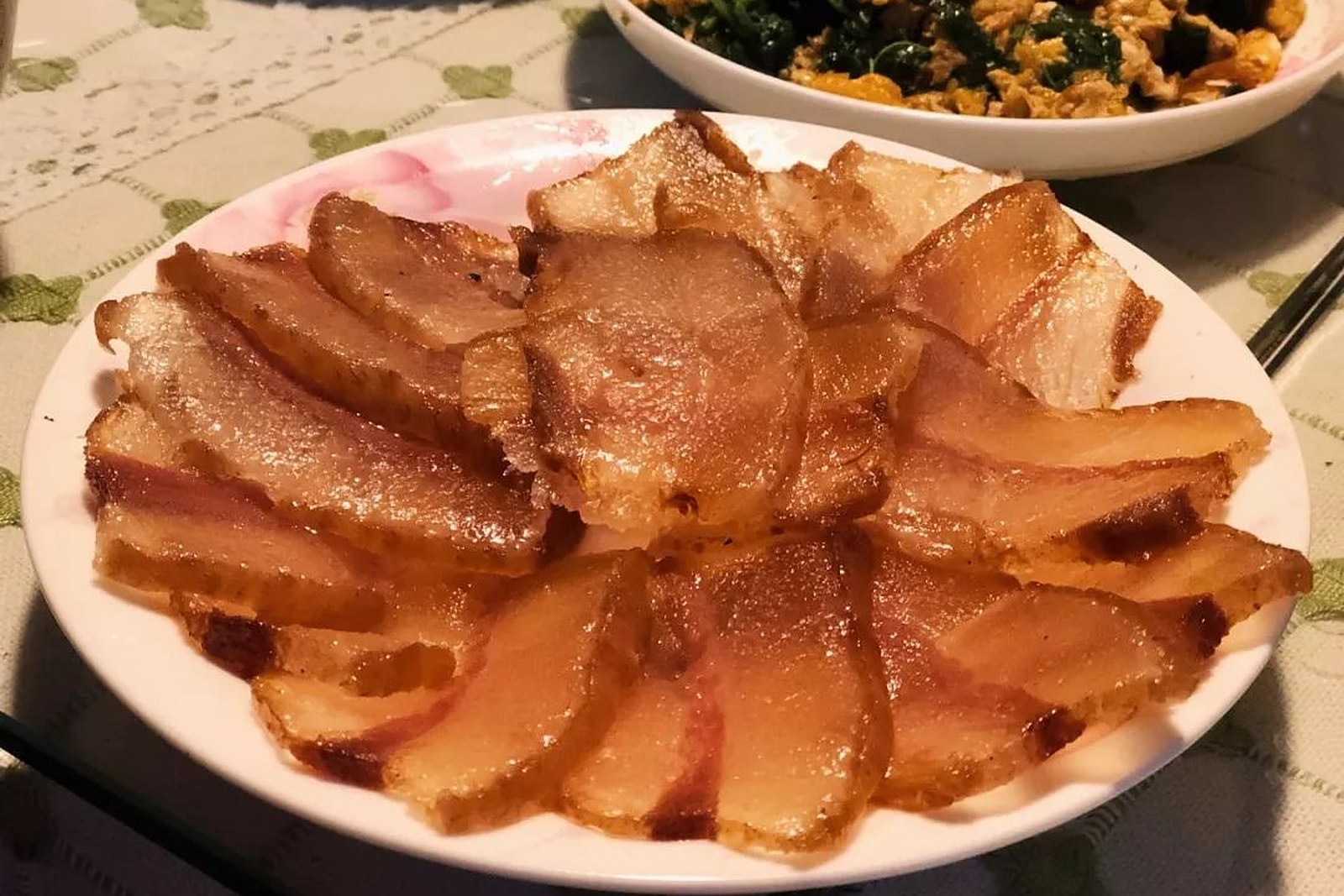
Locals eat it at the feast, not the stall. The move is to be invited to a 藏家 zàngjiā home at New Year, or to order it sliced at a Deqin 藏餐 zàngcān house, because a whole 琵琶肉 Pípá Ròu is too large and too precious to be a casual order – it is a year’s provision, not a plate, and visitors meet it as thin slices at the Deqin houses that still cure it. Ask for it 蒸 zhēng steamed to render the fat, or 煎 jiān pan-fried crisp at the edge, and eat the first thin slice plain to taste the cure before adding the 辣椒面 làjiāo miàn chili powder the table will offer. The 德钦 Déqín county town and the 云岭乡 Yúnlǐng Xiāng villages are the addresses where Tibetan households keep the tradition, and the honest check is the shape: a real piece should show the intact, guitar-curved body when whole, and a slice should be 透明 tòumíng translucent red rather than grey. Winter and early spring – around the 杀猪年 shā zhū nián and the New Year – are when it is freshest opened, and the first cut laid before a guest is the household’s highest honour.
Words and Names
琵琶肉 Pípá Ròu pipa meat · 迪庆 Díqìng Diqing · 德钦 Déqín Deqin · 云岭乡 Yúnlǐng Xiāng Yunling township · 藏族 Zàngzú the Tibetan people · 花椒 Huājiāo Sichuan pepper · 草果 Cǎoguǒ black cardamom · 青稞酒 Qīngkē Jiǔ barley wine · 风干 Fēnggān air-dried · 琵琶 Pípá the pipa lute · 火塘 Huǒtáng the hearth · 腊肉 Làròu cured pork
What the Locals Know
The local mark of a real 琵琶肉 Pípá Ròu is the shape: when whole it should show the intact, guitar-curved body, and a slice should be 透明 tòumíng translucent deep red rather than grey – the 花椒 huājiāo and 草果 cǎoguǒ do the preserving as much as the salt, so the meat eats rich rather than merely salted. It is a whole-pig cure, never cut into pieces, which is why a whole one is a household asset and a year’s provision rather than a casual menu order.
The honest way to meet it is to be invited to a 藏家 zàngjiā New Year feast, or to order it sliced at a Deqin 藏餐 zàngcān house – ask for it 蒸 zhēng steamed to render the fat, or 煎 jiān pan-fried crisp at the edge, and eat the first thin slice plain to taste the cure before the 辣椒面 làjiāo miàn chili powder. Winter and early spring, around the 杀猪年 shā zhū nián pig-killing festival and the New Year, are when it is freshest opened, and the first cut laid before a guest is the household’s highest honour.
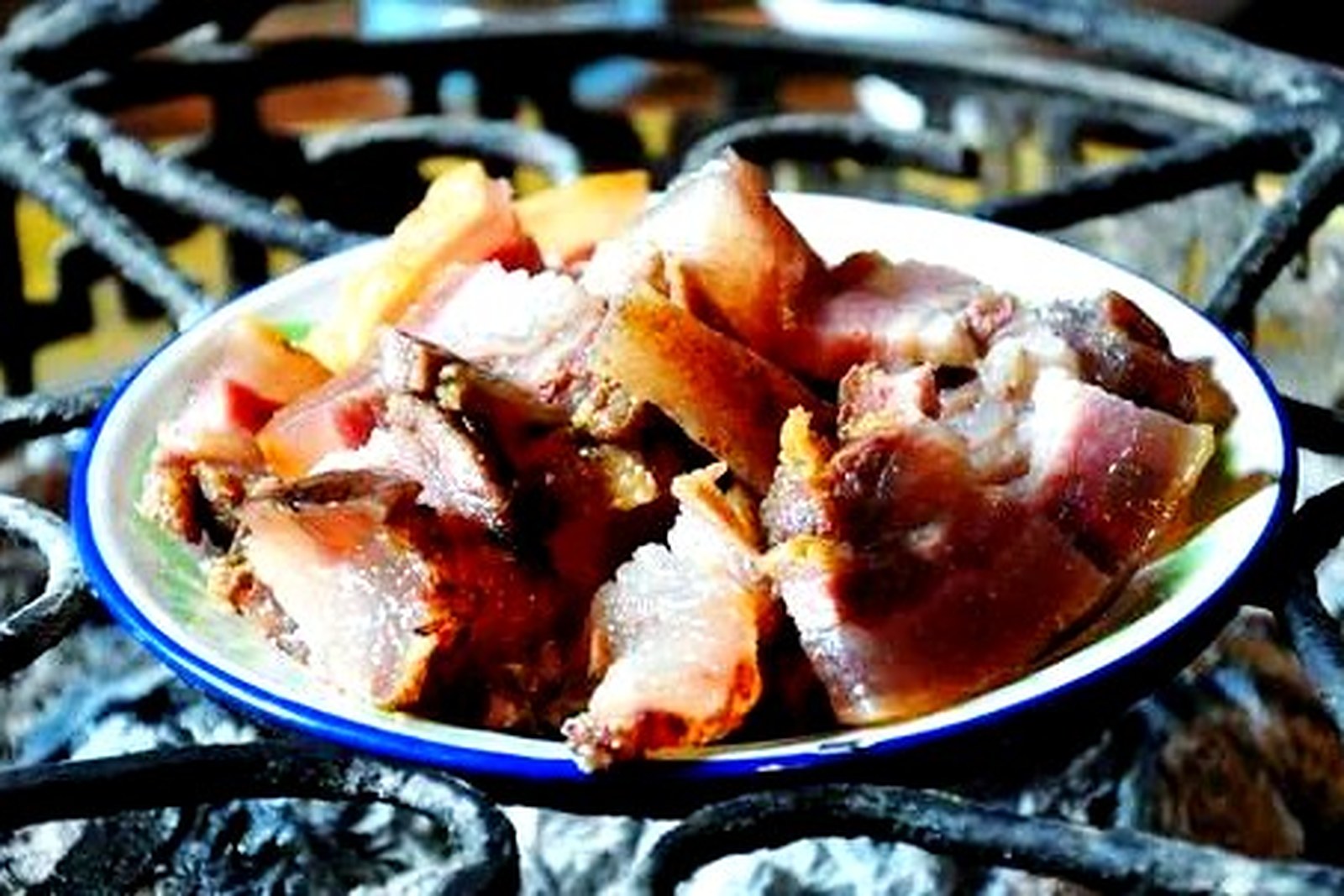
flowcloud would say that pipa meat is a whole pig, cured – gutted, de-boned, sewn and 风干 fēnggān into the shape of a 琵琶 pípá lute, rich with 花椒 huājiāo and 草果 cǎoguǒ – and that the honest move is to eat it sliced at a Deqin 藏家 zàngjiā New Year feast, because the whole-carcass cure is the dish and the first cut is the guest’s honour. All checked October 2026.
Where to find it: Tibetan-family feasts and 藏餐 zàngcān restaurants in 德钦 Déqín Deqin county, especially 云岭乡 Yúnlǐng Xiāng beneath 梅里雪山 Méilǐ Xuěshān Meili Snow Mountain, Shangri-La prefecture – 琵琶肉 Pípá Ròu is usually met as thin slices around the New Year. It is a whole-pig cure unique to Diqing’s Tibetan households, not a routine menu item. All checked October 2026.