
一把糌粑,半碗浓茶。Yī bǎ zānba, bàn wǎn nóng chá – A handful of tsampa; half a bowl of strong tea.
糌粑 Zānba tsampa is the portable meal of the 藏族 Zàngzú Tibetan plateau – 青稞 qīngkē highland barley roasted, milled into a fine 炒面 chǎomiàn roasted flour, and then kneaded with 酥油茶 sūyóu chá butter tea and a little 酥油 sūyóu yak butter into a dense, doughy ball that needs no fire and no plate. It is the original travel food: a 牦牛 máoniú yak herder carries a bag of the dry flour and a flask of tea, and on the pass mixes a meal in the palm of the hand. A portion at a 独克宗古城 Dúkèzōng Gǔchéng Dukezong restaurant or breakfast set runs about 15-30 yuan as part of a plate, and the honest shape is that 糌粑 zānba is not cooked at the table – the cooking happened weeks ago when the barley was roasted – so what you eat is the plateau’s stored sunshine, kneaded on the spot. Locals eat it daily as the anchor of the 酥油茶 sūyóu chá breakfast, and the same flour becomes a trail ration, an everyday staple, and the carbohydrate half of every Tibetan meal from 香格里拉 Xiānggélǐlā to the high 牧场 mùchǎng pastures.
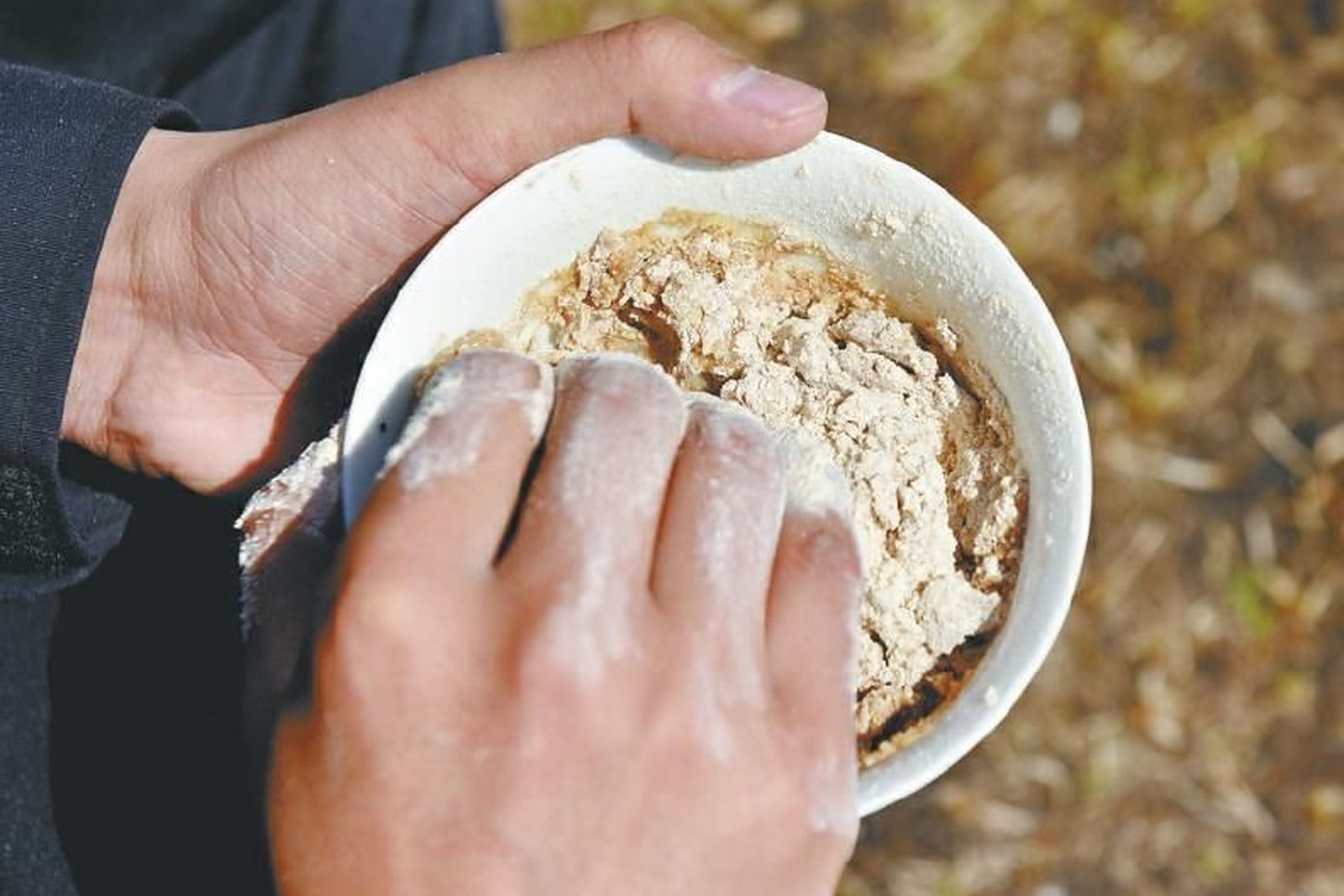
The mechanism is the roast. 青稞 qīngkē highland barley is parched in a 铁锅 tiěguō iron wok until the grains pop and turn nut-brown, then stone-milled into flour that keeps for a season in a 皮袋 pídài leather sack – no refrigeration, no spoiling, which is exactly what a nomadic 牧民 mùmín pastoralist needs. To eat it, the diner pours 酥油茶 sūyóu chá into a 木碗 mùwǎn wooden bowl of the flour, works it with the fingers into a 团 tuán ball, and the tea hydrates the roast while the 酥油 sūyóu binds it, so the dry flour becomes a chewy, savoury mouthful rather than a paste. The ratio is the craft: too little tea and the ball crumbles, too much and it turns to glue, and a 藏族 Zàngzú hand knows the feel without measuring. 糌粑 zānba is the carbohydrate half of the whole Tibetan diet – the other halves are 酥油茶 sūyóu chá for fat and 奶渣 nǎizhā dried curd for protein – and it is what makes 风干牛肉 fēnggān niúròu air-dried beef and a flask of tea a complete meal on the 高原 gāoyuán plateau. The comparison visitors draw is with 糍粑 cíbā the glutinous-rice cake of the south, but the two share only the sound of the name: one is roasted barley, the other is pounded rice, and only the barley one travels.
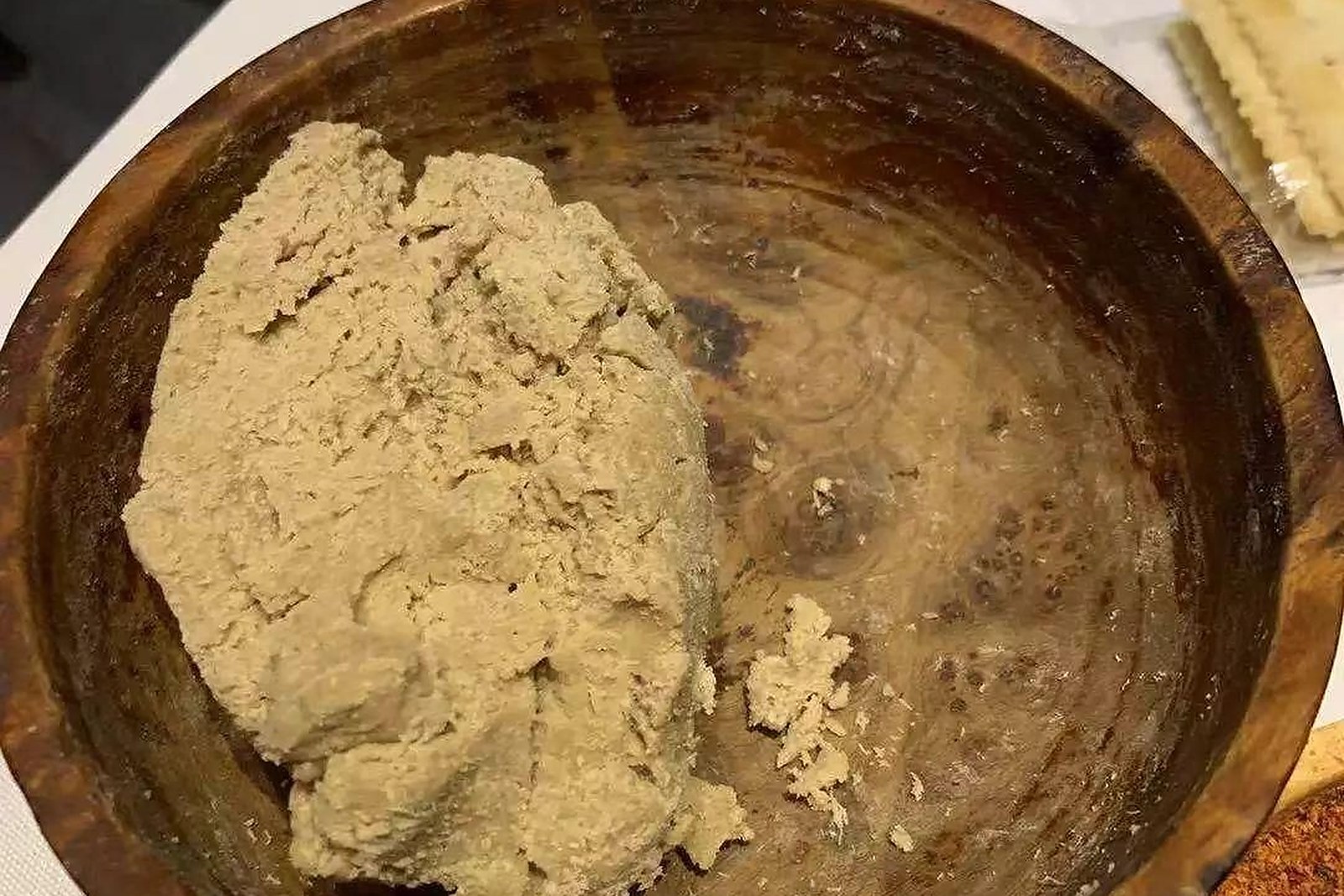
Locals eat it by hand, with tea. The move is to order a 糌粑 zānba plate at a 藏餐 zàngcān Tibetan meal or as part of a breakfast set, then mix your own ball rather than expecting a spoon – the 木碗 mùwǎn and the fingers are the whole utensil set, and a table that hands you a fork has tourist-ified the dish. Add a little 奶渣 nǎizhā or a pinch of 白糖 báitáng white sugar if the plain roast tastes too stern, and eat it with 酥油茶 sūyóu chá on the side so each ball is washed down with the salty cup. The 独克宗古城 Dúkèzōng Gǔchéng restaurants and the 藏家早餐 zàngjiā zǎocān family breakfasts are where visitors meet it; at a real 藏家 zàngjiā Tibetan home you may be handed the flour and the flask and invited to knead your own, which is the point – the dish is the act, not the plating. Winter is the storage season when the year’s barley is milled, and the honest version is the one mixed at the table from flour that was roasted, not from a pre-made block that merely needed reheating.
Words and Names
糌粑 Zānba tsampa · 青稞 Qīngkē highland barley · 酥油茶 Sūyóu Chá butter tea · 酥油 Sūyóu yak butter · 炒面 Chǎomiàn roasted flour · 木碗 Mùwǎn wooden bowl · 奶渣 Nǎizhā dried curd · 藏族 Zàngzú the Tibetan people · 牧民 Mùmín pastoralist · 风干牛肉 Fēnggān Niúròu air-dried beef · 高原 Gāoyuán plateau · 藏餐 Zàngcān Tibetan meal
What the Locals Know
The local craft with 糌粑 zānba is the ratio of tea to flour: too little 酥油茶 sūyóu chá and the ball crumbles, too much and it turns to glue, and a 藏族 Zàngzú hand knows the feel without measuring – so the honest move is to mix your own in a 木碗 mùwǎn with the fingers, and a table that hands you a fork has tourist-ified the dish. Add a little 奶渣 nǎizhā or a pinch of 白糖 báitáng if the plain roast tastes too stern, and eat each ball with the salty cup on the side.
The real version is the one mixed at the table from flour that was roasted weeks ago, not from a pre-made block that merely needed reheating – winter is the storage season when the year’s 青稞 qīngkē barley is milled, and at a genuine 藏家 zàngjiā home you may be handed the flour and the flask and invited to knead your own, which is the point: the dish is the act of kneading, not the plating.
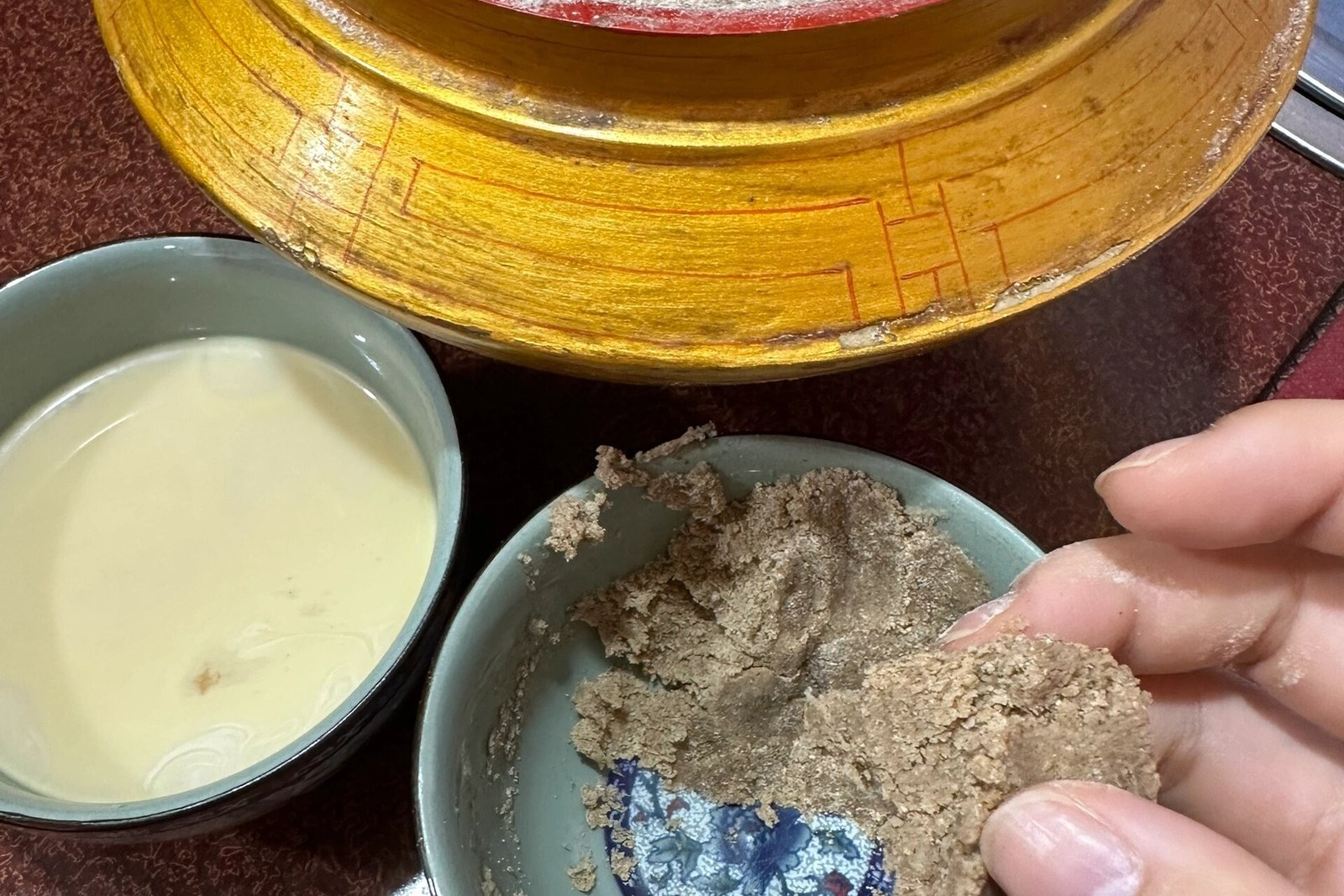
flowcloud would say that tsampa is roasted barley turned to flour – kneaded with butter tea into a ball by hand, no fire, no plate – and that the honest move is to mix your own in a 木碗 mùwǎn with the salty cup beside it, because the dish is the act of kneading, not the plating. All checked October 2026.
Where to find it: Tibetan restaurants and family-breakfast sets in 独克宗古城 Dúkèzōng Gǔchéng Dukezong old town, Shangri-La – a 糌粑 zānba portion runs about 15-30 yuan as part of a plate; ask to mix your own ball with 酥油茶 sūyóu chá, and look for it inside the “藏家早餐” zàngjiā zǎocān set. Tsampa is the daily barley staple across Diqing, kneaded by hand and eaten with butter tea. All checked October 2026.