
一锅牦牛肉,暖透高原冬。Yī guō máoniúròu, nuǎntòu gāoyuán dōng – One pot of yak beef; warmth through the highland winter.
牦牛肉火锅 Máoniúròu Huǒguō yak-beef hotpot is the bowl of 香格里拉 Xiānggélǐlā Shangri-La, the Tibetan town where the wind comes off the 雪山 xuěshān snow mountains – 牦牛 máoniú yak, the shaggy highland bovine grazed above 3,000 m on the 草场 cǎochǎng alpine pasture, simmered in a 紫铜锅 zǐtóng guō purple-copper pot with 山泉水 shānquánshuǐ spring water, salt and a few 药材 yàocái medicinal herbs until the meat goes silky and the broth turns golden. The yak carries little fat and no 膻味 shānwèi gamy odour – the claim to fame on a plateau where ordinary mutton can be a gamble – and the pot is deliberately clean: no heavy spice base, so the beef carries the flavour and the 蘸水 zhànshuǐ dip of 辣椒油 làjiāo yóu chili oil, minced 朝天椒 cháotiānjiāo bird’s-eye chili and 青稞酒 qīngkē jiǔ barley wine supplies the heat for those who want it. A meal commonly runs about 70-120 yuan a head in the old town, and the honest shape is that this is the Tibetan winter pot – where a Lijiang 腊排骨火锅 Là Páigǔ Huǒguō is salty-cured, this one is clean and meaty. Locals eat it the way the town’s day is built: a light 酥油茶 sūyóu chá butter-tea breakfast, a 牦牛肉面 máoniúròu miàn beef-noodle lunch, and only in the evening do they sit down to the pot – and the first bowl of plain broth, before any dip, is what the restaurant is really selling.
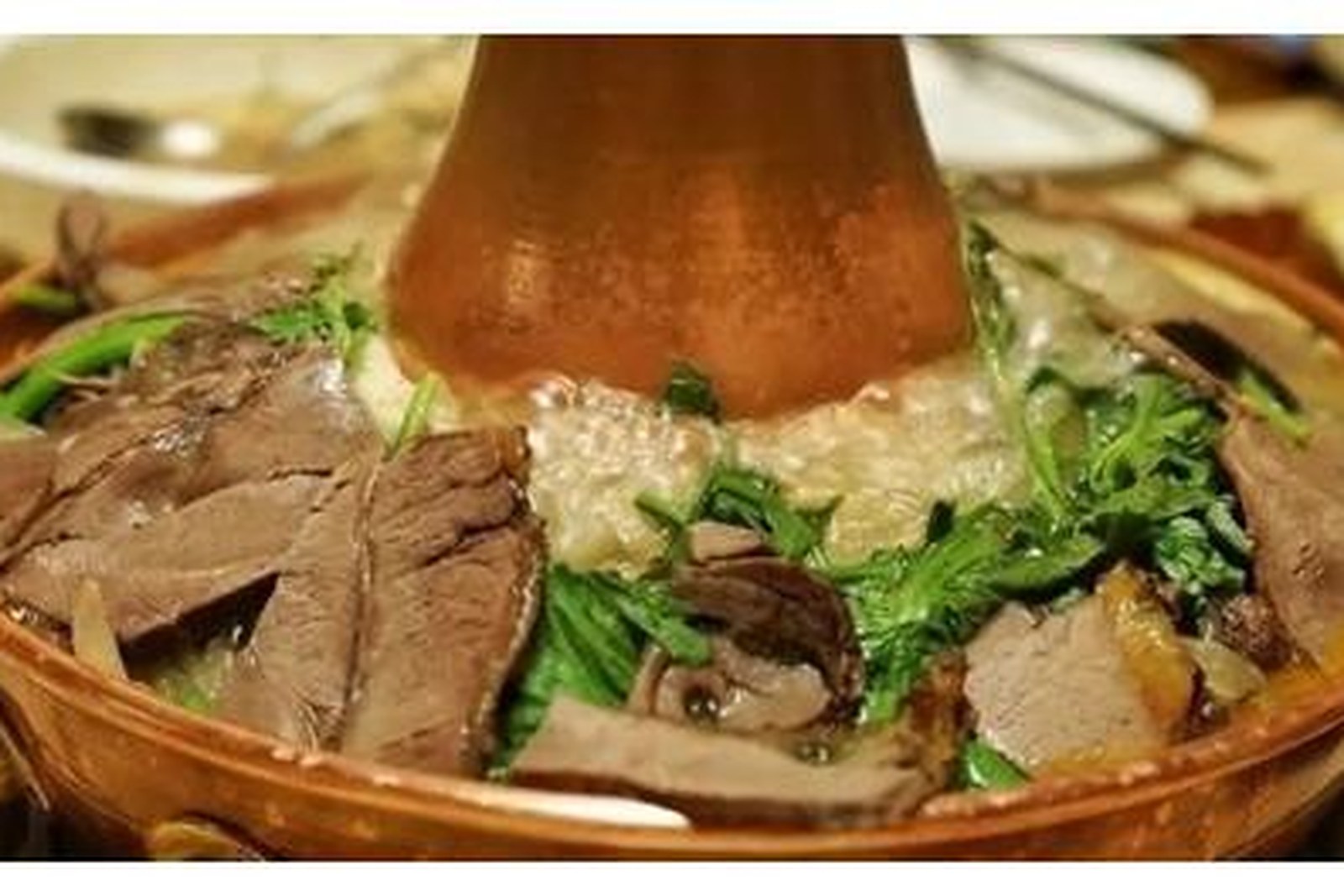
The mechanism is the animal. 牦牛 máoniú yak walks the 高原 gāoyuán plateau all day at altitude, so the muscle is tight and lean and the fat is mild – which is why the meat needs only water and time, and why a cook who buries it in spice is apologising for the beef. The 紫铜锅 zǐtóng guō copper pot matters: it holds a steady, even heat that coaxes the collagen out of the bone and keeps the broth clear before it turns golden, and the 带骨 dàigǔ bone-in cut is the local order because the bone is what flavours the soup. The 蘸水 zhànshuǐ is built for the meat rather than the broth: 辣椒油 làjiāo yóu chili oil melted from 牛油 niúyóu beef tallow, sharpened with 朝天椒 cháotiānjiāo and a splash of 青稞酒 qīngkē jiǔ, so you dip the slice, not the pot, and the broth stays clean for the 白萝卜 bái luóbo radish and 豆腐 dòufu tofu that follow. The dish is the cold-weather food of a 3,200 m basin, and its relatives on the same menu are the 牦牛肉干巴 Máoniúròu Gānbā wind-dried beef strips – 风干 fēnggān air-dried the plateau way – which sit on the table as a snack while the pot comes to the boil. The comparison every local draws is with the 藏香猪火锅 Zàngxiāngzhū Huǒguō Tibetan fragrant-pig pot: the yak is the lean winter pot, the pig is the rich one, and the two divide the cold months.
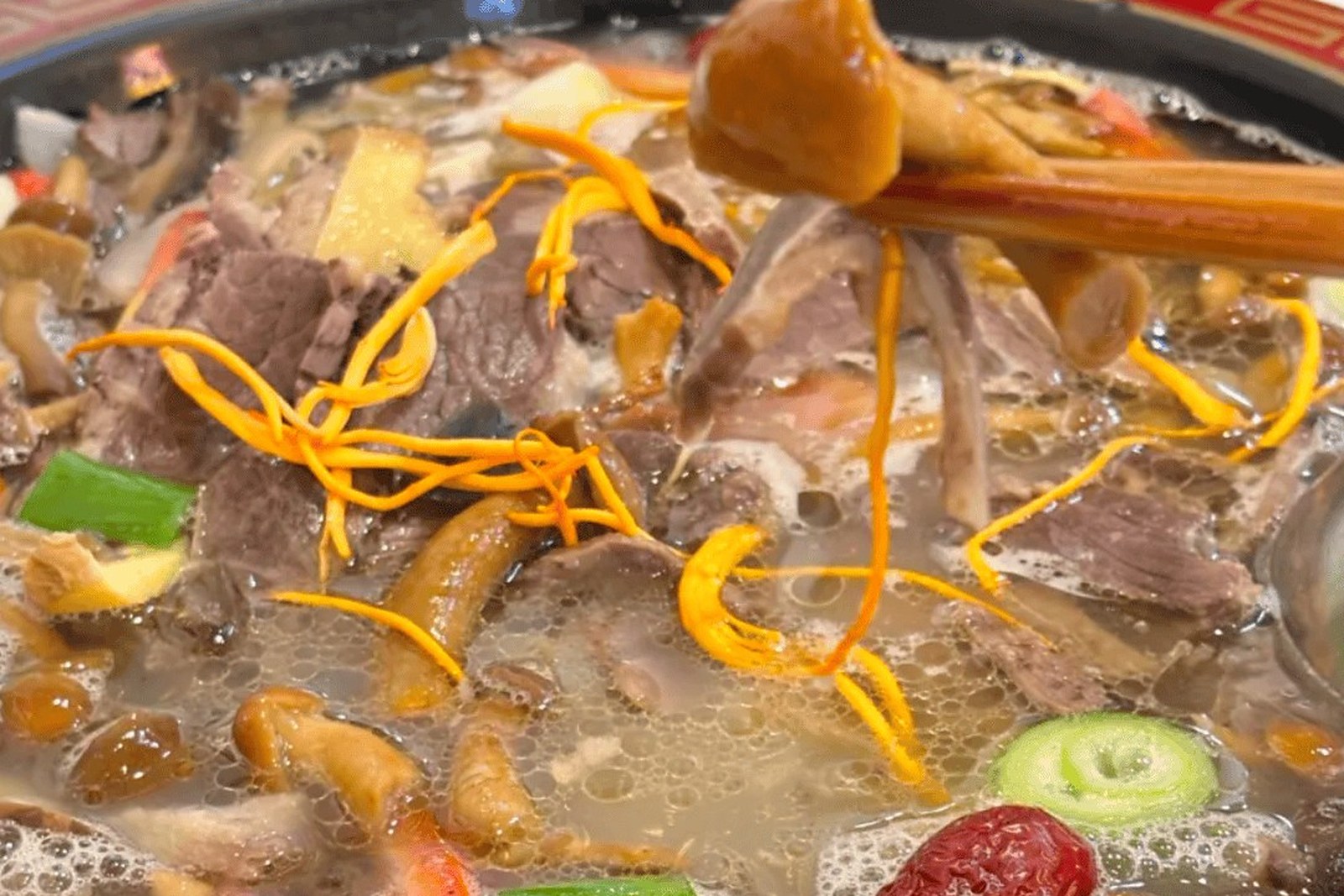
Locals eat it in the evening, in the 独克宗古城 Dúkèzōng Gǔchéng Dukezong old town rather than the new blocks. 玛利嘎藏餐 Mǎlìgā Zàngcān is the name most cited for the pot, and the move is to order 带骨 dàigǔ bone-in cuts, drink the first bowl of broth plain before touching the dip, and let the 白萝卜 bái luóbo radish have the first twenty minutes. Add the 辣椒油 làjiāo yóu to the dip rather than the pot, so the broth stays golden for the vegetables; 豆腐 dòufu and the wild 菌 jùn mushrooms cooked last are what stretch the pot into a full meal, and a pot for two with a plate of greens is the honest order for a pair. Winter is the season – the pot’s job is to put heat back into a cold afternoon – and the honest test of a house is the broth: golden from the bone and the beef, not from powder. The 高原 gāoyuán altitude slows digestion, so locals warn newcomers to keep the first meal light and let the broth do the work rather than piling on the chili and the wine at once.
Words and Names
牦牛肉火锅 Máoniúròu Huǒguō yak-beef hotpot · 牦牛 Máoniú the yak · 香格里拉 Xiānggélǐlā Shangri-La · 藏族 Zàngzú the Tibetan people · 紫铜锅 Zǐtóng Guō the copper pot · 蘸水 Zhànshuǐ the dip · 辣椒油 Làjiāo Yóu chili oil · 青稞酒 Qīngkē Jiǔ barley wine · 风干 Fēnggān air-dried · 独克宗古城 Dúkèzōng Gǔchéng Dukezong old town · 牦牛肉干巴 Máoniúròu Gānbā wind-dried beef · 高原 Gāoyuán plateau
What the Locals Know
The local test of a yak-beef house is the broth: it should be golden from the bone and the beef, not from stock powder, and the copper 紫铜锅 zǐtóng guō is the honest vessel because it holds an even heat that keeps the soup clear before it turns gold. Order 带骨 dàigǔ bone-in cuts – the bone is what flavours the pot – and let the 白萝卜 bái luóbo radish have the first twenty minutes so it drinks the broth, then add the 辣椒油 làjiāo yóu chili oil to your 蘸水 zhànshuǐ dip rather than the pot, so the broth stays clean for the 豆腐 dòufu and wild 菌 jùn mushrooms that stretch it into a meal.
The honest order for a pair is a pot for two with a plate of greens, and the honest hour is the evening: locals take a light 酥油茶 sūyóu chá breakfast and a 牦牛肉面 máoniúròu miàn lunch, and only sit down to the pot after dark, because the pot’s job is to put heat back into a cold afternoon. The 高原 gāoyuán altitude slows digestion, so newcomers are told to keep the first meal light – drink the first bowl of plain broth before any dip, and let the broth do the work rather than piling on the chili and the 青稞酒 qīngkē jiǔ at once.
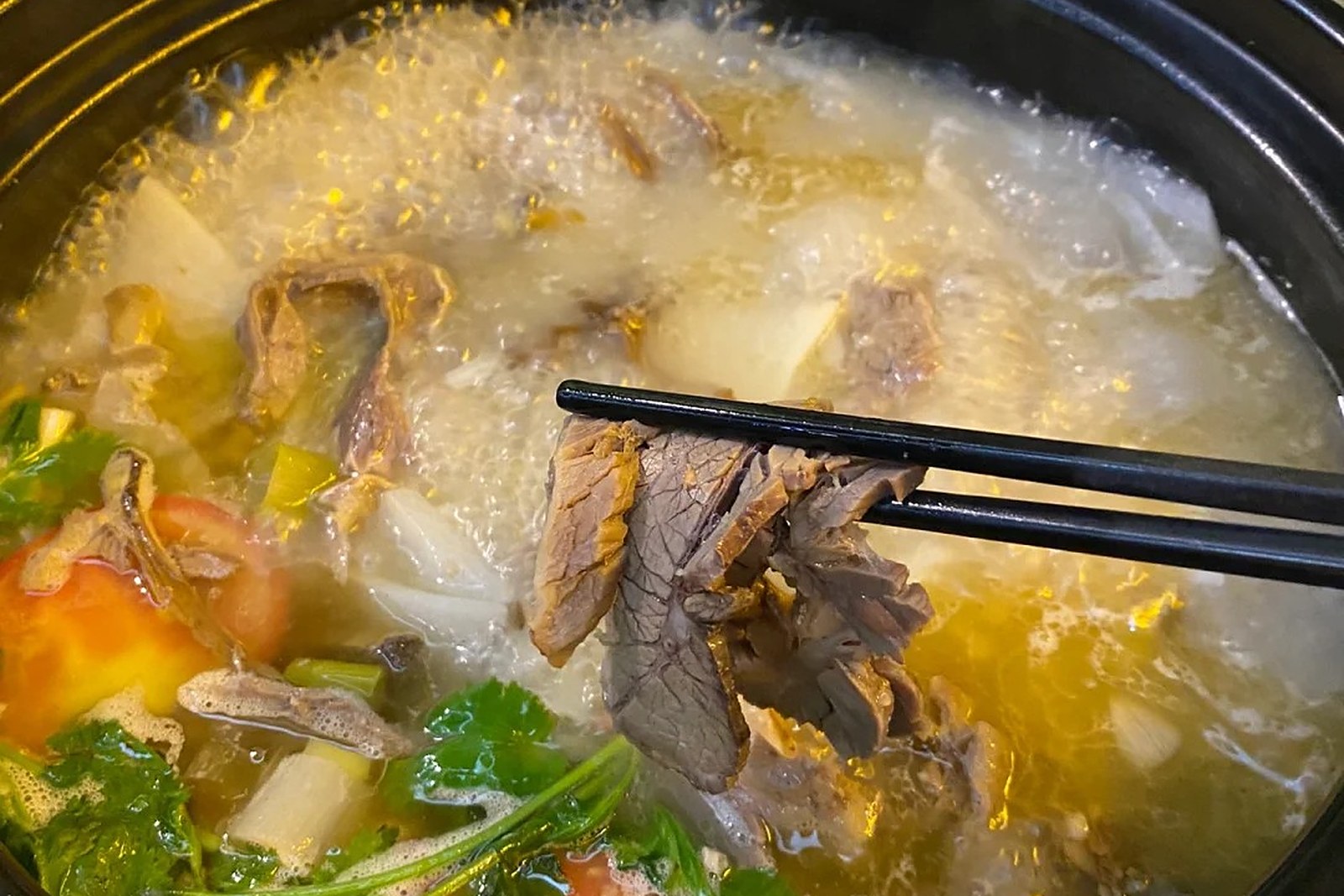
flowcloud would say that the yak-beef pot is bone and broth – plateau yak simmered in a copper pot until the soup turns golden, dipped in chili-beef-tallow, radish first and dip second – and that the honest move is to take the Dukezong row on a cold evening and drink the first bowl plain, because the beef is the flavour and the chili is your choice. All checked October 2026.
Where to find it: the Tibetan restaurants of 独克宗古城 Dúkèzōng Gǔchéng Dukezong old town in Shangri-La – 玛利嘎藏餐 Mǎlìgā Zàngcān is the local name for yak-beef hotpot, about 70-120 yuan a head; order 带骨 dàigǔ bone-in and drink the first broth plain. The same pot appears across Shangri-La and Deqin, and the honest check is the broth’s colour: golden from the bone, not from stock powder. All checked October 2026.