
东方鳄鱼 Dōngfāng èyú, the crocodile of 东方市 Dōngfāng Shì Dongfang, is a farm animal here before it is an attraction, and that is the strangest fact in this whole batch: the city’s farms around 红草村 Hóngcǎo Cūn Hongcao village in 三家镇 Sānjiā Zhèn Sanjia Town hold roughly a third of all the crocodiles farmed in China and supply around four fifths of the country’s hatchlings, and the meat is cooked and eaten in the park’s own restaurant. It is legal, and the legality has a date: in 2000 the Ministry of Agriculture ruled that Siamese, Nile and saltwater crocodiles of lawful origin are managed as ordinary aquaculture species, which is what allows a crocodile to be sold as food at all.
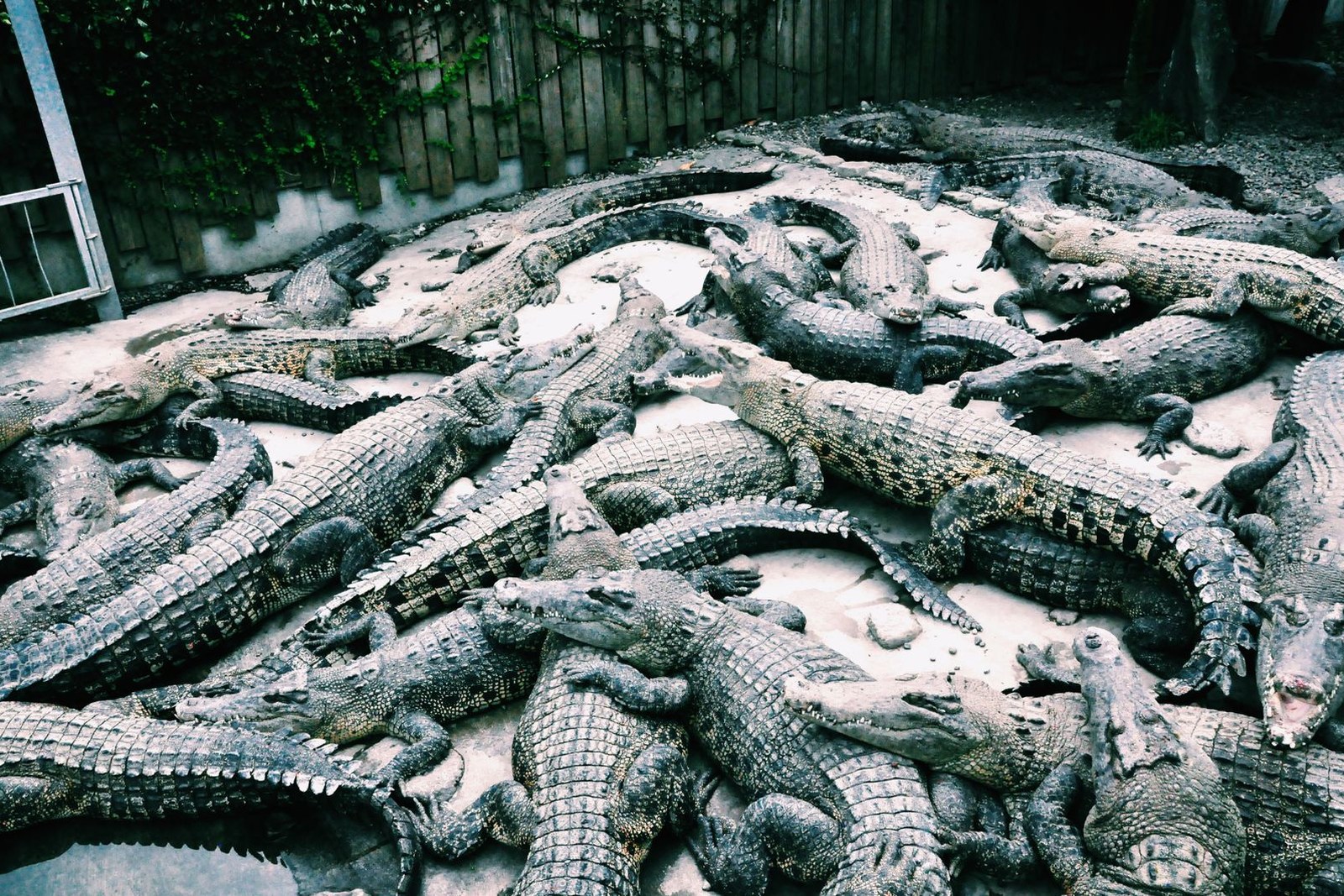
The industry started as one farm and became a town. The first crocodile breeding park went up at Hongcao in 2015, and in 2019 the company 鳄珍 Èzhēn moved its headquarters there after surveying several provinces, bringing years of product research with it. The reason is climate, and the city says so: Dongfang sits in the south-west, gets less rain than most of the island, runs a mean annual temperature around twenty-four or twenty-five degrees with strong sun, and crocodiles grow fast here, so the commercial cycle is shorter than it would be elsewhere. What was one pen has become an alliance of villages. The core at Hongcao now links 代鸠 Dàijiū Daijiu and 旺老 Wànglǎo Wanglao and a cluster of neighbours into a cross-village partnership that the city says reaches fourteen villages, with sixty-nine breeding firms and some three thousand four hundred mu of standardised ponds.
Three species are on the farm: 暹罗鳄 Xiānluó è, the Siamese crocodile, 尼罗鳄 Níluó è, the Nile crocodile, and 湾鳄 wān è, the saltwater crocodile, and the 2000 ruling is what lets them be farmed and sold, the point this article leads with because it is the point readers ask about. The chain that has grown from them runs from pond to product: meat turned into ready-to-eat cans and restaurant dishes, skin into leather goods, and bone and oil into health and cosmetic ingredients. The park’s own count is more than a thousand products across the lines, sold from a themed restaurant, a product hall and a shop; the site also carries Asia’s first crocodile-themed glass walkway, a science corridor and a maze, which belong to this site’s travel column, while this page stays with the kitchen. The city’s plan for the place is written down in a master plan for a crocodile characteristics town covering 2021 to 2035, which sets the goals of the country’s largest crocodile breeding base, a crocodile creative-industry engine, a crocodile tourism destination and a national model for village revival.
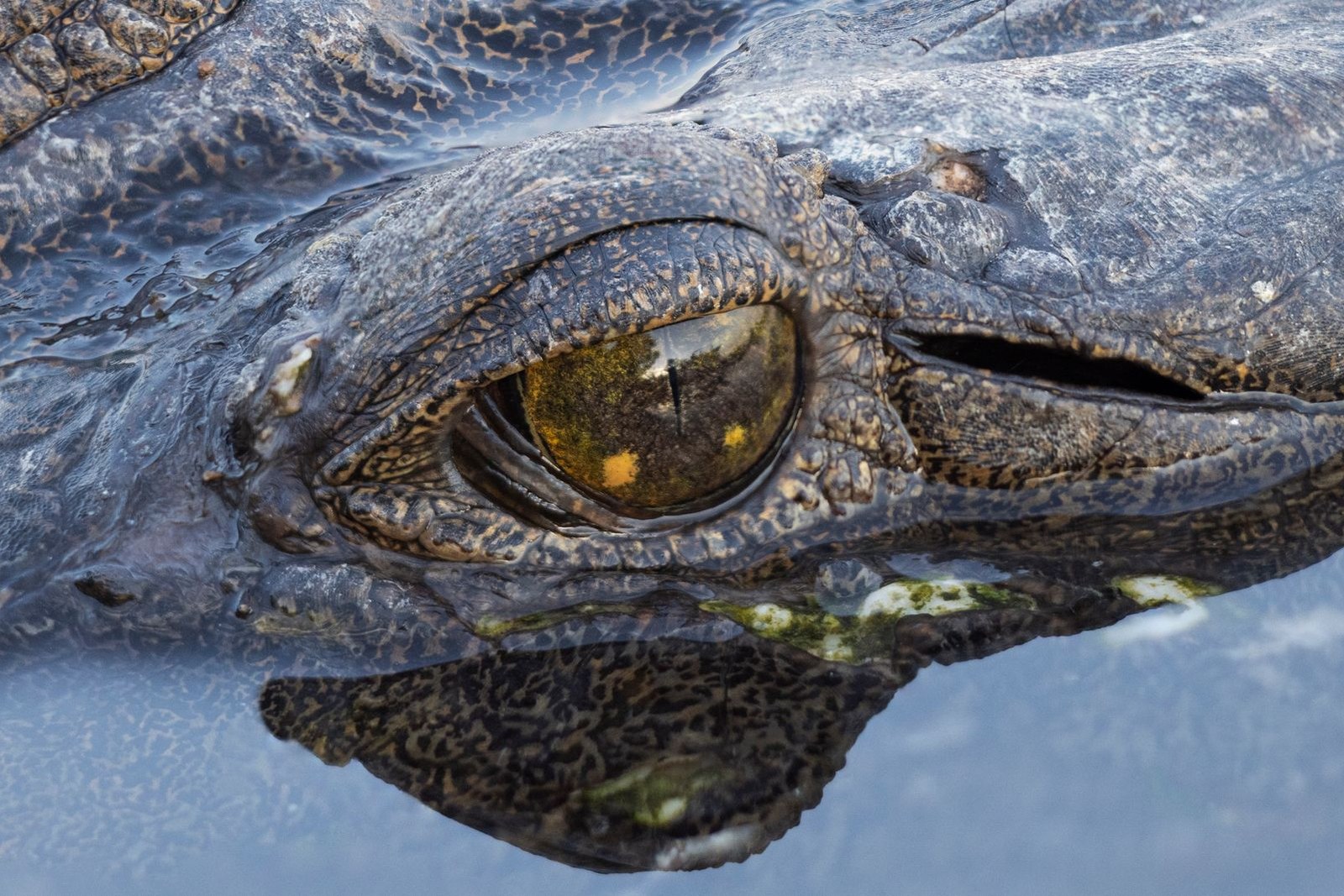
The figures come in two vintages and they must be kept apart. By the city’s own account in September 2026, Sanjia’s crocodile stock is the country’s largest, the hatchling supply is more than four fifths of the national total, the full-chain output value has reached 870 million yuan, and the Hongcao collective’s income has passed 2.3 million yuan, up 112.5 per cent on the year, with the village named a national-level agricultural industry strong town; a provincial labour brand called “crocodile expert” is said to pay the workers who hold it about 72,000 yuan a year, and more than five thousand rural workers have been taken on locally, while the park received 304,000 visitors over the year. The earlier vintage is the news reporting: in March 2024 a wire service put the town’s stock near 320,000 animals, about thirty per cent of the national total and eighty per cent of the country’s hatchlings, and in April 2025 it reported a full-chain value of 677 million yuan, forty-seven firms and a hatchling share of more than half the national market. Those two sets describe two moments and are not to be set side by side as one year’s numbers; the 2026 set is the newer and is preferred here.
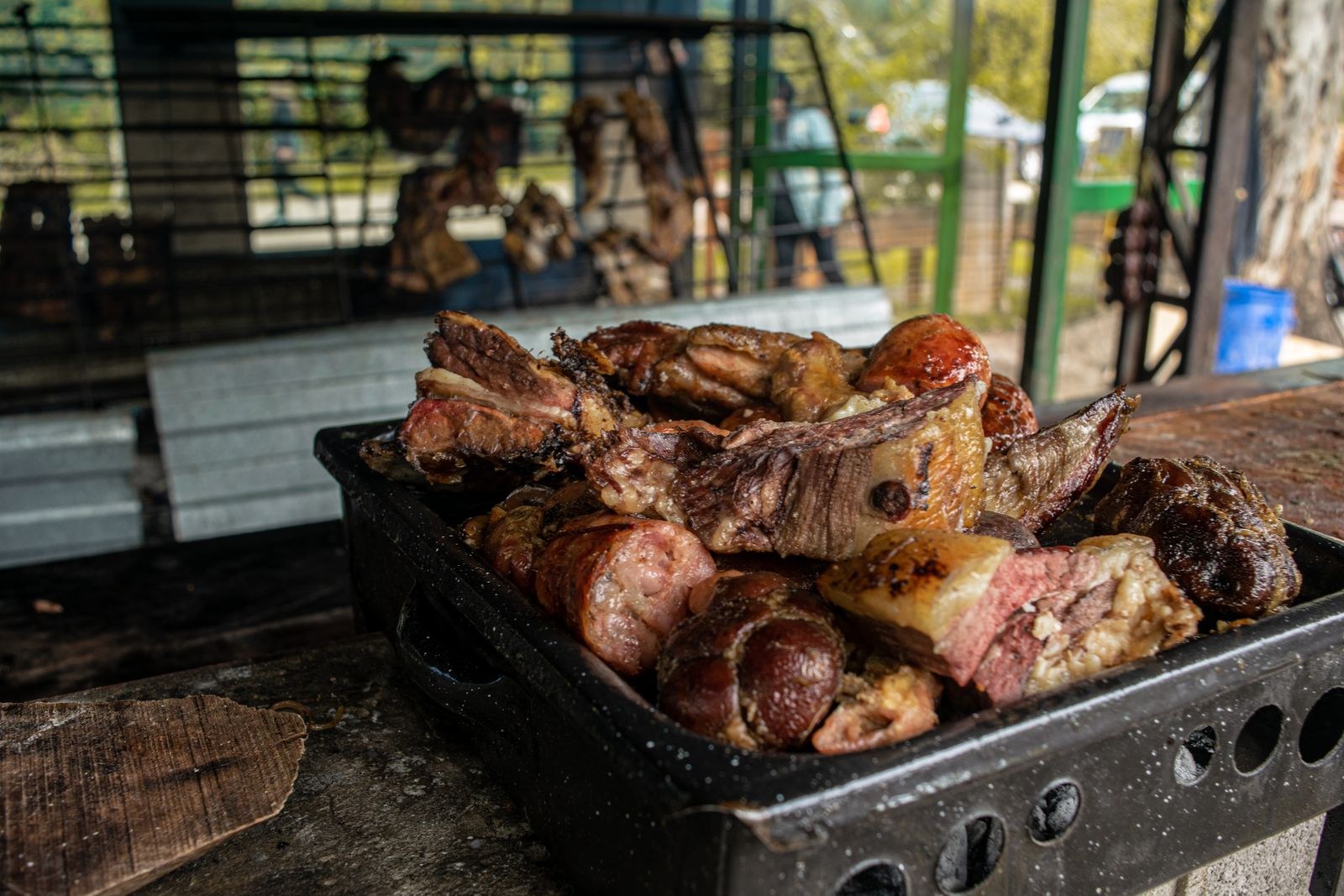
On the plate the meat is a lean white one. It carries a good amino-acid profile with plenty of lysine and little fat, and the city’s farms have long supplied fresh meat to markets outside the island; in the park’s restaurant it is cooked into dishes for visitors who want to try it, and it is also canned and bottled for the shelf, which is how most people first meet it. This page takes the meat as food and refuses the dare: the framing here is a farmed white meat with a supply chain behind it, not a novelty. The village changed around the trade. Before 2015 hardly a building went up at Hongcao, and since then the crocodile money has paid for more than two hundred houses; one farmer, 张师办 Zhāng Shībàn, built his own base in 2017 and says the family’s income reached more than three million yuan in one year while he led a dozen households along with him. Five farmhouse kitchens and several guest rooms now operate in the village. Admission to the park is around forty yuan on a 2026-10 snapshot that floats, the dishes are priced per dish and the canned goods per tin, and no official price exists for either.
Words and Names
东方鳄鱼 Dōngfāng èyú is the city’s farmed crocodile, and 鳄珍 Èzhēn is the company whose park at 红草村 Hóngcǎo Cūn Hongcao village in 三家镇 Sānjiā Zhèn Sanjia Town anchors the trade; 东方鳄鱼小镇 Dōngfāng èyú xiǎozhèn, Crocodile Town, is the district the city is building around it. 暹罗鳄 Xiānluó è, the Siamese crocodile, 尼罗鳄 Níluó è, the Nile crocodile, and 湾鳄 wān è, the saltwater crocodile, are the three species on the farm, managed as ordinary aquaculture since the 2000 agriculture-ministry ruling. No crocodile page and no farmed-meat page of any kind exists elsewhere on this site, so this page’s whole obligation is the differentiation that is not needed: it keeps the one animal, its legality and its kitchen, and leaves the park as a destination to the travel column.
What the Locals Know
The park is the one place to eat the meat, and the way there is a drive. 鳄珍鳄鱼园 Èzhēn èyú yuán at 红草村 Hóngcǎo Cūn Hongcao village in Sanjia runs a themed restaurant where the meat is served, a product hall for the canned and bottled lines and the leather goods, and the ponds where the animals are grown, and a handful of farmhouse kitchens in the village cook it too. It sits out in the town’s farmland, and the route in is the scenic tourist highway that runs through 板桥 Bǎnqiáo, 感城 Gǎnchéng and 新龙 Xīnlóng along the city’s coast.
Fit it into a south-city day: the crocodile park in Sanjia in the morning, the organic pineapple of 乐安村 Lè’ān Cūn Le’an village and the dragon-fruit fields in the afternoon, then the light on the fields at dusk along the Banqiao and Donghe road, which is the city’s own crocodile-and-fruit line to the sea. Note that the site’s travel page covers the park as a destination, and this one deliberately keeps to the food. What the record refuses, once more: a price for the meat or the canned goods, which no authoritative source gives; the paperwork behind the “largest in China” billing, which the city and the wires use and which is printed here as their attribution; and the company’s long-range target for the town’s output value by 2035, a plan and not a result.
flowcloud would say that Dongfang’s crocodiles are farmed around Hongcao village in Sanjia, managed as ordinary aquaculture since a 2000 agriculture-ministry ruling, holding roughly a third of China’s stock and supplying about four fifths of its hatchlings, eaten as a lean white meat in the park’s restaurant, and reported at 870 million yuan of full-chain value by September 2026, up from 677 million yuan in early 2025.
Where to find it: the 鳄珍鳄鱼园 Èzhēn èyú yuán park and the farmhouse kitchens of 红草村 Hóngcǎo Cūn Hongcao village in 三家镇 Sānjiā Zhèn Sanjia Town, reached along the island scenic tourist highway, in 东方市 Dōngfāng Shì Dongfang, Hainan; admission is around forty yuan and the dishes are priced per dish on a 2026-10 snapshot that fluctuates, the canned and bottled crocodile lines and the leather goods are sold on site for carrying home, and the site’s travel page covers the park itself.