
The water in 东江湖 Dōngjiāng Hú is the coldest inland water in Hunan and it is cold for a reason that has nothing to do with the air. The lake is an artificial reservoir behind a hydroelectric dam, 26,000 mu of surface holding 8.12 billion cubic metres of water, and the dam draws its turbines from deep in the impoundment where the temperature sits somewhere around ten degrees all year. What comes out of the outlet downstream, and what lies under the surface upstream, is water that has not seen sunlight in months. Fish grown in it never develop the muddy taste of a lowland pond, because the pond muck that produces that taste is not present in the first place. The county’s claim that the water meets the national grade one standard, drinkable without filtration, is the kind of statement that deserves an eyebrow, but the fish does taste the way they say it does: sweet, firm, almost vegetal.
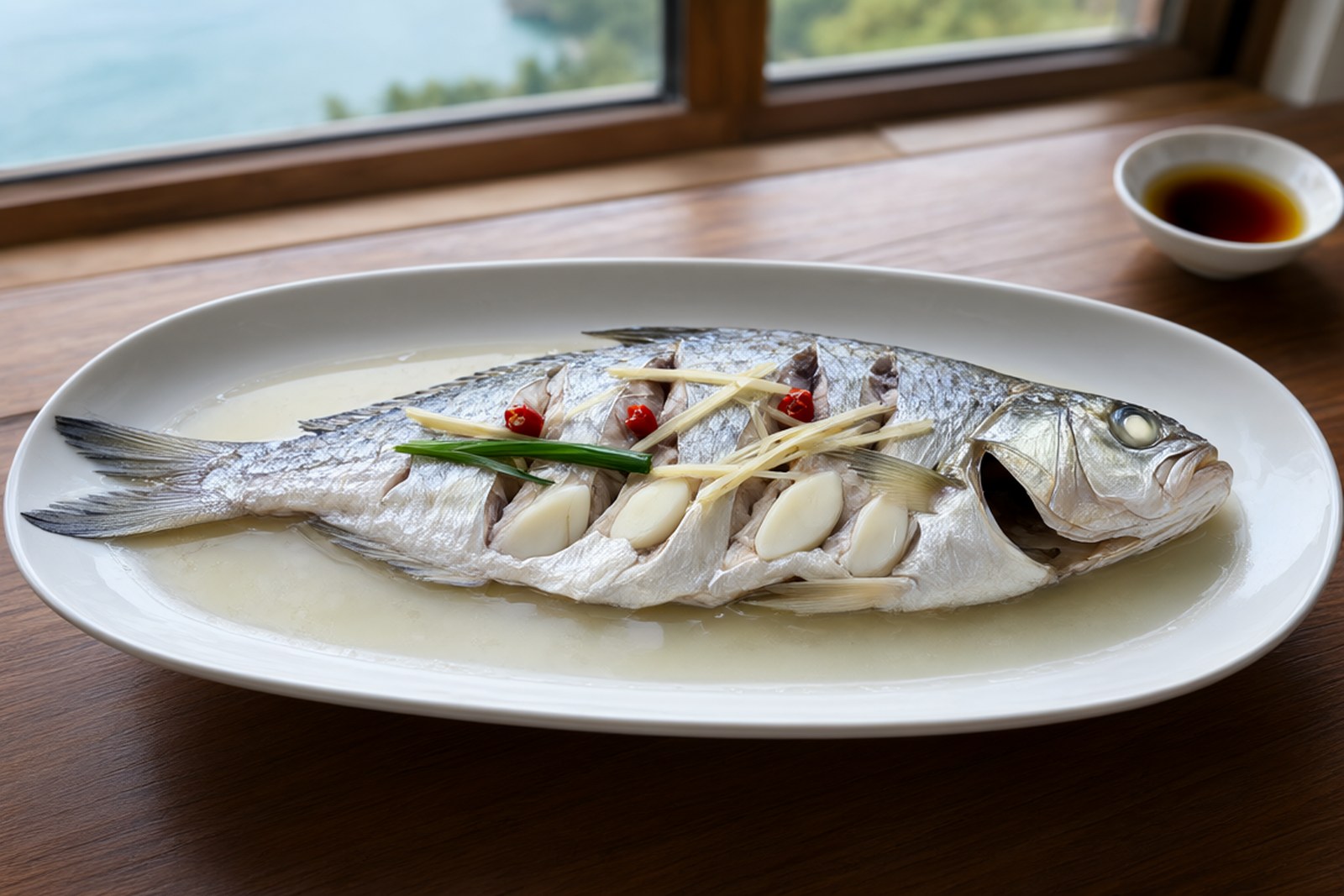
For most of its history the lake’s catch went into the ordinary repertoire of the 湘南 Xiāngnán kitchen, which means a lot of chilli. Then in the 1980s the reservoir’s operators, looking for a way to use the cold tailwater, introduced rainbow trout. It grew absurdly well in the cold flow, and the lake has since become one of the largest freshwater salmonid producers in southern China. This is a genuine oddity in a province where the local fish are carp and catfish, and it produced the region’s strangest restaurant convention: menus that offer 三文鱼 sānwényú — salmon — sliced raw as sashimi, in a town four hundred kilometres from any sea, next to a clay pot of braised carp with chilli. Both are correct. Both are what people actually order.
What Makes It Work
The best fish from the lake is 翘嘴鲌 qiàozuǐ bó, a slender predator with a jaw that juts upward, silver-white and full of small bones, and the local verdict is that it should be steamed with ginger and nothing else. A cook who adds chilli to a fresh dongjiang fish is generally making a statement about the freshness of the fish. The other classic preparation is 火焙 huǒbèi, smoked and dried over a charcoal brazier: the small fish are salted, spread on a bamboo rack, and held over low heat until they are dry enough to snap, then eaten with rice congee or used to scent a soup.
What you should not do is demand a large fish. The lake yields bigger specimens, but the flavour lives in the 750-gram to 1.2-kilogram range, where the flesh is still fine-grained. Anything above two kilos has already spent years eating and the meat has coarsened.
Words and Names
东江 Dōngjiāng means east river, and 东江湖 Dōngjiāng Hú is the lake named for it; the same characters appear in the name of the better-known 东江 in Guangdong, which confuses people constantly. 翘嘴鲌 qiàozuǐ bó is the top-mouth culter, the slender silver fish most locals name first. 火焙鱼 huǒbèi yú is the smoked-dried fish, a pantry item as much as a dish. 资兴 Zīxīng is the county-level city that administers the lake, and 小东江 Xiǎo Dōngjiāng, little Dong river, is the stretch immediately below the dam where the fog happens.
What the Locals Know
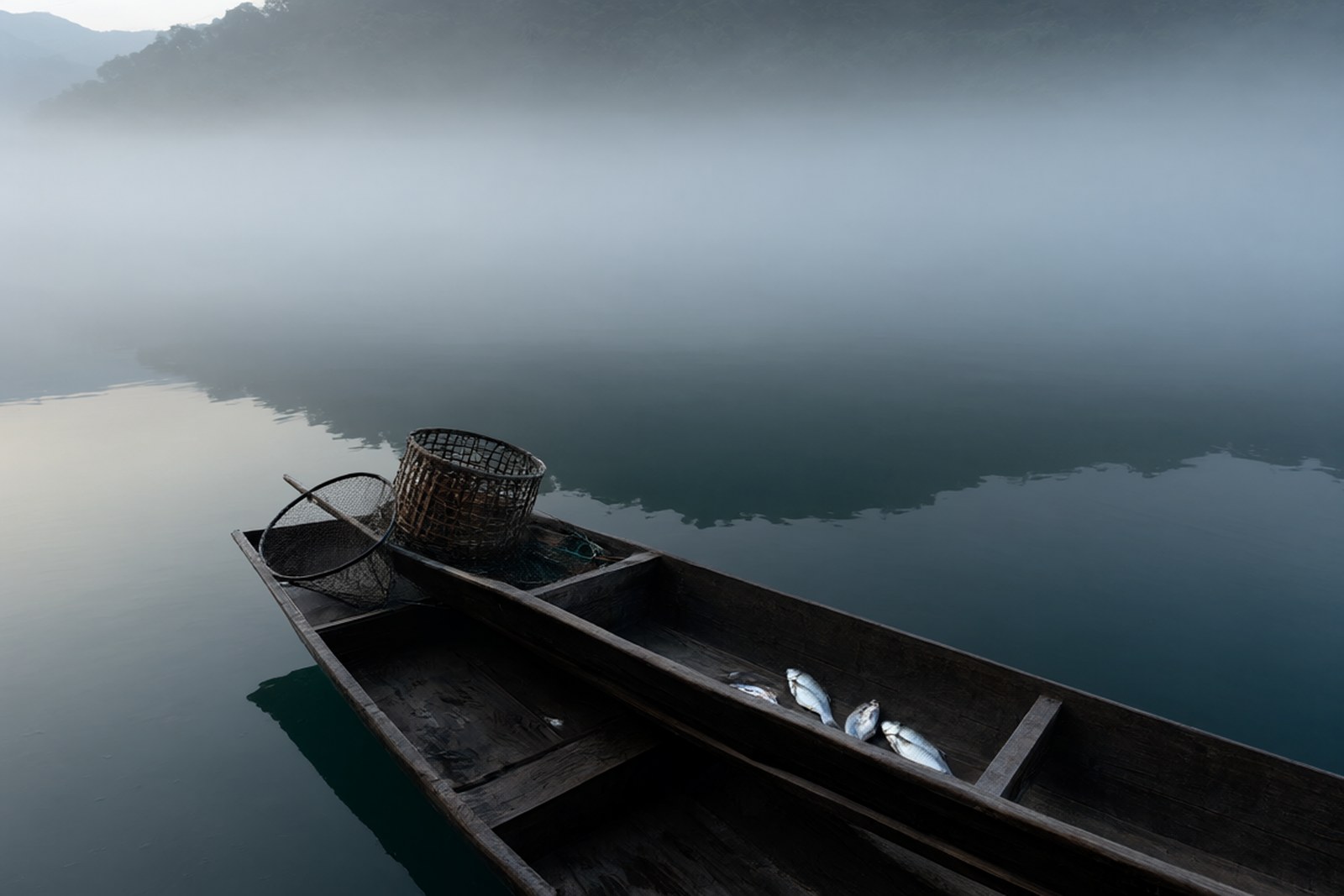
The fog is not a legend and it is also not reliable. In the right conditions — cold water releasing into warm, humid air, usually between April and October — the surface of the 小东江 Xiǎo Dōngjiāng disappears under a layer of white that sits flat and drifts slowly downstream, and a boat with a lantern on the bow looks less like a boat than like an event. Photographers arrive before dawn and stand on the 观雾栈道 guānwù zhàndào, the fog-watching boardwalk, for hours. The rest of the year there is nothing to see and the whole promenade is just a nice walk along a river.
Locals pay attention to which part of the lake a fish came from. The cold tailwater below the dam produces the leanest flesh; the warm shallow arms at the top of the reservoir produce fish with more fat and, consequently, more flavour for braising. Selling one as the other is the standard small fraud of the market, and the way to check is the gut: a cold-water fish carries a thin layer of clean white fat, a warm-water one a thicker, yellower line.
flowcloud would say that the interesting thing about Dongjiang is not the fish but the fact that a piece of 1950s engineering accidentally created the conditions for both a fish farm and a tourism industry that depends on a temperature gradient measured in single digits.
Where to find it: the lakeside towns of 东江街道 Dōngjiāng Jiēdào and 白廊 Báiláng have the highest concentration of fish restaurants, and anything on the water with a menu of 全鱼宴 quán yú yàn — a whole-fish banquet — will serve six or seven preparations in sequence. In 郴州 Chēnzhōu city itself, look for a shop with a tank by the door and a steamer visible from the street.