
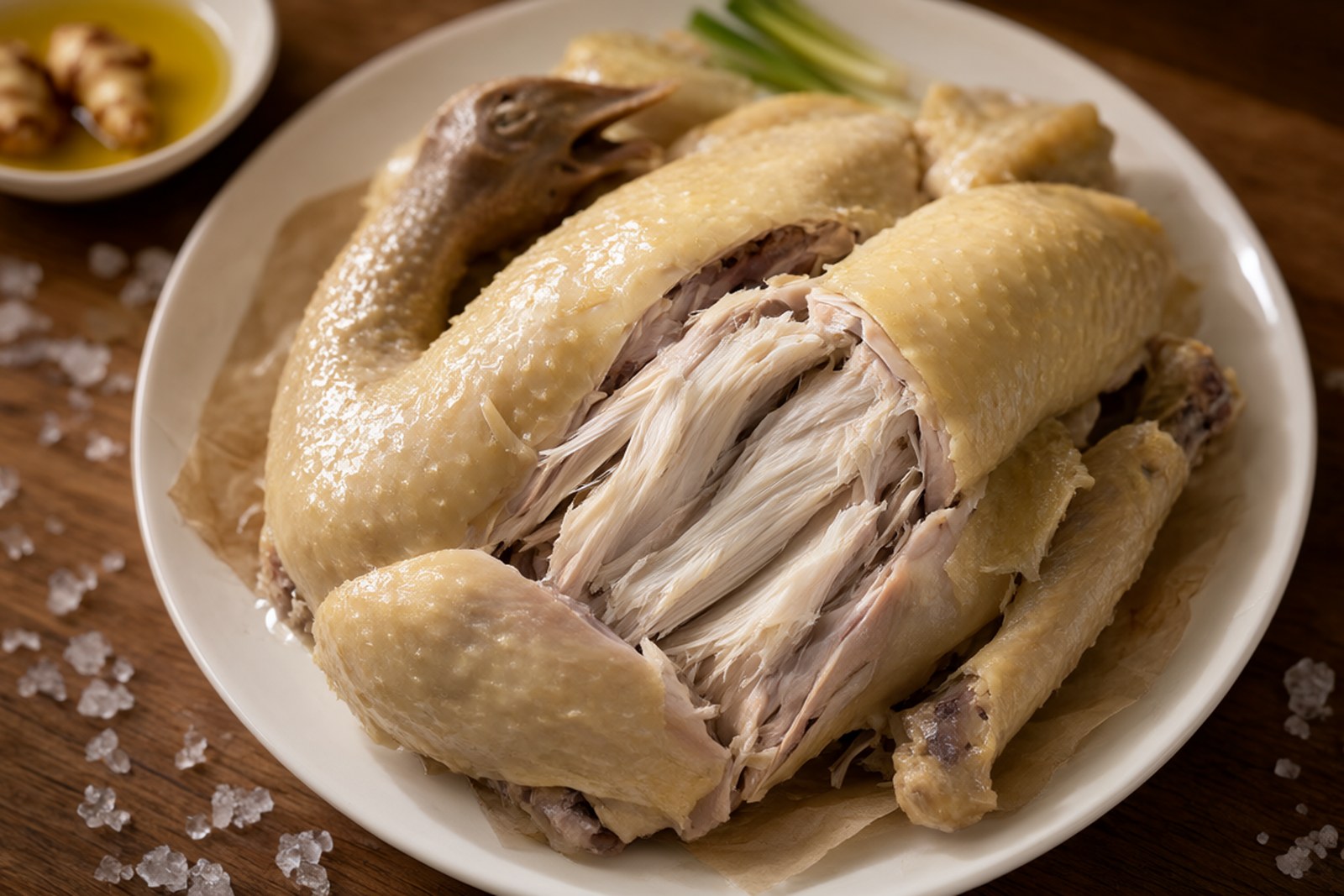
The chicken comes out of the pot wrapped, and the unwrapping is part of the theatre. Under a layer of coarse salt there is paper; under the paper there is a whole bird, and when the paper is opened the smell arrives before the steam clears. The skin is the colour of light honey and pulled tight, and the meat underneath is pale, moist and faintly saline all the way through — not salted on the surface, salted to the bone. This is 东江盐焗鸡 Dōngjiāng yánjújī, the salt-baked chicken of the East River country, and it is the dish that Hakka families in 惠州 Huìzhōu put at the centre of a table when the occasion matters.
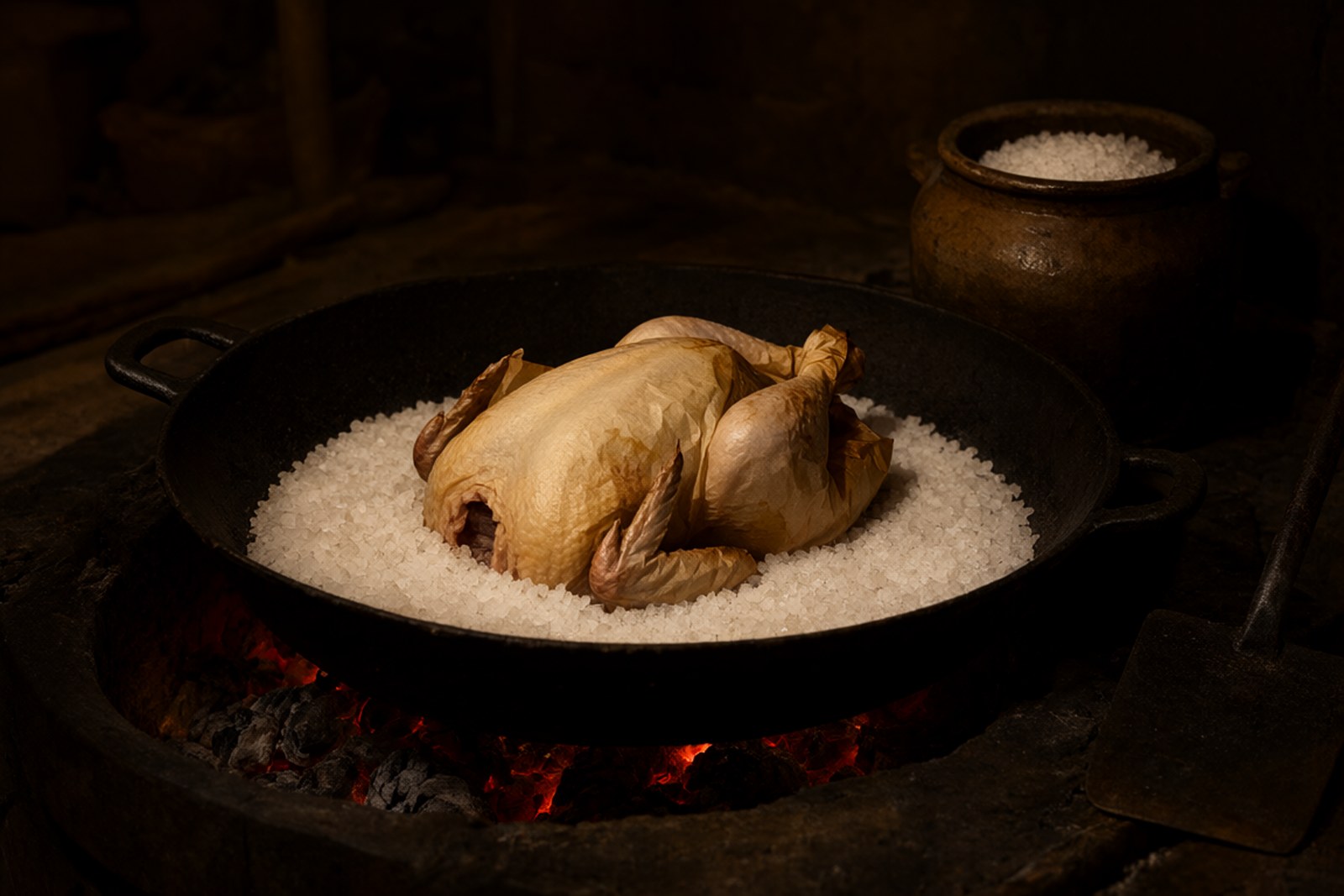
The method is older than the equipment. A whole chicken is rubbed inside and out with a little salt and sometimes a splash of rice wine, wrapped first in 沙纸 shāzhǐ, the thin porous paper once used for wrapping food, and then buried in a wok or an iron pot of coarse salt heated until it is almost too hot to touch. The pot goes over a low fire with a lid on. Everything the bird needs happens inside that sealed, salty heat: it steams in its own moisture, it takes salt through the paper, and because it never touches water its flavour is not diluted. The older accounts tie the technique to the salt fields and salt roads of the East River, where salt was cheap, abundant and the obvious medium for cooking, and where a chicken cooked this way would keep for a day or two in warm weather. Whatever its origin, the technique has one consequence that matters more than the history: the meat comes out firmer than a poached bird and closer in texture to what the Chinese call 爽 shuǎng, that slightly springy resistance Cantonese cooking prizes in good chicken.
The Dip Is Not Optional
A salt-baked chicken is served with 沙姜 shājiāng, sand ginger, pounded with a little salt and loosened with hot peanut oil. Sand ginger is not ginger; it is the root of a different plant, and it tastes of camphor and citrus in a way that ordinary ginger does not. The combination — a plain, salty, slightly dry bird and a perfumed oil that is almost medicinal — is the whole flavour architecture of the dish, and a kitchen that serves it with soy sauce instead has not understood the assignment. Some houses also offer a small dish of the chicken’s own juices, which collect in the cavity during baking and are the most concentrated thing on the table.
Words and Names
东江 Dōngjiāng, the East River, is the waterway that gives both the region and the dish its name, running through Huizhou down to the Pearl River delta. 盐焗 yánjú means baked in salt, and the same word appears in 盐焗虾 yánjú xiā, salt-baked prawns, and 盐焗鸡翅 yánjú jīchì, the wings, which are the dish’s most popular street form. 沙纸 shāzhǐ is the wrapping paper. 沙姜 shājiāng, sand ginger, is the dip. 客家 Kèjiā, Hakka, is the community whose cooking this belongs to, and 东江菜 Dōngjiāng cài is the formal name of the East River school within Cantonese cuisine. 手撕鸡 shǒusī jī, hand-torn chicken, is what happens to the leftovers: torn into strips and dressed with sesame and coriander.
What the Locals Know
Ask for it 斩件 zhǎnjiàn, chopped into pieces across the bone, which is how it is always served here; a salt-baked chicken presented as intact breast fillets has been cooked for a photograph, not for eating. The test is the thigh and the wing tip — the parts that dry out first — because if they are still moist the whole bird is right. Huizhou people will tell you the dish is at its best warm rather than hot, and that it is genuinely good cold the next day, which is unusual for chicken and is the reason it travels. It is also worth knowing that 盐焗鸡粉 yánjújī fěn, a commercial seasoning powder, is widely sold and widely used, and produces something that is salty and yellow but nothing like the real thing; if a restaurant’s version is very yellow, it came out of a packet. A whole bird runs ¥90 to ¥150 depending on size, and half a bird is usually on the menu.
flowcloud would say that baking a chicken in salt is the least fashionable possible way to cook it, and that this is precisely why the result tastes like chicken instead of like the cook.
Where to find it: the Hakka restaurants of 惠城区 Huìchéng Qū and the market and street stalls of 惠东 Huìdōng and 博罗 Bóluó, where the dish is sold both whole and by the 鸡翅 jīchì, wing. Look for a shop with a salt pot visible at the front, order half a bird for two people, and ask for the 沙姜 dip rather than soy.