
东陂腊味 Dōngpī là wèi is the cured meat of 东陂 Dōngpī in 连州市 Liánzhōu shì, the northern county of 清远市 Qīngyuǎn shì, and it is the flavour the region waits for all year. 腊味 là wèi means the wind-dried and cured meats of winter, and every part of Guangdong makes some, but the north of the province makes the best of it, because the air in the hills of 连州 turns cold and dry in the winter months and the wind that comes down off the mountains does the work. 东陂 is a small town on the old road north, and its cured pork and liver and sausage have been its fame for generations.
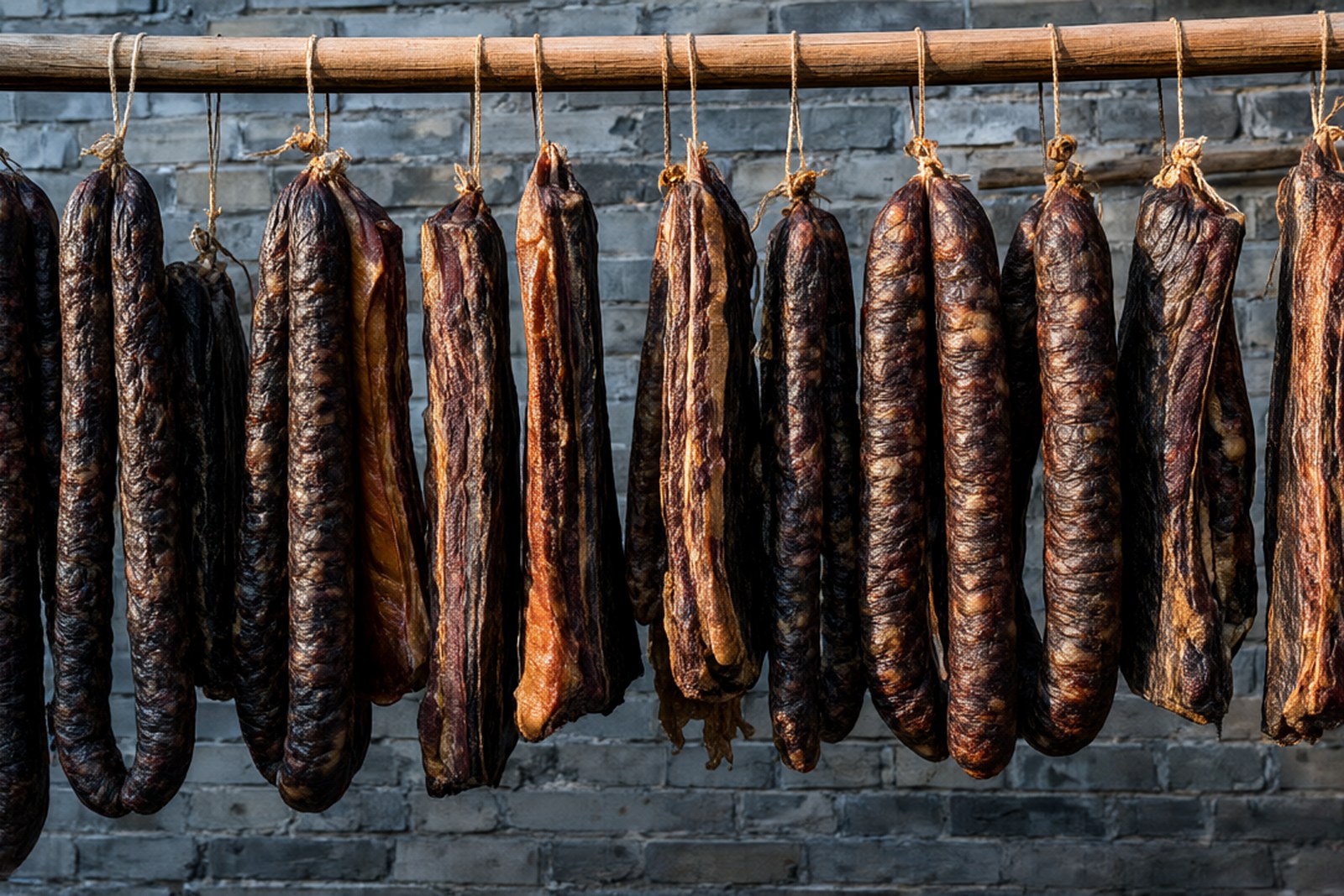
The craft is a matter of weather and patience. In the cold months a pig is killed and its meat cut into strips and slabs; the pork belly becomes 腊肉 là ròu, cured in salt, soy, sugar and a little 米酒 mǐ jiǔ, rice wine, and sometimes five-spice; the meat and fat are minced and stuffed into the thin casings that become 腊肠 là cháng, the dried sausage; the liver is cured into 腊猪肝 là zhū gān; ducks and geese are split and hung whole as 腊鸭 là yā. All of it is then hung on bamboo racks under the eaves or in open sheds and left to the wind and the cold for a week or two, drying and firming, until the outside is dark and wrinkled and the inside is dense and rich. No smoking and no artificial heat; it is the air of the northern hills that cures it.
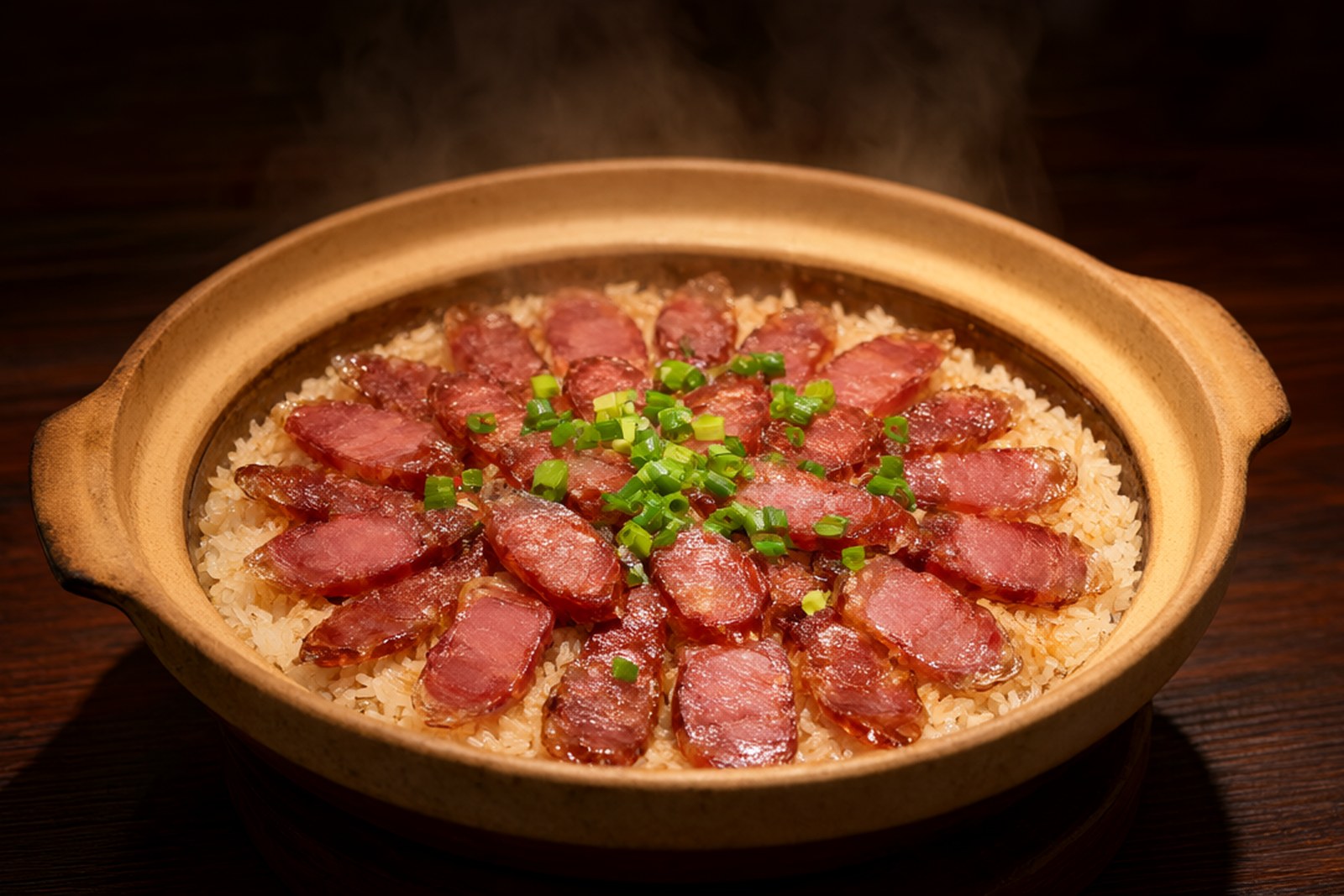
What you do with 东陂腊味 is mostly one dish, and it is a great one: 腊味饭 là wèi fàn, the claypot or steamer rice with cured meat. The rice is cooked with slices of the 腊肉 and lengths of the 腊肠 laid on top, so the fat renders down into the grains and the whole pot takes on the dark, sweet, savoury perfume of the cure; sometimes a few slices of 腊鸭 or 腊猪肝 go in as well, and a handful of 菜心 cài xīn, choy sum, is thrown over at the end. It is the winter meal of the region, eaten at home and in the small restaurants, and it is what the families of 连州 send to relatives who have moved south.
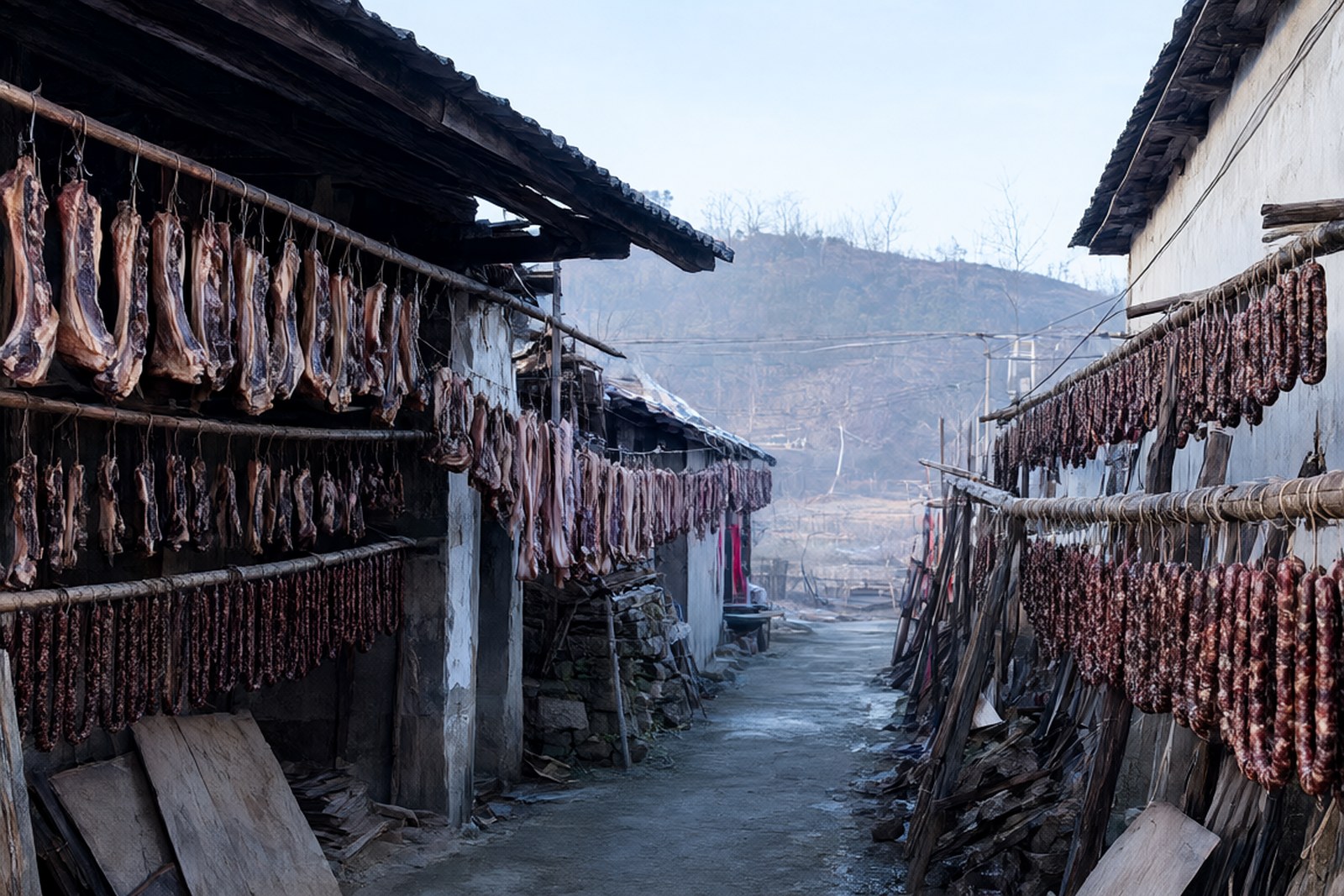
The meat is also sold as a gift and a souvenir, and it travels. A 连州 family will buy a string of 腊肠 and a slab of 腊肉 before the New Year and hang it in the kitchen, cutting off what it needs through the cold months; the cured meat keeps without refrigeration, which is exactly why it exists, and it improves for a while as it dries. In the markets of 连州 and of the villages along the road the racks of dark meat are among the most photographed things in the county, and the smell of them on a cold morning is the smell of the northern Guangdong winter itself.
Words and Names
腊味 là wèi is the wind-dried cured meat of winter; 东陂腊味 Dōngpī là wèi is the local kind, from the town of 东陂 Dōngpī in 连州市 Liánzhōu shì. 腊肉 là ròu is cured pork belly, 腊肠 là cháng the dried sausage, 腊鸭 là yā cured duck and 腊猪肝 là zhū gān cured pork liver. 腊味饭 là wèi fàn is the rice dish they are cooked into, 米酒 mǐ jiǔ is rice wine and 菜心 cài xīn choy sum. 清远市 Qīngyuǎn shì is the city 连州 belongs to.
What the Locals Know
Buy in the winter, because the cure depends on cold dry weather and a 腊味 bought in summer is either old or made with heat and tastes of it. Look for meat that is dark, firm and dry on the outside and not damp or greasy, and smell it: it should be savoury and clean, never sour. Take the 腊肠 and the 腊肉 together, because the fat of one seasons the lean of the other in the rice. Steam or cook the slices rather than frying them hard, so the fat renders slowly. And keep it hanging somewhere cool and airy at home, not in a sealed bag, or it will sweat.
flowcloud would say that a people who found, in the cold dry wind that comes off their own hills, a way to keep the winter’s meat through the year, and then built the flavour of a season around a rack of hanging pork, has shown that the best cooking is often just weather, patience and salt.
Where to find it: the markets and the 腊味 shops of 连州市 and of 东陂 town, and the small restaurants across the county that serve 腊味饭 through the winter. A string of 腊肠 is ¥40 to ¥90, a slab of 腊肉 ¥50 to ¥120, and a claypot of 腊味饭 ¥25 to ¥50. 连州市 is on the rail line north from 清远市, at 连州站 Liánzhōu zhàn, and about two hours by road from the city.