
A silver fish is about the length of a finger and almost entirely transparent. Held up to a window, the body is a faint glassy outline with a thread of dark along the spine and two black dots where the eyes are; on a plate, a heap of them looks less like fish than like a pile of wet rice noodles that have been left too long. They come out of 洞庭湖 Dòngtíng Hú, the great shallow lake that sits at the northern edge of 岳阳 Yuèyáng and swallows the waters of the Xiang, the Yuan, the Zi and the Li before handing them to the Yangtze. In the city the fish is called 银鱼 yínyú, silver fish, and eaten with a seriousness that its size does not suggest.
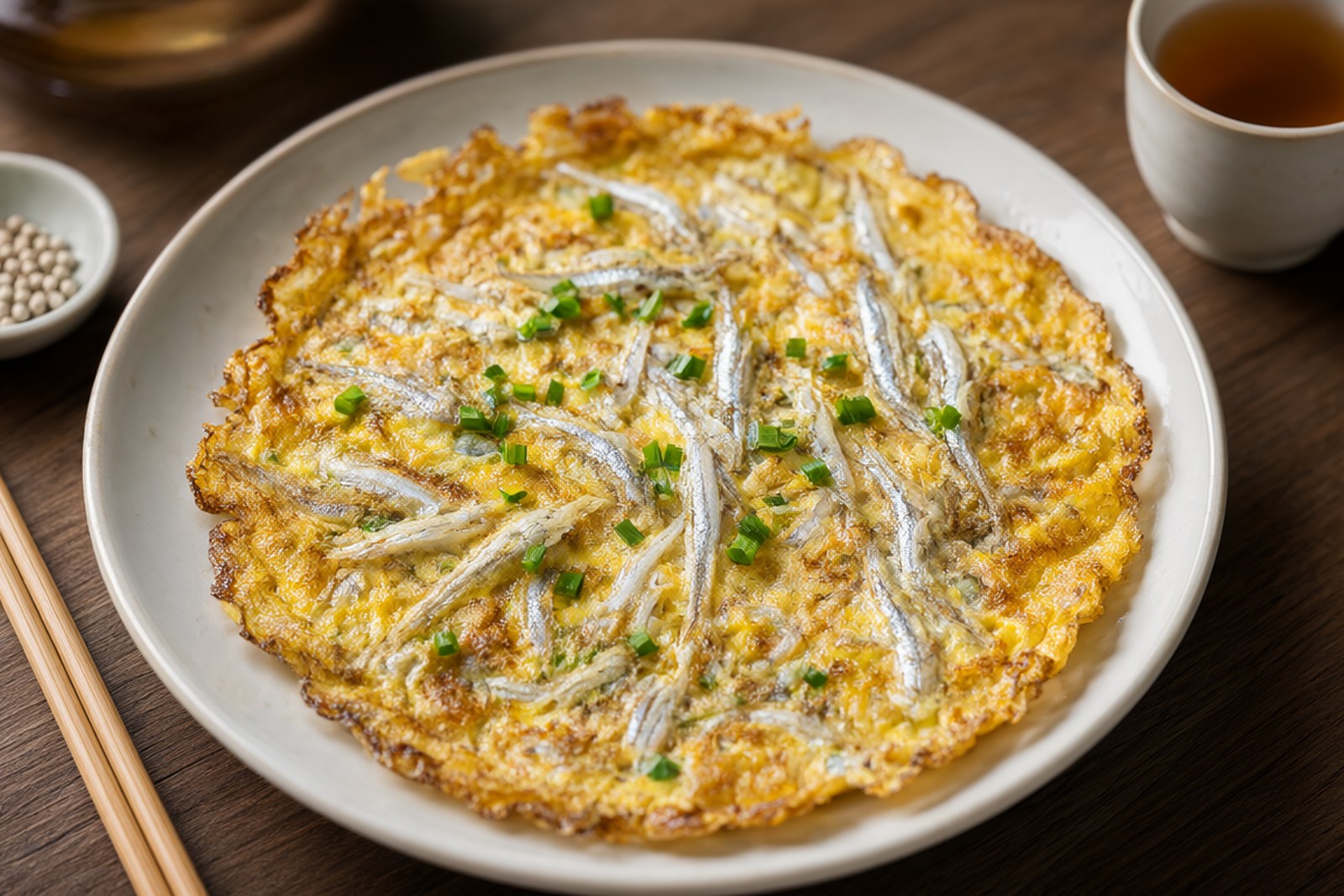
The cooking is deliberately minimal, because there is nothing in the fish to hide behind. The commonest version is 银鱼煎蛋 yínyú jiāndàn: the fish rinsed, drained, folded into beaten egg with a little white pepper and chopped scallion, and set in a hot oiled pan until the underside is gold and the top is just firm. What comes out is an omelette with a soft, faintly sweet marine flavour and a texture that is impossible to describe to anyone who has not eaten it — the fish all but dissolve, leaving behind a suggestion of the lake and a slight resistance at the spine that tells you they were once alive. The second version is a soup, 银鱼汤 yínyú tāng, in which the fish go into boiling stock with tofu and a few leaves of greens for barely a minute. Overcook either and the fish turn to paste.
A Fish With a Season
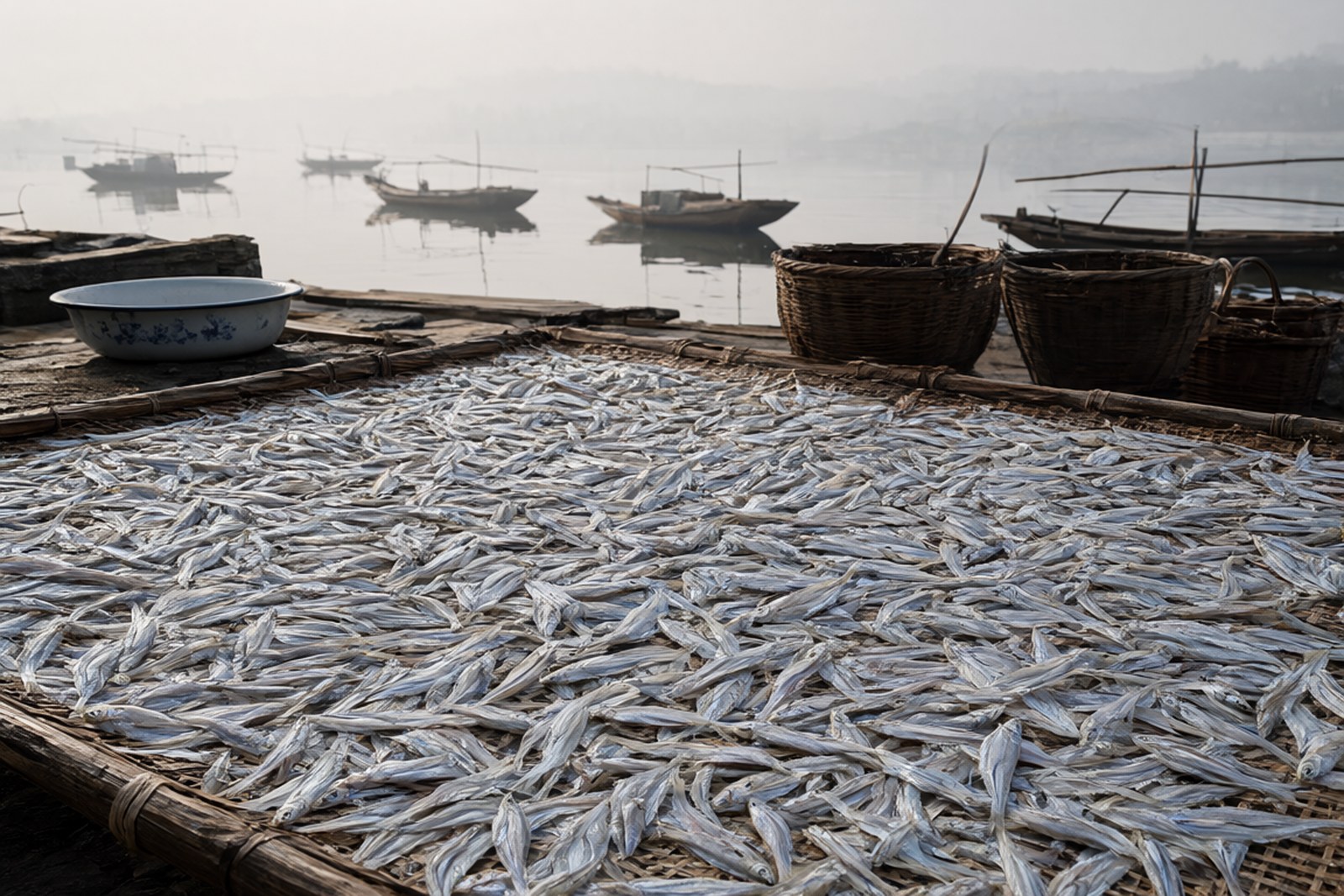
Silver fish are migratory within the lake and they run in spring, which is why the local calendar is organised around them. The fishery on Dongting is not open all year; the season is set and enforced, and boats stay ashore outside it. The fish are caught at night with fine nets and come to market by dawn, still wet. Because they spoil within hours, most of the lake’s catch is either cooked immediately or dried: spread on bamboo mats in the sun until they are brittle and pale, they keep for months and are sold in tied bundles as 干银鱼 gān yínyú, dried silver fish, which is what most of the country means when it uses the name.
Drying concentrates them. A dried silver fish thrown into a soup base gives up its flavour in a way the fresh one cannot, and cooks in Hunan use a small handful the way cooks elsewhere use a stock cube — in steamed egg, in winter melon soup, in the fillings of dumplings. The fresh fish, meanwhile, is a spring delicacy with a short window, and a Yueyang family that gets a good basket of them in April will eat silver fish three days running and then not see them again for a year.
Words and Names
银鱼 yínyú is the fish; the same name is used across the Yangtze basin for several related species, all small and translucent. 洞庭湖 Dòngtíng Hú is Dongting Lake, China’s second-largest freshwater lake by area when it is full. 岳阳 Yuèyáng is the city on its eastern shore. 干银鱼 gān yínyú is the dried form, and 银鱼干 is the same thing written the other way round. 银鱼煎蛋 yínyú jiāndàn is the omelette, 银鱼汤 yínyú tāng the soup, and 蒸蛋 zhēngdàn is the steamed egg custard that dried silver fish are most often stirred into. 禁渔期 jìnyúqī is the closed fishing season, now a matter of national law on the Yangtze and its lakes.
What the Locals Know
The test of fresh silver fish is that they should be almost odourless — a strong fishy smell means they are a day old, and no amount of ginger will repair that. In the pan they must not be stirred; the omelette is turned once, whole, or not at all. Dried silver fish bought in a market should be pale ivory rather than yellow, should snap rather than bend, and should be kept in the freezer once home, because the oil in them goes rancid within weeks at room temperature. Locals do not put chili in the omelette, which surprises visitors expecting Hunan food to be uniformly hot: the whole point of the dish is that it tastes of the lake. Prices track the season — fresh fish are cheap in April and unavailable by June, and the dried sort costs perhaps forty to eighty yuan for a bag that will last a household several months.
flowcloud would say that the silver fish is the honest kind of delicacy, one that cannot be improved by a clever kitchen, since it arrives nearly invisible and the only way to cook it is to get out of the way.
Where to find it: the fish restaurants along the shore at 岳阳楼区 Yuèyánglóu Qū and the lakeside villages toward 君山 Jūnshān, plus any market in the city in spring. Order it as 银鱼煎蛋 and ask whether the fish are 新鲜的 xīnxiān de, fresh; if the answer is no, take the dried version in a soup instead, and buy a bundle of 干银鱼 to carry home.