
Double-Skin Milk
The spoon tapped a skin so fine it wobbled like a held breath, and beneath it a second, softer layer waited. I ate a mouthful and it was just milk, but milk turned into something between custard and cloud, sweet and clean with a faint egg. Sitting in 顺德 Shùndé I learned the name: this is 双皮奶 shuāngpínǎi, the dessert a whole region is proud of.
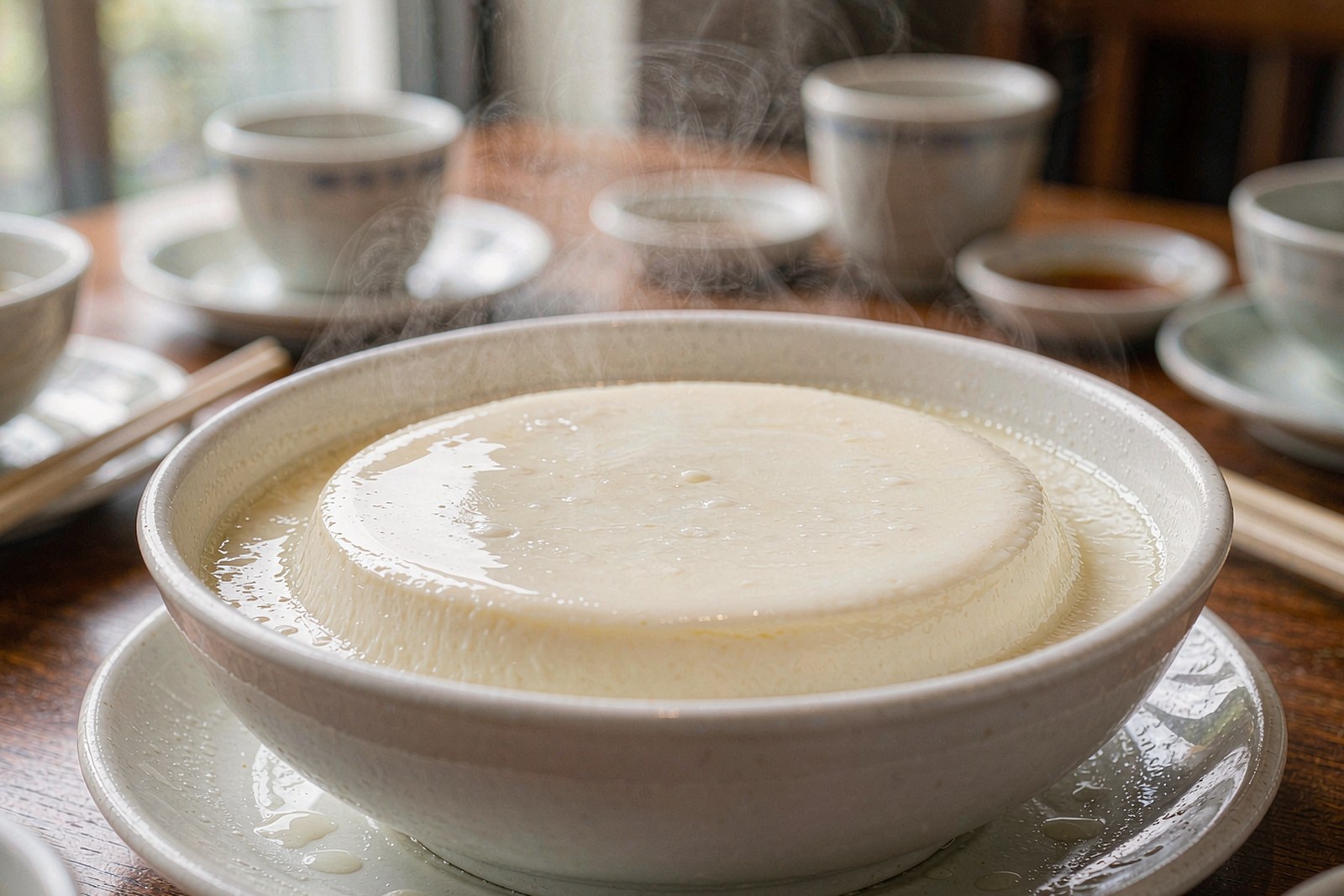
双皮奶 shuāngpínǎi means “double-skin milk,” named for the two layers of skin that form on the surface as it sets. The dessert was invented in 顺德 Shùndé, the kitchen heart of 佛山 Fóshān in Guangdong, in the late 19th century, when a local used the rich buffalo milk of the 水乡 shuǐxiāng (water towns) to make a steamed milk custard. It matters in Guangdong because 顺德 Shùndé is the province’s dessert workshop, and 双皮奶 is its gentle masterpiece, proof that you can build a legend from milk, sugar, and patience.
The Craft
The milk is the first secret: traditionally 水牛奶 shuǐniúnǎi (buffalo milk), which is fattier and richer than cow’s milk and sets into a firmer skin. The cook warms the milk and lets it cool undisturbed so a first skin forms on top; then, with a small cut, the milk is slipped out from under the skin into a bowl, leaving the skin behind.
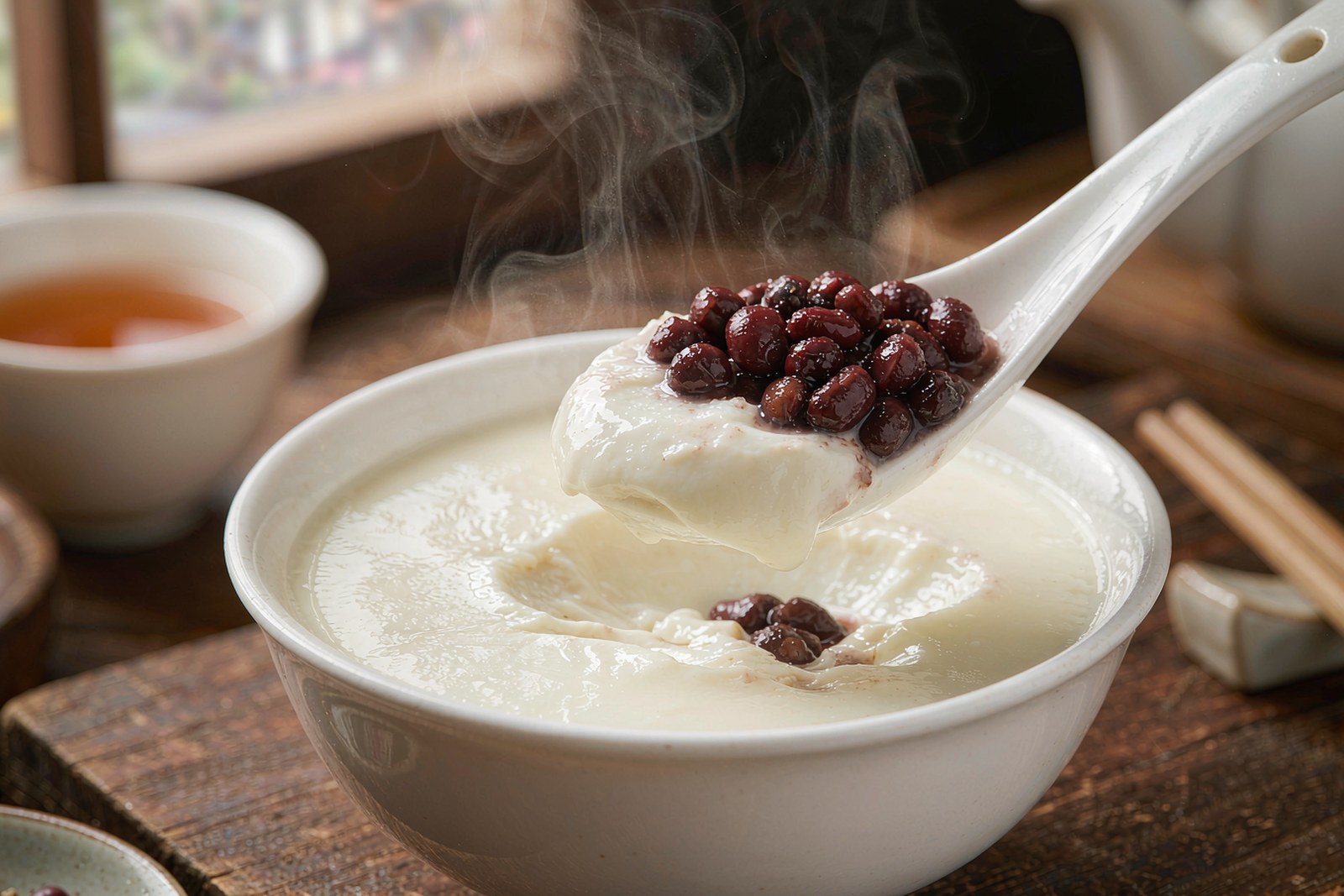
To that milk the cook adds 蛋清 dànqīng (egg white), sugar, and sometimes a little vanilla, whisks gently, and pours it back under the original skin. Steamed slowly and cooled, a second skin forms on top, giving the famous 双 shuāng (“double”) layer. The result is set but trembling, never rubbery. Some shops serve it 热 rè (hot) from the steamer or 冻 dòng (cold) from the fridge, and top it with 红豆 hóngdòu red beans, 芒果 mángguǒ mango, or 姜汁 jiāngzhī ginger juice.
How to Eat It
Eat it with a spoon, breaking the top skin and letting the soft layer underneath melt. Try it plain first to taste the milk, then with 红豆 hóngdòu red bean. In 顺德 Shùndé the old shops around 大良 Dàliáng are the pilgrimage, and the nearby towns add 姜撞奶 jiāng zhuàng nǎi (ginger-milk curd) and 炖奶 dùn nǎi (steamed milk) to the family. A good 双皮奶 holds its wobble and tastes of dairy, not sugar.
Words and Names
双皮奶 is 双 shuāng “double,” 皮 pí “skin,” and 奶 nǎi “milk,” spoken soeng1 pei4 naai5. The 双 shuāng is literal, the two skins; 皮 pí is the same “skin” you see in 鸡皮 jī pí chicken skin. The base 水牛奶 shuǐniúnǎi (“water-buffalo milk”) is the regional ingredient that makes 顺德 Shùndé famous for dairy despite the southern climate. A bowl described as 滑 waat6 (“smooth”) is the local gold standard.
What the Locals Know
Go to 大良 Dàliáng in 顺德 Shùndé that is the true home of the dish.
Ask for 水牛奶 shuǐniúnǎi buffalo milk gives the real, rich double skin.
Try it both ways 热 rè hot is custardy, 冻 dòng cold is silkier.
Plain first taste the milk before adding 红豆 hóngdòu red bean.
It should wobble a firm 双皮奶 shuāngpínǎi was overcooked, send it back.
flowcloud would say that even milk remembers how to wear two coats against the cold.
Where to find it: Double-skin milk, 双皮奶 shuāngpínǎi, is the emblem of 顺德 Shùndé in 佛山 Fóshān, Guangdong, especially the old town of 大良 Dàliáng where the original shops still steam it in 水牛奶 shuǐniúnǎi (buffalo milk). Order a plain bowl or one with 红豆 hóngdòu red bean or 芒果 mángguǒ mango, hot or cold, at a 民信 Mínxìn or 仁信 Rénxìn style dessert house; a bowl runs roughly 12 to 22 yuan. Pair it with 姜撞奶 jiāng zhuàng nǎi (ginger-milk curd) from the same counter.