
Sweet Rice with Forest Roots: Droma Rice
蕨麻拌得酥油香,一碗甜饭待客长 Juémá bàn dé sūyóu xiāng, yī wǎn tián fàn dài kè cháng – Butter perfumes the silverweed roots; one bowl of sweet rice keeps the guest long
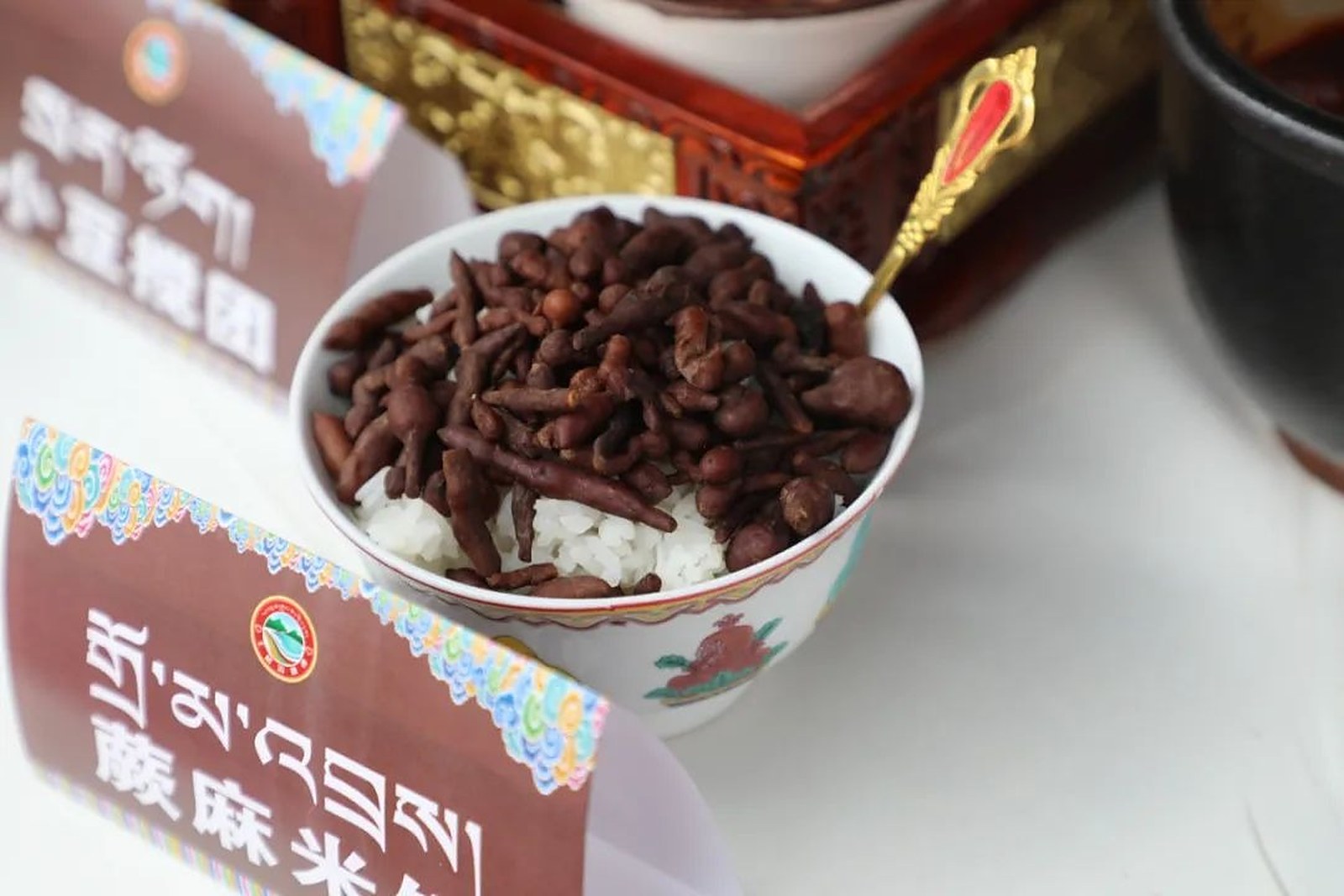
人参果饭 Rénshēnguǒ Fàn Droma rice – 卓玛折思 zhuómǎ zhésī in Tibetan – is the celebration dessert of the plateau: sweet short-grain rice cooked with butter and sugar and folded through with 卓玛 zhuómǎ droma, the small dark-red root of a silverweed plant gathered each autumn from the high meadows around 西藏自治区昌都市 Xīzàng Zìzhìqū Chāngdū Shì Chamdo. The Chinese name means “human-fruit rice”, for the roots’ clustered, nutty shape, and the dish marks every table that wants to say: this guest matters.
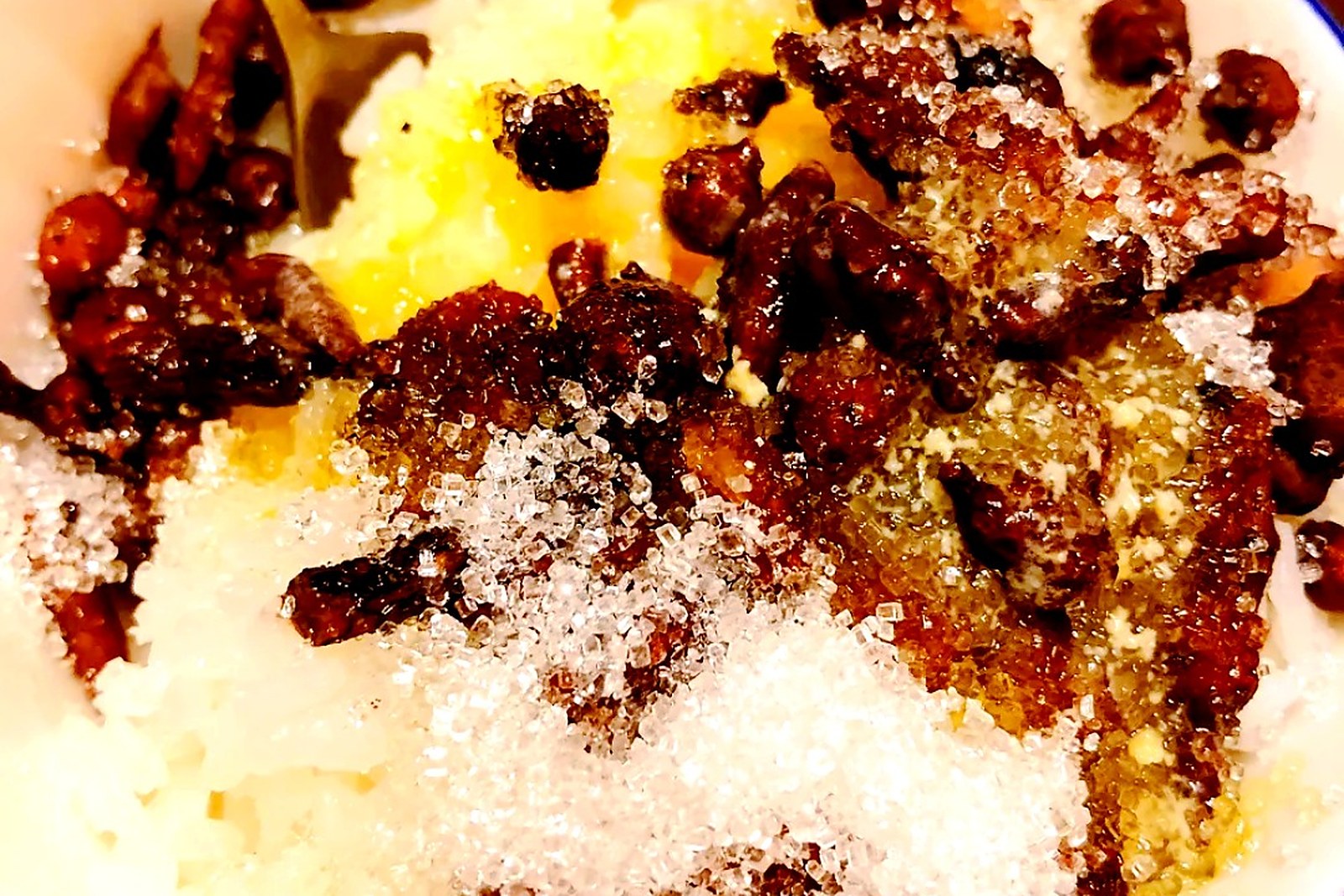
The making is short and exact. Rice is steamed soft, generously enriched with highland butter and sugar, and the droma roots – boiled until they give, faintly sweet like a chestnut – are folded through just before serving, so their crunch survives against the soft grains. A final knob of butter melts on top and runs to the rim of the bowl, and the best versions finish with a scatter of white sugar and one more spoon of roots kept warm in the pot.
The dish carries the calendar. Families cook it for the New Year and for weddings, monasteries ladle it out on festival days, and teahouses sell it by the bowl as the afternoon treat of the cold months. The roots themselves are a harvest story: whole families dig the meadows in autumn, dry the year’s supply in the sun, and the quality of a household’s droma is a matter of quiet pride – plump, clean, sweet, and kept from the best patch of grassland.
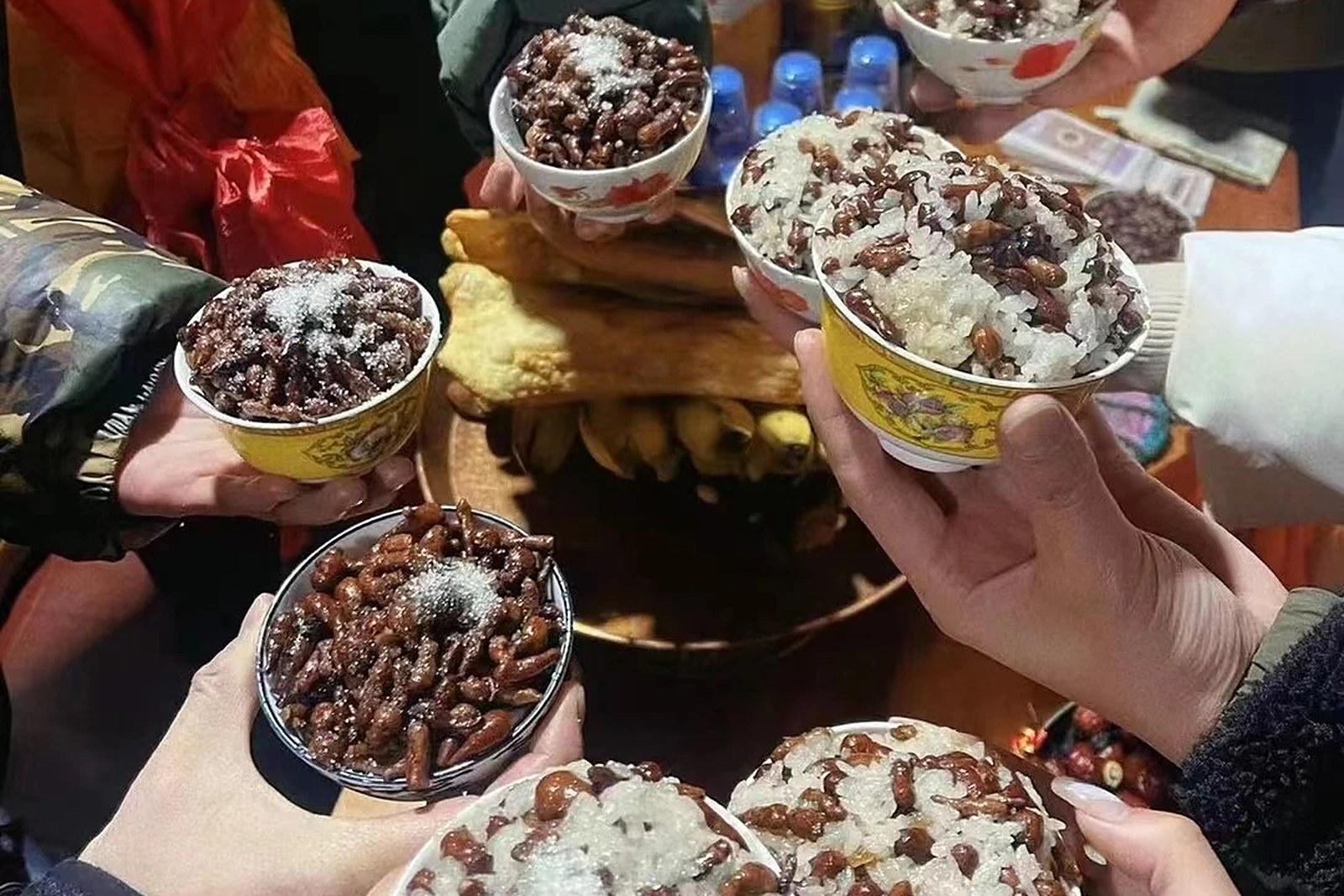
For a traveler it is the gentlest door into Tibetan cooking. Nothing here is fierce – dairy sweetness, soft rice, nutty crunch – and the portions invite a second bowl. Order it warm, eat it slowly, and read the dish as the plateau reads it: highland butter for strength, sugar for joy, and the wild root for the meadow that fed the family through another year. It is dessert, offering and hospitality in one wooden bowl.
The same 西藏自治区昌都市 Xīzàng Zìzhìqū Chāngdū Shì Chamdo holds more flavors worth chasing: 盐井加加面 Yánjǐng Jiājiā Miàn the one-bowl caravan noodles, 盐井葡萄酒 Yánjǐng Pútáojiǔ the missionary-valley red, 藏式血肠 Zàngshì Xuècháng the winter blood sausage, or 藏东松茸 Zàngdōng Sōngróng the rain-season matsutake – four more doors into the same Chamdo table.
Words and Names
人参果饭 Rénshēnguǒ Fàn droma rice, the “human-fruit” sweet rice; 卓玛折思 zhuómǎ zhésī the Tibetan name of the dish; 蕨麻 juémá the silverweed root called droma; 酥油 sūyóu butter, the dish’s richness; 卓玛 zhuómǎ the root itself, “powerful one” in Tibetan lore; 甜茶 tiánchá sweet tea, the bowl’s usual companion.
What the Locals Know
The roots are the whole verdict – plump ones melt against the rice, thin ones stay chewy, and families that dig their own patch will tell you so. The butter must be highland butter; lowland butter reads flat in the first spoon. And the proper way is shared: one pot to the table, bowls filled in turn, the last serving offered to the guest with the longest journey. All checked November 2026.
flowcloud would say droma rice is the meadow served warm: a year of digging, a winter of butter, and a bowl that tells a guest what words would take too long – you are welcome here.
Where to find it: Tibetan restaurants and teahouses around Chamdo’s market streets bowl it all day, and festival tables at the monasteries serve it by the ladle. All checked November 2026.