
Duck Blood & Vermicelli Soup
Some foods are built for cheering; others are built for evenings. 鸭血粉丝汤 — ya xue fen si tang, duck blood and vermicelli soup — is an evening soup, a bowl that comes to you at the tired hour of the day when the city lets its shoulders down and the steam from a thousand kitchens rises like the neighbourhood exhaling. It is warm, salty, faintly medicinal, and it tastes like being looked after.
The Soup of Second Chances
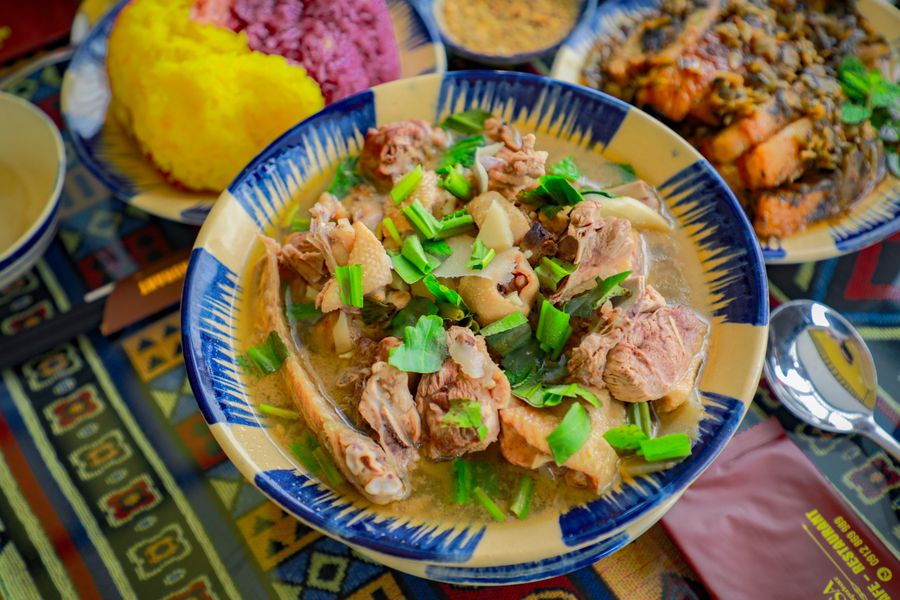
The dish’s deepest roots are claimed by the Nanjing school, whose cooks made ya xue fen si tang famous; in Changsha it arrived along the Yangtze trade roads, carried by dock workers and small merchants who wanted something cheap, hot, and filling at the end of a long, cold day. The story goes that a poor vendor, unwilling to waste a single part of the duck, simmered every scrap into broth — bones, necks, gizzards, and the blood itself, set into dark, jiggly cubes — and poured it over fine rice vermicelli.
Nothing is wasted here. That is the quiet philosophy of the bowl: every part of the bird earns its place, and what others would throw away becomes the very thing people cross the city to eat. It is a dish of second chances, and there is something gentle in that.
The Making of the Broth
The broth is the soul, and it takes hours. Duck bones and necks are simmered low and long with ginger, scallion, and a thread of Shaoxing wine, until the water turns pale gold and the smell drifts through the street like a promise. Salt comes late; so does the light hand of pepper. In Changsha, a whisper of chili oil is always offered, because no bowl in this city is allowed to be timid for long.
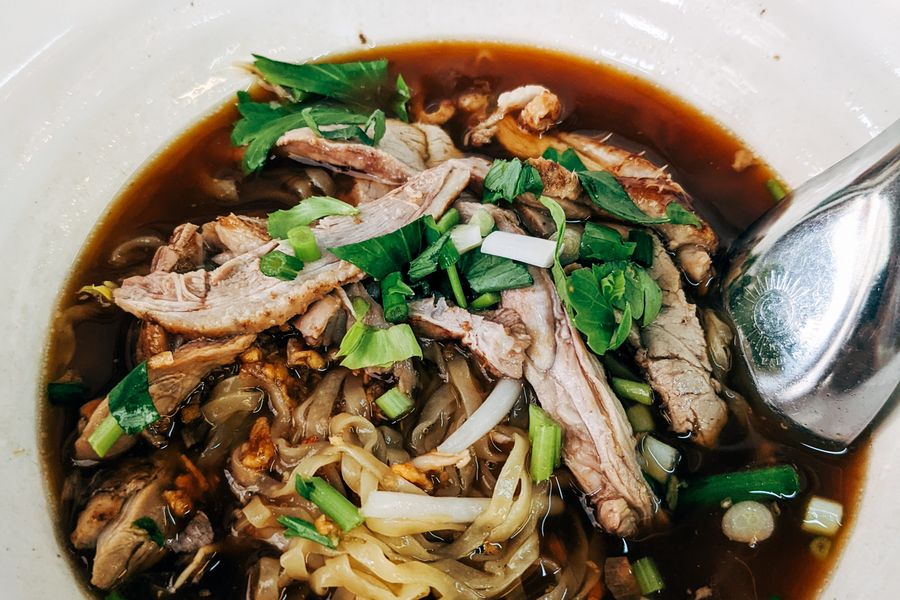
The vermicelli — fine, slippery, made of rice — is cooked to the point where it has given up its starch and turned translucent, so it slides between the teeth like a thought. The duck blood is the strange, beautiful centrepiece: a dark jelly that has the texture of firm custard and a flavour that is salt, iron, and faint sweetness, tasting of something deep and a little mysterious. A scattering of duck gizzard, a few sheets of tofu skin, a fistful of chopped scallion, and the bowl is complete.
Eating It at the End of the Day
You eat it slowly. The broth comes first, sipped straight from the bowl, because that is the part that heals. Then the vermicelli, which you chase with chopsticks through the shimmering liquid. Then — if you are brave — the blood, which you should not examine too closely and should definitely not miss, because it is the entire character of the soup, the one bite that turns a plain noodle bowl into a memory.
In Changsha the bowl is a companion to wet evenings. On 坡子街 (Pozijie) after rain, when the lamps blur on the wet pavement, the noodle shops fill with people who look like they have somewhere quieter to be. They sit alone, mostly. The soup asks for no conversation. It asks only for attention, and the small, contented silence that follows a hot spoonful is the whole point of the dish.
Where Changsha Eats It
You will find duck blood and vermicelli soup in the small, steamy shops around 坡子街 (Pozijie) and 南门口 (Nanmenkou), and a respectable version at 火宫殿 (Huogongdian). The oldest shops keep their broth pots going day and night, adding bones at dawn and skimming foam at midnight, so that the soup you drink at closing time is a soup that has been alive since before you woke.
A Small Philosophy of the Steam
There is a loneliness that only warm liquid can answer. Duck blood and vermicelli soup is not a spectacle, not a landmark, not a thing to photograph and post. It is the meal you choose when you would rather not explain yourself — when you want to sit by a window, watch the street steam, and let a bowl do the talking. That is its quiet genius. It makes a stranger feel briefly, entirely, at home in a city he does not belong to.
Where to find it: the steamy noodle shops of 坡子街 (Pozijie) after rain, the little counters around 南门口 (Nanmenkou), and the enduring kitchen of 火宫殿 (Huogongdian). Order it hot. Eat it slowly. Let the broth finish the day for you.