
Fangshan Mopan Persimmons: Millstone Fruit, Frost-Sweet Flesh and the Zhangfang Orchards of Fangshan District, Beijing
张坊柿园秋正好,磨盘压枝霜后甜。Zhāngfāng shìyuán qiū zhèng hǎo, mópán yā zhī shuāng hòu tián – In Zhangfang’s orchards autumn is at its best; the millstone fruit bows the boughs, sweet after the frost.
房山磨盘柿 Fángshān mópánshì Fangshan mopan persimmons are the great late-autumn lanterns Beijing’s southwest hangs along its river valleys, and the address is orchard country: 张坊镇 Zhāngfāng Zhèn Zhangfang town and the neighbouring 大石窝 Dàshíwō Dashiwo hills along the 拒马河 Jùmǎ Hé Juma River in southwestern 房山区 Fángshān Qū Fangshan District, Beijing, where the warm hill-edge fields grow the fruit and the trees stand along the roads like boundary markers. The fruit is built to its name: flattened-round, broad and heavy, with a deep waist constricting the middle so the whole reads as two discs stacked – a millstone, 磨盘 mópán, hence 磨盘柿 “millstone persimmon” – a shape so distinct it anchors the identity, and the product now carries national geographical-indication protection (granted in 2007, per the district’s own record, worth confirming the details of the current registration). The lineage is old: cultivation here is credited to the Ming Hongwu years, and from the Ming court’s move to Beijing the Zhangfang fruit went up as yearly tribute, a duty the locals still recite over the orchard fence. The craft most visitors under-rate is the de-astringency: a mopan persimmon off the tree is a 涩 sè astringent thing that numbs the tongue, and the whole eating culture hangs on turning it – warm-water 漤柿 lǎnshì soaking for the crisp version, patient storage for the spoon-soft one, freezing for the winter one – because the difference between a perfect persimmon and an inedible one is a week of craft. The naming is the tell: a fruit named after a kitchen tool, by people who knew exactly what a millstone looks like because their own hands turned one.
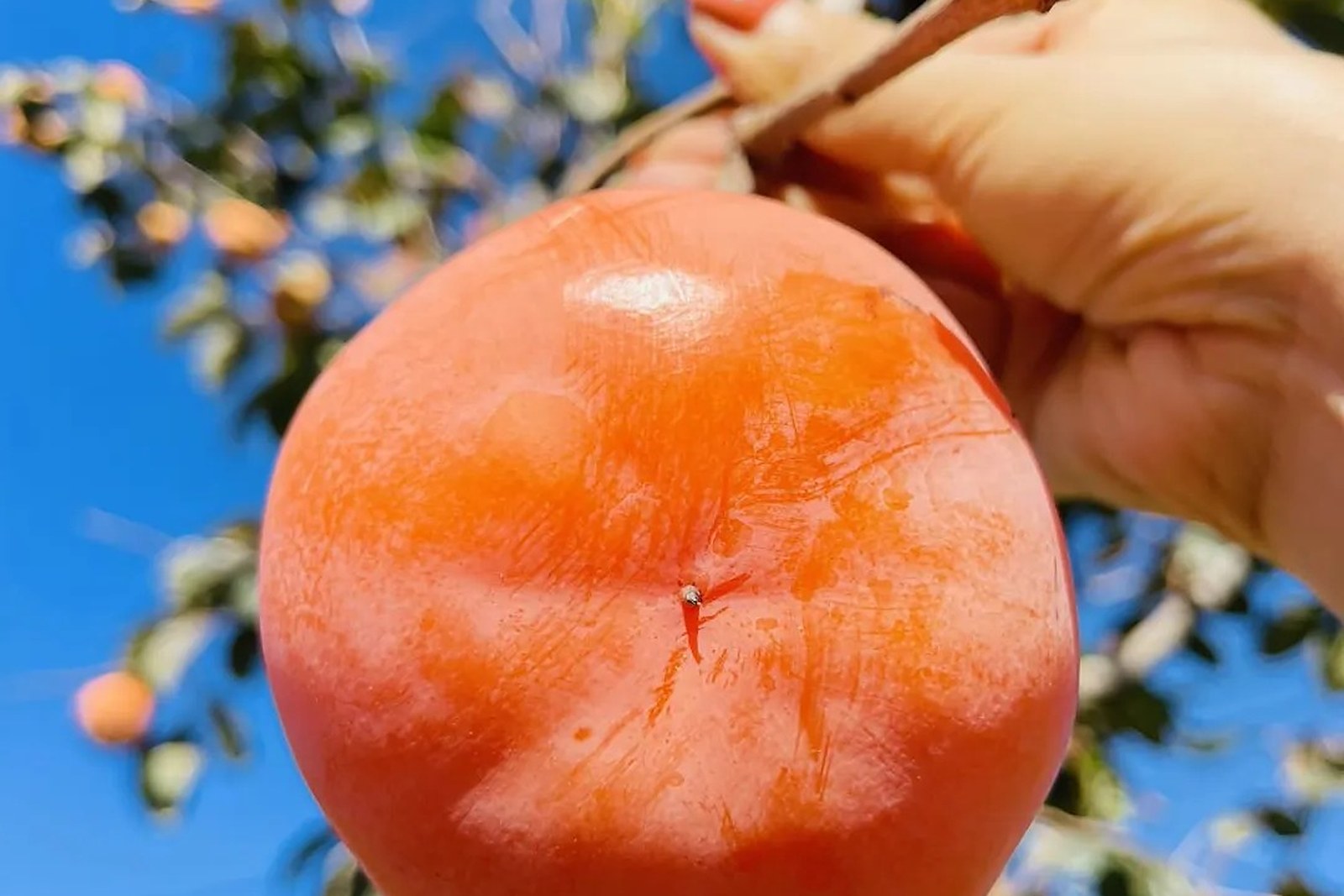
The eating is a ripeness grammar written for one fruit in several costumes, and it leans 甜 tián honeyed sweetness plus 汁 zhī juice to match the harvest table. The anchor is the fully ripe fruit – skin thin as paper, flesh gone to honey-juice, eaten with a spoon straight from the skin – backed by the crisp 漤柿 lǎnshì de-astringed rounds that snap like apples, the sun-dried 柿饼 shìbǐng persimmon cakes of early winter frosted with white 柿霜 shìshuāng natural fruit sugar, the deep-winter frozen 冻柿 dòngshì thawed to sherbet, the iced persimmon desserts the city’s hotels have lately borrowed from the county tables, and the kitchen byways – persimmon vinegar, persimmon-and-maize buns, the orchard-leaf tea of the older households. Harvest runs from around 霜降 Shuāngjiàng “frost descent” in late October through November, the orchards of the Zhangfang villages open for picking, and the fruit stores stubbornly well – a properly handled mopan persimmon keeps for weeks, which is how it once reached the court and now reaches the gift box without losing its argument.
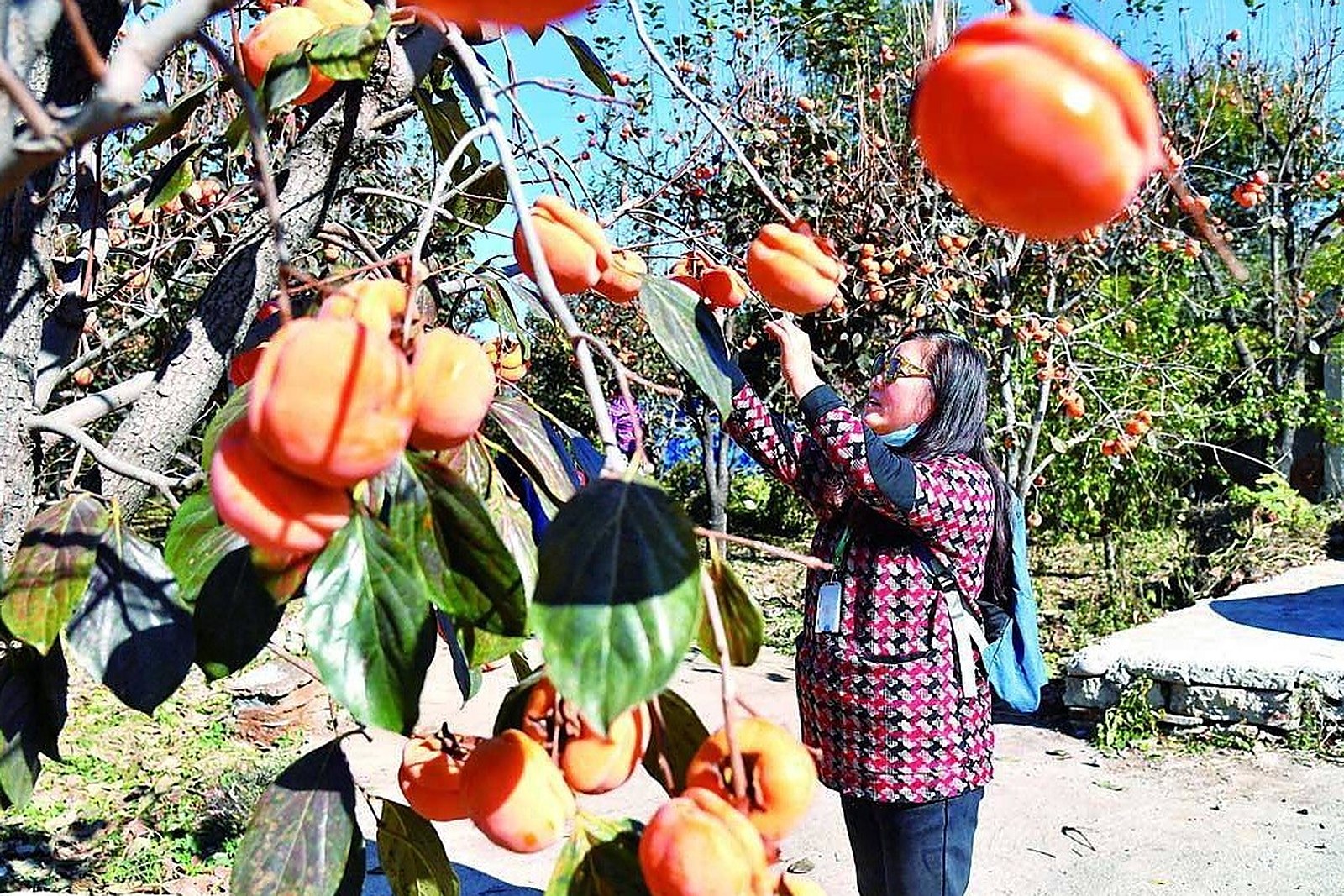
The honest grade is geography plus the 霜降 Shuāngjiàng frost clock. In 房山区 Fángshān Qū Fangshan District, Beijing the trade gathers along the Zhangfang roads at the foot of the orchards, where the clientele is half 周末 zhōumò weekend pickers with one eye on the cliffs and half city families buying gift boxes by the boot-load, a mix that keeps the fruit honest in a way a fruit-stand pile never could – an orchard here is graded by returning customers who know which slope ripens first (worth confirming the details – which growers pick to order and which sell through wholesale). The grade you can test on the spot is texture: a ripe fruit reads 清汤 qīngtāng clear-juiced, thin-skinned and sweet with little or no seed, a rushed one reads starchy and numbing, and no orange blush hides the difference – worth confirming the details, tree by tree, because the same orchard sells both in the same week. A per-person bill runs on the box and the bag, so call it worth confirming the details rather than a fixed number, and come after the first frost rather than before: the weeks before, the fruit hangs ornamental but not ready, and the honest growers will tell you so.
The wry truth is that 房山磨盘柿 Fángshān mópánshì is over-rated as a photo prop – the heavy boughs with their lantern fruit are a whole genre of Beijing weekend photography – and under-rated as agriculture: the actual trade, centuries-old trees grafted and guarded through hail and drought, an astringency calendar timed to the solar terms, a fruit that must be talked out of its tannin before it is food, barely registers with the people holding the camera. The self-deprecating footnote, and the district braid: a food writer will explain “terroir” to an orchard keeper who answers every question with the word 磨盘 mópán and points at the fruit, weigh a persimmon in his hand at heroic shutter, and then call it “commendably photogenic” as if the point were the picture – which is the honest grade: 房山磨盘柿 Fángshān mópánshì is a working orchard the writer will romanticise more than he eats from, and the keeper’s family at the next row has already spooned two fruits and argued about who gets the third before the shutter closes. The same 房山区 Fángshān Qū Fangshan District, Beijing thread runs on: the sugar-fried woks of 良乡板栗 Liángxiāng bǎnlì Liangxiang chestnuts crack along the plain’s market streets, the charcoal smoke of 十渡虹鳟鱼 Shídù hóngzūnyú Shidu rainbow trout drifts up the same Juma River, the paddy wind of 长沟大米 Chánggōu dàmǐ Changgou rice combs the southern wetlands, and the glass jars of 霞云岭蜂蜜 Xiáyúnlǐng fēngmì Xiayunling honey wait on the mountain shelves – one district, four more tables.
Words and Names
- 磨盘柿 mópánshì / millstone persimmon · the waisted giant fruit named for the grindstone it resembles - 张坊镇 Zhāngfāng Zhèn / Zhangfang Town · the persimmon heartland along the Juma River - 脱涩 tuōsè / de-astringency · the craft that turns a numbing fruit into food - 漤柿 lǎnshì / warm-water crisped persimmon · the apple-crunch way of eating the harvest - 柿饼 shìbǐng / dried persimmon cake · the sun-cured winter sweet of the orchard kitchens - 柿霜 shìshuāng / persimmon frost · the white natural sugar that grades every cake - 霜降 Shuāngjiàng / frost descent · the late-October solar term the harvest waits for - 拒马河 Jùmǎ Hé / Juma River · the cold river water the orchard country drinks
What the Locals Know
- Wait for the frost: around 霜降 Shuāngjiàng the astringency drops and the fruit turns honest – early fruit looks ready and bites back (worth confirming the details of each year’s harvest).
- Choose your texture out loud: spoon-soft ripe fruit and crisp 漤柿 lǎnshì are two different dishes made from the same tree – say which you want before the keeper decides for you.
- Trust the white frost on the cake: the 柿霜 shìshuāng bloom on a good 柿饼 shìbǐng is the fruit’s own sugar, not mould, and its whiteness is the grade.
- Carry the boxes flat and never stack them: a bruised mopan persimmon turns to bruised-sweet pulp by the drive home, and the boot of a car is where gift boxes go to die.
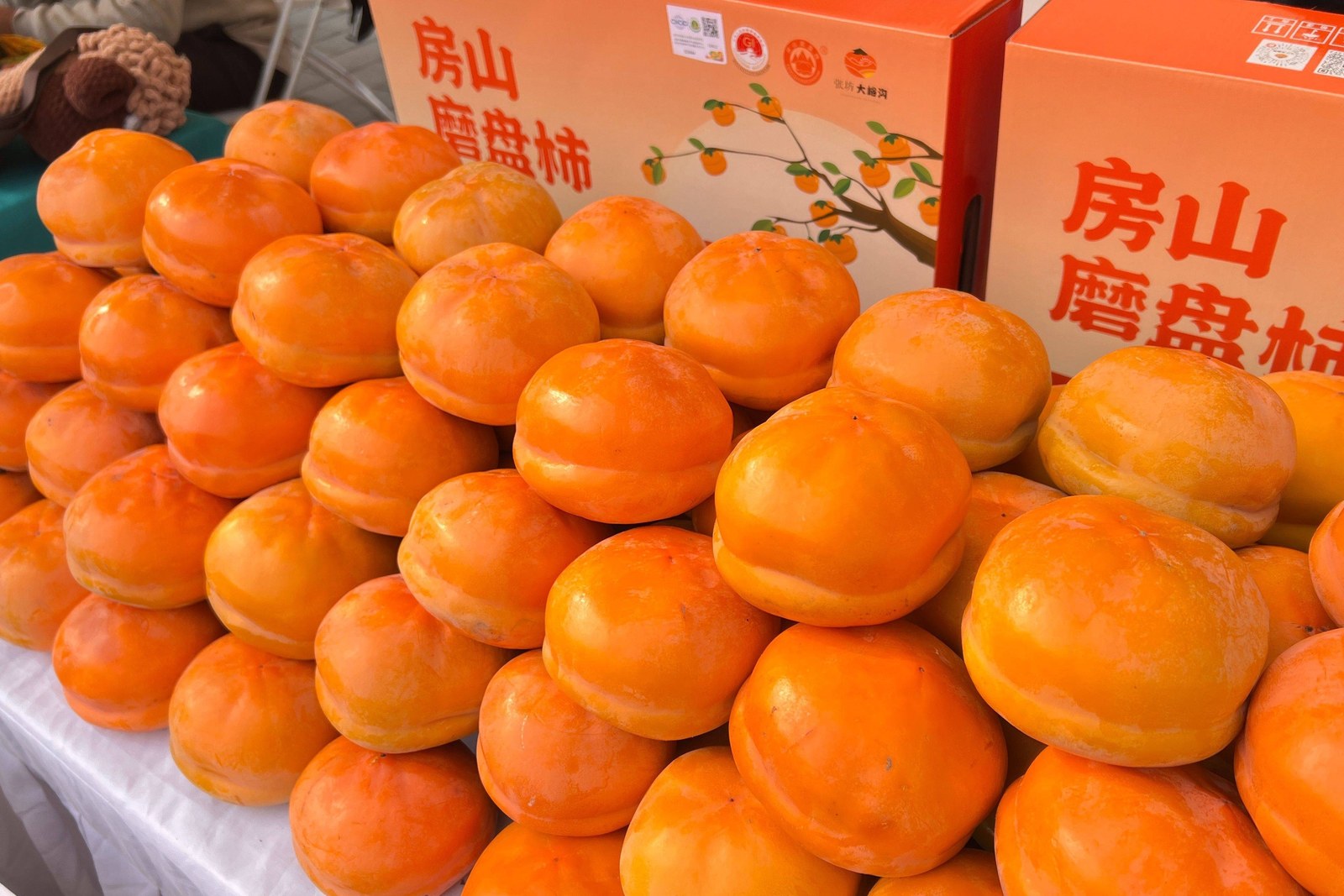
flowcloud would say that the 房山磨盘柿 Fángshān mópánshì is the millstone fruit, frost-sweet flesh and Zhangfang orchards of Fangshan District, Beijing – a 拒马河 Jùmǎ Hé valley fruit with a national geographical-indication name and a Ming-era tribute line, turned from tannin to honey by 漤柿 lǎnshì, patience and frost – and that the honest move is to wait for 霜降 Shuāngjiàng, choose your texture out loud, and carry the box flat, because the tree sets the calendar and the keeper keeps the craft. All checked October 2026.
Where to find it: Fangshan District Fángshān Qū, Beijing – the persimmon orchards and village counters of 张坊镇 Zhāngfāng Zhèn Zhangfang town and the neighbouring 大石窝 Dàshíwō Dashiwo country along the Juma River in southwestern Fangshan, where growers sell fresh 磨盘柿 mópánshì, crisp 漤柿 lǎnshì, frosted 柿饼 shìbǐng and gift boxes through the October-November harvest (worth confirming the details – which orchards pick to order and which sell through wholesale); a per-person bill runs on the box and the bag, so call it worth confirming the details rather than a fixed number. Fangshan mopan persimmons are the millstone fruit, frost-sweet flesh and Zhangfang orchards of Fangshan District, Beijing, orchard before gift box.