
奉节老腊肉 (Fèngjié Lǎolàròu) — Fengjie’s aged bacon, pork cured in salt and spice then slow-smoked until the fat turns to amber glass.
In the gorges, winter is the season of the smoke house. As soon as the cold sets in, Fengjie households and county workshops take the season’s pork, cut it into generous slabs with skin and a ribbon of fat, and begin a two-stage ritual that has more in common with preservation than with cooking. First the meat is rubbed hard with salt, cracked Sichuan pepper, and a pour of liquor, then left to cure for about a week so the seasoning works deep and the moisture is drawn out. Only then comes the part that defines the product: a long, low smoke over green cypress and oak branches, kept smouldering rather than flaming so the meat sits in a cool, scented haze for weeks until it darkens, firms, and the fat goes translucent gold.
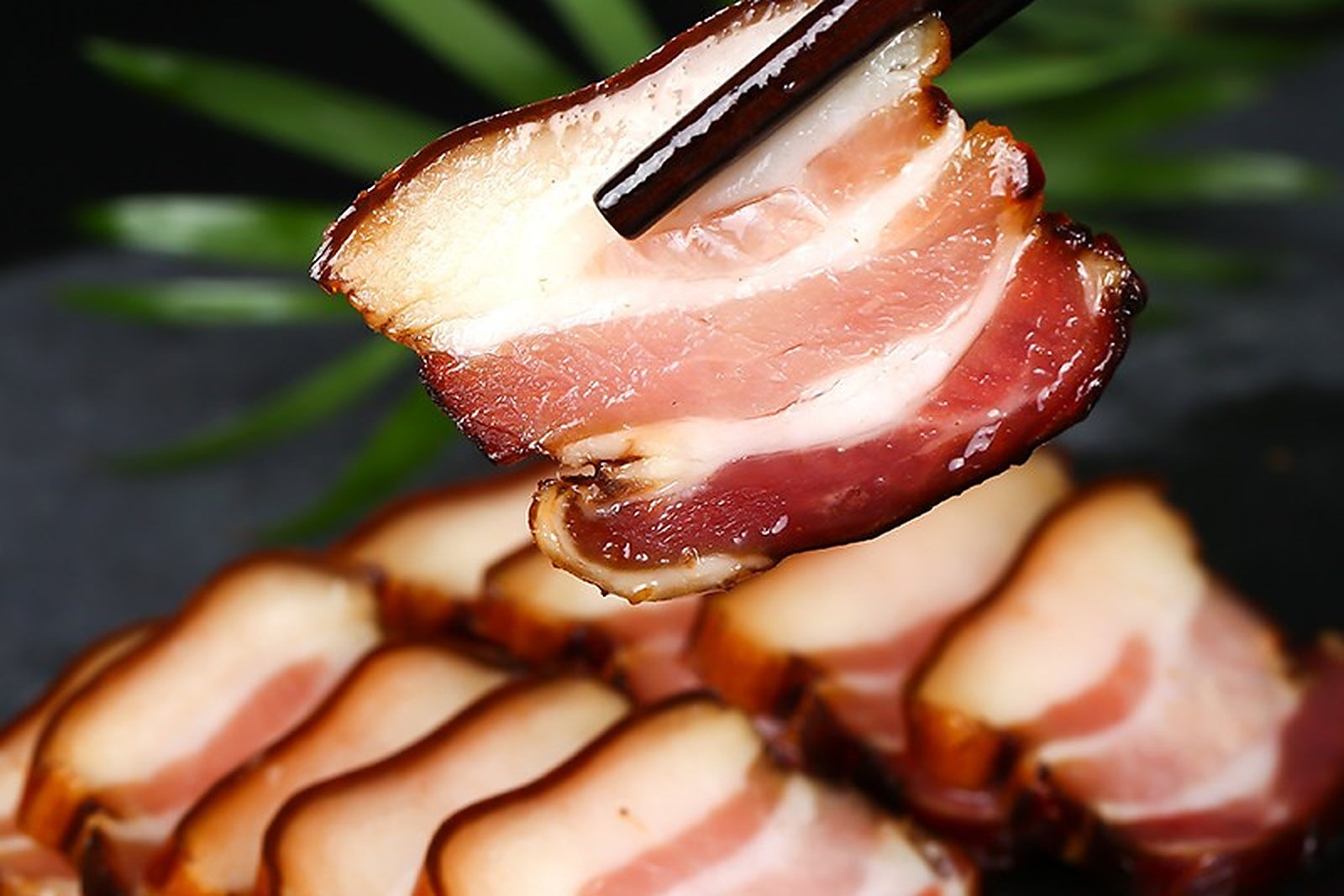
What the smoke does is more than colour. It drives out the last of the moisture and lays a preservative coat over the meat, so a well-made slab “draws no flies through the hottest days and keeps through the dog days of summer” without refrigeration — the old measure of a good Fengjie bacon. The cypress and oak give it a clean, resinous perfume that no spice rack can fake, and the slow cure concentrates the pork into something dense and savoury rather than merely salty. Sliced thin, the lean reads deep red and the fat glows like stained glass.
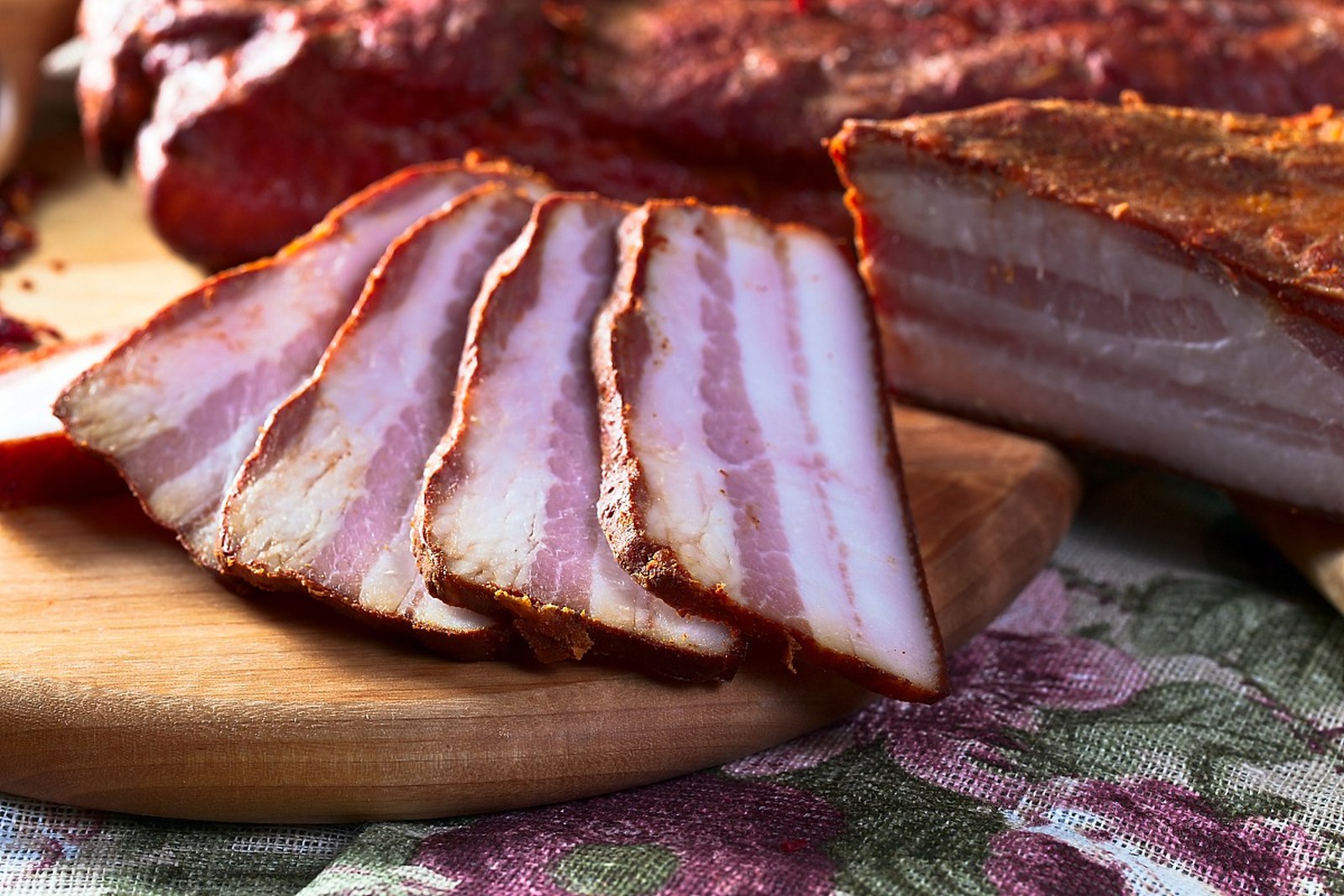
On the table it is the most forgiving of ingredients. The simplest treatment is the best: rinse, steam whole, and slice, letting the meat speak for itself while it is still warm and the fat softens. More often it meets the wok — stir-fried with garlic sprouts or scallion, with dried chilli and pepper, or braised with dried potato and beans until the starch drinks up the rendered fat. Around the New Year it is the centrepiece of the holiday spread, the dish that signals family home and a table full of returned travellers, and the one visitors are served first when they arrive in a Fengjie village in winter.
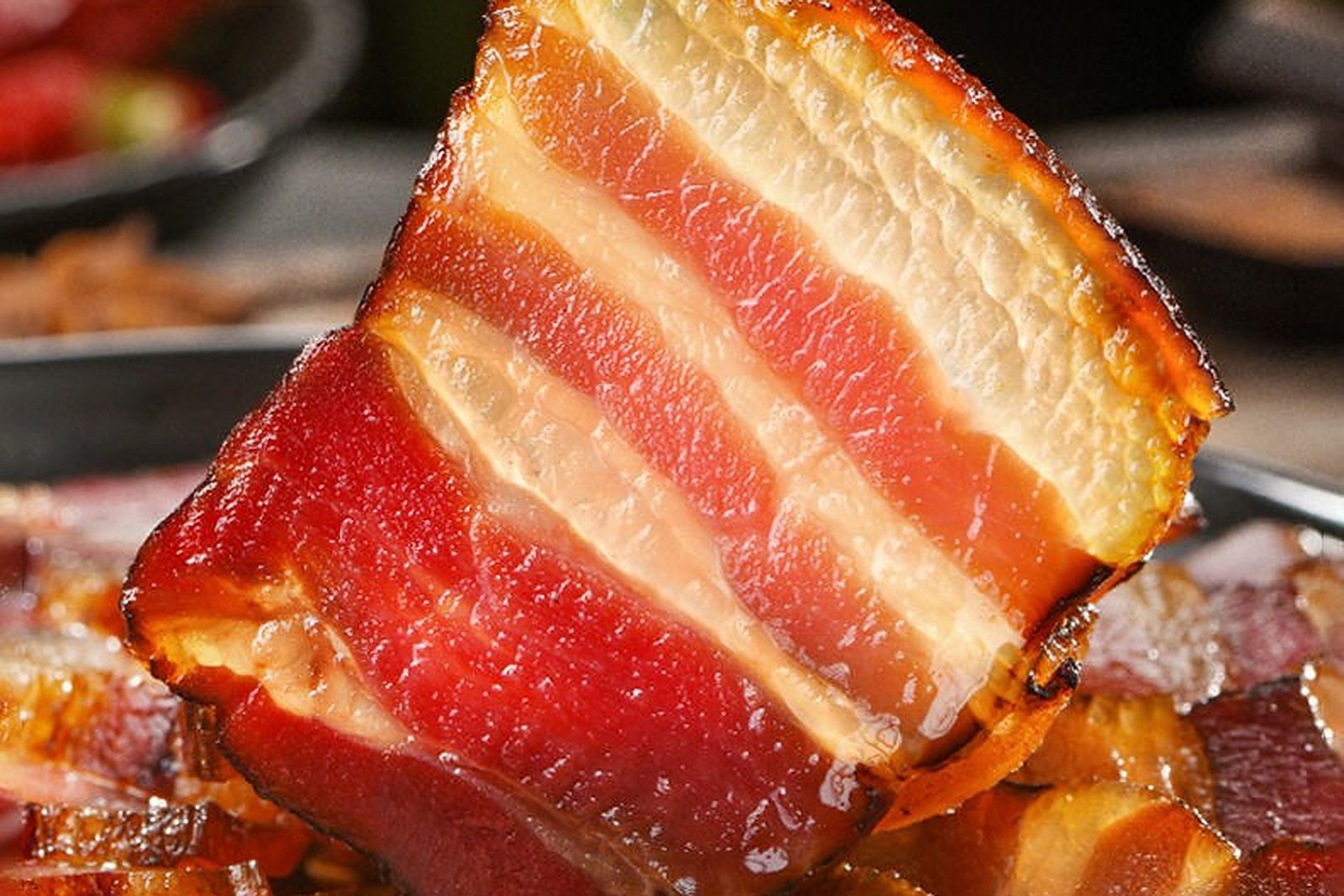
Today the same method has moved from the rafters of farmhouses into county workshops that smoke by the tonne, but the logic is unchanged: salt, spice, and patient woodsmoke. Buy it by the slab in the seat’s markets or at roadside curing houses, and treat it as a seasoning as much as a meat — a little goes a long way through the long gorge winter.
Words and Names
奉节老腊肉 Fèngjié Lǎolàròu — Fengjie cured bacon, the county’s smoked preserved pork 腊肉 làròu — cured and smoked bacon, a winter staple across the gorges 花椒 huājiāo — Sichuan pepper, the cracked spice rubbed into the cure 柏枝 bǎizhī — cypress branches, the fragrant wood used for the slow smoke 蒜苗 suànmiáo — garlic sprouts, the classic vegetable stir-fried with the bacon 熏制 xūnzhì — smoking, the low-fire step that preserves and perfumes the meat