
Táoguàn yī huō, tǔjī yī zhī; fēiyí yī dào, xiān zài yī guān. — One clay jar, one local chicken; the heritage title, the flavour sealed in one jar.
Guzi chicken (盬子鸡, Gùzǐ Jī) is the county’s non-heritage (非遗) signature: a local chicken slow-cooked in a special clay jar (盬子, gùzi), the vessel’s design trapping the steam so the bird cooks in its own moisture rather than in added water. It is a sit-down dish rather than a snack, running about 55–60 yuan per person, and the county’s answer to the question of what a mountain town’s Sunday table looks like.
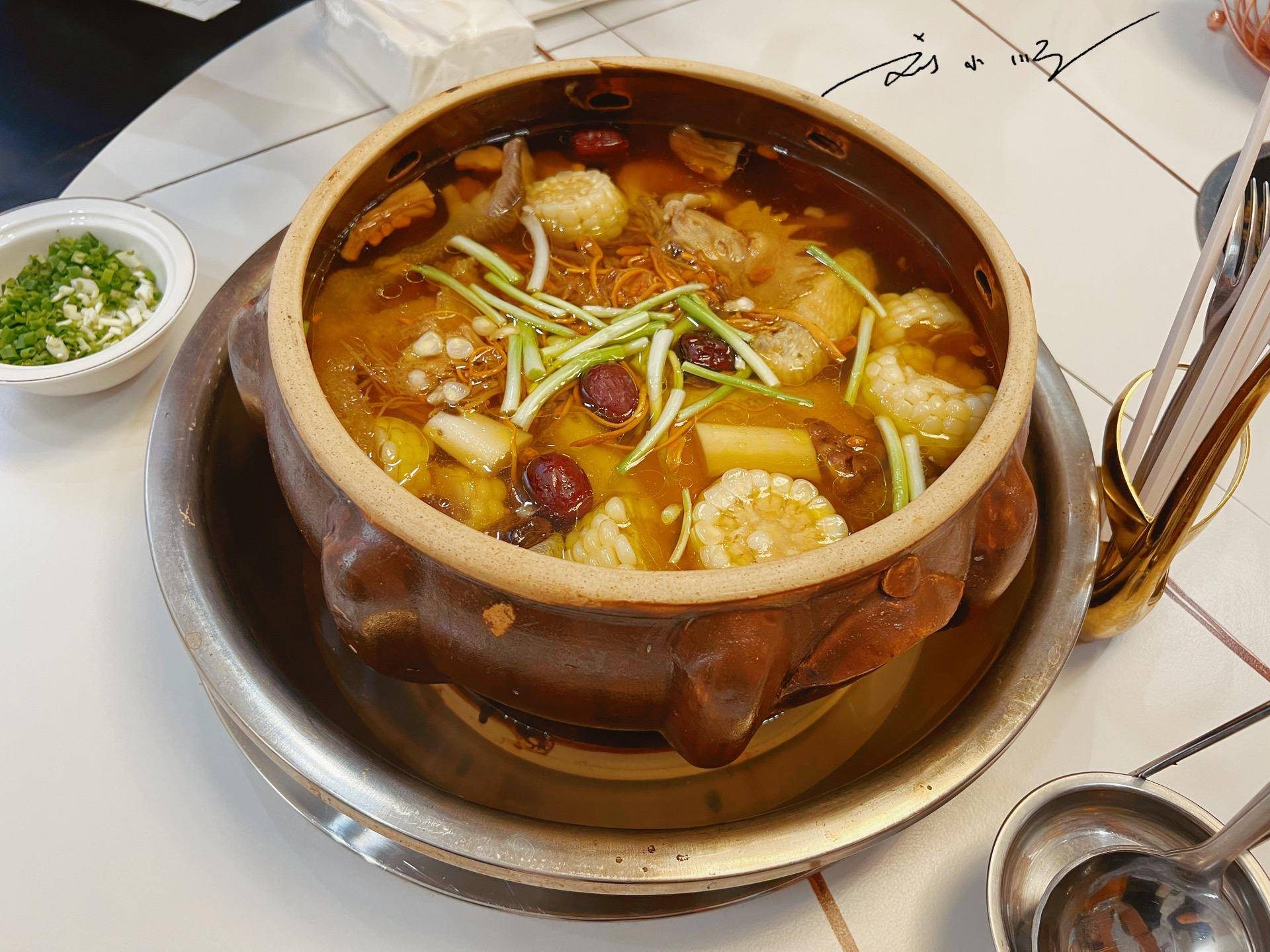
The 盬子 is a lidded clay pot with an internal rim that catches the condensing steam and lets it drip back onto the food — a closed cycle that needs almost no liquid. The chicken goes in with the county’s mountain aromatics, the jar is sealed over a gentle fire, and hours later the bird has become a broth and a tender meat at once. The method is the heritage: the craft is in the jar and the fire, not in a recipe anyone can shortcut.
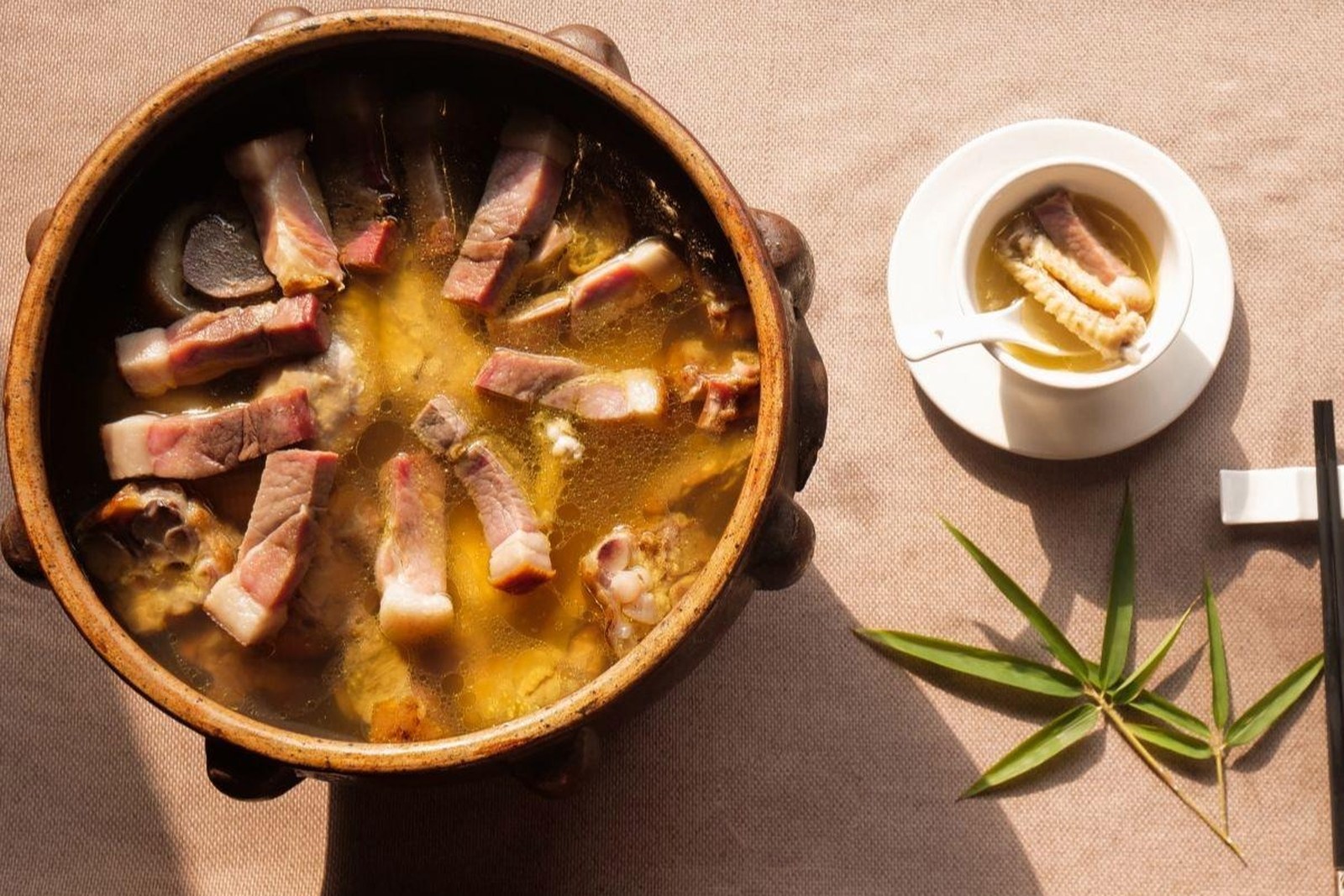
The dish is a slow order — call ahead or arrive early, because the jar takes its hours and kitchens cook a limited number. The correct table is a whole jar for the group, and the broth is drunk last, after the meat. The county’s kitchens source the birds from the mountain households, and the farmhouse version is the one to ask for with an introduction.
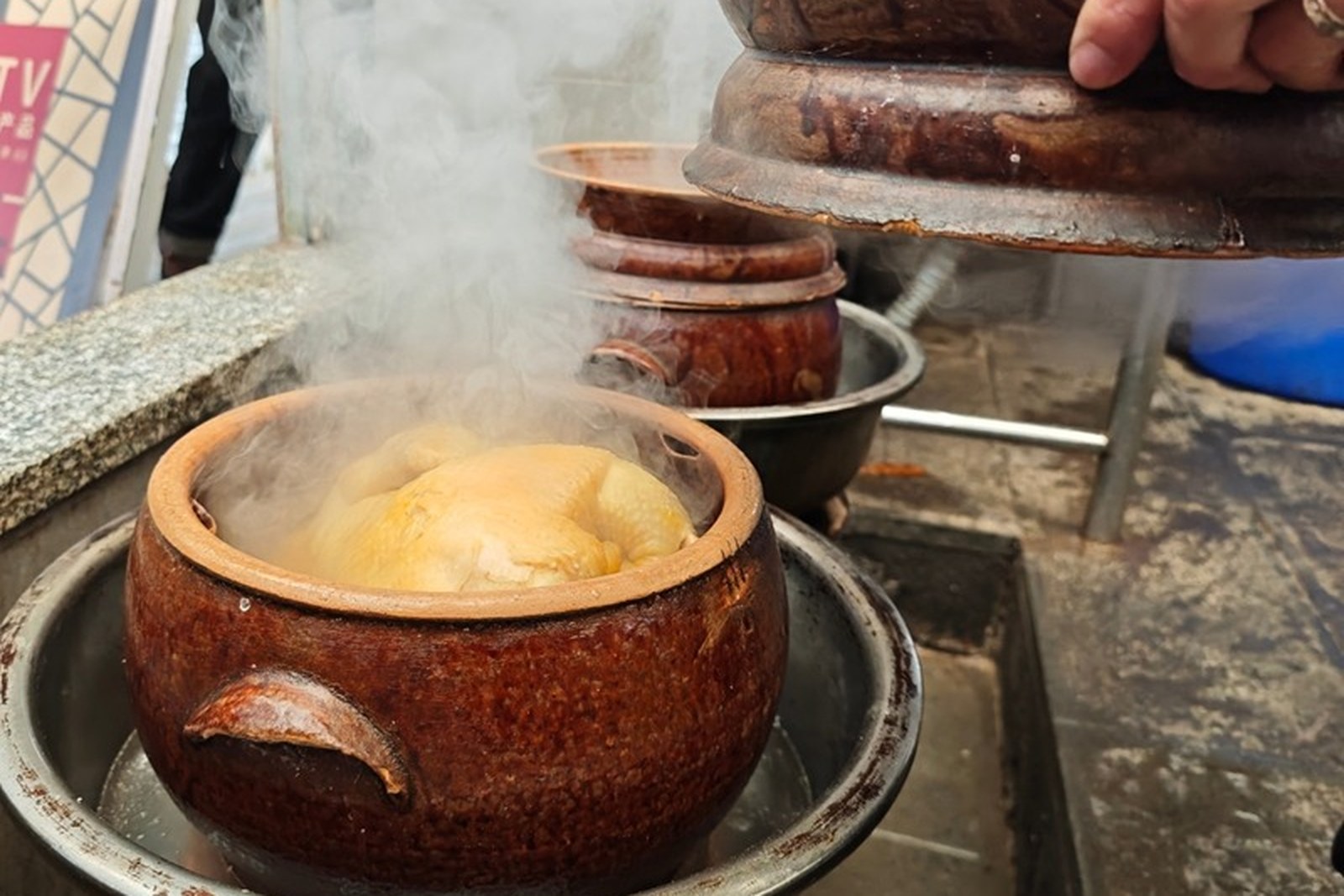
flowcloud would say that the county’s heritage dish is a pot that waters itself — and that the recipe’s hardest ingredient is patience.
Where to find it: the county’s kitchens — a slow order, so call ahead; the farmhouse version comes from the mountain households and needs an introduction. All checked October 2026.
Words and Names
盬子鸡 gùzǐ jī — Guzi chicken, the clay-jar dish · 盬子 gùzi — the steam-trapping clay jar · 非遗 fēiyí — intangible cultural heritage, the dish’s credential · 土鸡 tǔjī — local free-range chicken, the ingredient