
Fengjing Ding Trotter: The Ding Yixing Old-House Braised Pork Huckle of 1852, the Skin-and-Flesh Softness of a Water Town’s Feast Dish and the Guest-Table Pride of Fengjing Old Town in Jinshan District, Shanghai
枫泾炉火百年旺,丁蹄上桌宴客欢。Fēngjīng lúhuǒ bǎinián wàng, dīngtí shàng zhuō yàn kè huān – At Fengjing the stove fires have burned a hundred years strong; when the Ding trotter reaches the table the feast guests rejoice.
枫泾丁蹄 Fēngjīng dīngtí Fengjing Ding trotter is the braised-pork-huckle trade of 枫泾古镇 Fēngjīng Gǔzhèn Fengjing Old Town in 金山区 Jīnshān Qū Jinshan District, Shanghai – the old water town on the city’s south-western border with Zhejiang where the covered streets run along the market creek and where one dish has anchored the guest table since the 咸丰 Xiánfēng Xianfeng years. The dish is the town’s own heirloom: the 老字号 lǎozìhào time-honoured house 丁义兴 Dīngyìxīng Dingyixing is credited with creating the braised trotter in 1852, taking the local 蹄髈 tǐpáng pork huckle and working it through the long braise – hours of skimming and ladling until the 皮肉酥烂 pí ròu sū làn skin and flesh reach the falling-soft point without losing their shape, the skin turned glossy amber and the meat pulling apart in sweet, soy-dark strands (worth confirming the details – which shop frontage holds the Dingyixing name today turns over as old towns do, and the specific doors are best confirmed on the street rather than recited). The clientele is the town’s own calendar first: Fengjing families who set the trotter at the 待客硬菜 dàikè yìngcài proper-dish seat when guests cross the threshold, and the weekend tide from the city who read the whole water town around one pot. The blunt definition: the water town that turned a pig’s huckle into a hundred-and-seventy-year name – the taste of Jinshan eaten where the braise never learned to hurry.
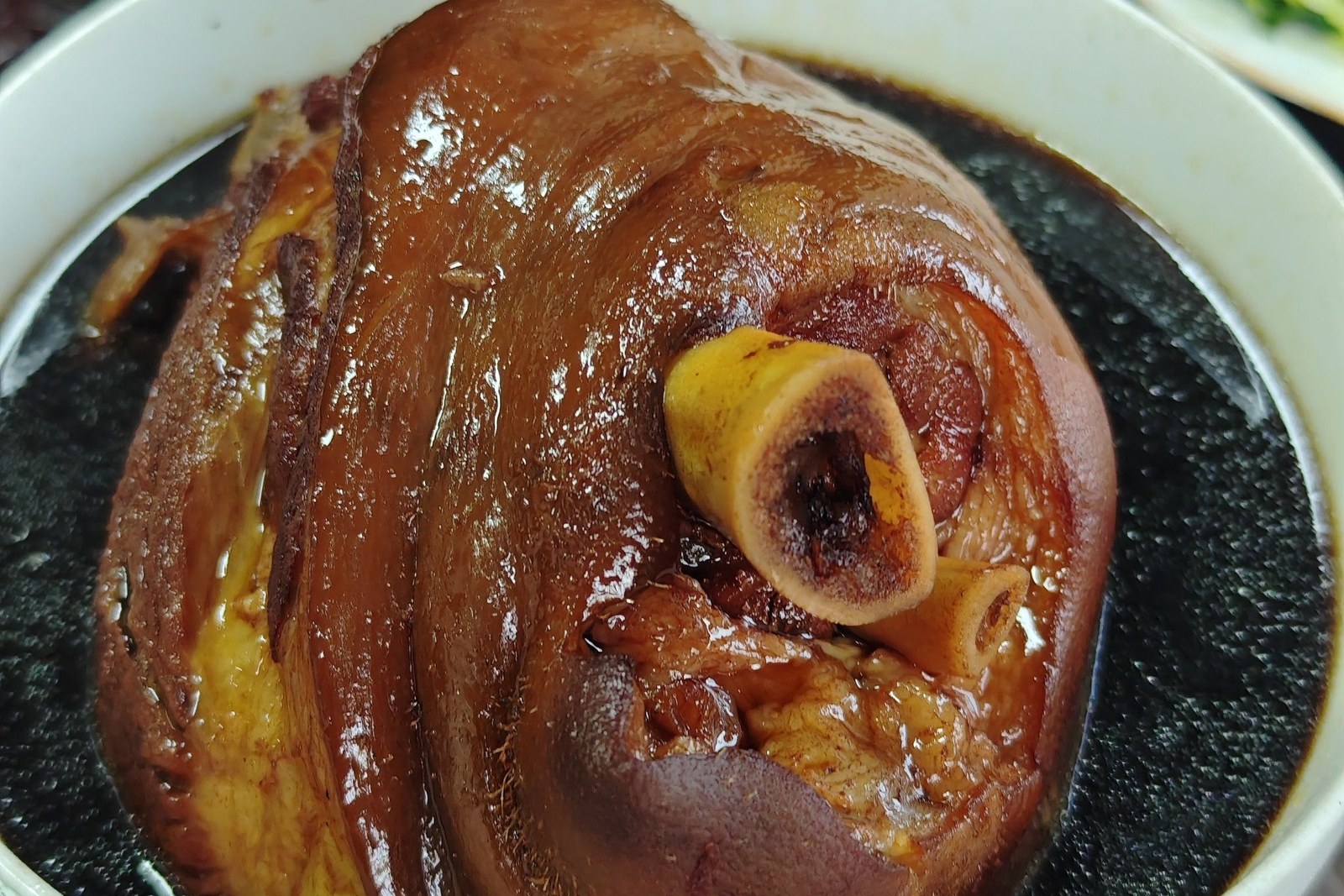
Call it honestly: heritage-braise money on a water-town clock. Getting there is one door: the town sits at Jinshan District’s north-western corner, reached by bus or road ride from the city’s south-west rather than by metro, with the district’s rail and road connections funnelling visitors toward the old town’s gate streets (worth confirming the details for the connecting services, the approaches shifting with the old town’s season arrangements). A plate of braised trotter at a canal-side table prices at casual-neighbourhood money, a vacuum-packed trotter carried home as a gift at souvenir-box money, a full water-town table for a group at occasion-within-reason money – though exact figures are worth confirming the details on rather than quoting, the doors being family-run and repriced by the visitor season. The crowds run to the weekend tide: Saturdays and Sundays pack the covered streets and the trotter pots sell deep by mid-afternoon, weekday mornings hand the old town to the residents and the tea crowd, and a weekday mid-morning, when the kitchens tend the day’s first pot and the market creek runs quiet, is the eater’s own hour (worth confirming the details for individual kitchens’ hours, which follow the town’s trade more than any posted sign).
The honest star is the braise itself, graded pot by pot. What gets oversold is the “imperial recipe museum” framing: guides sell a shrine where every trotter is a relic, and a first-timer may meet an ordinary water town of restaurant fronts, snack windows and souvenir counters – which is not the disappointment but the point. What repays the effort is grading the dish the way the town does: a trotter judged by whether the skin carries its gloss without turning rubbery, the meat judged by whether it parts in sweet strands under the chopstick’s own weight rather than fighting back, the pot judged by whether the braise tastes of the morning’s ladling rather than a reheated barrel. The test costs nothing: order one trotter plain at a canal-side table before you buy the gift boxes, watch whether the meat yields without the knife, and eat where the local families book their celebration tables rather than where the heritage plaques hang – a town that has braised the same huckle since 1852 grades its pots daily, and the family banquet queue is the certificate (worth confirming the details – the doors migrate with the leases, and today’s plainest frontage may be next season’s remembered one).
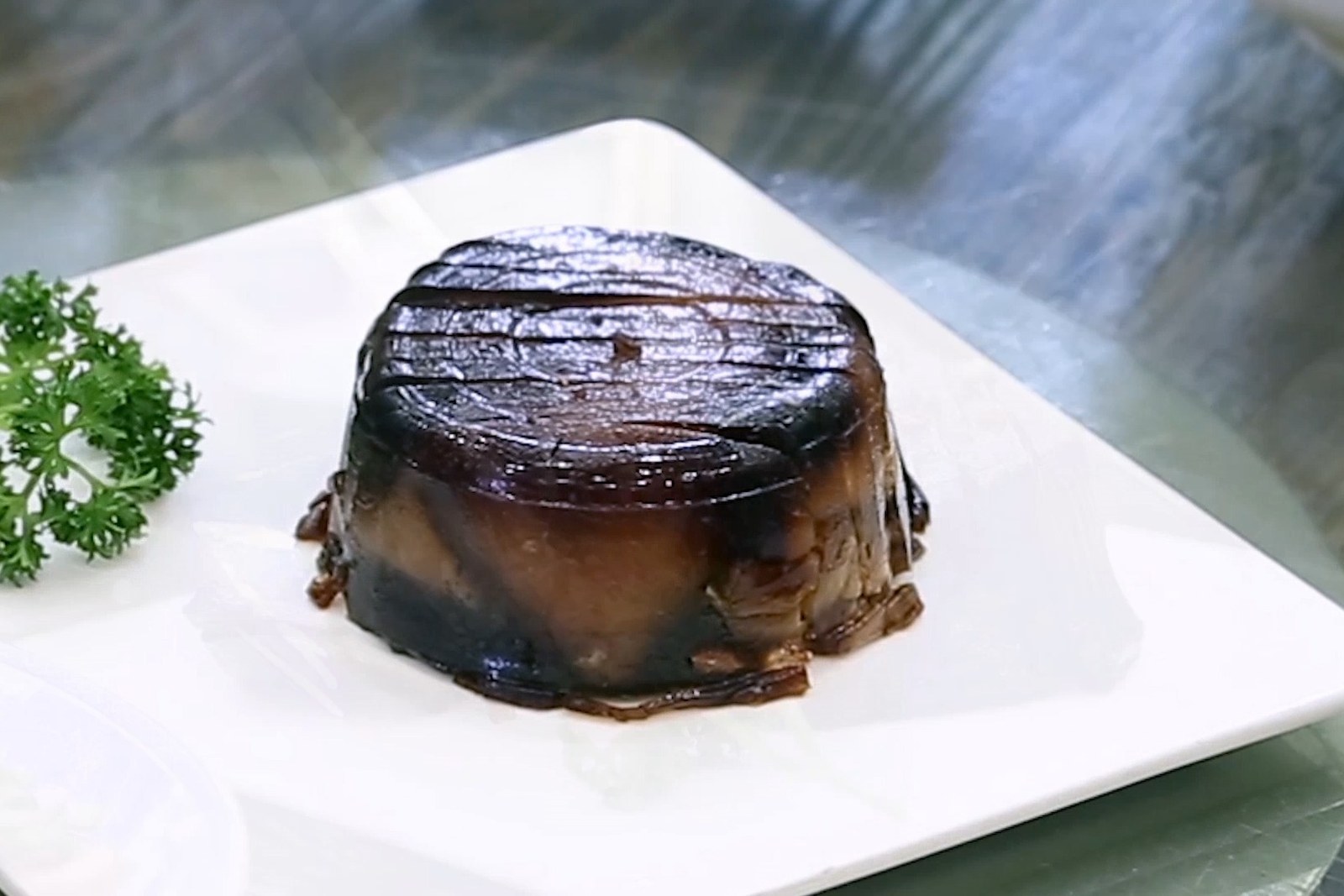
The town’s deepest habit is the guest-table arithmetic: a Fengjing family setting a proper table puts the trotter at the honour seat, skin up, and measures the household’s face by how it parts – a discipline the old house built and the town’s kitchens keep. Time it right – a weekday ride out, the first pot of the morning still settling – and the dish arrives as the braise meant it: skin glossed, meat sweet, the recipe’s own arithmetic (worth confirming the details – which kitchens still run the long pot from raw every day, the trade thickening on weekends and thinning to prepared boxes on quiet weekdays).
The rest of this Jinshan list keeps other tables: the sea-breeze platters of 金山嘴渔村海鲜 Jīnshānzuǐ yúcūn hǎixiān Jinshanzhou fishing-village seafood steam a ride south at the old fisher wharf, the red-stamped tea cakes of 枫泾状元糕 Fēngjīng zhuàngyuán gāo Fengjing zhuangyuan cake bake in this same old town, the white-cut winter mutton of 张桥羊肉 Zhāngqiáo yángròu Zhangqiao mutton warms the district’s village tables, and the flat July peaches of 吕巷蟠桃 Lǚxiáng pántáo Lüxiang pan peaches ripen in the orchard park to the east – one district, four more tables, all inside 金山区 Jīnshān Qū Jinshan District; and when the water-town afternoon needs a bed beside the creek or a broader route, the stay-and-street notes for the district pick up where the braise leaves off.
Words and Names
What the Locals Know
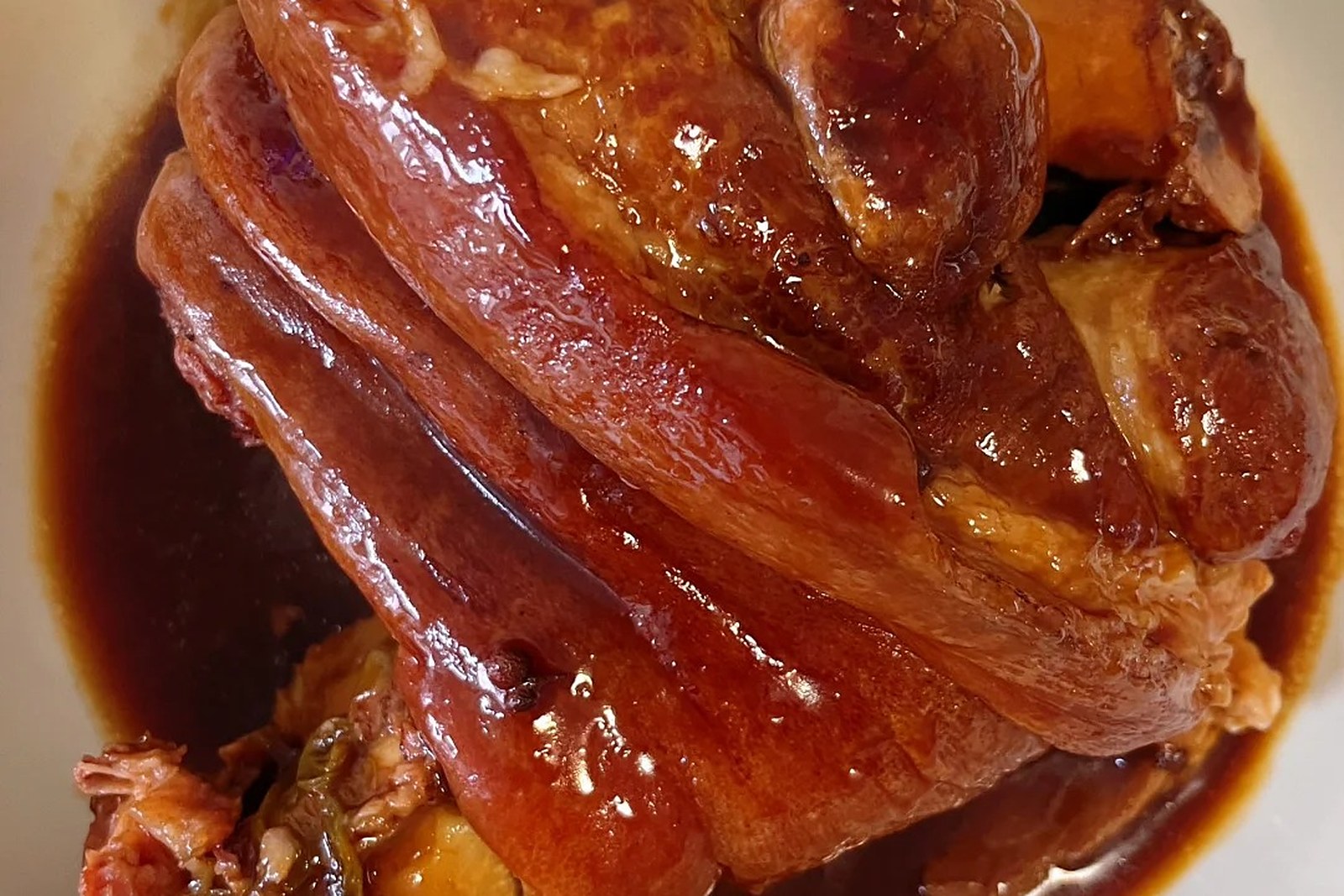
flowcloud would say that the 枫泾丁蹄 Fēngjīng dīngtí is the hundred-and-seventy-year braise and the guest-table honour dish of Jinshan District, Shanghai – a 老字号 lǎozìhào discipline where the 丁义兴 Dīngyìxīng Dingyixing founding of 1852 answers the 皮肉酥烂 pí ròu sū làn skin-and-flesh softness and the 待客硬菜 dàikè yìngcài seat at every proper Fengjing table – and that the honest move is to order one trotter plain at a canal-side table, test whether the chopstick alone parts the meat, and let the family banquet queue cast the vote, because the water town built the pot and the pot keeps the town’s face. All checked October 2026.
Where to find it: 金山区 Jīnshān Qū Jinshan District, Shanghai – the heritage-braise belt of 枫泾古镇 Fēngjīng Gǔzhèn Fengjing Old Town on the city’s south-western border, where the 老字号 lǎozìhào house 丁义兴 Dīngyìxīng Dingyixing keeps the 蹄髈 tǐpáng pork-huckle pot it is credited with founding in 1852 and the canal-side kitchens keep the 待客硬菜 dàikè yìngcài guest-table register, reached by bus or road ride from the city’s south-west into the old town’s gate streets (worth confirming the details for the connecting services and which frontage holds the Dingyixing name today, water-town doors turning over as water towns do), where the town keeps the weekend clock – Saturdays and Sundays the visitor tide through the covered streets, weekday mornings the residents’ tea loop, weekday mid-morning the eater’s own; casual-neighbourhood to occasion-within-reason money, so call it worth confirming the details rather than a fixed number, and let the family banquet queue cast the vote. Fengjing Ding trotter is the braised pork huckle of 1852, the skin-and-flesh softness and the guest-table pride of Fengjing Old Town in Jinshan District, Shanghai – the taste of 金山区 Jīnshān Qū Jinshan District eaten where the braise never learned to hurry. All checked October 2026.