
Fengmu Bitter Melon, the County’s Cooling Crop
枫木苦瓜 Fēngmù kǔguā, the Fengmu bitter melon, is a bitter gourd rather than a melon, and it takes its name from 枫木镇 Fēngmù zhèn, the town whose fields it comes from. 屯昌县 Túnchāng xiàn is an inland county in the north-central part of Hainan Island with no coastline, and 枫木镇 sits in the south-west of it beside 木色湖 Mùsè shuǐkù, a reservoir; the crop grows on the 枫木洋 Fēngmù yáng, flat field country with free-draining soil and reliable water. What the county sells is a long-bodied green bitter gourd, and the way it sells it is as an off-season vegetable, 反季节瓜菜, because the fruit is marketed from February to May, which puts it ahead of the Guangdong and Guangxi harvest in May and into the gap in the market after the Spring Festival, when prices are high. In Chinese kitchens the bitter flavours are filed at the cooling end of the spectrum, which is half the reason the county’s English marketing calls it a cooling crop; the other half is the calendar, since it ripens in the one cool season the island has.
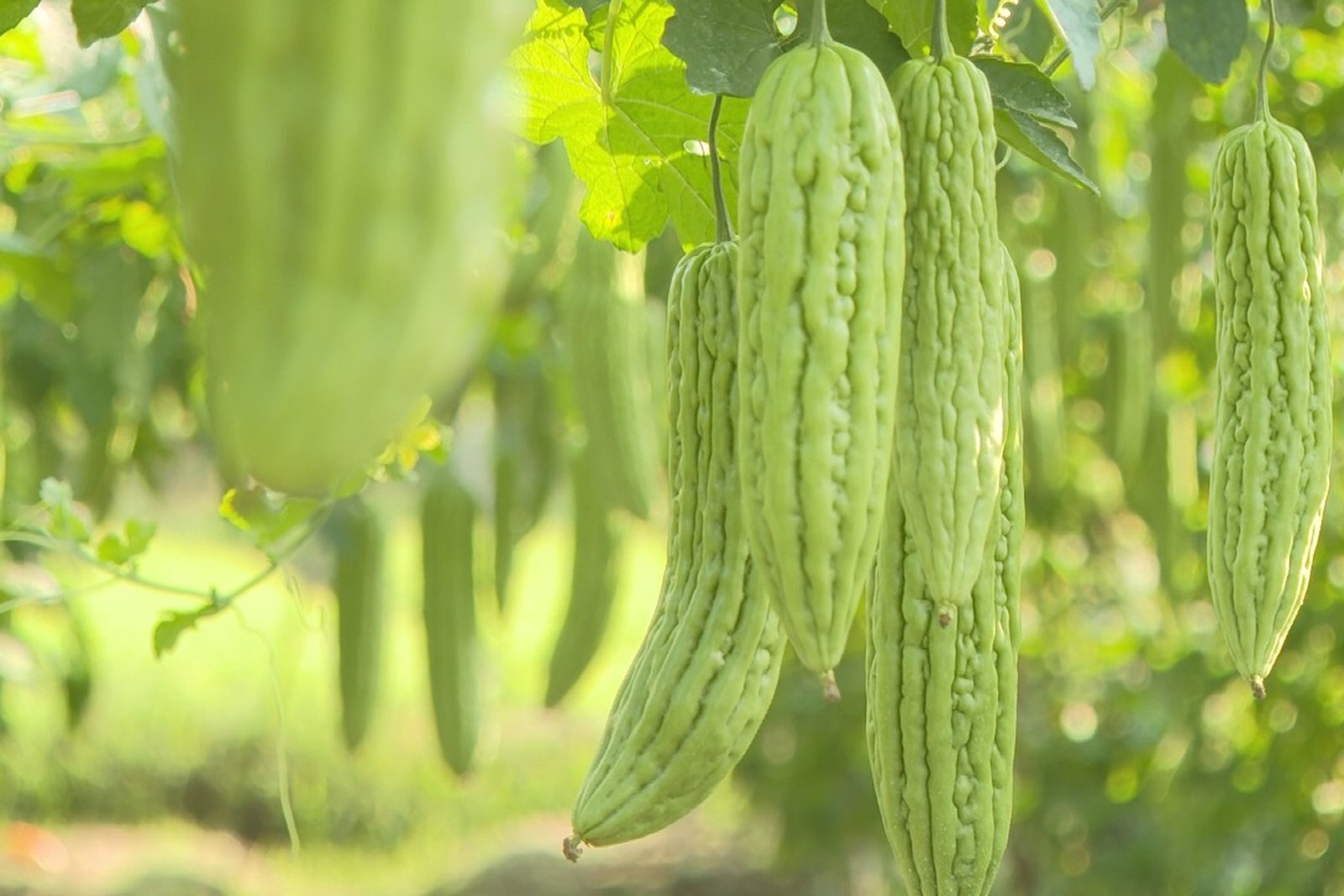
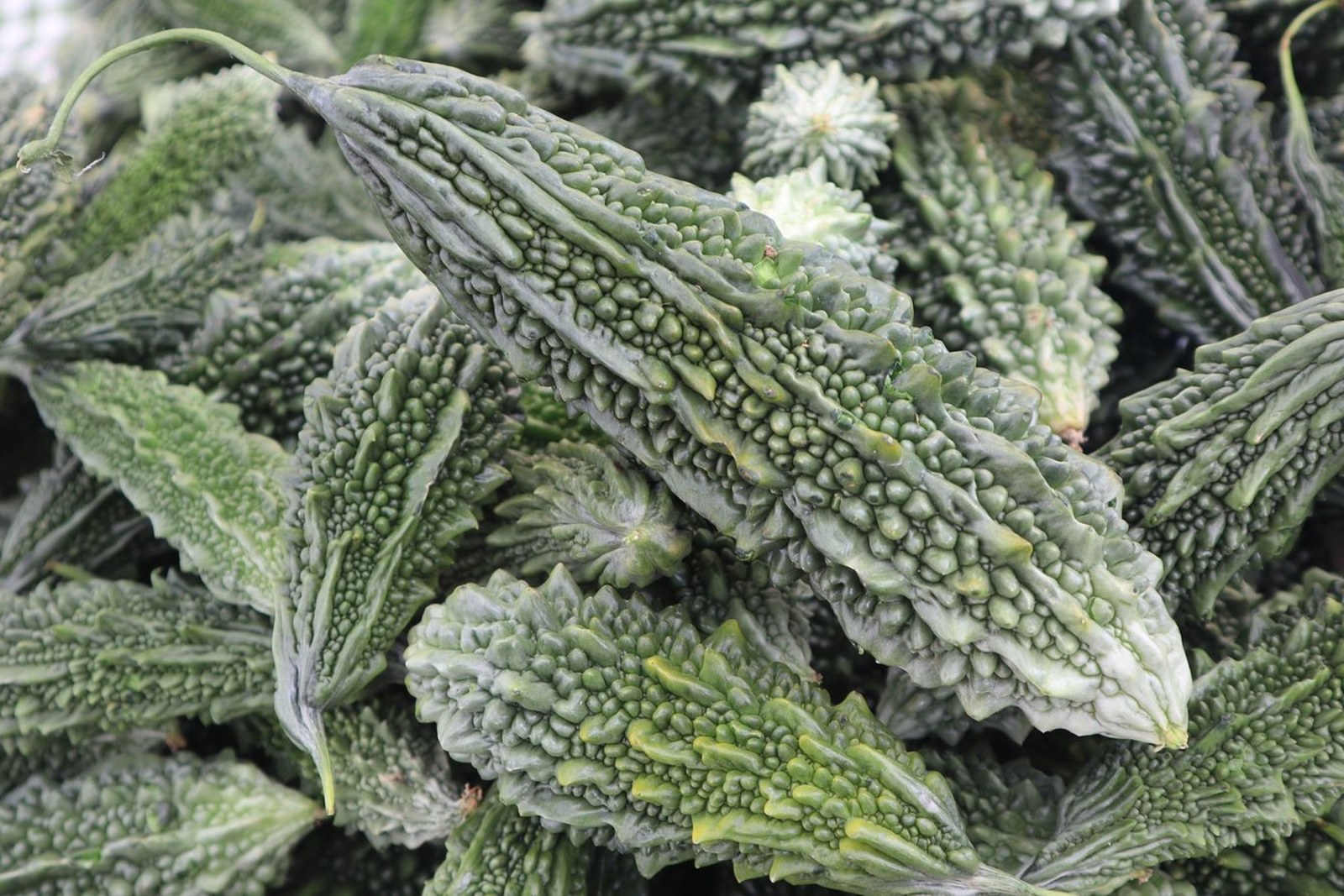
The plant itself is described in the county’s own technical writing as a long-bodied, light green bitter gourd, glossy and evenly shaped, weighing 300 to 400 grams, with flesh that is crisp and full and a bitterness that carries a sweetness behind it; a cross-section is up to two centimetres thick, which is thick for a bitter gourd and is the number a cook cares about. The varieties grown are 丰绿, 绿冠军, 金泰, 海研2号 and 热科2号油绿苦瓜, and since December 2014 the county has worked with the Hainan Academy of Agricultural Sciences and the Chinese Academy of Tropical Agricultural Sciences on grafting the vines onto 白籽南瓜 báizǐ nánguā, a white-seeded pumpkin rootstock, which gives field survival above ninety per cent and better tolerance of the cold and the dull light of a Hainan winter. Two local standards were written for the crop, one for cultivation without pollution and one for quality, and the county’s claim is that the Fengmu standard was the first local standard for bitter gourd in the country.
The season is short and the trade around it is unusual. Twenty-odd buyers come to Fengmu each year and fifteen collection counters operate in the town, shipping to the Jiangnan and Humen markets in Guangdong and on to Beijing, Shanghai and Guangzhou. The pricing rule is worth knowing because it has no equivalent in most fresh-produce trades: 销售当日只计重、不计价, on the day of sale the crop is only weighed and not priced, and the buyer sets a single uniform price the following day from wholesale prices on the mainland and then settles the accounts. The risk that leaves with the grower is real, and the county has answered it with insurance – a vegetable price index policy whose premium is ninety per cent subsidised, a payment of 300 yuan a mu a year, and 0.6 to 1.0 yuan per grafted seedling.
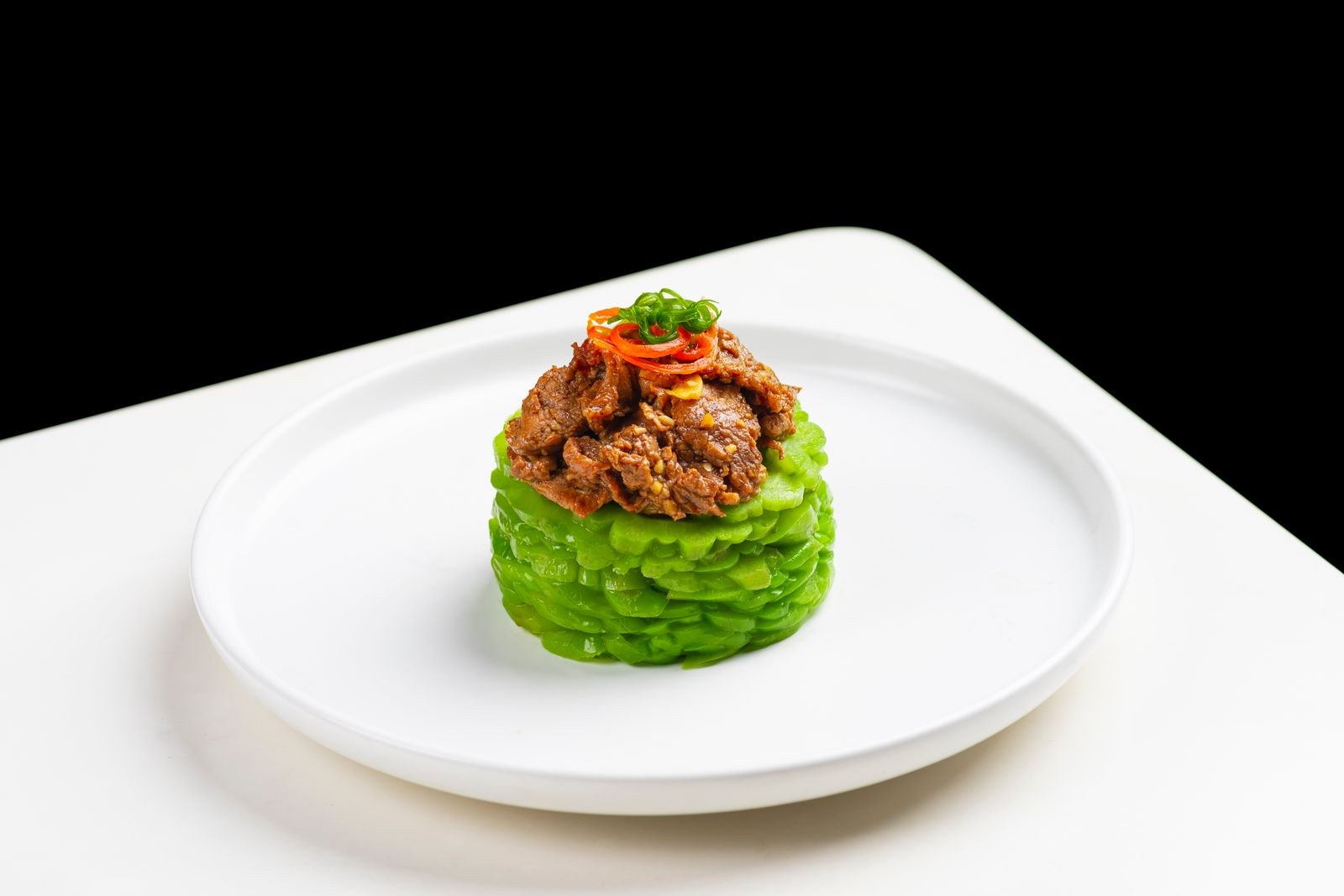
On the plate the dish the county named is 枫木苦瓜煲 Fēngmù kǔguā bāo, a clay-pot braise whose whole purpose is to hold the bitterness against fat. The classic method has three stages: halve the gourds, scrape out the seed and cut them into three-centimetre segments, soak the segments for ten minutes in lightly salted water to take the raw edge off them, then fry them with slices of pork belly until half done before adding 豆豉 dòuchǐ, fermented black beans, soy and sugar, and letting the pot simmer slowly; at the end the juices are thickened and poured back over, so that the segments come out dark green and glossy. A home version simmers the same gourd with pork ribs and soybeans, the beans doing the work of the sugar. The county has also pushed the crop into 苦瓜汤圆, a glutinous dumpling coloured with the juice and filled with sesame and peanut, along with a five-colour soup, a bitter-melon lemon tea and a dried slice sold for its reputed effect on blood sugar.
Nobody can say with confidence when the planting began. The accounts put large-scale bitter gourd growing in Fengmu in the 1980s, in the early 1990s, and simply thirty-odd years ago, and the oldest of the three is the one most often repeated; what is agreed is that the town’s soil and climate gave the crop an advantage and that it became the county’s flagship winter vegetable. In 2015 the town government registered the 枫木苦瓜 trademark and the product was given national agricultural geographical-indication protection in the same year, and the town was named to the fifth batch of the national 一村一品 demonstration list that August. One claim that circulates about the crop needs handling carefully: an encyclopaedia entry attributes the quality of the melon to a volcanic-rock soil and to a bitterness twenty to thirty per cent below that of standard varieties. Tunchang lies in the red-soil hill country rather than in the volcanic belt of northern Hainan, and no official or academic source supports the volcanic claim, so it appears here only to be marked as unverified.
Words and Names
苦瓜 kǔguā is the bitter gourd, called 凉瓜 liángguā, the cooling gourd, in Cantonese; it is a gourd rather than a melon, and the English bitter melon is a translation of the Chinese. 枫木 is the town and 枫木洋 is its flat field country. 白籽南瓜 báizǐ nánguā is the white-seeded pumpkin used as a rootstock, and 嫁接 jiàjiē is grafting, the technique that lets a tender vine feed through a tougher root. 反季节瓜菜 fǎn jìjié guācài, off-season vegetables, is the trade the county’s winter harvest belongs to; 一村一品 means one product to a village and 一镇一品 one industry to a town, both national policies the county quotes back. 豆豉 dòuchǐ is the fermented black bean in the braise, 苦瓜王 kǔguā wáng is the giant fruit auctioned at the festival, 屯长香 Túnchāng xiāng is the county’s public agricultural brand, and 蔬菜价格指数保险 is the vegetable price index insurance the growers buy.
What the Locals Know
The event that tells you what this crop means to the county is the 枫木苦瓜节 Fēngmù kǔguā jié, the Fengmu bitter melon festival, held every year since 2016 and nine editions old by 2024, with a 苦瓜王 contest for the biggest fruit, a cooking competition, a game named 苦尽甘来, bitterness turns to sweetness, and a slogan, 相约枫木 遇见苦瓜, meet me at Fengmu and meet a bitter gourd. The auction is the part everybody remembers. In 2017 the champion fruit weighed 2.3 jin and was knocked down to 屯昌紫京皇冠酒店 for 13,000 yuan; in 2018 the winner weighed 2.15 jin and went for 18,000. A bitter gourd that costs a few yuan in the market is worth a hundred times that at the festival, because what is being bought is the county’s own advertisement, and the line the newspapers like best is 苦瓜种出甜日子, growing sweet days out of bitter gourds.
The commercial year is not always kind. The most recent published price reporting describes 2025 as a year of 增产不增收, more in the fields and no more in the pocket, with prices sliding, and that is the risk built into an off-season crop that has to be sold inside a narrow window. The county’s answer has been the insurance and the subsidies; its scale is what carries it. In 2024 枫木镇 had more than 4,000 mu under bitter gourd – one figure says 4,410 – turning out around 15,000 tonnes and up to 117 million yuan in gross value, while the whole county harvested over 11,000 mu. Older figures are larger again: the town was reported at more than 8,000 mu in 2017 with yields of 6,000 to 7,000 jin a mu, and at more than 4,000 mu in 2018 producing 20,000 tonnes and over 90 million yuan, so the numbers move with the price at least as much as with the acreage, and any of them should be read with its year attached.
To eat the melon well, think about salt and fat. The bitterness in a bitter gourd is water-soluble and partly drawn out by salting, which is why the three-stage braise begins with a brine soak; the rest is masked rather than removed by fat, which is why pork belly and black beans are the traditional partners and why a soybean-and-rib soup works in a home kitchen. Buy fruit that is pale green and glossy rather than dark and dull, and press a thumbnail into the skin – a mark that springs back is a fresh gourd. If you are in 枫木镇 during the season the fields themselves are the best shop, and the collection counters along the field tracks will sell you a bag for far less than a city market charges. The fresh crop runs from February to May and is gone by summer, which is the second reason the county calls this its cooling crop.
flowcloud would say that the Fengmu bitter melon is a shape before it is a taste – thick-walled, glossy, evenly weighted at a third of a kilogram – and that an inland county with no coast has made a name for itself out of the one flavour that most kitchens spend their time trying to hide.
Where to find it: the 枫木洋 Fēngmù yáng fields of 枫木镇 Fēngmù zhèn in the south-west of the county, where the demonstration block runs to a thousand mu and the collection counters stand along the field tracks; the market in 枫木镇, busiest from February to May; the other growing townships the crop has spread to, 南吕镇, 乌坡镇, 新兴镇, 坡心镇 and the 屯郊 belt; and any restaurant in 屯城镇 Túnchéng zhèn, the county town, where 枫木苦瓜煲 is on the menu – the version the county named among its ten great dishes comes from 谢家烤王. The festival is held at 枫木镇 each spring, near 木色湖 Mùsè shuǐkù, with the auction and the cooking competition at its centre. Plan for February to May, when the fresh crop and the price both peak, and if you are driving yourself, the fields are close to the road and the farmers will sell you fruit without ceremony.