
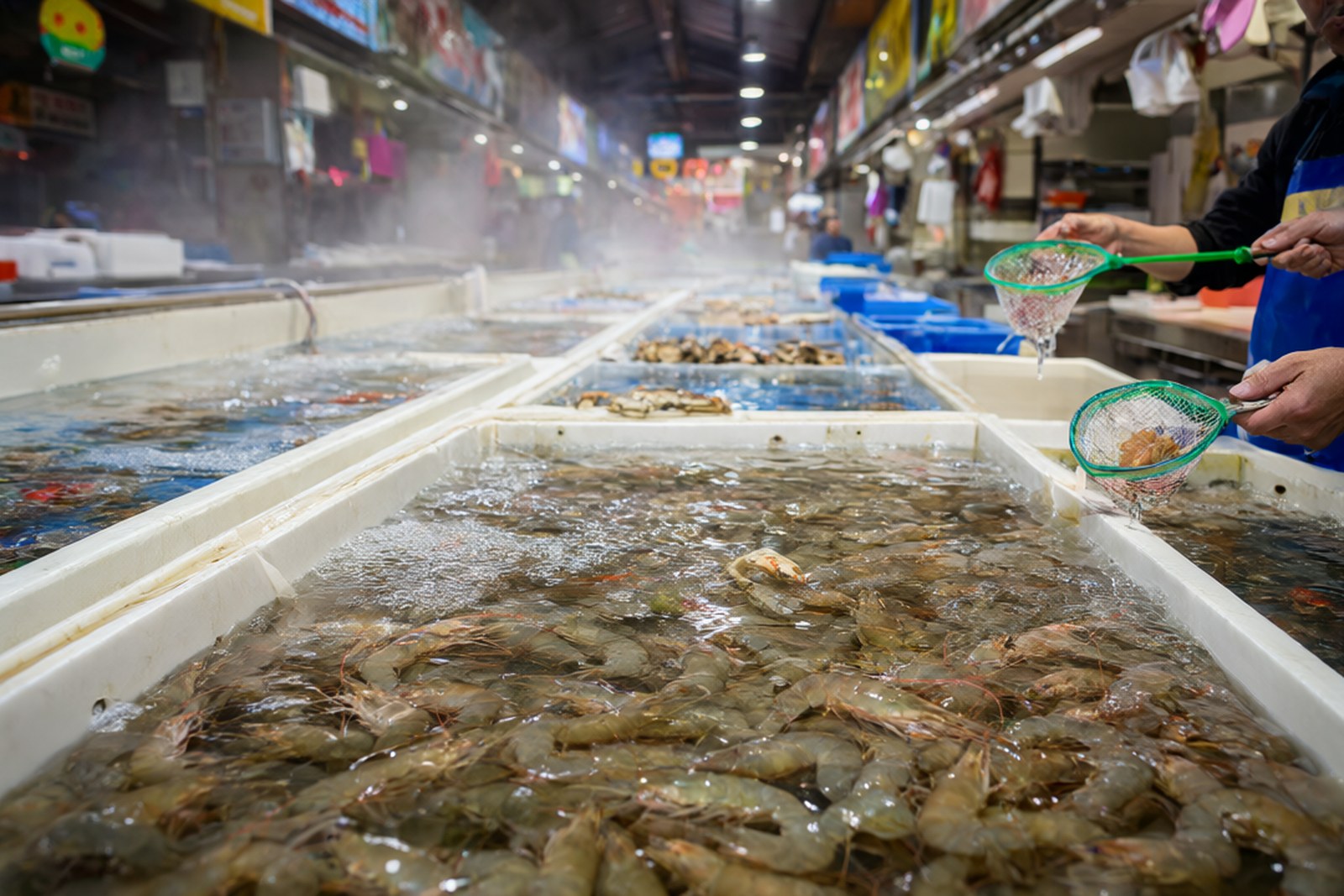
The First Market of 三亚 Sānyà Sanya – 三亚市第一农贸市场 Sānyà Shì Dì-yī Nóngmào Shìchǎng, the Sanya No. 1 Farmers’ Market – is where the city’s signature meal is not cooked but bought. Sanya is a coastal city at the southern tip of Hainan, an island province of southern China, and the market stands at No. 155 Xinjian Street in the old-town blocks of Tianya District, a short walk from the bay. The meal it anchors is a transaction rather than a dish: you walk the seafood hall, pick grouper, mantis shrimp and mango clams alive out of aerated tanks, pay by the catty at the stall, carry the bag across to a processing shop on the streets behind the market, and pay a posted fee by weight and method to have it cooked. Buy, weigh, settle, cook – four steps, and every one of them has, at some point in the last fifteen years, been the subject of a government regulation.
The market is old by the standards of a young city, and its name is a number. The encyclopedic accounts, drawing on Sanya Daily reporting, take its first form to the mid-to-late 1970s, when it was the only produce market the town had and people simply called it the Sanya farmers’ market; in 1989, as a second market, a third and the Ganghua market opened in turn, it was formally named the No. 1 Farmers’ Market – the number a sequence, though the market is also counted the oldest and the largest in the urban area. The same accounts credit it as the first farmers’ market in Hainan province to be upgraded, at the end of 2007. The name has since outlived the building: the old structure was torn down in the years after 2012 and the trade spent a long stretch in temporary quarters before it came home.
It came home on 9 January 2025, after a five-month refit the city government reported at a cost of more than 20 million yuan: 660 stalls on two floors, the ground floor given to the seafood hall – centrally chilled tanks – and to fruit, vegetables and meat. Every stall keeps an IoT traceable scale, the entrance screens post reference prices, inspection results and merchant information, each trader answers for a credit score under a one-household-one-code scheme, and in the run-up to the reopening more than fifty merchants signed integrity pledges that include draining the seawater off the seafood before it is weighed – the figures and the commitments carried, with attribution, from the city government’s own reporting of the reopening. The footfall is municipal-scale: the city government’s January 2025 figure put ordinary-day attendance above 50,000 people, and in the peak tourist season it runs visibly higher – how much higher the guidebooks disagree about, so no peak figure is printed here.
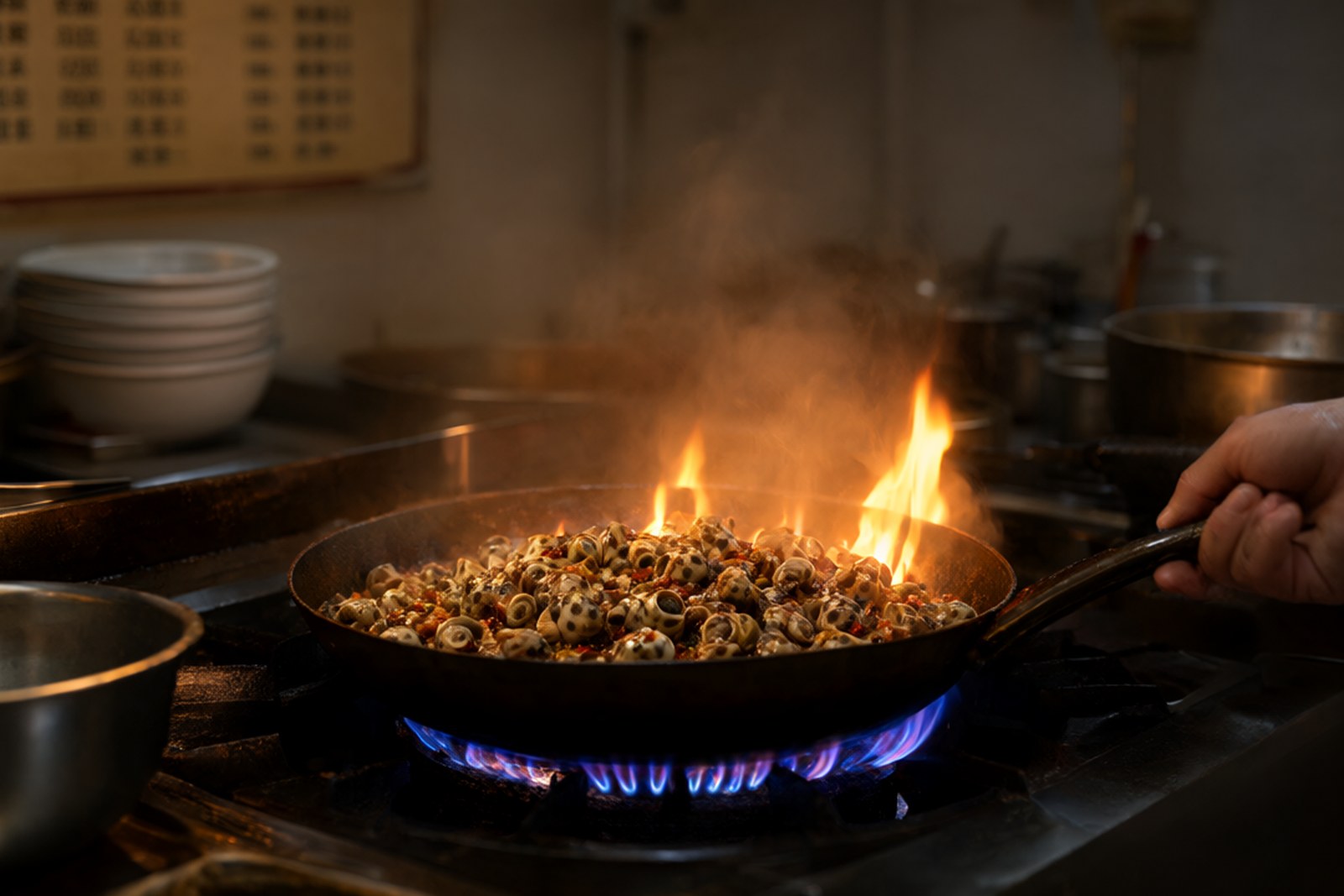
The mechanics are simple and posted. The seafood is bought by the catty at the stall; the cooking is bought by weight and method at the processing shops that line 新民街 Xīnmín Jiē Xinmin Street and the lanes of 椰风巷 Yēfēng Xiàng Yefeng Lane and 河西路 Héxī Lù Hexi Road behind the market – roughly forty of them by the encyclopedic count, an attributed figure rather than a census. The fee list is the contract: poaching and steaming sit at the low end of the posted range, chilli stir-fries and salt-and-pepper frying in the middle, and the big pieces – a lobster, a mud crab – go by the animal; on platform and guide snapshots taken around 2026-10 the cooking fees run from roughly 10 to 15 yuan a catty for the simple methods to 20 to 30 for the fiercer ones, and some 30 to 80 by the piece for the largest shellfish, figures that fluctuate with the season and carry no city-wide standard – the seafood itself sits under government guidance and posted ceilings, while the cooking fee is a market price with only the list behind it. The cooking is home cooking of the Sichuan-Hainan kind, the chilli and salt-and-pepper methods having arrived with migrant restaurant kitchens, by the trade’s own telling; the menu answers this site’s Dongshan mutton page at a single point, the Hele mud crab of Hainan’s four famous dishes being a standard big-ticket order here. It is not a hotpot – the shops cook single woks to order – and it is not a coconut-chicken story either: the island’s two coconut-chicken pots have their own pages, and this raw material is the sea, not the bird.
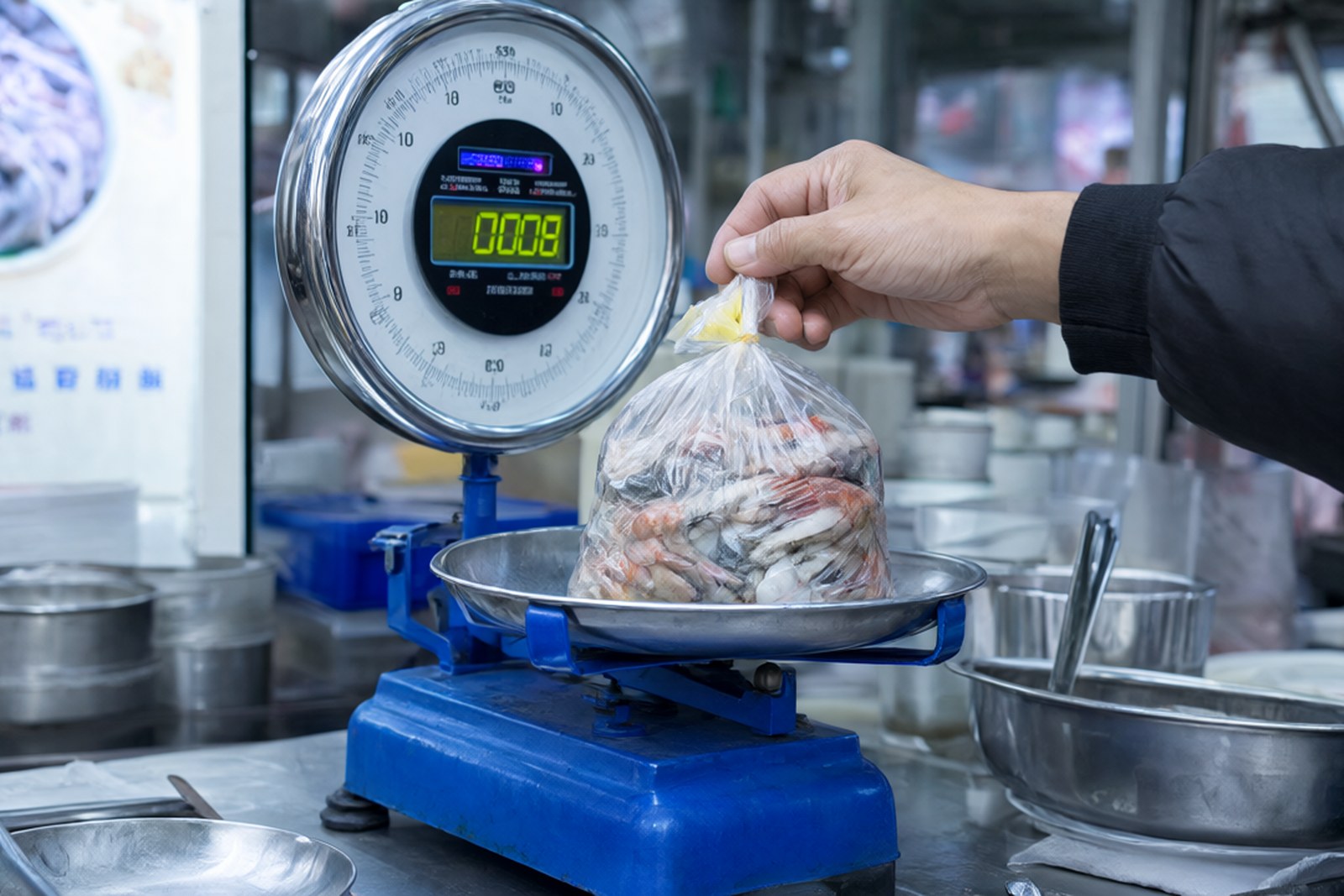
The scales are the serious part of the page. In the Spring Festival of 2012 a dispute over a seafood-restaurant bill became the country’s most talked-about consumer story, and a trade that had lived on word of mouth carried the discredit. What followed is the most fully documented chain in this page’s record. In February 2012 the city government adopted a rectification plan that put fifteen departments – industry and commerce, price, tourism and public security among them – on the same job for three months: a nine-point deduction system that could push a stall out of the market, licence revocation described as one-time death for the gravest cases, unified use of quality-inspected anti-cheat electronic scales, one item one label one price, an average mark-up rate rule for seafood, mandatory electronic ordering and price-display systems linked to the regulators, and pursuit of the kickbacks taxi drivers and guides took for delivering customers. By late April 2012 all 201 licensed seafood stalls in the city had been fitted with the anti-cheat scales, a week ahead of the deadline, and twelve had already been prosecuted for using faulty measuring instruments. By January 2013, 157 stalls ran the electronic ordering system and 168 had the full set – ordering, public price display and card payment – before that year’s Spring Festival, with operators caught overcharging struck off and their shareholders and principals barred from the trade for three years. By October 2013 the holiday reporting could describe the routine that holds today: clearly marked prices, water drained before weighing, and screens showing the government ceiling beside the shop’s own price. The fair-scale at the gate, where any buyer may re-weigh a purchase for nothing, is the standing monument to that winter.
Words and Names
第一市场 Dì-yī Shìchǎng is the First Market, short for 三亚市第一农贸市场, the Sanya No. 1 Farmers’ Market – the number dates from 1989 and is a sequence, not a ranking. The market’s address is No. 155 Xinjian Street in 天涯区 Tiānyá Qū Tianya District; Xinmin Street is the processing-shop street at the market’s west side and is not the market’s address. 公平秤 gōngpíng chèng is the fair-scale, the public check-weighing scale at the gate; 物联网溯源秤 is an IoT traceable scale, one registered to a named stall; 加工费 jiāgōngfèi is the cooking fee, paid by the catty or by the piece; 来料加工 láiliào jiāgōng is the bring-your-own-seafood service itself. At the counter, 白灼 báizhuó is poaching, 清蒸 qīngzhēng steaming, 椒盐 jiāoyán salt-and-pepper frying and 辣炒 làchǎo stir-frying with chilli; 和乐蟹 Hélè xiè is the Hele mud crab, 濑尿虾 làiniào xiā the mantis shrimp, 芒果螺 mángguǒ luó the mango clam and 石斑鱼 shíbān yú the grouper. The site’s single-creature seafood pages keep their own recipes; this page keeps the transaction.
What the Locals Know
Work the transaction in its own order and the protections stack. Weigh nothing you have not watched being weighed; ask the stall to drain the bags before the scale, which is now a signed pledge as much as a habit; keep the receipt; and if a number looks wrong, carry the bag back to the fair-scale at the entrance and re-weigh it in front of the market. The guides agree on one warning and this page passes it on attributed rather than as a verdict: touts work the streets around the market for the processing shops, and the consistent advice is not to follow one but to read the posted fee lists and compare for yourself. After about five in the evening the seafood prices soften as the day’s stock is cleared, by the same guides’ account, though the choice thins with them. Fees and prices move with the season on a 2026-10 snapshot that fluctuates, so no single price is printed here.
A day that makes sense of the page puts the hall in the late afternoon, the cooking on the street behind it and the walk home past the fair-scale. What the record refuses is stated plainly: no exact count of processing shops beyond the attributed roughly forty, no turnover figures, and no claim that Sanya’s seafood is the country’s cheapest or freshest – those are slogans, not records; no pre-2012 scandal anecdotes, which live in word of mouth and not in documents; no details of the commercial complex once discussed for the site, only the fact of the years in temporary quarters; and no recommendation of any single shop. The noodle shop at the market gate has its own article on this site – a bowl of sweet broth and ten toppings – and this piece is about everything that happens behind that bowl: the seafood hall itself, the scales, the fee list next door, and the fifteen government departments that rebuilt this one meal’s reputation after the winter of 2012.
flowcloud would say that the First Market of Sanya is a transaction with a history – pick the grouper, mantis shrimp and mango clams alive in the seafood hall of a market named by sequence number in 1989, carry them to the processing shops of Xinmin Street, and pay a posted fee by the catty – a meal rebuilt on trust after the winter of 2012, when fifteen departments, 201 anti-cheat scales, electronic ordering and government price ceilings turned the city’s most complained-about bill into its most inspected one, and the market itself reopened in January 2025, 660 stalls deep, every scale traceable and every price posted.
Where to find it: the First Market – the Sanya No. 1 Farmers’ Market – at No. 155 Xinjian Street, Tianya District, Sanya, Hainan, its seafood hall on the ground floor and the processing shops of Xinmin Street, Yefeng Lane and Hexi Road immediately behind; the name is a 1989 sequence number rather than a ranking, ordinary-day footfall topped 50,000 on the city government’s January 2025 figure and runs visibly higher in season, and the seafood pages elsewhere on this site keep their own single creatures; cooking fees run from roughly 10 to 15 yuan a catty for poaching and steaming to 20 to 30 for the fiercer methods and some 30 to 80 by the piece for lobsters and crabs, on 2026-10 snapshots that fluctuate; the fair-scale at the gate re-weighs any purchase for nothing, the touting warning stands attributed, and no single shop is recommended here.