
豆花饭 Dòuhuā fàn, tofu pudding with rice, is the district’s everyday institution rather than its showpiece, and all the more telling for that. It is the meal working people eat when they are not thinking about eating – quick, hot, restorative, cheap – and its persistence across the district says more about the local table than any banquet dish could. There is no ceremony to it: a bowl of soft tofu, a mound of steamed rice, a tray of condiments, and however many minutes a working day allows. Yet the difference between a good douhua shop and an indifferent one is as sharp as the difference between kitchens of any famous cuisine.
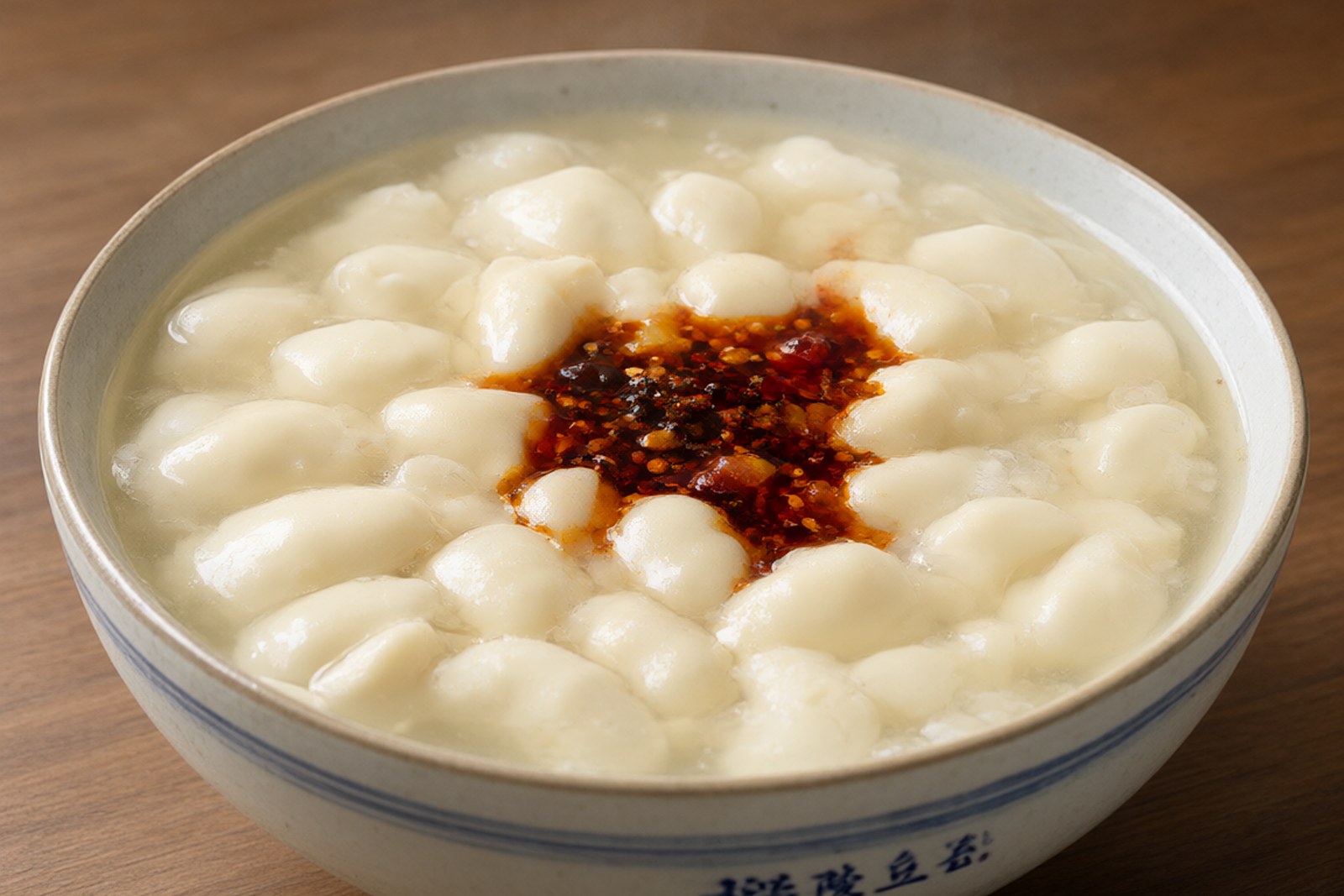
The douhua itself is made soft, in the 活水 huóshuǐ, living-water style – a manner of setting the curd so that it keeps the water of its making and holds a wobble rather than a slice. It is ladled gently, never cut roughly, straight from the day’s batch into the bowl: still warm, barely holding together, trembling on the journey from tub to table. A proper living-water douhua yields at the touch of the chopstick and dissolves against the rice, and the whole dish is arranged around that softness – nothing else on the table is allowed to be loud enough to bully it.
The rice comes from the 甑子 zèngzi, the slatted wooden steamer that gives cooked rice a dry, separate grain and a faint smell of wood that metal pots never manage. Between the two sits the diner’s own work: a tray of condiments – chili oil, garlic, scallion, crisp fried soy beans, pickles – that every customer mixes personally, in whatever proportion the moment demands. The finishing touch is ritual across the district: a ladle of oil so hot it hisses when it hits the dish, waking the garlic and the chili into a dipping sauce built bowl by bowl by the person who is about to eat it.
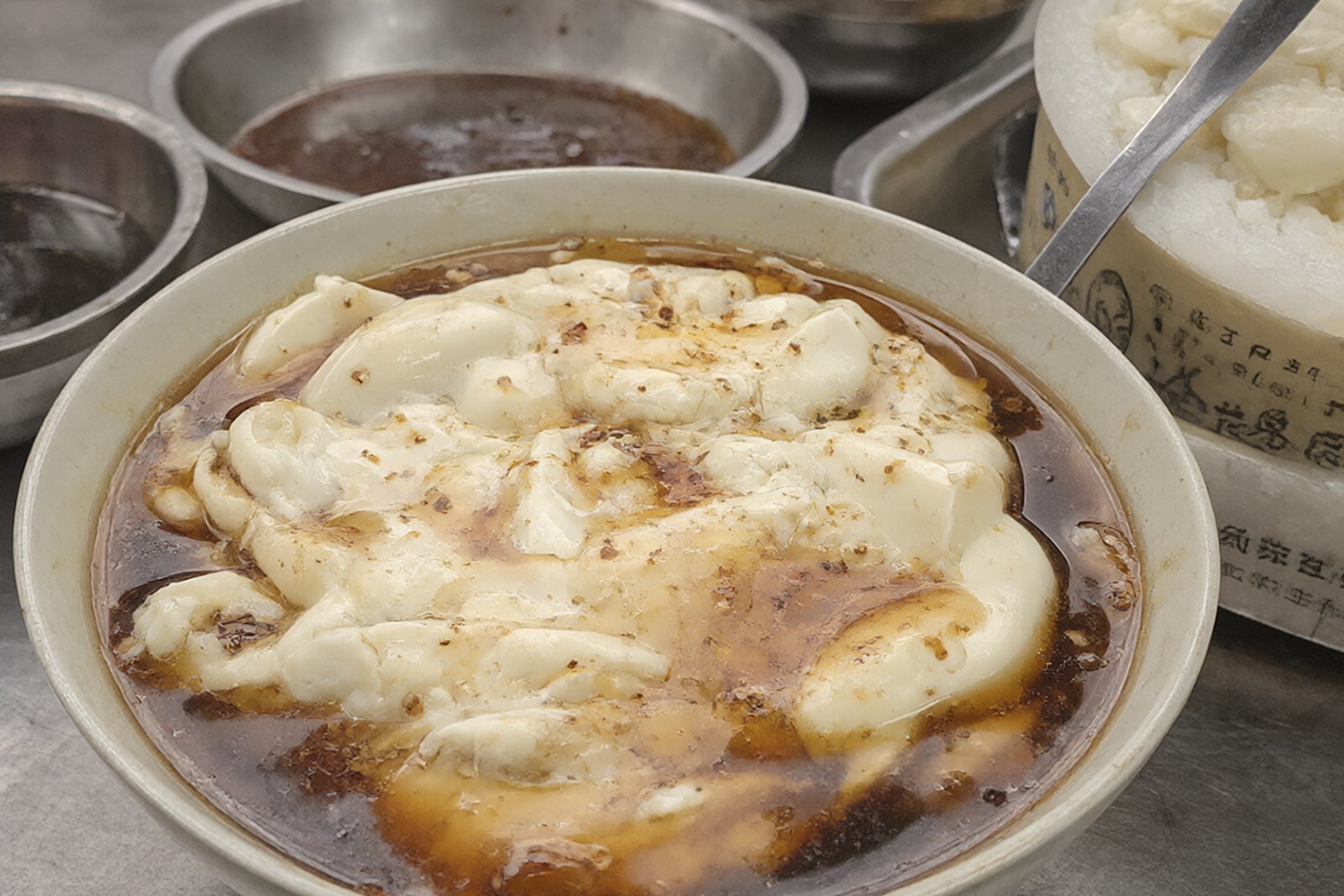
The hours tell you what the dish is. Shops do a steady trade from early morning, when the first bowl of douhua goes with rice as breakfast for the market porters and the early shift, through noon, when the tables fill and empty in turns, and into the evening, when the last bowls are eaten standing by the counter. The meal stays cheap enough to be a daily habit rather than an occasion – a price bracket that is part of the dish’s definition – and a local who eats douhua rice five times a week is not being lazy but simply being local. A local legend even attaches a wandering Tang emperor to the dish, a story the district tells with a straight face; the plainer truth is that a working river town needed exactly this kind of fast, hot, restorative plate, and has needed it for as long as anyone can remember.
The discipline of this page is worth stating plainly. The record consulted names the living-water style, the zengzi rice, the five condiments with the hissing ladle of hot oil, the morning-to-evening trade, the daily-habit price level and the Tang-emperor legend; it does not name a founding shop, a posted price in figures, any founding year or a single address, and none is invented here. The honest page describes a district-wide habit rather than one celebrated shop, and lets the busiest tub on the street be the recommendation.
Words and Names
豆花饭 Dòuhuā fàn, douhua rice, tofu pudding with steamed rice and a self-mixed condiment dish, the district’s everyday meal from breakfast to night. 活水豆花 huóshuǐ dòuhuā, living-water douhua, the soft style of setting the curd so it holds its water and wobbles, ladled gently from the day’s batch. 甑子 zèngzi, the slatted wooden steamer that gives the rice its dry, separate grain and wood-smelling finish. 蘸水 zhànshuǐ, the dipping dish each diner mixes personally from chili oil, garlic, scallion, crisp soy beans and pickles, finished with a ladle of hissing hot oil. The record names no founding shop, year or figure price, and none is invented here.
What the Locals Know
The first thing locals know is the wobble. Douhua should tremble – a firm, rubbery pudding means the curd was set hard to survive careless handling, and a shop that serves hard douhua has already told you everything about the rest of its cooking. The batch is the day’s business: it is at its best from the morning onwards, and the good shops sell what they make and stop, which is why the afternoon tub being empty is a sign of quality rather than a disappointment.
The second thing locals know is the mixing. The condiment dish is personal – some start from chili oil and garlic, some load crisp soy beans and pickles first, and the hiss of the hot oil should be heard at the table, not in the kitchen, because the sauce dies if the oil is poured early. Locals judge a shop by exactly this moment: a proper ladle of oil, hot enough to crackle, waking a dish the diner has built to their own taste. Then the method: a piece of douhua resting on a pinch of rice, dipped, and eaten in one motion – a rhythm the regulars keep without thinking.
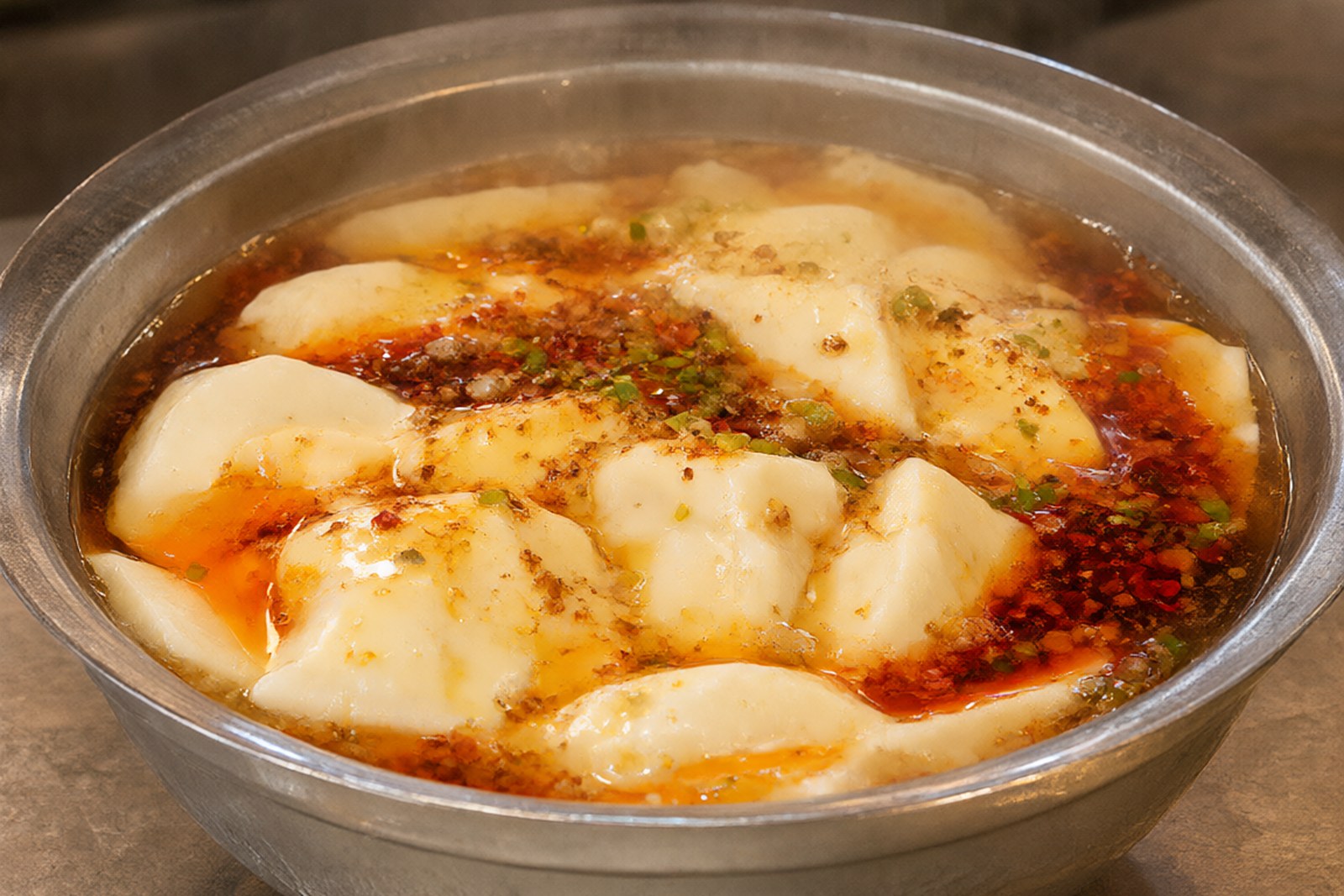
flowcloud would say that douhua rice is the district’s true everyday institution – living-water tofu pudding ladled trembling from the day’s batch, wooden-steamer rice, and a condiment dish each diner mixes personally and finishes with a hissing ladle of hot oil – cheap enough to be a habit and eaten from morning to night, the fast hot restorative plate a working river town has always needed, whatever the Tang-emperor legend says, with no founding shop or figure price on the record and none invented. All checked October 2026.
Where to find it: douhua rice shops run through every working street of 涪陵区 Fúlíng Qū, Fuling District, whose seat stands at the confluence of the Wujiang and the Yangtze downstream of Chongqing – densest around the morning markets, the bus stations and the riverside lanes, with a wooden tub visible from the door in the classic ones. The trade runs from early morning to the evening bowls, and the busiest tub on the street at breakfast hour is the practical guide. Reach the district seat by frequent rail and road connections from Chongqing. No specific shop, address or posted price is named on the public record consulted. All checked October 2026.