
油醪糟 Yóu láozāo, sweet oil fermented rice, is Fuling’s own dessert, and the story on record gives it a date: the Spring Festival of 1799, when a hurried cook, caught short of rice-ball dough while guests waited, simmered the household’s fermented rice with eggs and the fillings meant for the balls – and the guests liked the accident better than the plan they had come for. Whatever the truth behind the tale, the dish that survived it is nothing like the thin sweet soup other provinces call laozao. Fuling’s version is a rich, almost baroque confection, the kind of thing a household produces to say that a guest is honoured.
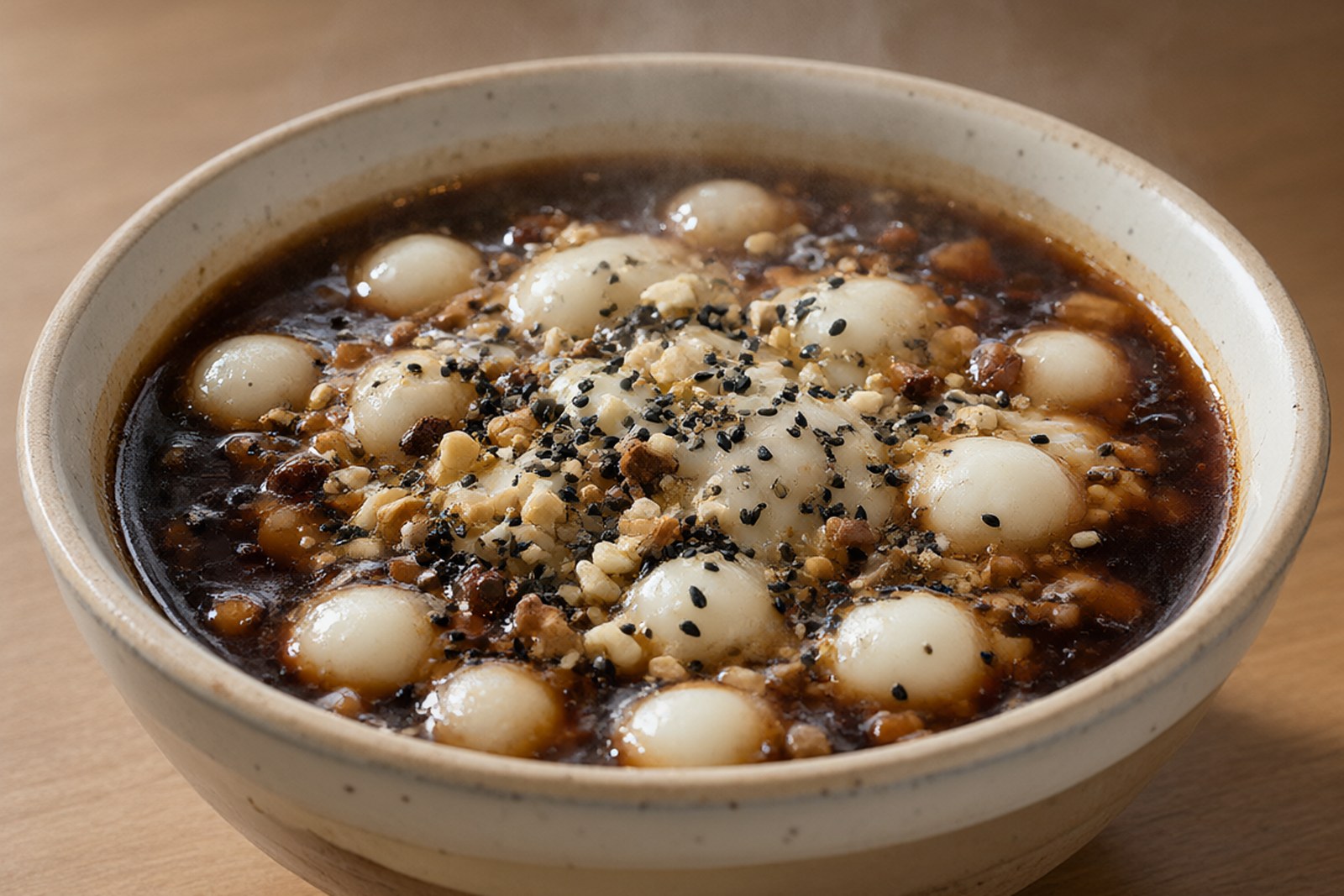
The real thing is built slowly, and the ingredient list reads like a festival pantry. A base of 醪糟 láozāo, fermented glutinous rice, is fried in pork leaf-lard – the dish’s whole point is in that word 油油, oil, which most laozao never earns – together with black sesame, candied tangerine peel, walnuts, peanuts, honeyed dates, goji berries and both brown and rock sugar. The mixture is then simmered for a couple of hours, until the kitchen smells of lard and rice wine together and the separate ingredients have melted into one dark, glossy, spoonable mass. Households that keep a batch on hand guard it the way other kitchens guard a good stock.
What turns the preserved base into a served dish is the finish, done to order: the laozao is boiled up fresh with small glutinous rice balls – tiny handmade spheres, not the shop-bought kind – and a poached egg slipped in at the last minute. The bowl that arrives is rich, warm and faintly boozy, the wine of the ferment still audible under the sweetness, the lard carrying the flavour of the nuts and peel across the tongue. It is breakfast on a festival morning, a nightcap on a winter night, and always the thing set before a guest whose visit matters.
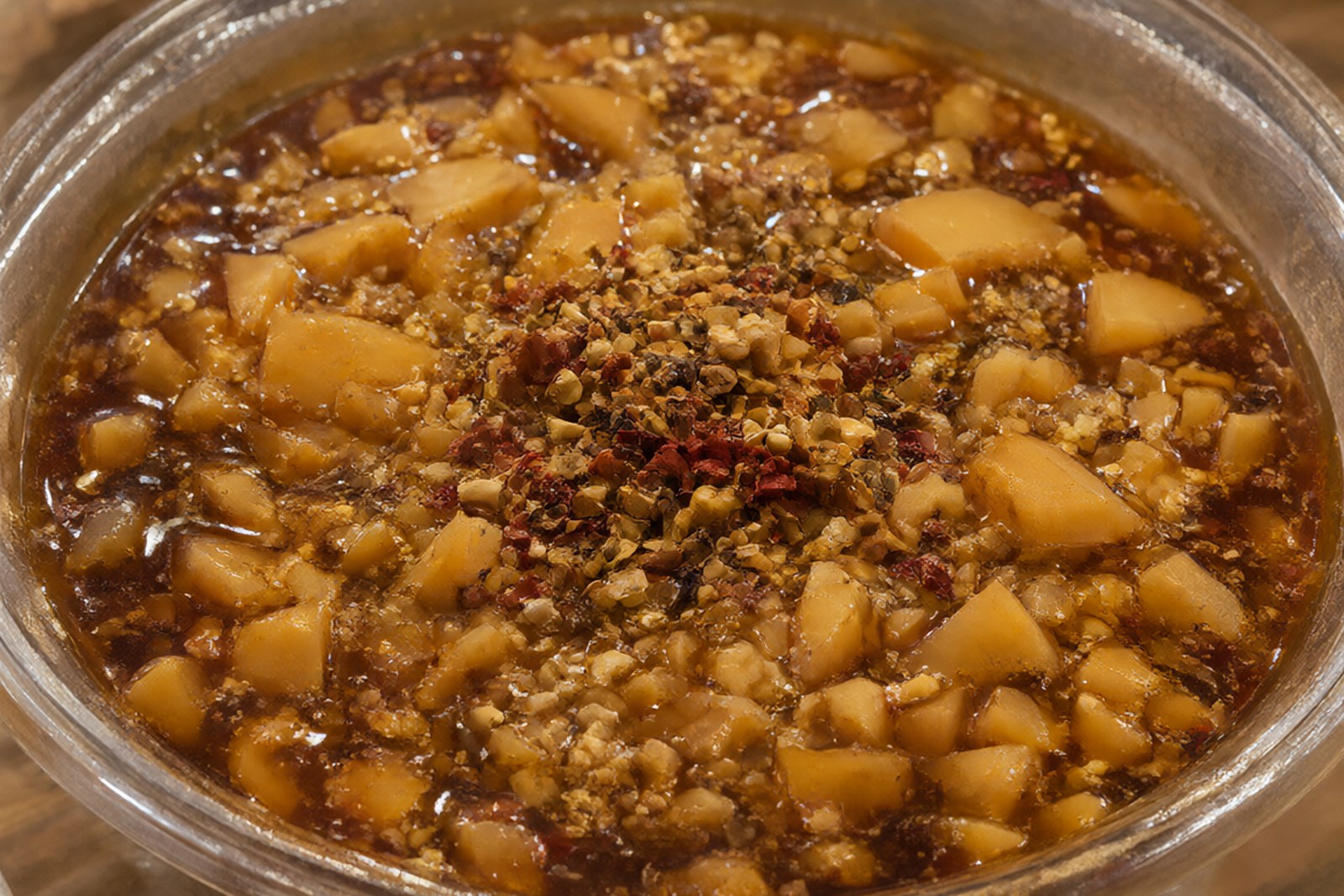
The dish’s formal standing matches its domestic one. It is a listed item of intangible cultural heritage, and it has been honoured on Chongqing’s 渝味360碗 Yúwèi sānbǎi liùshí wǎn, the Yuwei 360 bowls, as a pick for cultural value – recognition that it is less a menu item than a piece of the district’s social fabric, the taste of hospitality itself. In the old streets it is still made in household kitchens for festival tables, and the cooks who make it properly are sought out the way a district seeks out its best noodle hands: quietly, by word of mouth, for batches that never reach a signboard.
The discipline of this page is worth stating plainly. The record consulted names the 1799 Spring Festival origin story, the full ingredient list, the two-hour simmer, the finish of rice balls and poached egg, the heritage listing and the Yuwei 360 cultural-value honour; it does not name a founding shop, a posted price, a current maker’s address or any figure beyond the date on record, and none is invented here. The honest page describes a household craft rather than a restaurant trade, and lets the distinction stand.
Words and Names
油醪糟 Yóu láozāo, sweet oil fermented rice, the district’s festive dessert: a laozao base fried in pork leaf-lard with black sesame, candied tangerine peel, walnuts, peanuts, honeyed dates, goji berries and both brown and rock sugar, simmered for a couple of hours, then finished to order with small glutinous rice balls and a poached egg. 醪糟 láozāo, fermented glutinous rice, the sweet boozy base of the dish. 汤圆 tāngyuán, glutinous rice balls, here the small handmade kind. 渝味360碗 Yúwèi sānbǎi liùshí wǎn, the Yuwei 360 bowls, Chongqing’s list of signature dishes on which this is honoured for cultural value. The record names no founding shop or figure price, and none is invented here.
What the Locals Know
The first thing locals know is that the lard is the test. A lazy version cuts the oil or substitutes it, and the difference is immediate: proper 油醪糟 coats the spoon and carries a lard-and-wine perfume that no leaner version can counterfeit, while a thin, watery bowl is a shop that did not want to spend the morning on the simmer. The two-hour cook is not decoration – it is what makes the separate nuts, peel and sugar into one thing – and regulars can taste the shortcut at the first spoonful.
The second thing locals know is the occasion. This is a dish of arrivals: a guest from far away, a daughter’s family at the festival, a neighbour home after years away – the bowl is cooked because the visit matters, not because the hour is mealtime. Locals also know the serving order: the rice balls and the egg go in last and fresh, so a good kitchen finishes each bowl individually rather than holding a pot. And they know it is at its best on the coldest nights, when the booziness arrives as warmth.
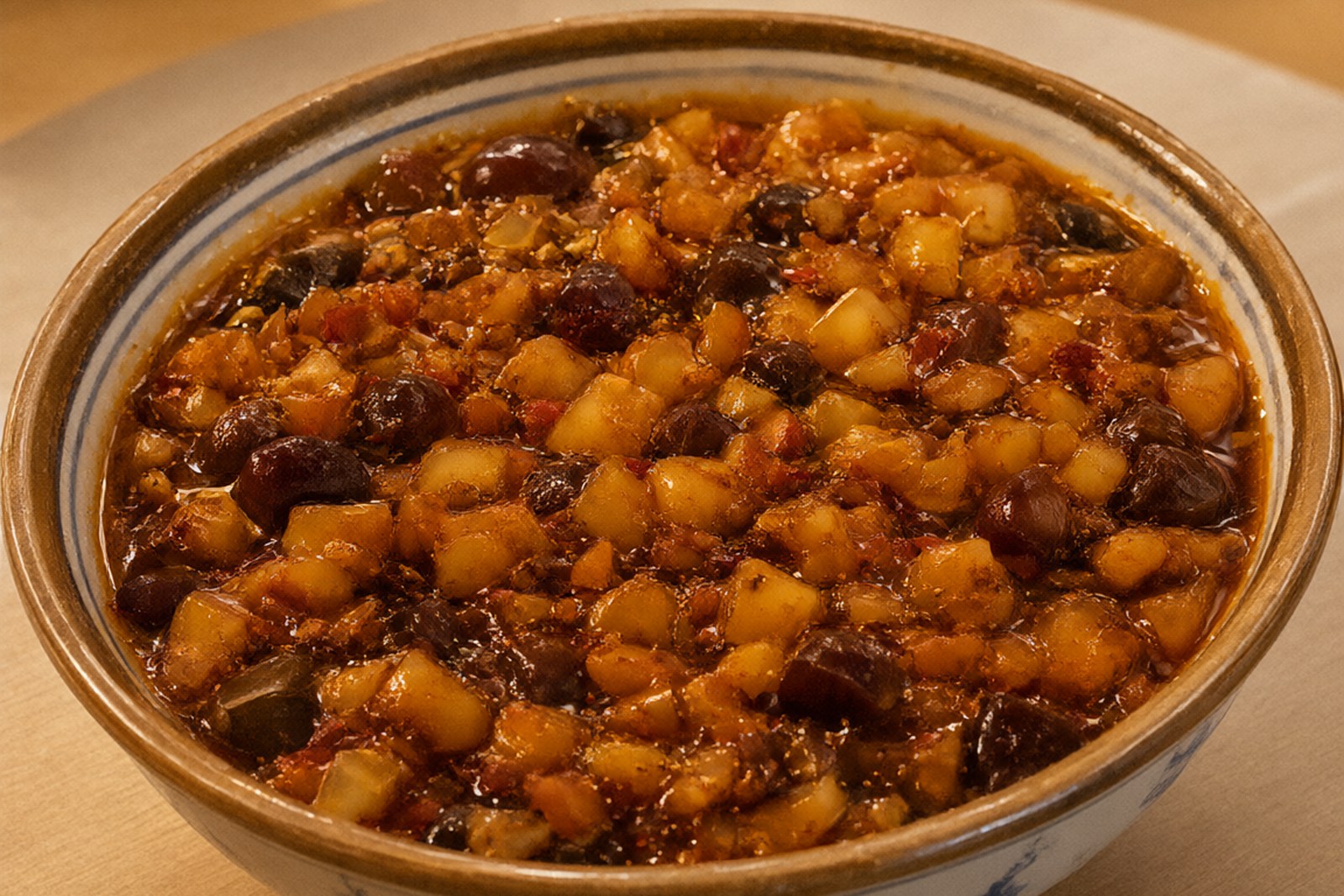
flowcloud would say that Fuling’s sweet oil fermented rice is the district’s highest form of hospitality – a fermented-rice base fried in pork leaf-lard with sesame, candied tangerine peel, walnuts, peanuts, honeyed dates, goji and two sugars, simmered for hours, then finished to order with small rice balls and a poached egg – an accident of a hurried cook at the Spring Festival of 1799 that became a listed intangible heritage and a Yuwei 360 cultural-value pick, with no founding shop or figure price on the record and none invented. All checked October 2026.
Where to find it: the dish is a household craft of 涪陵区 Fúlíng Qū, Fuling District, whose seat stands at the Wujiang’s confluence with the Yangtze downstream of Chongqing – at its best in home kitchens during festival seasons, and served by old-street snack shops and congee houses in and around the district seat, most reliably in the cold months when demand for the rich version is highest. Reach the district seat by frequent rail and road connections from Chongqing and ask for the version finished with rice balls and egg. No specific shop, address or posted price is named on the public record consulted. All checked October 2026.