
The Pickle That Conquered the World’s Tables
榨菜 Zhàcài, Fuling zhacai, is the pickle that turned a river district into a household name across China, and it begins with a vegetable that hardly exists outside the upper Yangtze. The 青菜头 qīngcàitóu, a knobbly stem mustard, is sown in autumn and cut in the weeks before spring, when the hillsides above the river are at their coldest and dampest. The bulbous stem swells through the winter exactly because the climate of the gorges suits it – thick fog, thin sun, a chill that never quite hardens into frost – and the same climate that grows it is the one that preserves it. No other pickle in the Chinese repertoire is so completely a product of one stretch of river.
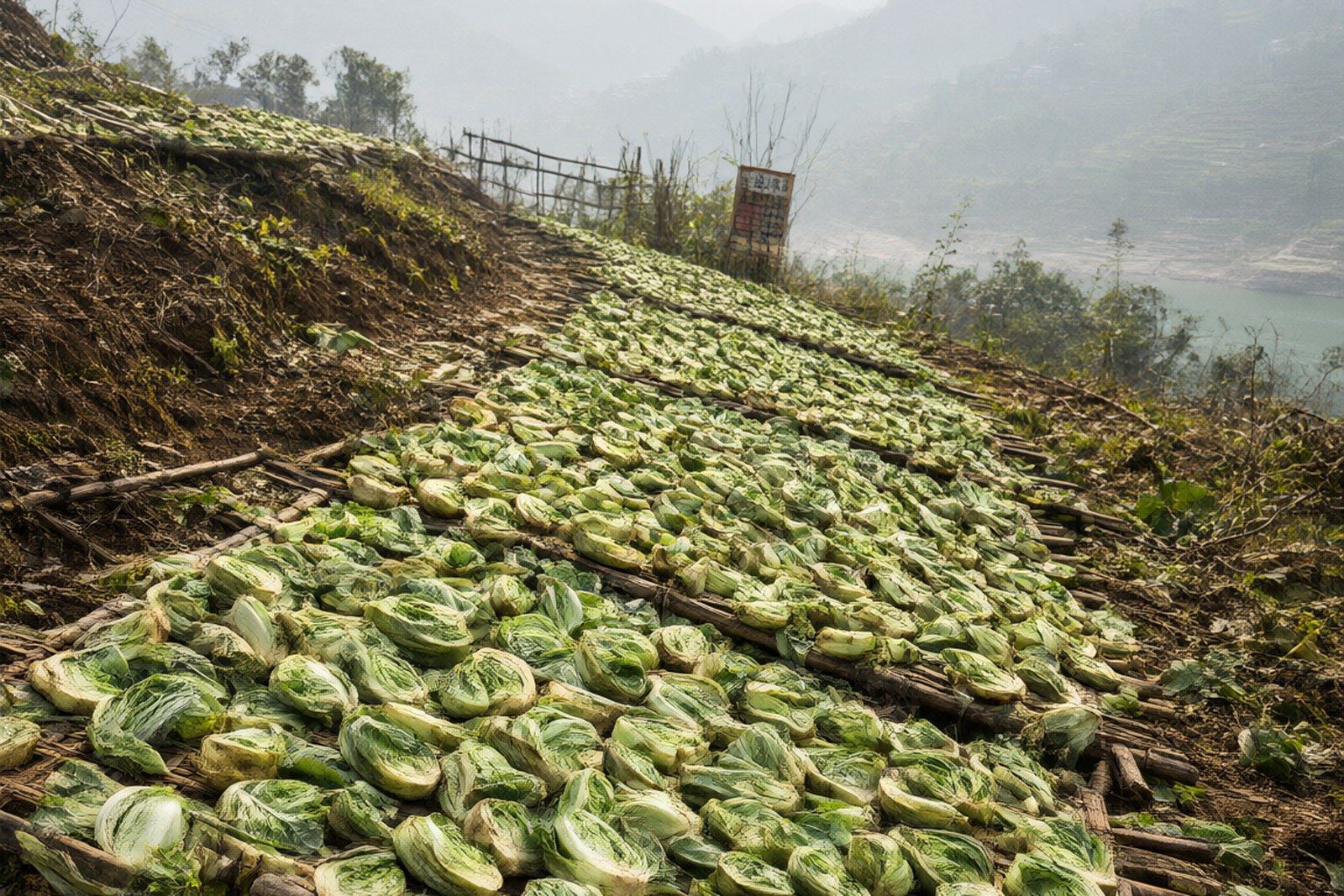
The traditional craft starts with a knife and a length of rope. The heads are peeled and strung up through the coldest weeks, hung in the open air where the mountain wind can work on them, and left to dry for some twenty days. This is the wind-dehydration step – 风脱水 fēng tuōshuǐ, wind-wilting – that gives the best grade its name, and it matters more than any later stage: the slow drying in cold moving air concentrates the flesh, firms the texture and takes out the water that would otherwise rot the pickle instead of fermenting it. A warm-room shortcut exists, and the trade uses it, but the grade that carries the district’s reputation is the one that hangs outside.
Then come the saltings and the pressings – three rounds of each, salt worked into the wilted heads, the mass pressed to drive out the brine, salted again, pressed again. The name itself records the step: zhacai means pressed vegetable, and the pressing is what separates a proper pickle from a salted one. After the third round the heads are mixed with spice, packed hard into clay jars and sealed for at least 289 days of ferment. What comes out at the end is crisp, briny, faintly sweet, with a texture no fresh vegetable holds – a clean snap under the tooth that the whole trade is judged by.
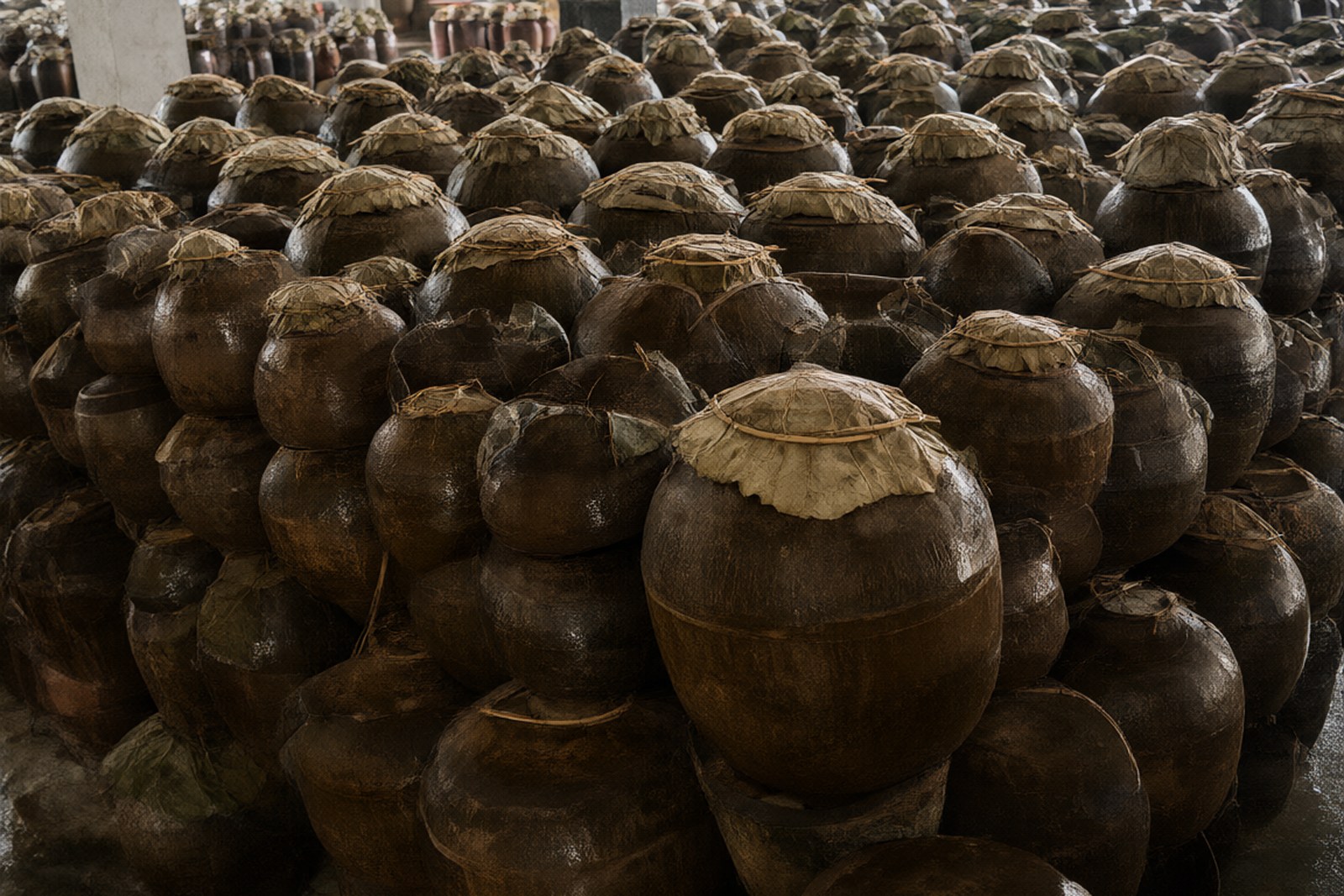
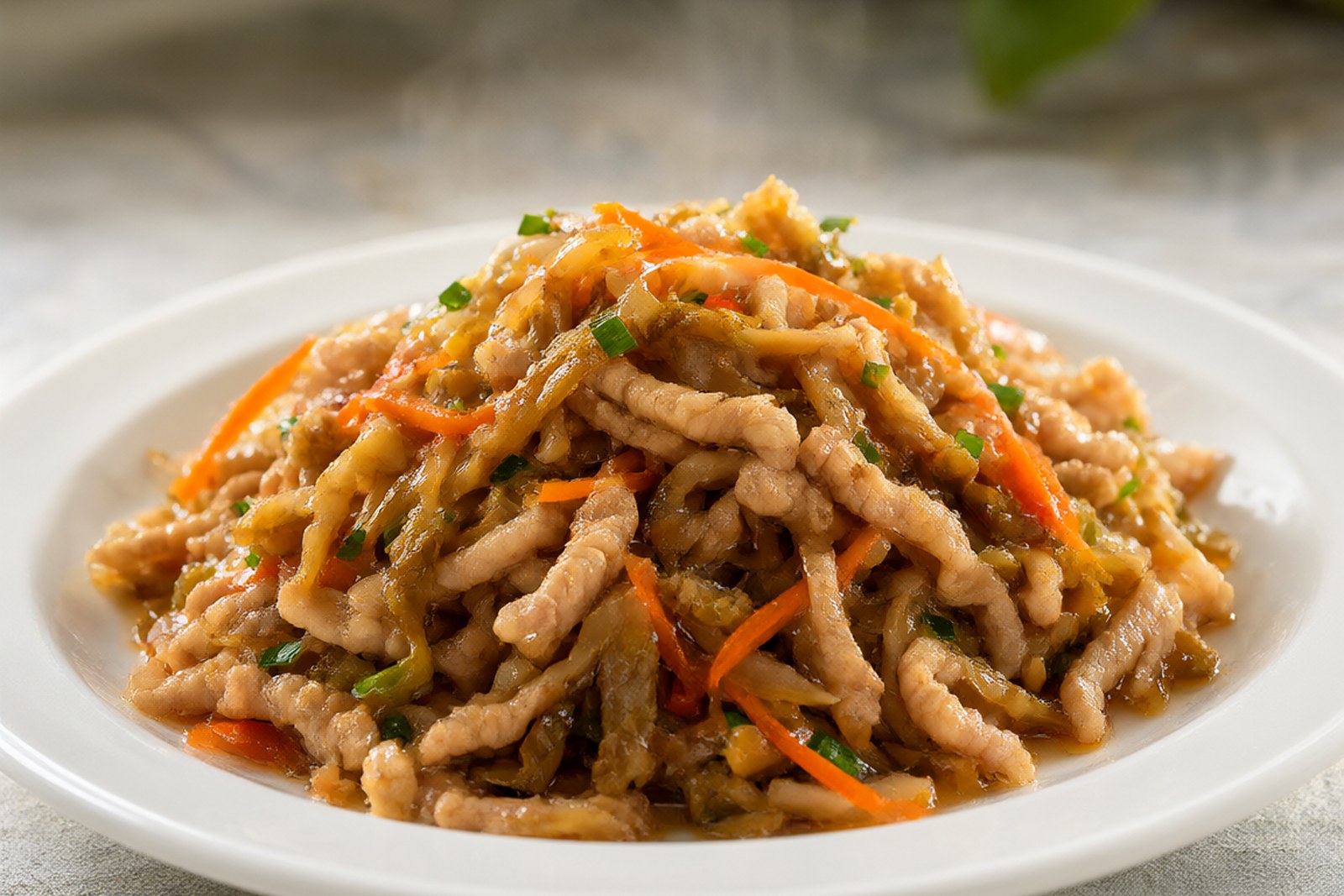
A registered geographical-indication product with more than a century of craft behind it, zhacai is at once the district’s signature industry and the seasoning half of half its cooking. In the home kitchen the pickle is not only a side dish but an ingredient: shredded into soups, steamed with pork, folded into dumpling filling, stir-fried with beans or river shrimp, its salt and umami doing the work that other cuisines expect from cured meat or aged cheese. The farmers of the surrounding townships plant the mustard in the slack weeks between rice seasons, the traders buy it green off the slopes, and the whole winter economy of the district once turned on the hanging of the ropes.
The discipline of this page is worth stating plainly. The record consulted names the autumn sowing, the twenty days of wind-drying, the three saltings and three pressings, the clay jars, the 289-day minimum ferment and the geographical-indication status; it does not name a founding family, a founding year, a posted price or any single factory address, and none is invented here. The honest page describes a craft and a crop that belong to the whole district, rather than one celebrated house.
Words and Names
榨菜 Zhàcài, zhacai, pressed vegetable – the name comes from the pressing stage – the crisp briny mustard pickle that is the district’s signature product, fermented in sealed clay jars for at least 289 days after three saltings and three pressings. 青菜头 qīngcàitóu, the knobbly stem mustard sown in autumn and cut in the weeks before spring, the raw material of the whole craft. 风脱水 fēng tuōshuǐ, wind-dehydration, the twenty-day hanging of the peeled heads in cold mountain wind that gives the best grade its name. 三腌三榨 sān yān sān zhà, the three saltings and three pressings. The record names no founding family, year or figure price, and none is invented here.
What the Locals Know
The first thing locals know is the season. The mustard comes off the slopes in the weeks before spring, and the ropes go up in the coldest weather of the year – a warm spell during the drying is the craft’s nightmare, because wilted heads that sit damp spoil instead of curing. That is why the best pickles are talked about by their year: a cold, dry winter with a steady wind is remembered the way a good vintage is, and buyers of the top grades ask which township the heads came from before they ask anything else.
The second thing locals know is the snap. A proper zhacai bends and resists before it breaks, never slumps; a soft, over-salty or sour-smelling batch tells you the ferment went wrong or the pressing was hurried. Locals buy by texture first and flavour second, and they use the pickle the way a cook uses a seasoning rather than a side: a pinch of shreds into a bland soup, a layer under steamed pork, a handful into fried rice. A household jar is treated as a working ingredient, restocked through the year, and a guest leaving with a jar as a gift is receiving the district in its most concentrated form.
flowcloud would say that Fuling zhacai is a pickle that could only come from one stretch of the upper Yangtze – the knobbly qing cai tou cut before spring, wind-dried on ropes for some twenty days, taken through three saltings and three pressings, spiced, jarred and fermented for at least 289 days into something crisp, briny and faintly sweet – and that the pressing in the name, the geographical-indication status and the century of craft behind it are the reasons the vegetable made the district a household name, with no founding house or figure price on the record and none invented. All checked October 2026.
Where to find it: the pickle is everywhere in 涪陵区 Fúlíng Qū, Fuling District, whose seat stands on the south bank of the Yangtze downstream of Chongqing – sold in every market and supermarket in the district seat, served as the standard small dish in local restaurants, and hung on ropes through the winter in the mustard-growing townships along the river on both banks. The district seat is reached by frequent rail and road connections from Chongqing, and the winter weeks before spring are the season to see the ropes at work. No specific shop, factory address or posted price is named on the public record consulted. All checked October 2026.