
Eight Treasures Under a Lid: The Hui Covered-Bowl Tea of Changji, Xinjiang
盖碗八宝蜜意长,一盏春风话家常 Gàiwǎn bābǎo mì yì cháng, yī zhǎn chūnfēng huà jiācháng – The covered bowl’s eight treasures hold long sweetness; one cup of spring-breeze talk warms the family chat.
回族盖碗茶 Huízú gàiwǎnchá the covered-bowl tea of Changji’s Hui households is Eight Treasures tea – a lidded porcelain bowl on a saucer, packed with jujube, raisin, wolfberry, longan, walnut, rock sugar and jasmine before the boiling water goes in, the lid used to press back the fruit and sip without pouring. Refills keep coming until the treasures run dry, and a good bowl carries sweetness through an entire afternoon of talk (worth confirming the details for the winter walnut ratio, which housewives guard and guests pretend not to count). It is hospitality made drinkable, and no Changji guesthouse visit ends without one.
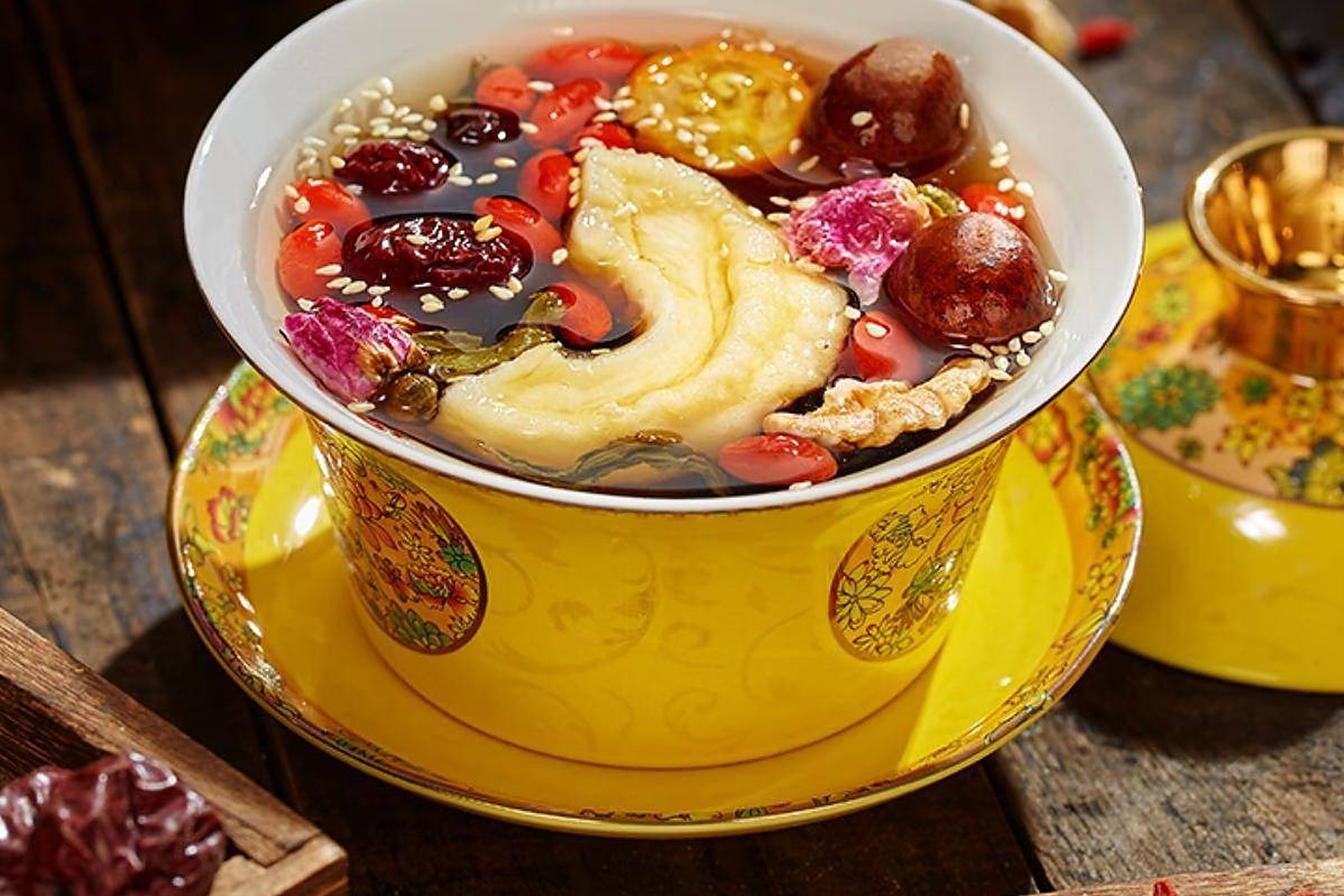
A bowl costs a few yuan wherever it is poured, the refills free. Getting there is one door: the food-street arcade off the main square pours it at the banquet stalls and tea counters, and the old-quarter teahouses keep the ceremony at its slowest – sit, lift the lid, and the water girls appear before the first sip cools.
The honest star is the ritual itself: lid as strainer, saucer as handle, refill as welcome – a tea you drink in small pressed sips for hours rather than gulps. The rock-sugar-to-fruit balance is the craft.
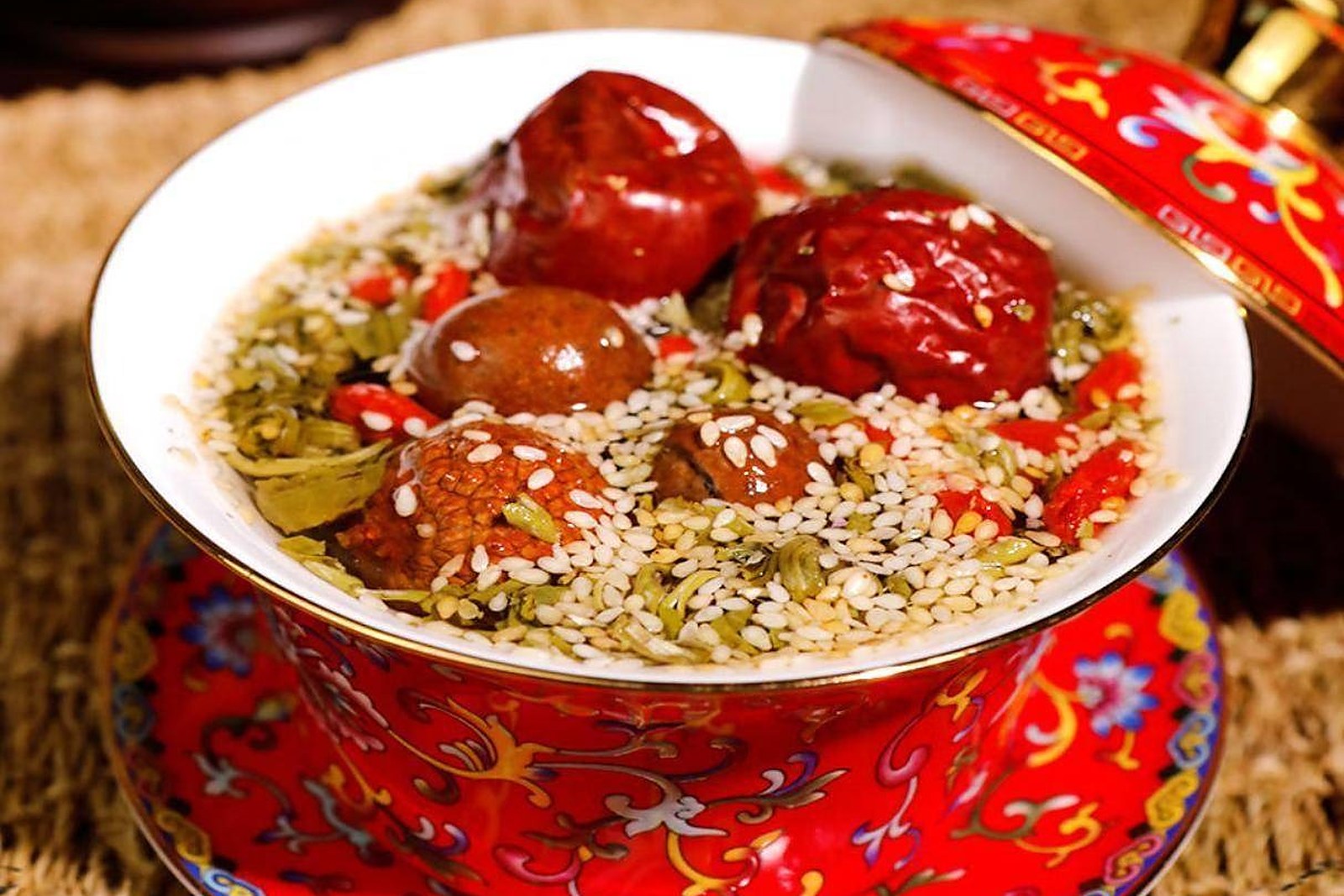
The town’s deepest habit is the afternoon stretch: tea after the noon meal, a bowl shared between two talkers, and the tradition that a guest’s bowl is never allowed to sit empty – the refill arriving before the question is finished.
Nearly every other plate on this Changji list trades a different mood on the same table: 九碗三行子 jiǔwǎn sānhángzi the nine-bowl banquet for ceremony, 回族粉汤 Huízú fěntāng the vermicelli soup for the morning, 椒麻鸡 jiāomá jī pepper-numbing chicken for the cold sharp plate, or 木垒羊肉焖饼子 mùlěi yángròu mèn bǐngzi lamb braised under pancake for the winter hearth – four more doors into the same 昌吉回族自治州 Chāngjí Huízú Zìzhìzhōu Changji Hui Autonomous Prefecture. Once the plates are planned, our Changji travel map fills the day.
Words and Names
What the Locals Know
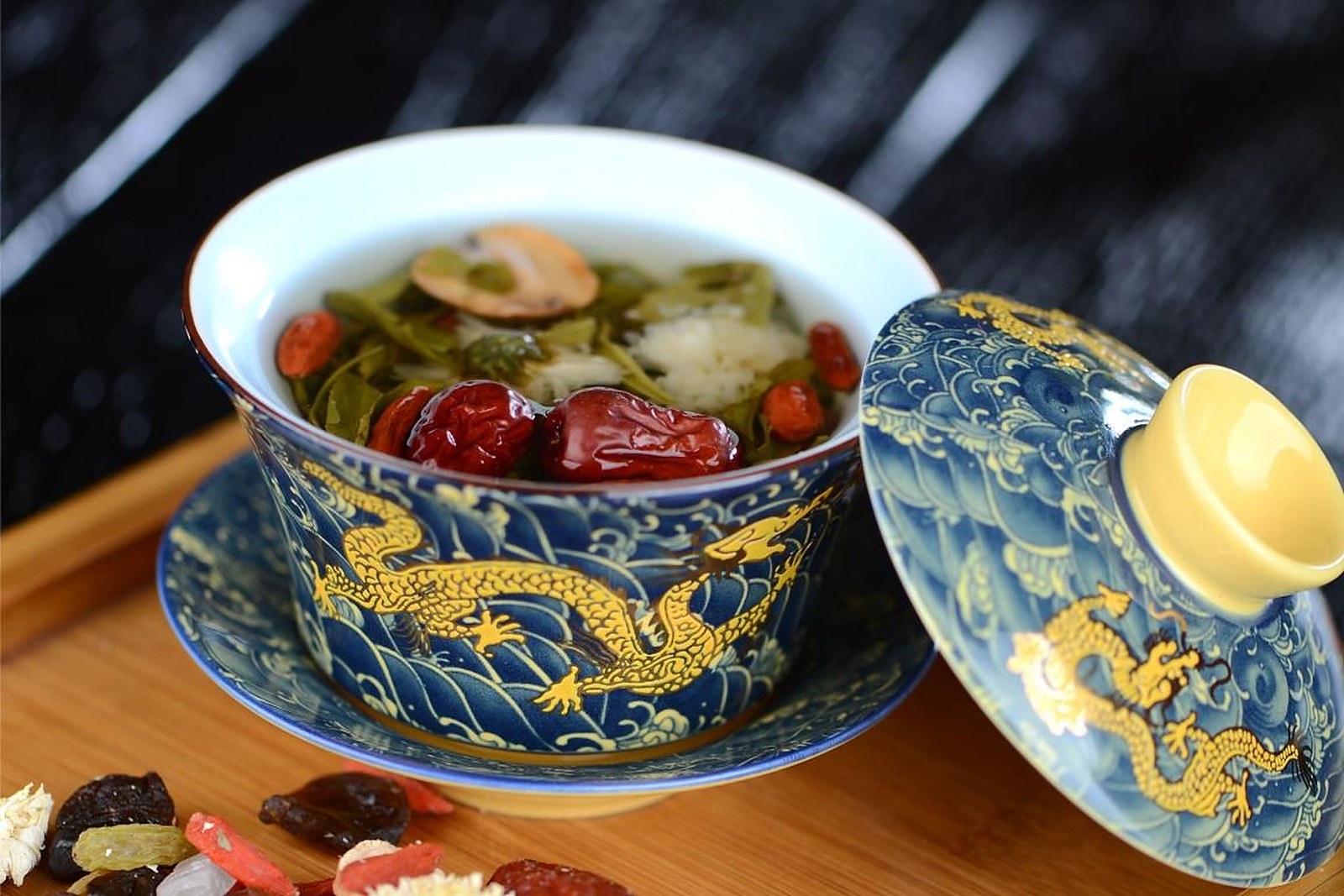
flowcloud would say the covered bowl is the prefecture’s pause button: lid up, steam out, and a whole afternoon agreed to without a word. All checked November 2026.
Where to find it: Take a table at any banquet stall in the covered food street off Changji’s main square and ask for the covered bowl, or slow down properly in the teahouses of the old quarter – the treasures are packed before your eyes, the water arrives boiling, and the refills never wait to be asked. All checked November 2026.