
Soup in an Enamel Mug: Gangzi Rou, the Marching Bowl That Stayed
一缸烟火气,暖尽戍边人 Yī gāng yānhuǒqì, nuǎn jìn shùbiān rén – One mug of fire and steam warms every frontier hand
正文:缸子肉 gāngzi ròu gangzi rou is the comfort bowl of 图木舒克市 Túmùshūkè Shì Tumushuke City – lamb chunks slow-stewed in individual enamel mugs with carrot, onion and a bay of salt, served in the dented tin the stew was built in. The dish’s pedigree is the frontier itself: Corps work crews and marching units each carried an enamel mug that did duty as cup, bowl and cooking pot, and somewhere on a cold bivouac the mug learned to stew. Today the same blue-rimmed tins line the street stalls and shopfront kitchens of the oasis, simmering in ranks over low coals, and the eating is as direct as the history: one mug, one spoon, one diner.

The method is patience in miniature. Each mug takes its ration – lamb on the bone, a carrot club, onion, the region’s yellow-fleshed potato in season – topped with water and salt, then goes onto the rack over a slow fire for hours. Nothing browns; nothing spices beyond the basics. The broth stays clear and lamb-forward, the fat rendering to a golden seal at the rim, and the vegetables cook to spoon-soft without collapsing. The enamel mug does the final work of any good pot: holds the heat to the last spoonful, so the diner at the counter is drinking the stew at the same temperature the bivouac cook intended.
Eating it is a schedule, not a stunt. The stall hands you the mug on its doily of newspaper or steel tray, a stack of naan, and brick tea; you eat the vegetables first, lift the meat from the bone with the spoon’s edge, drink the broth in stages, and finish by tearing the naan into the mug’s last warmth – the enamel keeps it hot enough to soak properly to the end. In winter the ritual starts before dawn with the drivers; in summer the stalls shift to evening and the mugs line the kerbs like a small brass section.
Beyond the mug stalls, the same 图木舒克市 Túmùshūkè Shì Tumushuke City holds other flavors: 烤包子 kǎo bāozi samsa, 拉条子 lātiáozi laghman noodles, 巴楚蘑菇 Bāchǔ mógu the Bachu mushroom, and 巴楚留香瓜 Bāchǔ liúxiāng guā the Bachu melon – four more doors into the same 图木舒克市 Túmùshūkè Shì Tumushuke City. With the mug settled, our Tumushuke travel map fills the day.
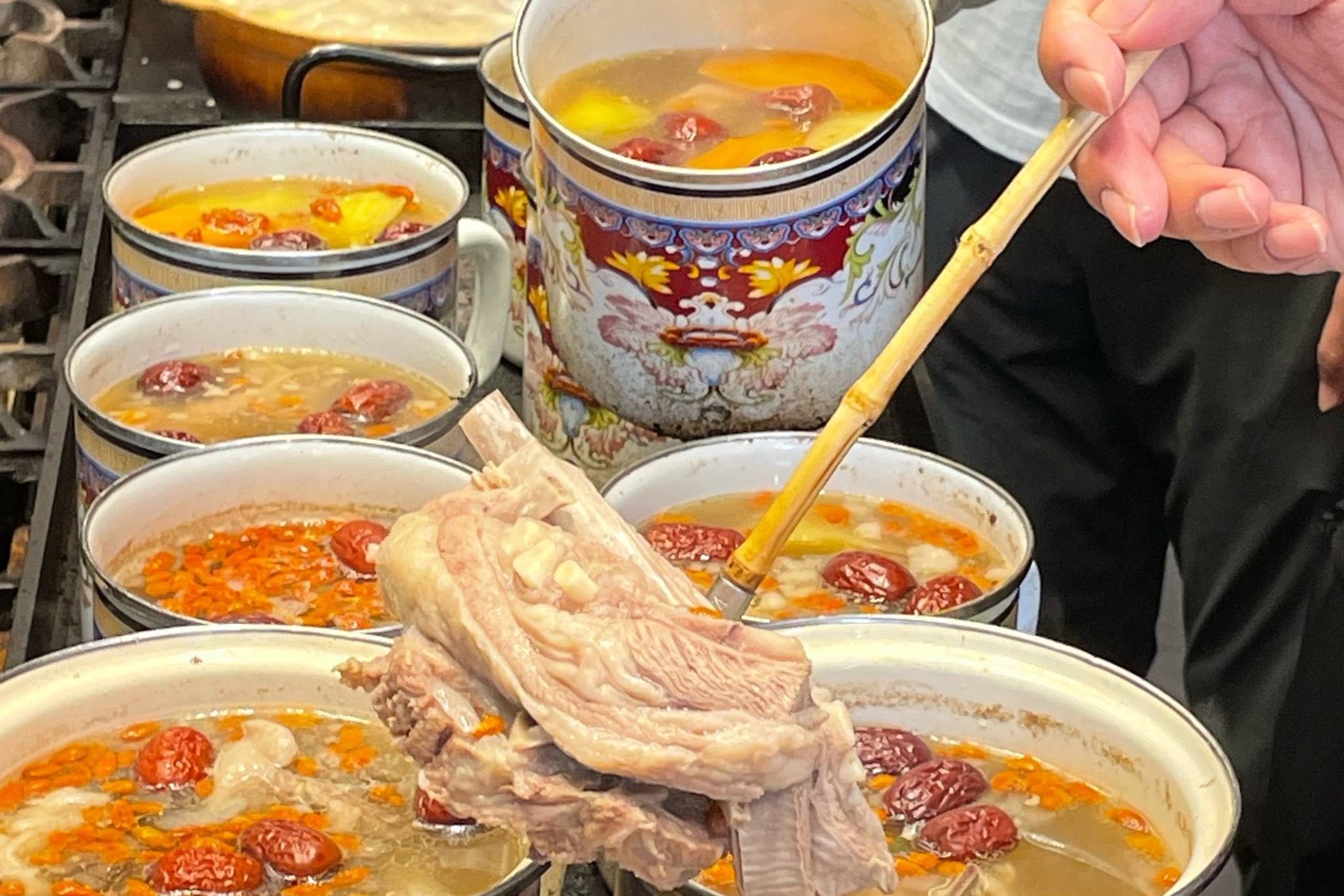
The stall culture is the dish’s second half. Mugs are numbered or repair-scarred into identity; regulars claim “their” tin the way commuters claim a seat; and the stall keeper’s memory for who takes extra carrot is part of the service. The kitchens buy enamel mugs by the crate – the old heavy-gauge kind, which hold heat the modern thinware cannot – and a mug’s cooking life runs decades, picking up the burnished dark of a thousand broths. Food safety is simple: the mug boils its own contents, and nothing sits between fire and table.
Practicalities first. Gangzi rou runs at worker’s-breakfast prices; the stalls fire before dawn for the driver trade and keep mugs on the coals till the evening queue thins. Order by the mug, take the naan and tea that come with it, and eat in stages – the broth, then the meat, then the soak. The dish is winter’s champion but never closes for the season; summer evenings by the kerb mugs have their own easy theater.
The lasting impression is proportion. No plate, no ladle, no ceremony – a single mug, a slow fire, and the exact ration one person needs, cooked by the same vessel that carried the water for the men who planted this oasis. In a city founded by mugs that became farms, gangzi rou is the founding vessel still on the stove, still feeding one working person at a time.
Words and Names
What the Locals Know
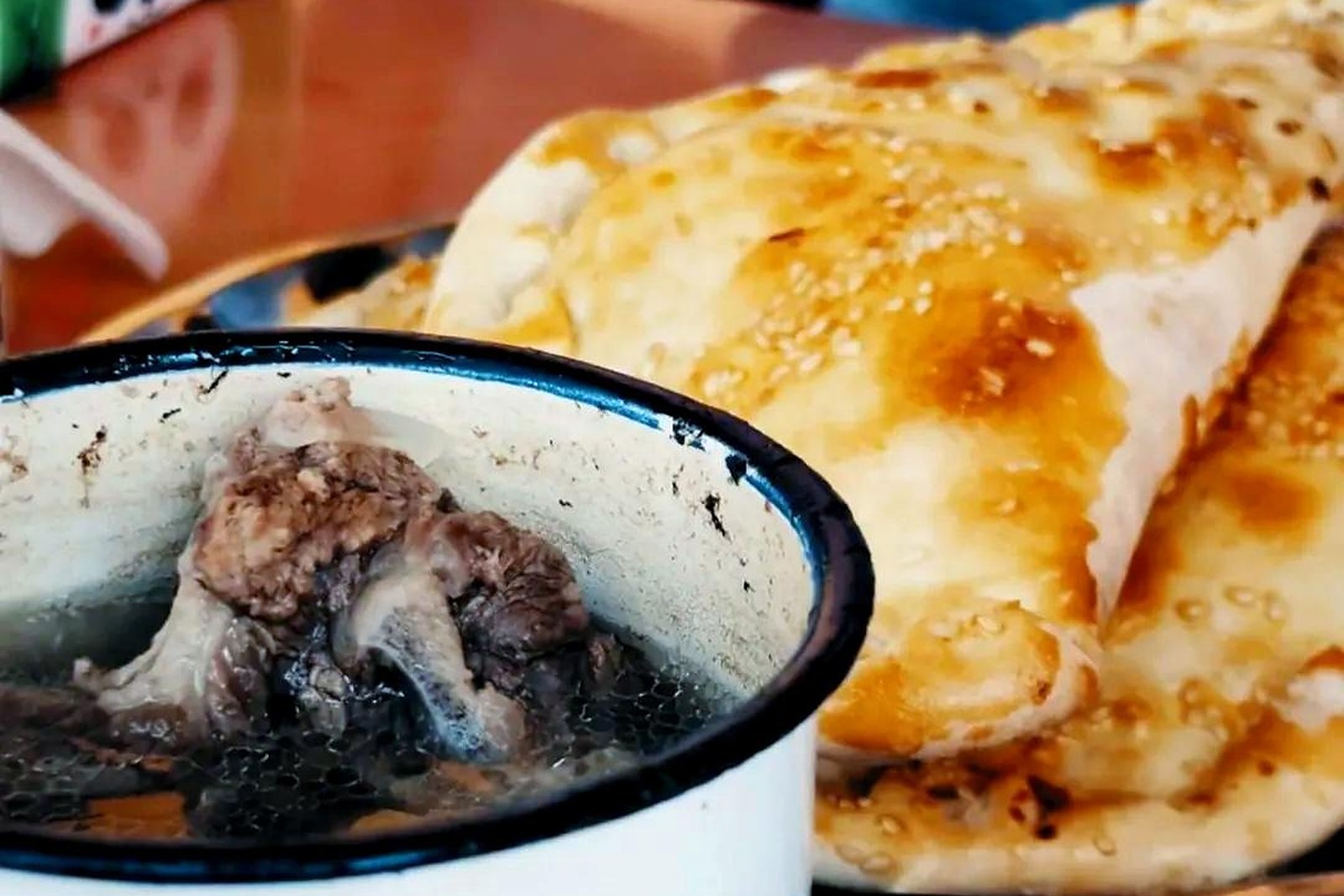
flowcloud would say gangzi rou is the Corps’ field kit that learned to be a restaurant: one enamel mug, one slow fire, one honest ration – soup that remembers the bivouac, priced for the driver’s pocket and warm to the last spoonful. All checked November 2026.
Where to find it: The kerb-side stalls along Tumushuke’s market edges simmer the mugs from before dawn; order one with naan and brick tea, eat vegetables first and broth in stages, and finish the naan in the mug’s remaining heat. All checked November 2026.