
Yellow Catfish in Brick-Red Sauce: Gayu Lajiang
黄骨鱼熬红辣酱,一勺鲜辣定宝坻 Huánggǔyú áo hóng làjiàng, yī sháo xiān là dìng Bǎodǐ – Yellow-boned catfish simmered into brick-red sauce; one spoonful of fresh heat settles Baodi
嘎鱼辣酱 gāyú làjiàng pairs the Chaobai’s yellow catfish – the armored, whiskered little fish Tianjin calls gāyú for the squeak it makes – with a brick-red fermented chili paste in the district’s most defended fish dish. In the hotel kitchens of 天津市宝坻区 Tiānjīn Shì Bǎodǐ Qū Baodi District the two meet in a claypot: catfish sections seared, the sauce bloomed in oil, and a slow simmer until the pepper coat sets over tender, bone-in fillets that flake clean off the shield-shaped bones.
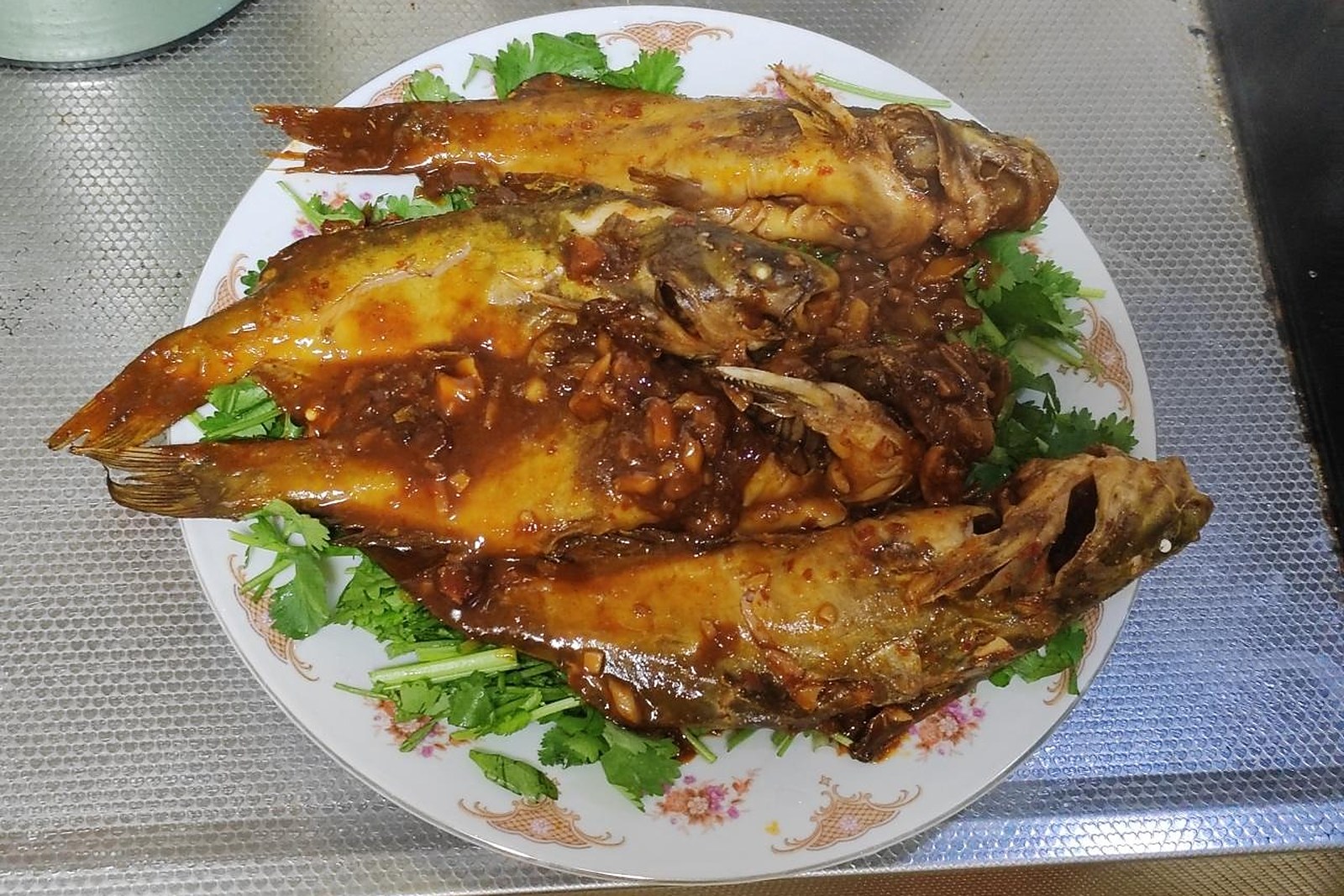
The fish is the argument. Yellow catfish carries no scales to fuss with, a single spine bone per piece, and flesh that stays gelatinous-sweet under heat – exactly the texture that survives a long red simmer. Whole small ones braise intact; the larger ones come in steaks. The sauce clings rather than floods, which is what separates the dish from ordinary spicy stews.
The sauce is the district’s fingerprint. Fermented broad-bean and chili bases are bloomed in oil with ginger, garlic and a whisper of anise, then cooked down until the raw heat rounds into a savory red that flavors rather than burns. House versions guard their ratios – more bean, less fire, or the reverse – and locals can name which kitchen leans which way after one bite.
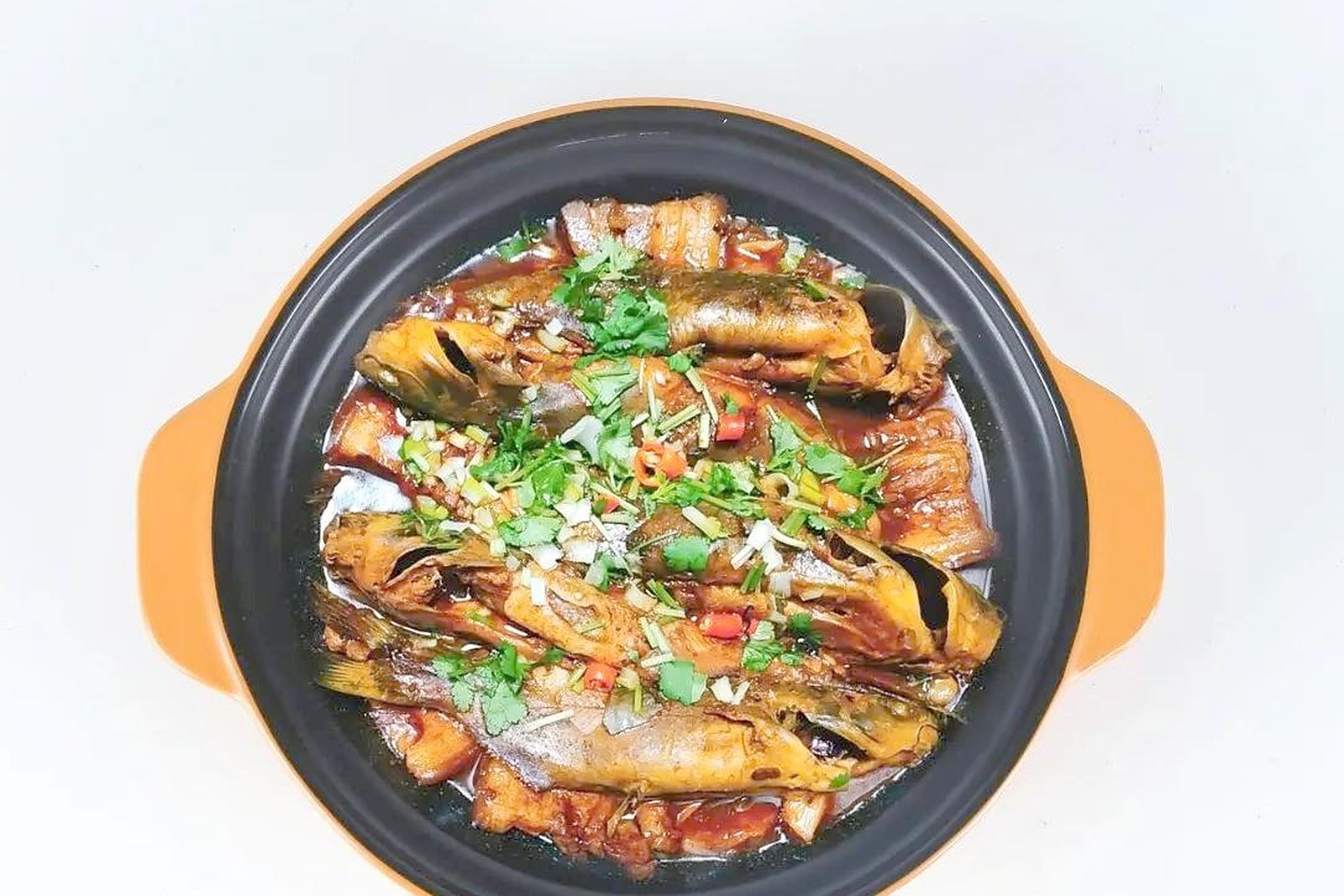
The pot travels well through a meal. Served bubbling, it holds its heat to the end, the sauce deepening as it reduces; rice or mantou arrives to catch the last of the red oil. The bones make slow eaters of everyone, which suits the table-talk – and the leftover sauce, strained over noodles the next day, is the connoisseur’s second meal.
The same district holds more flavors worth chasing: 卷馅肉饼 juǎnxiàn ròubǐng the layered meat pancake, 烙饼卷带鱼 làobǐng juǎn dàiyú the bread-wrapped braised hairtail, 蒜香饹炸 suànxiāng lèzha the garlic bean crisp, or 红烧大鱼头 hóngshāo dà yútóu the braised carp-head centerpiece – four more doors into the same Baodi District table.
Words and Names
嘎鱼 gāyú the yellow catfish, named for its squeak; 黄辣丁 huánglàdīng the Sichuan name for the same fish; 辣酱 làjiàng the fermented chili paste; 砂锅 shāguō the claypot it arrives in; 豆瓣 dòubàn the broad-bean base of the sauce.
What the Locals Know
The dish lives or dies on the paste – kitchens that fry the chili raw lose the roundness, and locals can tell in one spoonful. Small catfish taste sweeter than large; ask for the pot of small ones even if it means waiting. And the bones are a feature: pick around them slowly, the way the dish wants. All checked November 2026.
flowcloud would say gayu lajiang is Baodi diplomacy: a humble river fish and a fierce paste, introduced slowly until both sides mellow into one pot worth defending.
Where to find it: The district hotel kitchens that named the dish run the reference claypots, the fish restaurants along the old-town lanes keep their own house pastes, and the market’s chili-paste stalls sell the home version for private pots. All checked November 2026.