
The New Year Roll: Gezhi He
绿豆磨浆摊作皮,卷馅切段炸金黄 Lǜdòu mójiāng tān zuò pí, juǎn xiàn qiē duàn zhà jīnhuáng – Mung beans milled to batter, spread into wrappers; rolled round filling, cut to sections, fried to gold
咯吱盒 Gēzhī hé is the mung-bean roll of the Tianjin new-year table, and in the farmhouse courtyards of 天津市蓟州区 Tiānjīn Shì Jìzhōu Qū Jizhou District it is the sound of the season – the name itself imitates the kǎzhī crunch of the first bite. Batter of soaked mung beans griddles into thin springy wrappers, wraps around a savory filling, and fries into golden logs cut on the bias, the cut faces showing the spiral like a fingerprint.
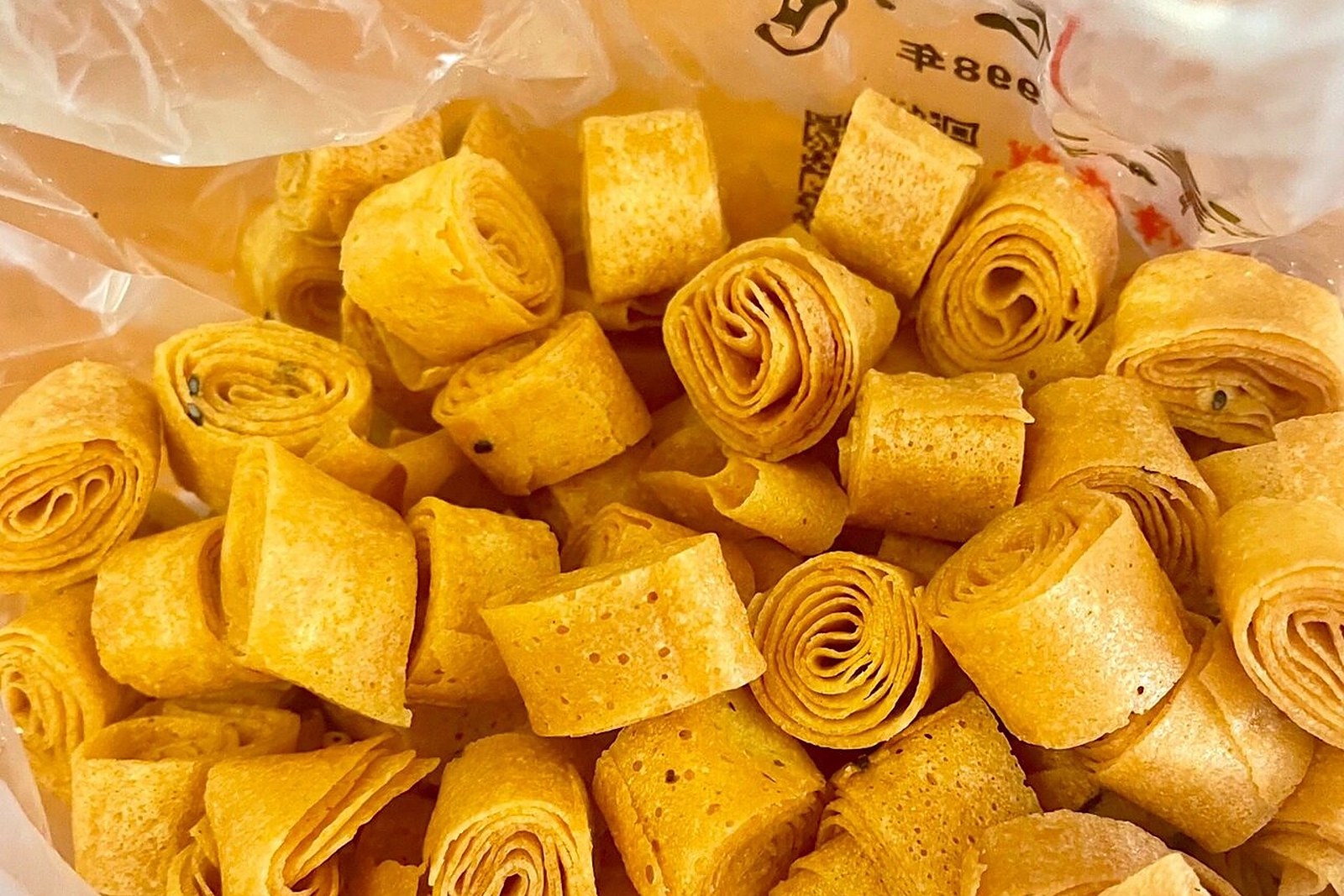
The wrapper is the craft. Mung beans soak overnight, mill wet into a pale-green batter, and the griddle work runs a steady wrist – each paper-thin sheet lifted whole at the exact moment it releases, no tear, no toast. The old households judge the year’s gezhi by the wrapper’s integrity; a torn sheet means the batter was hungry and the beans short-soaked.
The filling runs house to house. The classic rolls carrot and coriander with a little minced pork or a dusting of flour-and-oil paste, vegetarian rows use vermicelli and egg, and every courtyard seals the roll edge with a smear of raw batter so the fry never opens. Cut sections fry twice – once to set, once to color – and hold their crunch through a whole banquet tray.
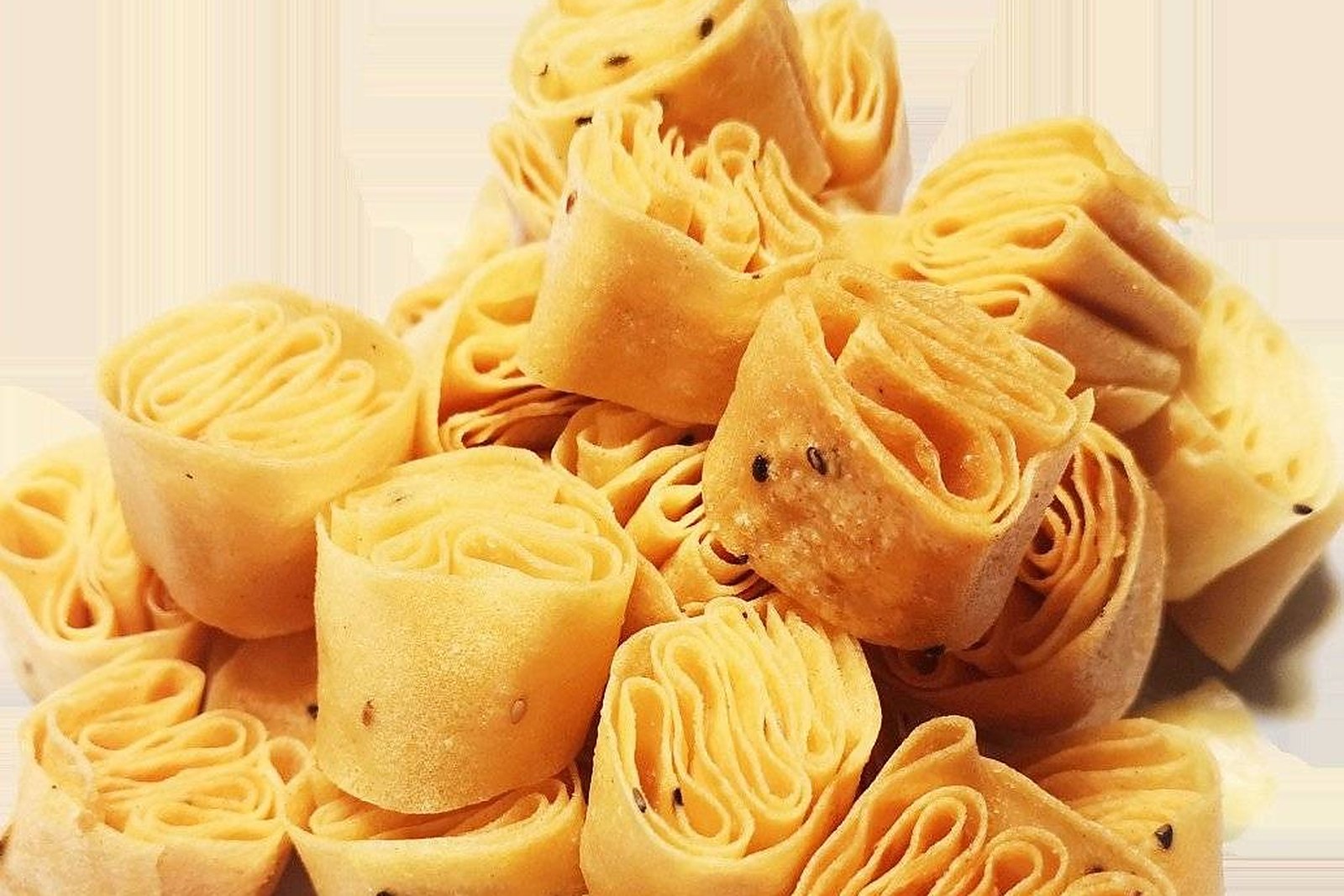
The season and the everyday share the dish. New year’s preparations stack the fried boxes in tall pyramids for the visiting rounds, but the farmhouse menus now serve gezhi year-round beside the iron-pot fish, and the market stalls around the parks sell fried sections hot in paper sleeves to walkers. Crunch is the compass: a good gezhi announces itself across the table.
The same 天津市蓟州区 Tiānjīn Shì Jìzhōu Qū Jizhou District holds more flavors worth chasing: 贴饼子熬小鱼 Tiēbǐngzi áo xiǎoyú the iron-pot fish and cakes, 麻酱鸡蛋 májiàng jīdàn the sesame-cured eggs, 州河鲤 Zhōuhé lǐ the reservoir carp, or 红花峪桑葚 Hónghuāyù sāngshèn the mulberry harvest – four more doors into the same Jizhou table.
Words and Names
咯吱盒 Gēzhī hé the crunchy roll box; 绿豆面 lǜdòumiàn mung-bean flour, the wrapper’s whole story; 摊皮 tān pí the griddle-spreading craft; 炸货 zháhuò the fry tray of the new year; 咔吱 kāzhī the sound the name imitates.
What the Locals Know
Listen before you buy – the fry tray’s sound tells the truth the color hides: a dry crackle means fresh oil and hot fry, a dull sizzle means the tray has stood. The vegetable filling is the original; meat versions are the tourist accommodation. And the households that still spread their own wrappers fry only before the new year, so the griddle-made originals are a season, not a menu line. All checked November 2026.
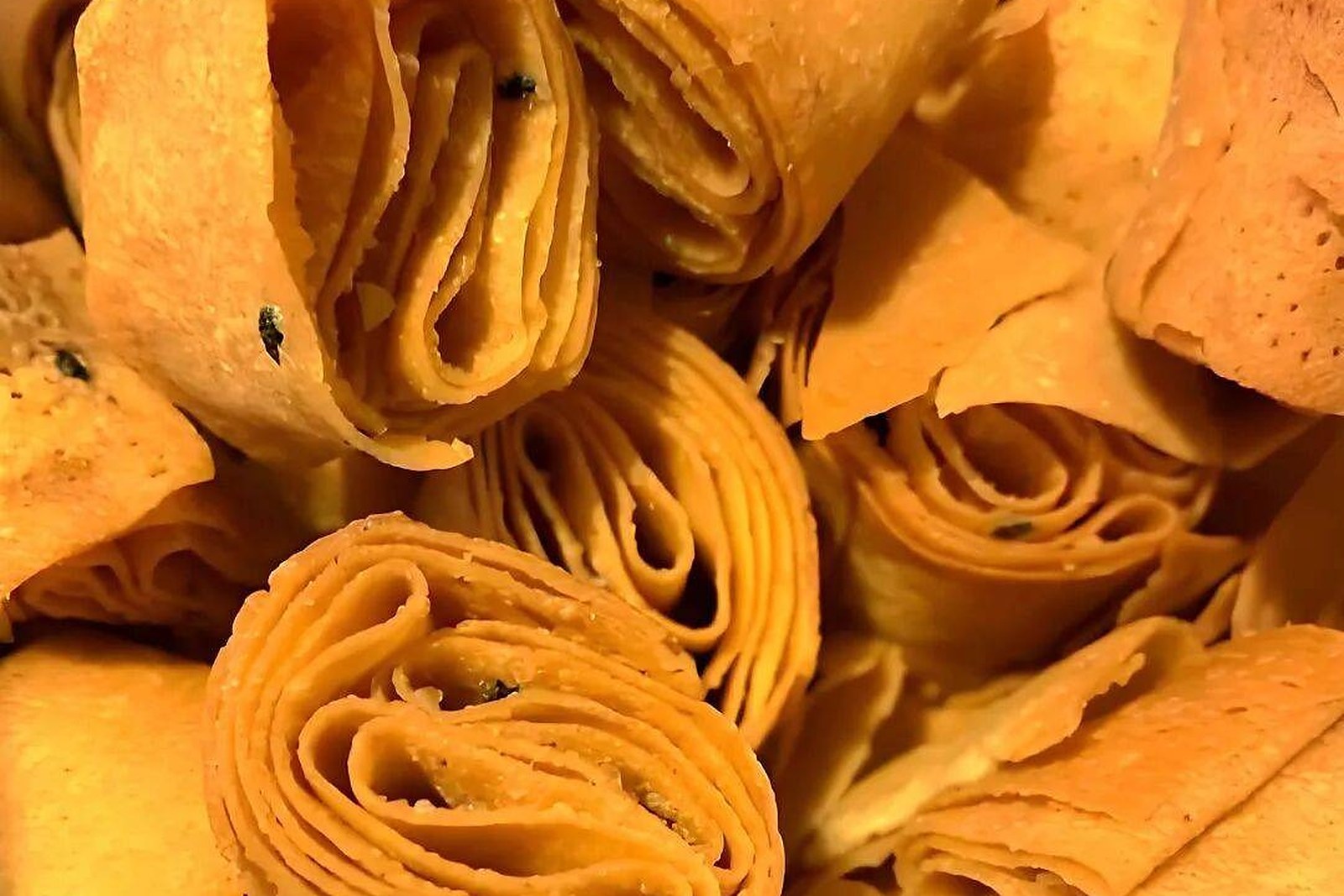
flowcloud would say gezhi is the mung bean’s stage debut: soaked, milled, spread paper-thin, rolled and fried – until one bite explains the name twice.
Where to find it: The farmhouse restaurants around the mountain parks serve sections beside the iron pots, and the market stalls at the town’s food streets fry to order through the day. All checked November 2026.