
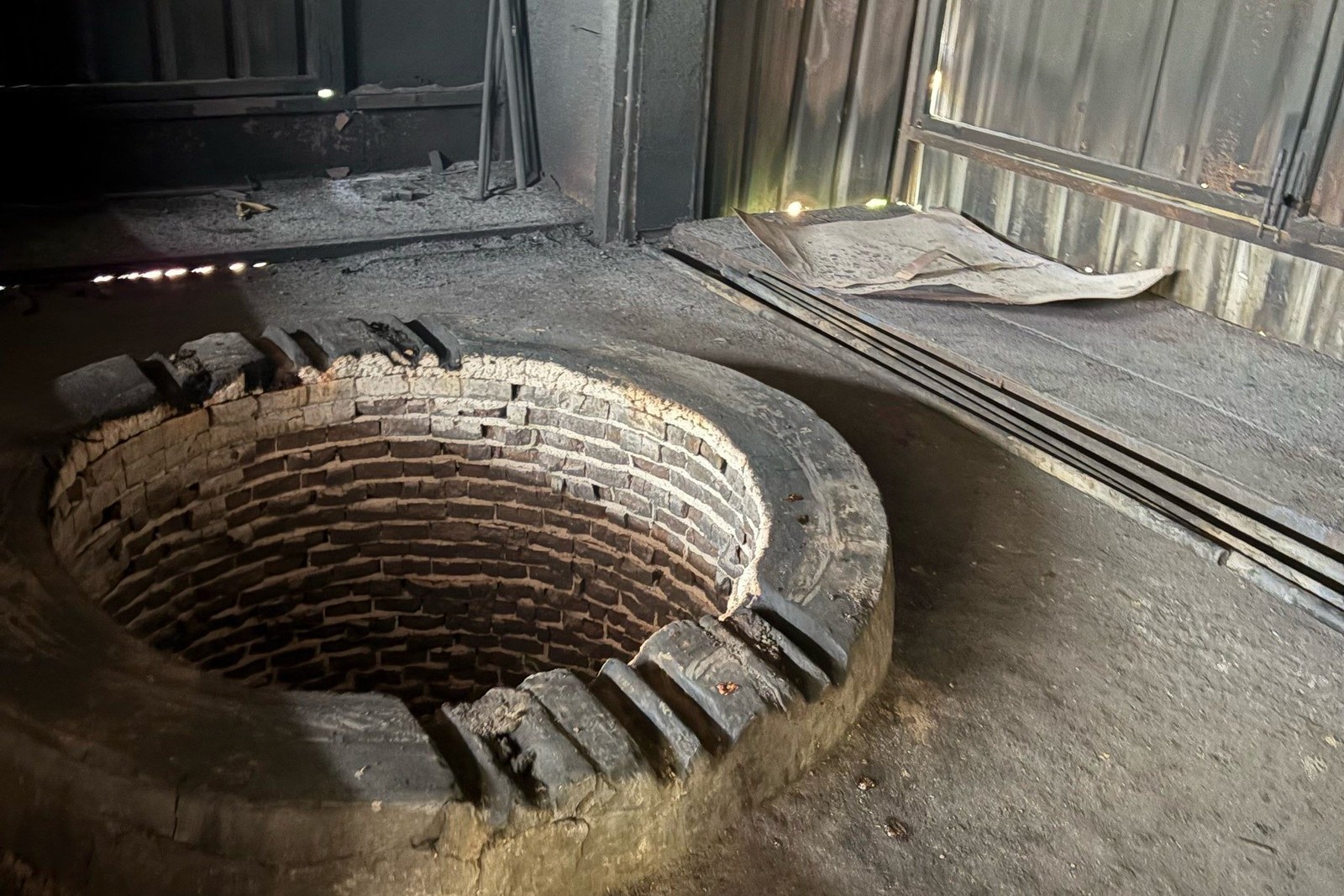
烧猪 shāo zhū is the ceremonial roast pig of the Cantonese south, and 公明 Gōngmíng in the north-west of 深圳 is one of the places where the old trade is still done at full scale. The pig is a suckling, six to eight weeks old and around five kilos, and it is roasted whole in a sealed charcoal oven, turned over a fire, or in the most traditional version buried in a pit lined with hot stones. Before any of that happens it is inflated: air is pumped under the skin through a small cut at the neck until the skin lifts clean off the fat underneath, and a frame or a split bamboo is pushed inside to hold the shape. This is the step that separates a 烧猪 from a roast pork joint anywhere else in the world, because the pocket of air is what lets the skin dry and then crackle independently of the meat. The whole pig is rubbed inside with 五香粉 wǔ xiāng fěn, salt and a little sugar, and the outside is brushed with a maltose and vinegar wash that gives the finished skin its red-brown shine.
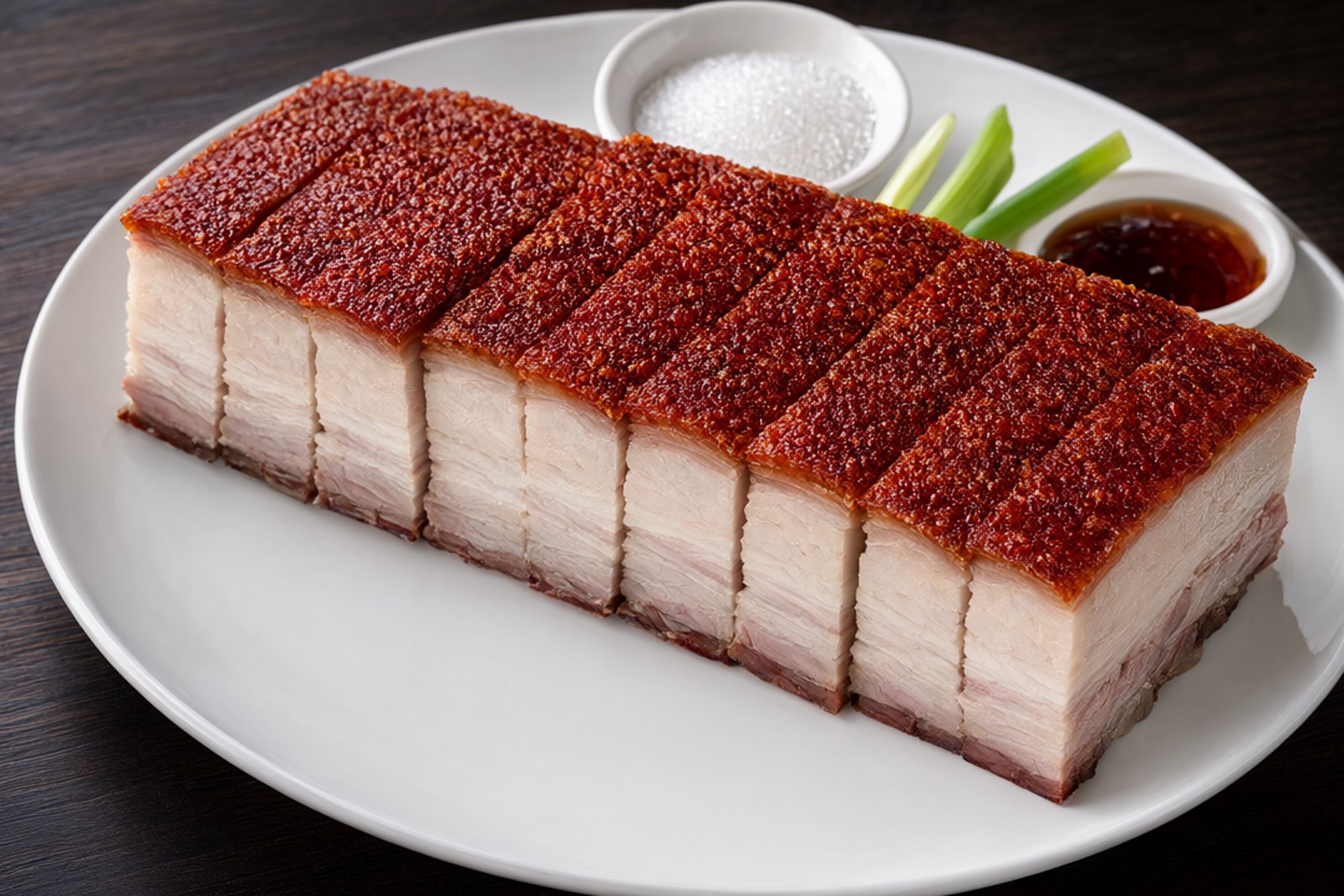
What you are buying, and what the town actually argues about, is the skin. The ideal is called 芝麻皮 zhī ma pí, sesame skin, a surface covered in tiny even blisters no bigger than a sesame seed, which is crisp through its whole thickness and shatters rather than bends. A pig roasted too fast gets 光皮 guāng pí, a smooth glossy skin that looks better in photographs and eats like leather. Good 公明 烧猪 is unmistakably the first kind, and the sound it makes under the knife is the only advertisement the trade has ever needed. It is carved in front of you, always with the cleaver coming down through the skin first and the meat second so the crackling does not tear, and the pieces are stacked skin-up on the plate. The traditional accompaniments are two: a dish of white sugar, into which the skin is dipped, and a dish of 海鲜酱 hǎi xiān jiàng, the sweet fermented bean and garlic sauce, for the meat. Some places also bring 葱段 cōng duàn, lengths of raw spring onion, which is the correct thing to eat between pieces of pork.
The pig is more than a dish. In the Cantonese calendar it is the standard offering at 清明 Qīngmíng when families sweep the graves, at weddings, at the opening of a shop, and at any 拜神 bài shén ceremony where something needs to be formally asked for or thanked for. A whole roast pig carried into a village on a red-lacquered tray, with the head on and a sprig of 柚子叶 yòu zi yè in its mouth, is the unit of celebration, and the meat is then divided among everyone who contributed. That is why the 公明 shops will sell you a pig by the 斤 at the counter, and why ordering a whole one takes notice of a day or more. It also explains the pricing, which is high and barely moves: a five-kilo pig costs several hundred yuan and a significant part of that is the skin you are going to eat in the first ten minutes.
Words and Names
烧猪 shāo zhū is the roast pig; 乳猪 rǔ zhū is the suckling version specifically, and 金猪 jīn zhū, golden pig, is what it is called when it appears at a ceremony. 芝麻皮 zhī ma pí is the blistered skin and 光皮 guāng pí the smooth kind; 五香粉 wǔ xiāng fěn is five-spice, 海鲜酱 hǎi xiān jiàng the sweet sauce, 白糖 bái táng white sugar and 葱段 cōng duàn spring onion lengths. 公明 Gōngmíng is the old town and 光明 Guāngmíng the district it now sits in; 清明 Qīngmíng is the grave-sweeping festival, 拜神 bài shén means to make an offering, and 斤 jīn is the half-kilo by which the trade weighs.
What the Locals Know
Ask for the head and the tail to be left on if you are buying for a ceremony and off if you are buying for dinner, because a shop will assume the former otherwise. The skin must be eaten within the hour and preferably within twenty minutes; after that it goes soft and reheating it in an oven makes it tough rather than crisp. Below the skin, the meat is not the point and is usually a little dry, which is why the leftovers go into 芋头焖猪肉 yù tou mèn zhū ròu, a braise of taro and pork that is arguably the better dish. If you want to watch the roast rather than just eat it, the ovens are loaded in the early morning and the pigs come out from about five, so the queue at a 公明 shop at seven is for the first cut of the day.
flowcloud would say that a town that roasts a whole pig for a wedding and then argues about the size of the blisters on the skin has its priorities in exactly the right order.
Where to find it: the 公明老街 Gōngmíng lǎo jiē area of 光明区, along 公明墟 and the lanes off 松白路, where several families have run the same 烧猪 ovens for three or four generations. Metro Line 6 to 公明广场站, then walk north into the old town. Buy a 斤 of the skin-on cut to eat standing up, and only order a whole pig if you have a ceremony to take it to.