
沙虫 shā chóng, sandworm, is the delicacy that 光村镇 Guāngcūn zhèn, on the coast north of 儋州市 Dānzhōu shì, is known for across the whole island, and it is exactly what the name says: a marine worm that lives buried in the sand of the tidal flats and is dug out by hand at low tide. It is a sipunculid, unrelated to the earthworm, a smooth pale cylinder about the length of a finger with a small proboscis at one end, and to anyone who has not grown up with it, the idea takes a moment. To the west coast of Hainan it is one of the finest things the sea gives, and the local phrase for it is 海滩上的冬虫夏草, the caterpillar fungus of the beach, which tells you how it is regarded.
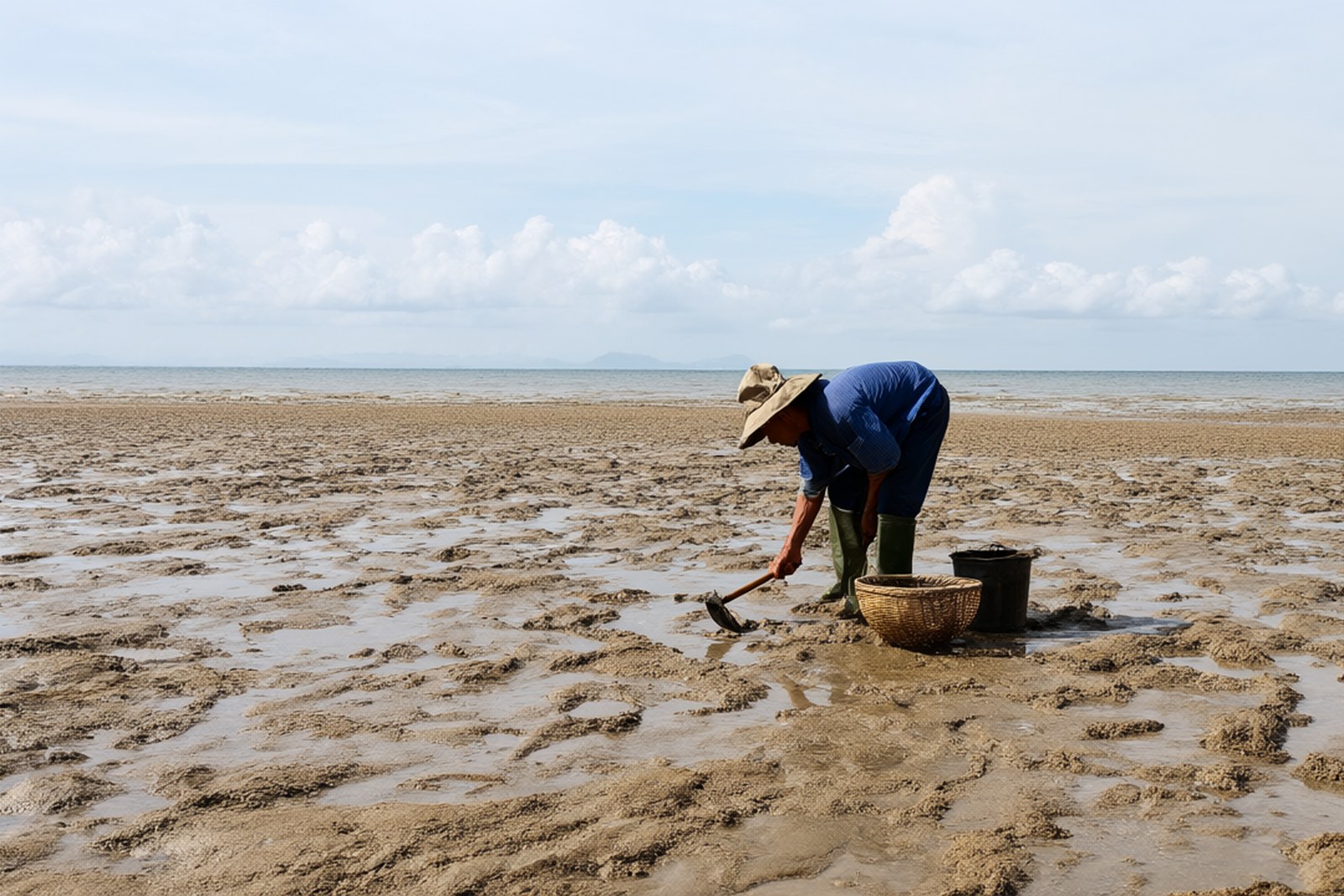
The digging is a skill and it is done with the tide. At dead low water the flats around 光村 are exposed, and the worm leaves a small dimple or a tiny mound where it has withdrawn into the sand; the digger, working fast, opens the sand behind the hole with a short hoe and lifts the worm out whole, because a broken one is worth much less and is kept for home. A good digger takes a few kilos in a tide. It is cold, wet, back-bending work that has to be finished before the water returns, and the price of 沙虫 in the market in the morning is a direct reflection of how the tide fell overnight.
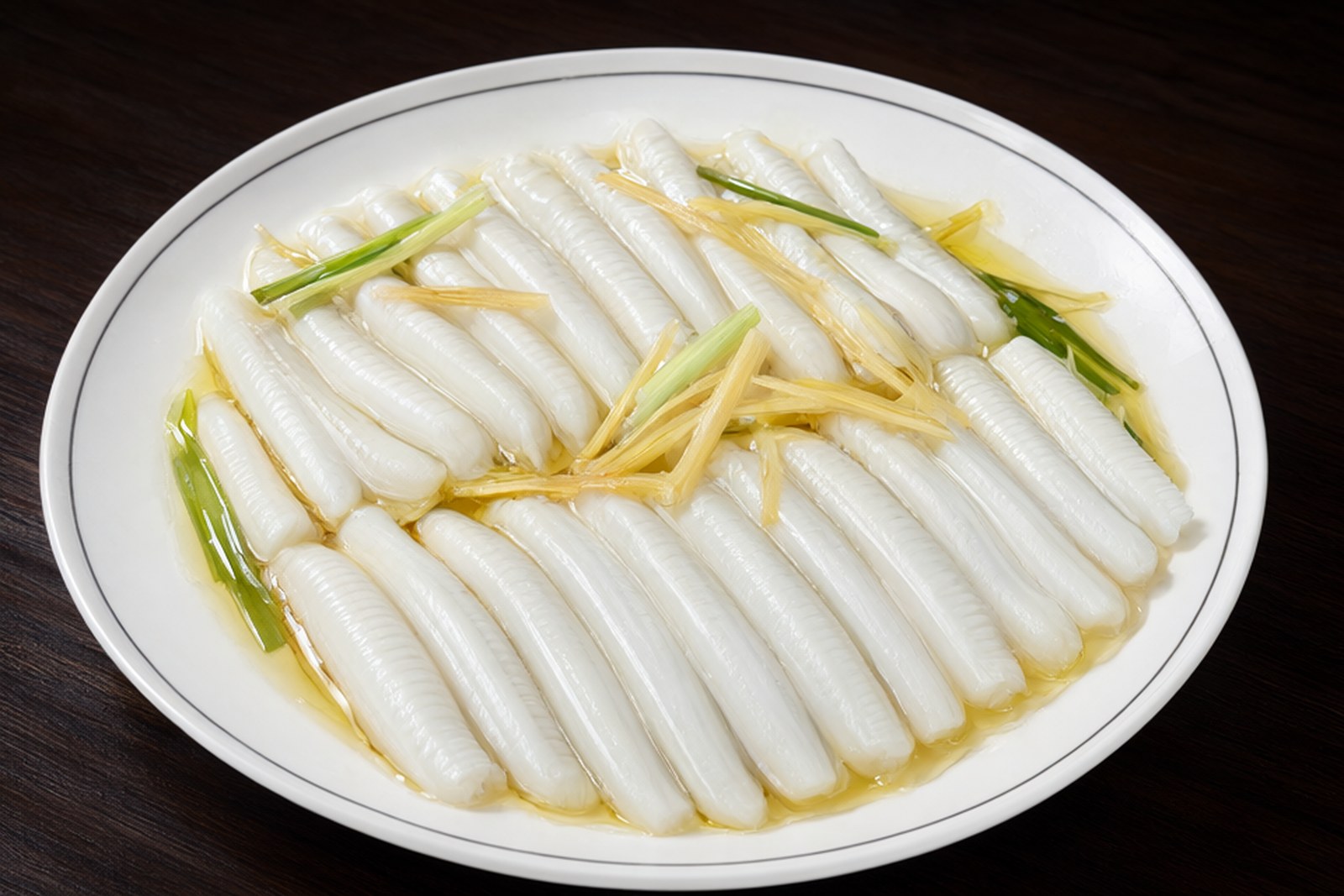
In the kitchen it is treated carefully and the cleaning is most of the labour. Each worm is turned inside out or slit and the gut removed, then washed in salted water until it is squeaky and translucent; in shops this is done in a basin of water at the front of the house, and a kilo of whole worms reduces to a good deal less once cleaned. The simplest and most admired treatment is 白灼 bái zhuó, blanched in barely boiling water for a few seconds, cooled, laid on a plate and dressed with shredded ginger and spring onion over which smoking oil is poured, with a dip of light soy. It should come out crisp, faintly sweet, and with none of the mud taste that badly cleaned worms carry.
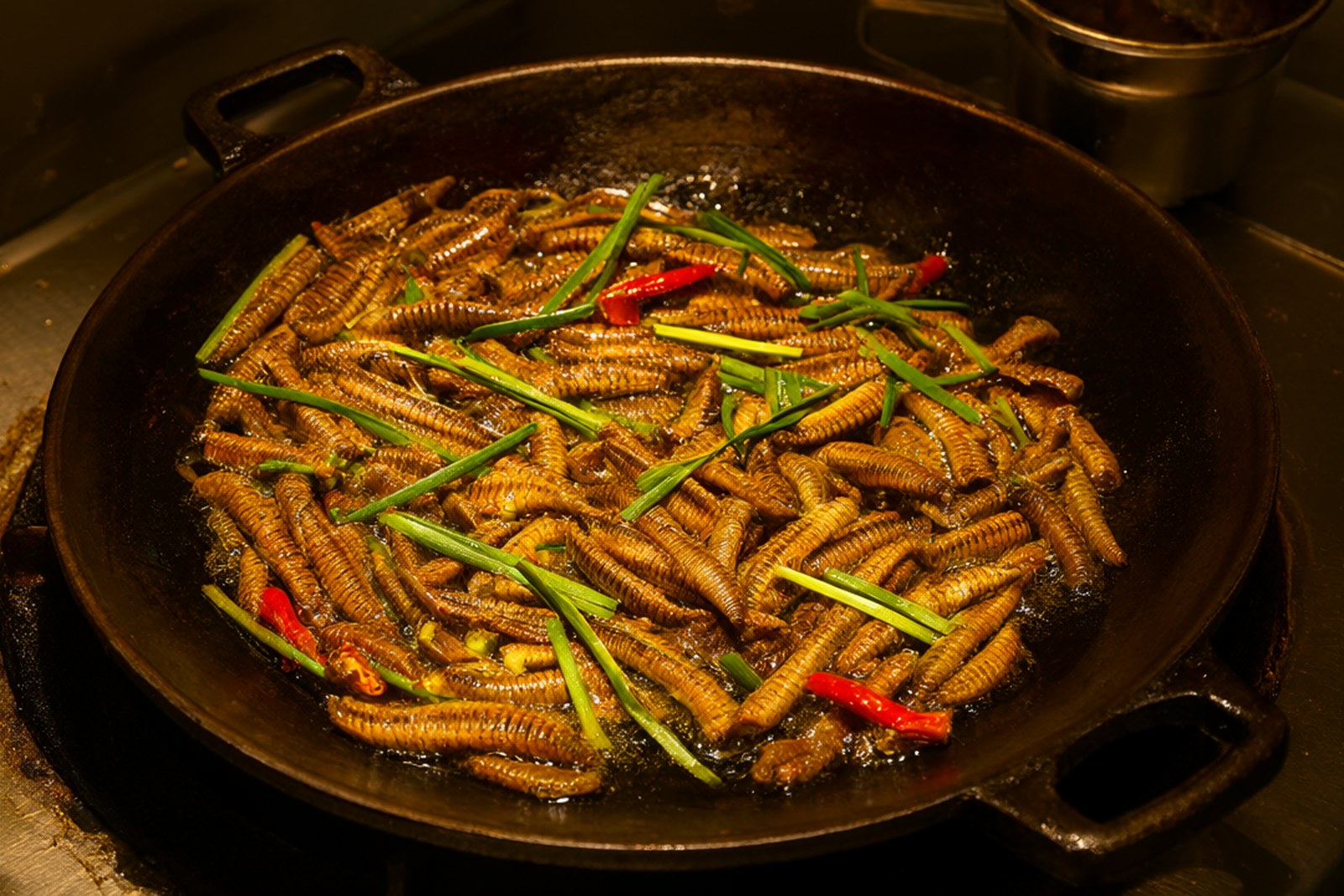
Beyond the blanched plate there are the dishes the coast actually eats at home. 沙虫炒韭菜 shā chóng chǎo jiǔ cài, sandworm stir-fried with Chinese chives, is the one most often cooked, the chives taking the place of the dressing; 沙虫粥 shā chóng zhōu, a rice congee with the worms stirred in at the end, is the breakfast of a fishing family and the food that is given to anyone who needs building up. Dried 沙虫, strung and sun-dried on the racks, goes into soups with pork bones for the rest of the year. In 光村 and 白马井 the restaurants sell the fresh blanched plate at a price that surprises visitors, because the labour is the cost and the catch is small.
Words and Names
沙虫 shā chóng is the sandworm, 沙 shā sand and 虫 chóng worm; the local phrase 海滩上的冬虫夏草 hǎi tān shàng de dōng chóng xià cǎo calls it the caterpillar fungus of the beach. 光村镇 Guāngcūn zhèn is the town on the coast north of 儋州 Dānzhōu that the trade belongs to, and 白马井 Báimǎjǐng the fishing port to the south. 白灼 bái zhuó is the blanching method, 韭菜 jiǔ cài Chinese chives, 粥 zhōu rice congee and 滩涂 tān tú the tidal flats.
What the Locals Know
Ask whether the worms were dug that morning, because 沙虫 does not keep and a plate made from yesterday’s catch is noticeably softer. Order the 白灼 first and eat it before anything else on the table, since it is served cool and the dressing is at its best in the first few minutes. If the price seems high, it is the digging and the cleaning you are paying for, and a plate that is cheap is usually a smaller or a broken grade. Eat it in 光村 or 白马井 rather than inland, and if you are offered the congee, take it: it is the version the fishing families make for themselves.
flowcloud would say that a coast which took a buried worm that most of the world would not think to eat, learned to read the sand for the dimple it leaves at low tide, and then served it blanched in water with a spoon of hot oil, has made a delicacy out of nothing but attention and tide tables, which is the oldest kind of cooking there is.
Where to find it: the seafood restaurants of 光村镇 and 白马井 in 儋州市, where it is landed; the market at 光村 sells it fresh in the morning and dried by the string. A plate of blanched 沙虫 is ¥80 to ¥180 depending on size and season, a 沙虫粥 ¥25 to ¥50 and dried 沙虫 ¥300 to ¥600 a catty. 儋州市 is a high-speed rail stop from 海口 in about fifty minutes, and 光村 is roughly an hour by road north of 那大.