
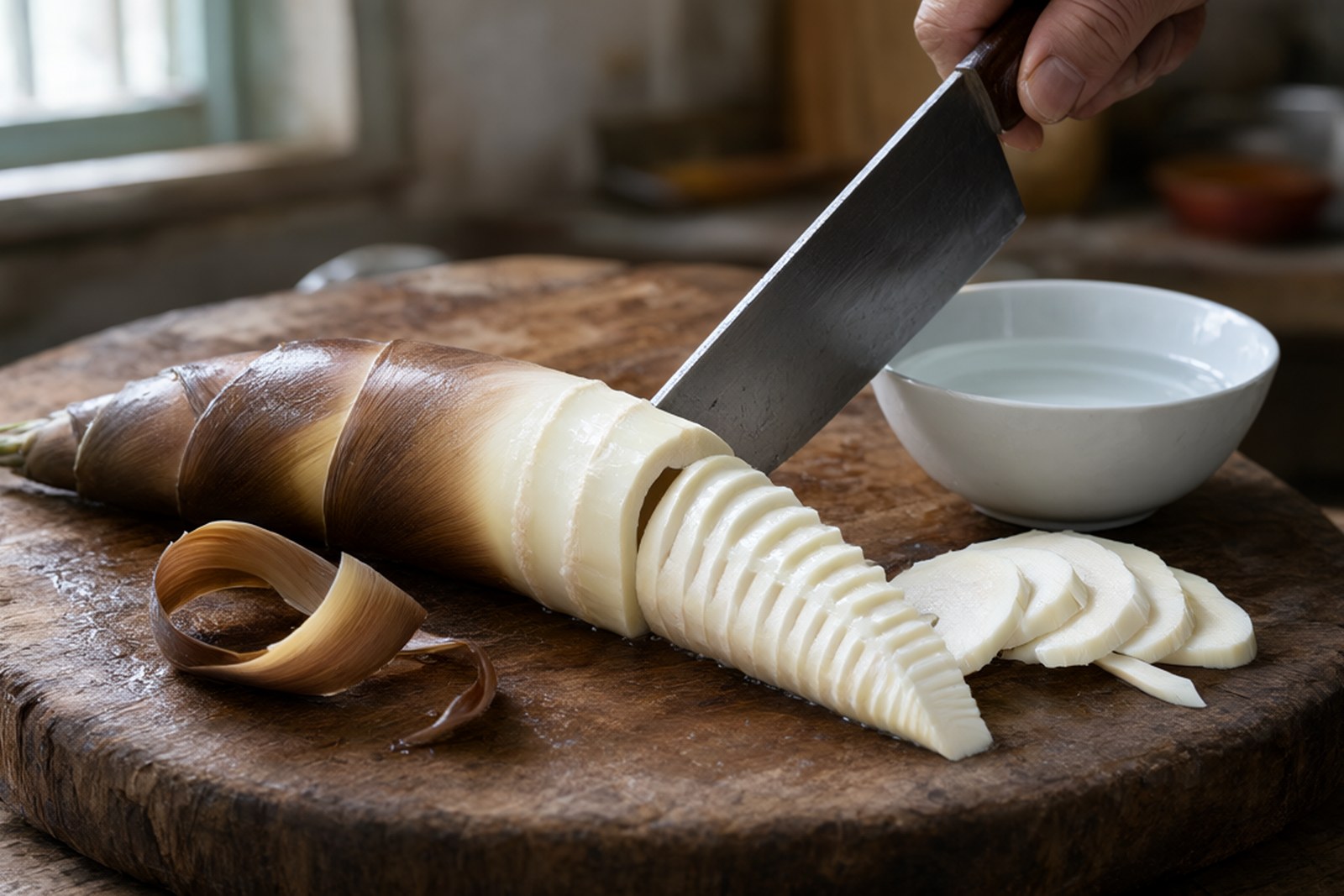
广宁 Guǎngníng grows more bamboo than almost anywhere else in Guangdong, and for a few weeks in early summer the county eats it as a vegetable. The shoots of 毛竹 máozhú, the moso bamboo, push up through the leaf litter after the first heavy rain, and they are dug at the point where they are still tight and pale, before the fibre sets and the bitterness develops. What makes the local version worth travelling for is the speed: a shoot that is dug in the morning and cooked at noon tastes of almost nothing but sweetness and water, and a shoot that has spent two days in a truck takes on the faintly bitter, faintly medicinal note that dried bamboo is known for. The preparation is short. The outer sheaths are stripped, the woody base is cut away, and the shoot is sliced and either simmered in lightly salted water to draw out the last of the bitterness or cooked straight with pork. 油焖笋 yóumèn sǔn, braised in oil and soy, is the home version, and 笋炒肉 sǔn chǎo ròu, sliced shoot with pork, is the everyday one. Both depend on the shoot, and both go wrong if it is old.
The county’s other great crop is 文笋 wénsǔn, a thinner shoot harvested from a related bamboo and prized for a texture that stays crisp after cooking. It is sold fresh in bundles at the roadside in season and dried, salted or canned out of it, and the dried version, 笋干 sǔngān, is what most of the province knows Guangning for. Drying concentrates the flavour and introduces the smoky, savoury note that makes 笋干 a standard ingredient in braised pork dishes across Guangdong, so the same county supplies the fresh vegetable in June and the pantry staple all year.
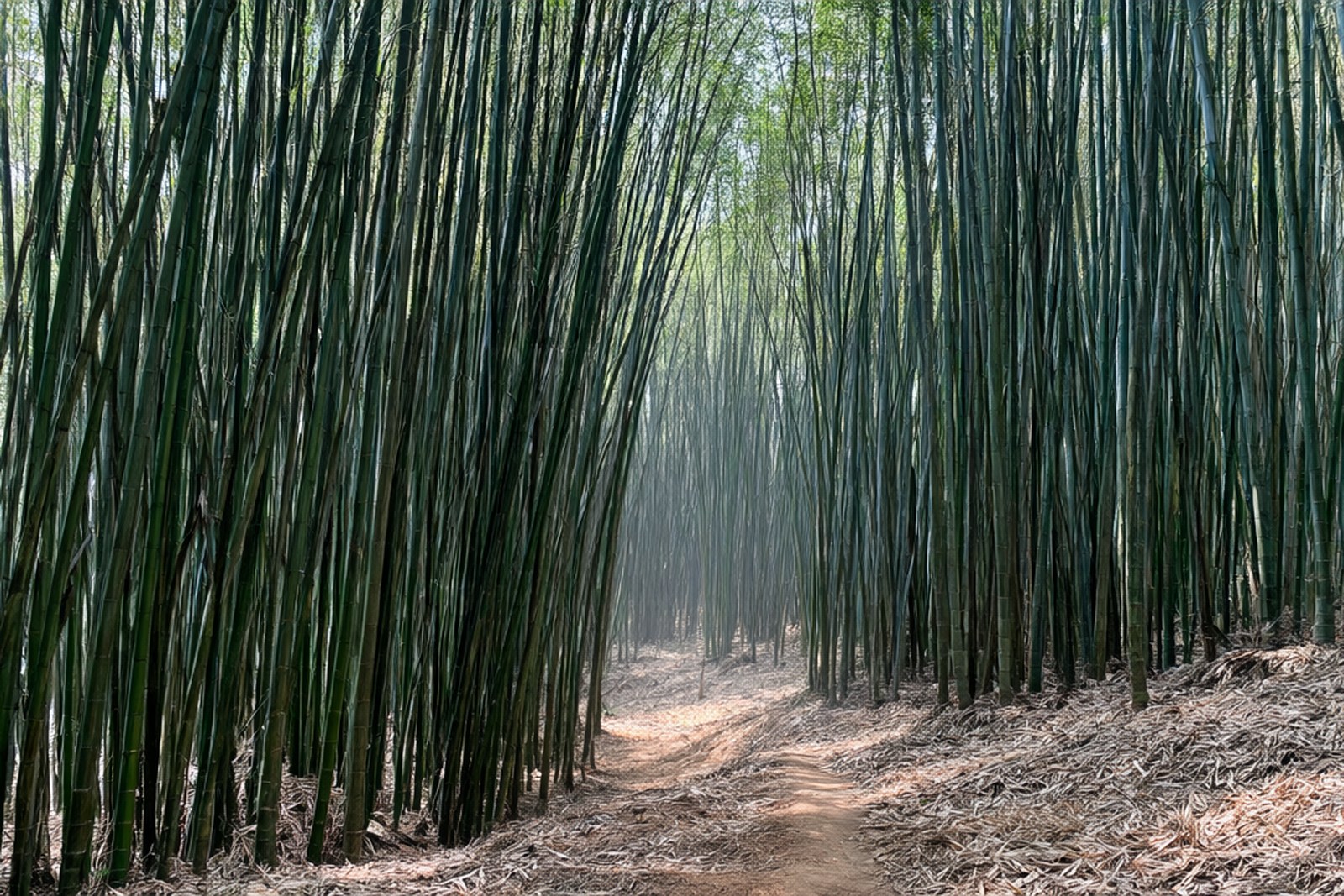
Bamboo in Guangning is not only food. It is the county’s timber, its scaffolding, its baskets and its paper, and the plantations are managed rather than wild: the stands are thinned, the shoots are selected, and a grove that has been worked for a century looks orderly in a way that a wild one does not. The 竹海 zhúhǎi, the bamboo sea, is the tourist name for what is really a working forest.
The Two Weeks
Fresh bamboo shoots cannot be stored. Once cut they begin to toughen within hours, and the window in which a shoot is genuinely sweet is measured in days rather than weeks. This is why the dish has never travelled and why the county’s own restaurants serve it as a seasonal special with a note on the wall rather than as a permanent menu item. The season runs from roughly late May to early July, and it depends on rain, so a dry spring shortens it.
Outside the season the same kitchens use 笋干, which is a different pleasure: saltier, firmer, and best slow-braised with pork belly until it has taken on the fat. The two are not substitutes for one another and locals will happily eat both, regarding the dried one as the everyday ingredient and the fresh one as something to be eaten while it lasts.
Words and Names
广宁竹笋 Guǎngníng zhúsǔn is the fresh shoot; 笋 sǔn alone means bamboo shoot. 毛竹 máozhú is moso bamboo, 文笋 wénsǔn the thin local variety, 竹海 zhúhǎi the bamboo sea. 笋干 sǔngān is the dried shoot, 油焖笋 yóumèn sǔn shoots braised in oil and soy, 笋炒肉 sǔn chǎo ròu shoots with pork, and 五花肉 wǔhuāròu belly pork. 涩 sè is the astringency that boiling removes, and 焯水 chāoshuǐ means to blanch, which is the step that takes it out.
What the Locals Know
Go in June. Ask whether the shoot is 新鲜 xīnxiān, fresh from the hill today, and whether it is 毛竹 or 文笋, since the thin one is crisper and the thick one sweeter. Fresh shoots need no seasoning beyond salt, oil and a little soy; if a restaurant has buried them in chilli and garlic, it is covering something up. Buy 笋干 to take home rather than fresh shoots, which will not survive the journey; the dried ones should be pale yellow and smell of smoke and sun, not musty. A fresh shoot dish costs from about twenty-five to fifty yuan in season, and a bag of dried ones from fifteen.
flowcloud would say that the bamboo shoot is a test of a kitchen’s patience, because the whole dish is decided by how quickly somebody walked it from the grove to the pot.
Where to find it: the 农家菜 nóngjiācài farm restaurants along the 竹海 zhúhǎi in 广宁县 Guǎngníng Xiàn, an hour or so northwest of 肇庆市, and the county town’s markets where fresh shoots are sold by the bundle from late May. Ask for 油焖笋, order it alongside a braised pork dish so you can taste both, and buy 笋干 rather than fresh shoots if you have a long journey home.